Free lesson planDemocracy in Ancient Athens: Who Could Vote? Percent and Pottery Ballots
Math50 minutesGrades: 6th, 7th, 8th
Overview
Calculate what percent of ancient Athens could vote, and hold a pottery-ballot vote.
Description
Your child uses historians' population estimates to calculate what percent of people in ancient Athens could actually vote, holds a family vote with pottery-style ballots the way Athenians did, and compares Athenian democracy with who can vote in the United States today.
Objective
Your child will find percents of a whole and parts from percents using population estimates, and explain who was included and excluded in Athenian democracy.
Standards
6.RP.3cMath · Grade 6 · Ratios & Proportional Relationships Find a percent of a quantity as a rate per 100 (e.g., 30% of a quantity means 30/100 times the quantity); solve problems involving finding the whole, given a part and the percent.
7.RP.3Math · Grade 7 · Ratios & Proportional Relationships Use proportional relationships to solve multistep ratio and percent problems.
Materials
| Item | Quantity |
|---|
| Population estimate table (in Additional Sections) | 1 |
| Calculator | 1 |
| Grid paper (10 x 10 squares) for a percent model | 2 sheets |
| Colored pencils | 3 colors |
| Paper scraps or broken-up pieces of a clean paper plate as "pottery shard" ballots | 10-20 |
| A bowl or box for the ballot count | 1 |
Vocabulary
Democracy
Government by the people; from Greek demos (people) and kratos (power or rule).
Citizen
A full member of a state with legal rights, such as voting.
Assembly
The Athenian meeting (the Ekklesia) where citizens debated and voted on laws.
Ostracism
An Athenian vote, written on pottery shards, to send a powerful person away for ten years.
Preparation
- Read the background and the estimate table in Additional Sections.
- Cut 10-20 small ballots from paper or a paper plate.
- Choose a low-stakes family question for the vote, such as which game to play tonight or what to have for Saturday breakfast.
Introduction
Athens is often called the birthplace of democracy. About 2,500 years ago, citizens met on a hillside called the Pnyx to vote on laws themselves. But here is the question historians ask: who counted as a citizen?
What does democracy mean to you?
Who do you think should get to vote, and why?
Can a system be important and also unfair at the same time?
Steps
1Step 1
Who lived in Athens?
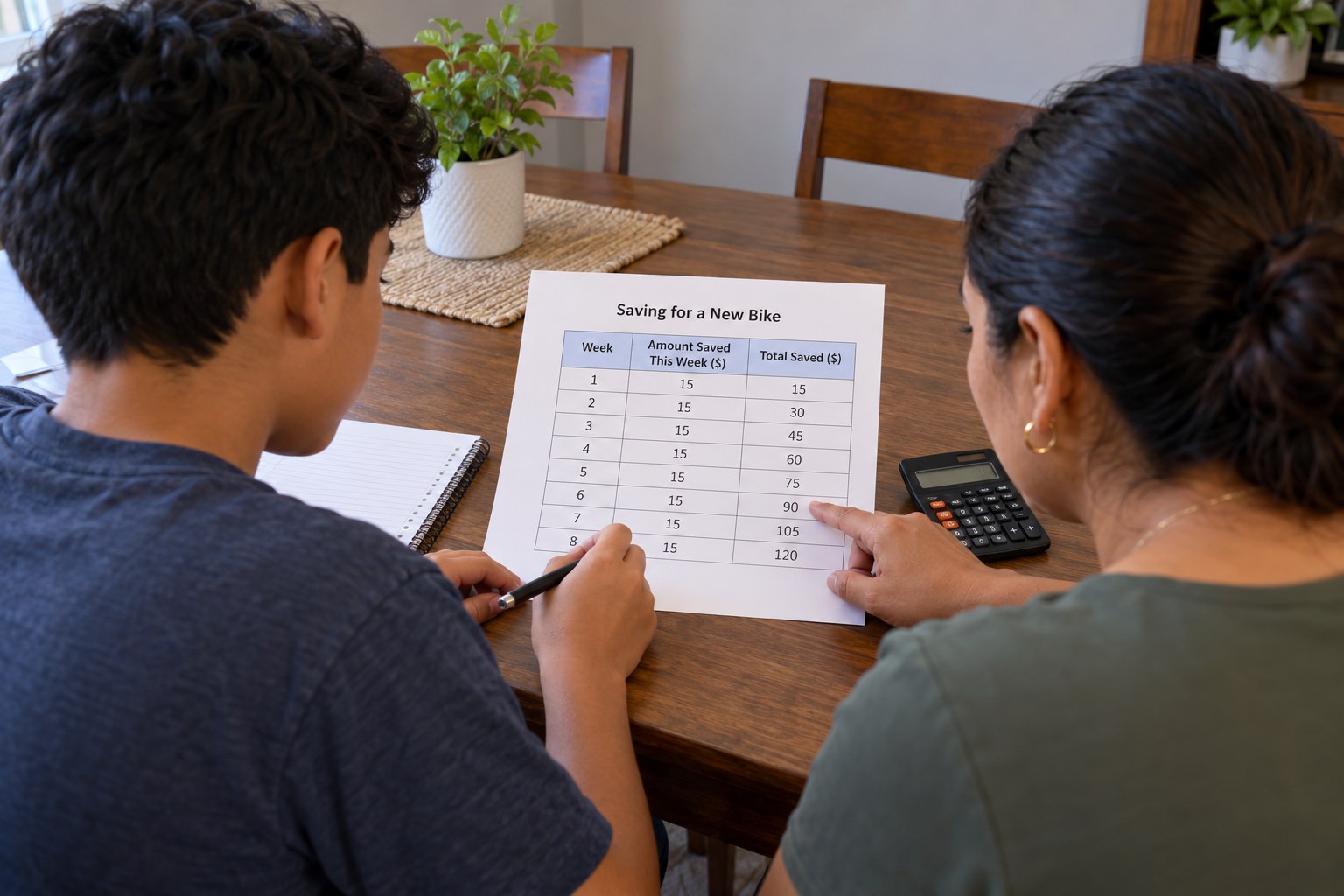
(8 min) Read the estimate table together: adult male citizens, their wives and children, metics (free foreign residents) and enslaved people. Talk about why the numbers are estimates and ranges, since no full census survives.
2Step 2
Calculate the percent who could vote
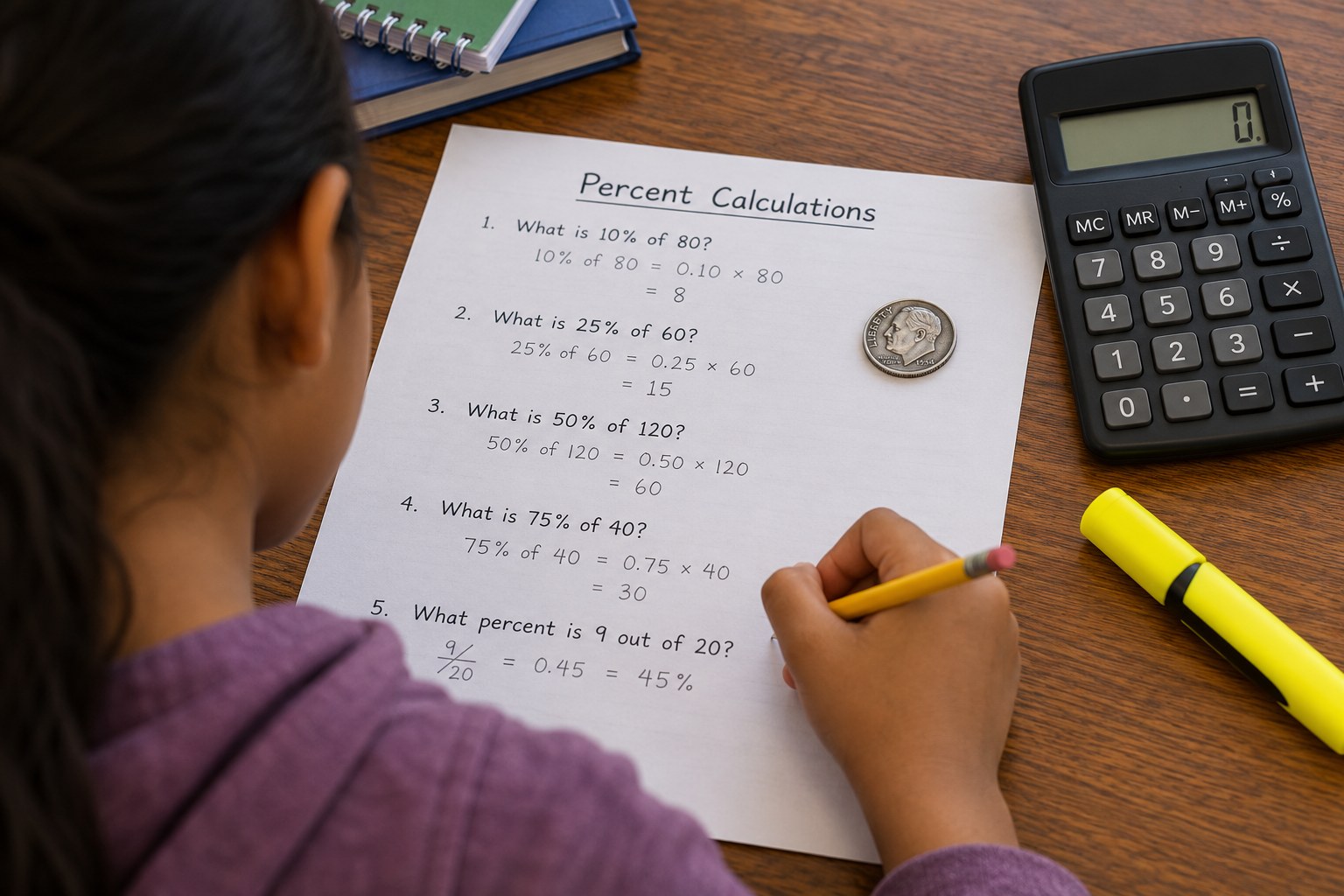
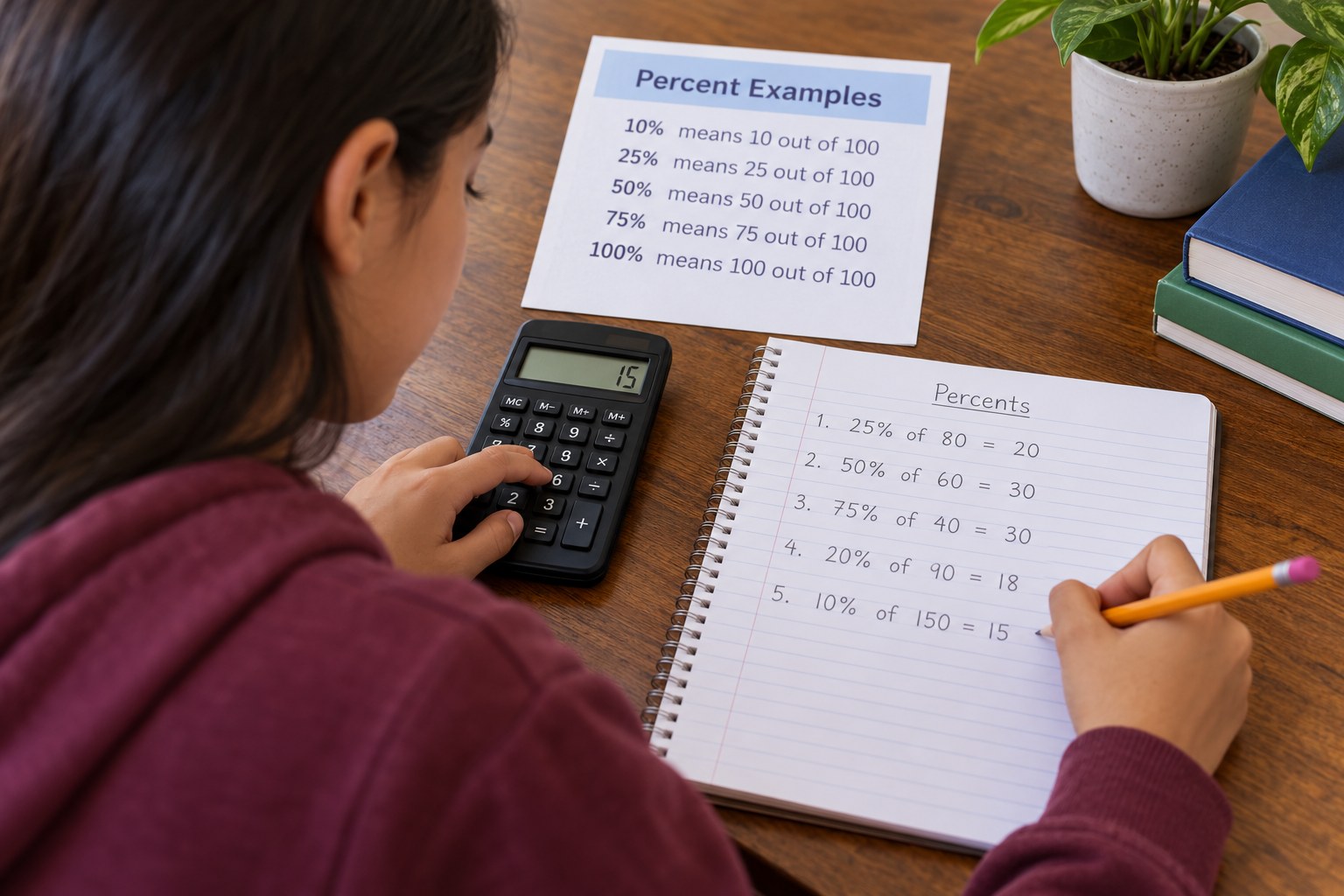
(12 min) Using the middle estimates, your child divides about 30,000 voting citizens by about 250,000 total people to find roughly 12 percent. Then they redo it with the low and high ends of the ranges and record the smallest and largest possible percents.
3Step 3
Model it on a 100-grid
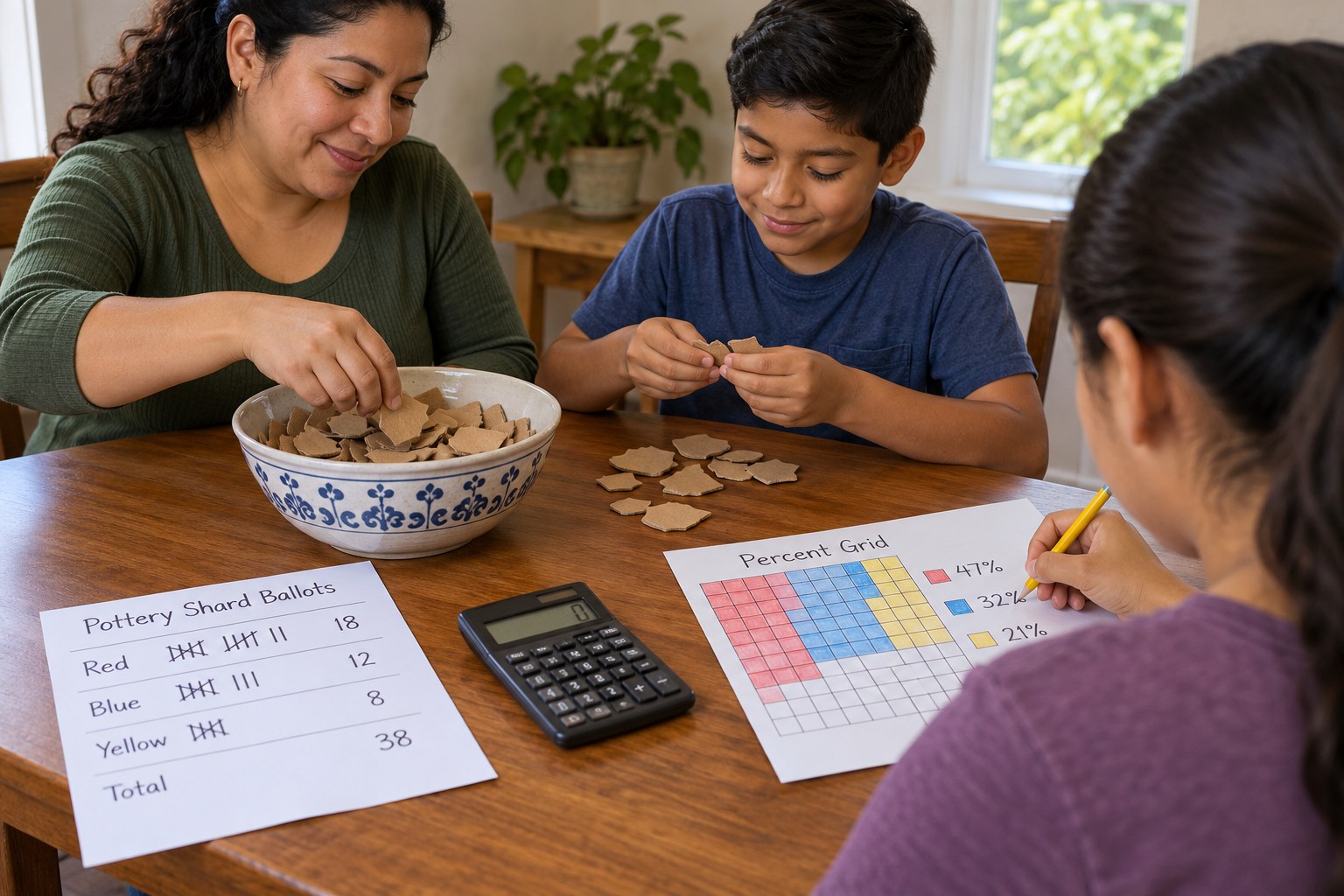
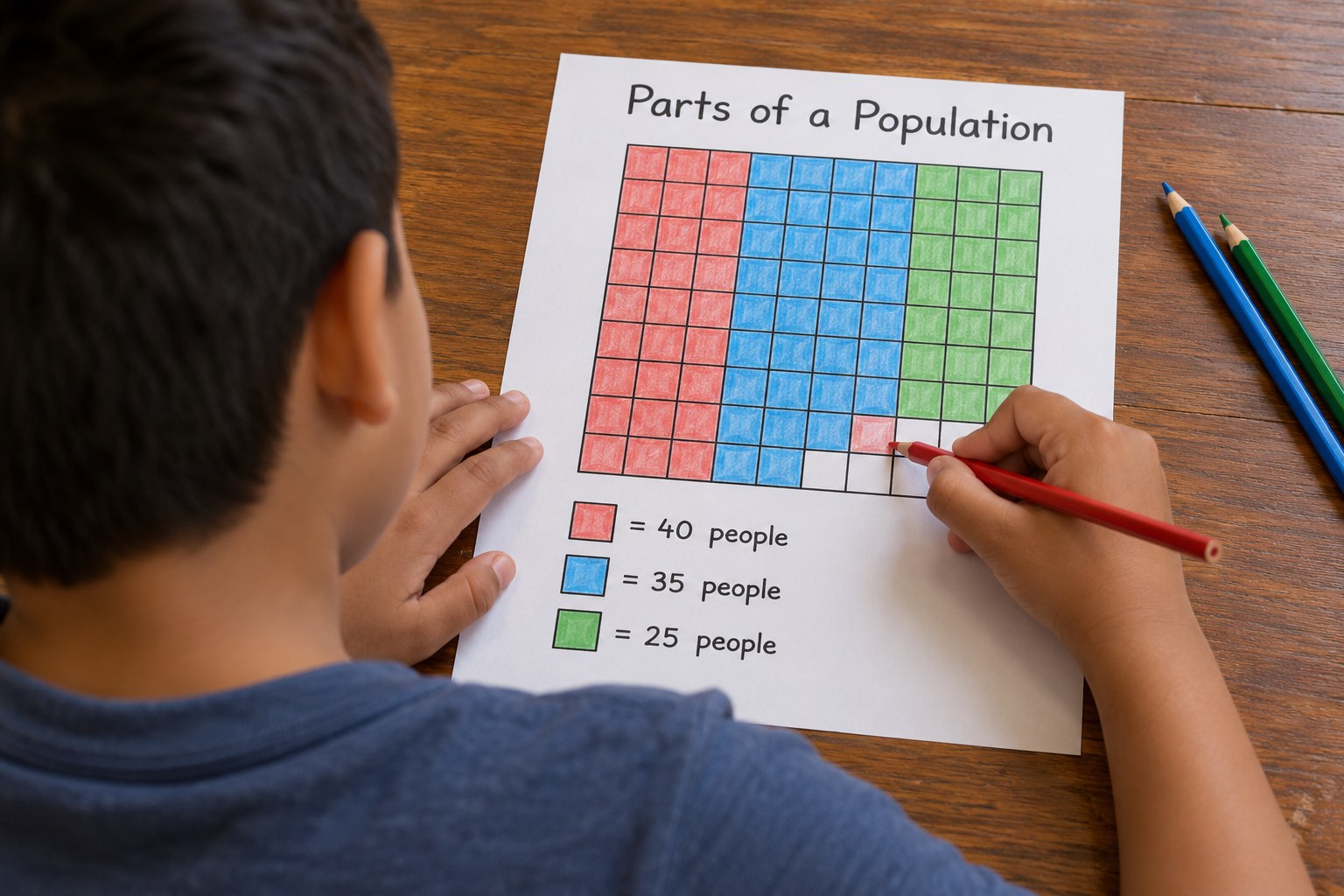
(8 min) On a 10 x 10 grid, your child shades about 12 squares for voting citizens and uses other colors for women and children of citizen families, metics and enslaved people. Ask, "If you lived in Athens, which square would you most likely be in?" Talk about the answer together.
4Step 4
Pottery ballot vote
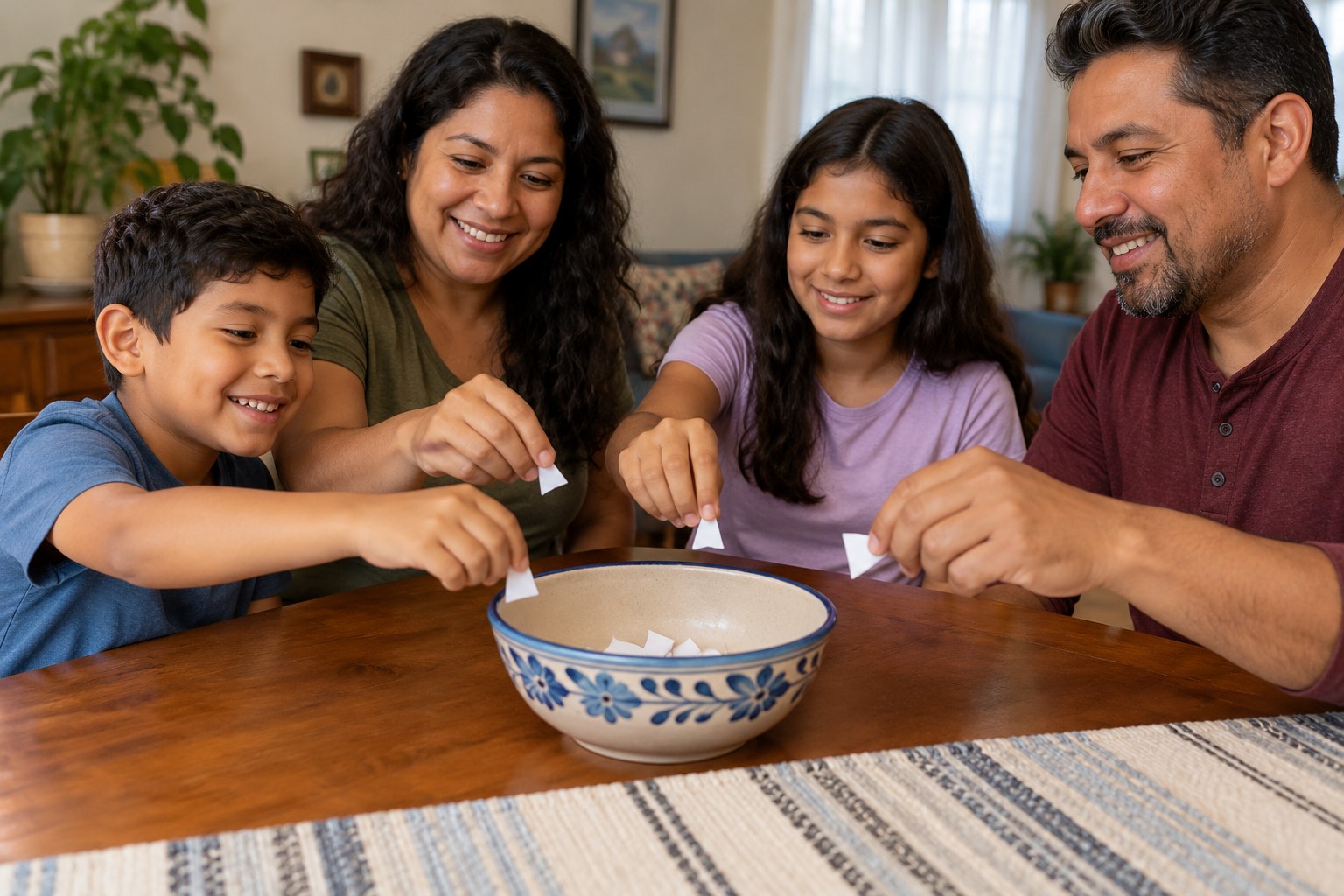
(10 min) Hold a family vote where each eligible voter scratches or writes a choice on a "shard" ballot and drops it in the bowl, then count and find each option's percent. Run it a second time where only some family members (for example, only people born in an odd month) may vote, and discuss how the result and the fairness change.
5Step 5
Then and now
(8 min) Compare with the United States today: women won the right to vote nationally in 1920, the Voting Rights Act of 1965 fought racial discrimination at the polls, and the voting age became 18 in 1971. Your child writes two sentences explaining what Athens got right and what it left out.
Conclusion
Your child states the percent range they calculated and explains in their own words why Athenian democracy was a big new idea and also limited.
Make your own lesson plan in minutes
Describe a topic and Resource Portal AI writes the objectives, materials and steps for your group.
Try Resource Portal AI