Full lesson previewToilet Paper Solar System: Scale Planet Distances by Powers of 10
Math45 minutesGrades: 4th, 5th
Overview
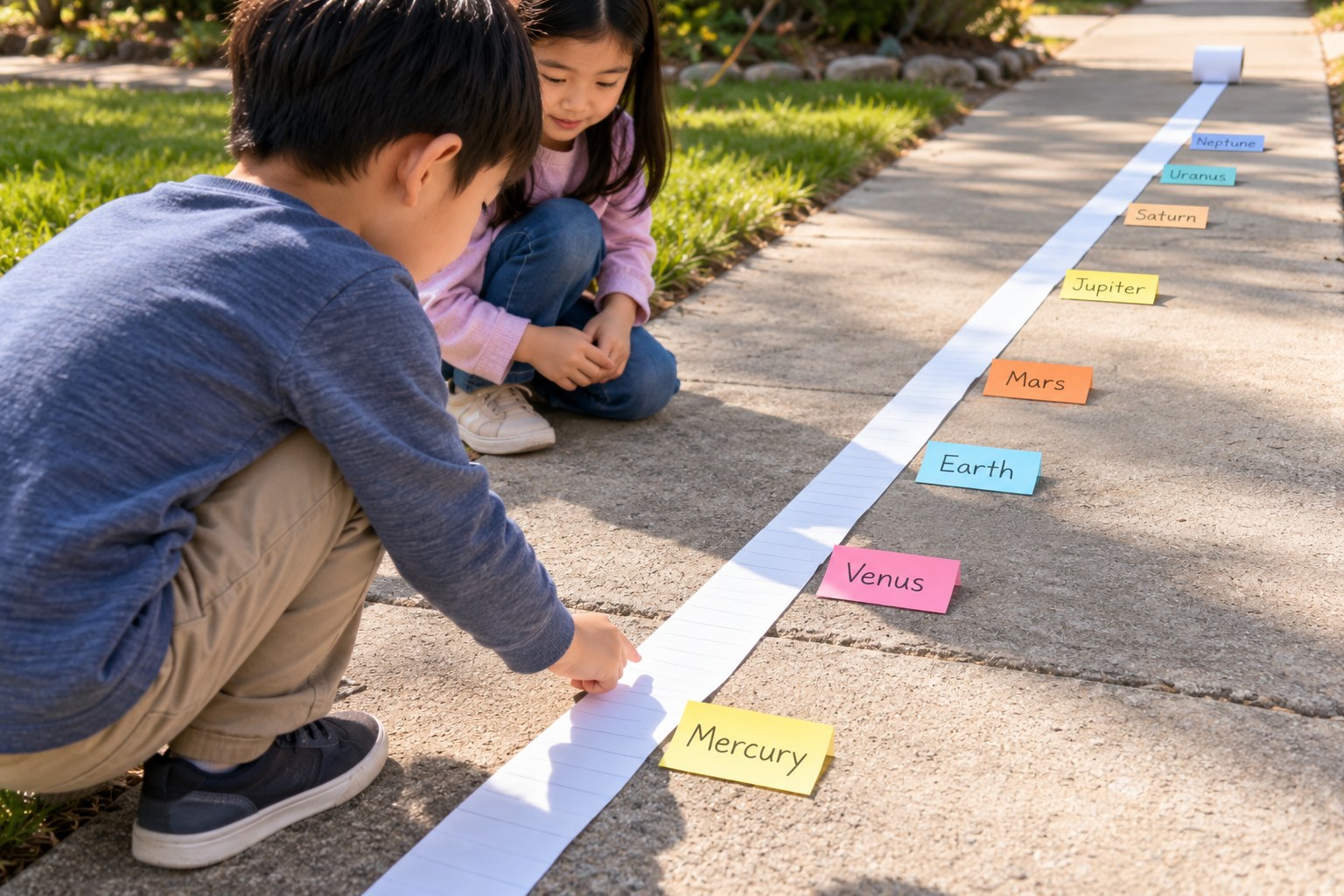
Unroll a scale model of the solar system, one square at a time.
Description
Your child converts each planet's distance from the Sun in astronomical units into toilet-paper squares by multiplying by 10, then unrolls a giant scale model down a hallway, sidewalk or yard to see how crowded the inner planets are and how far away Neptune really is.
Objective
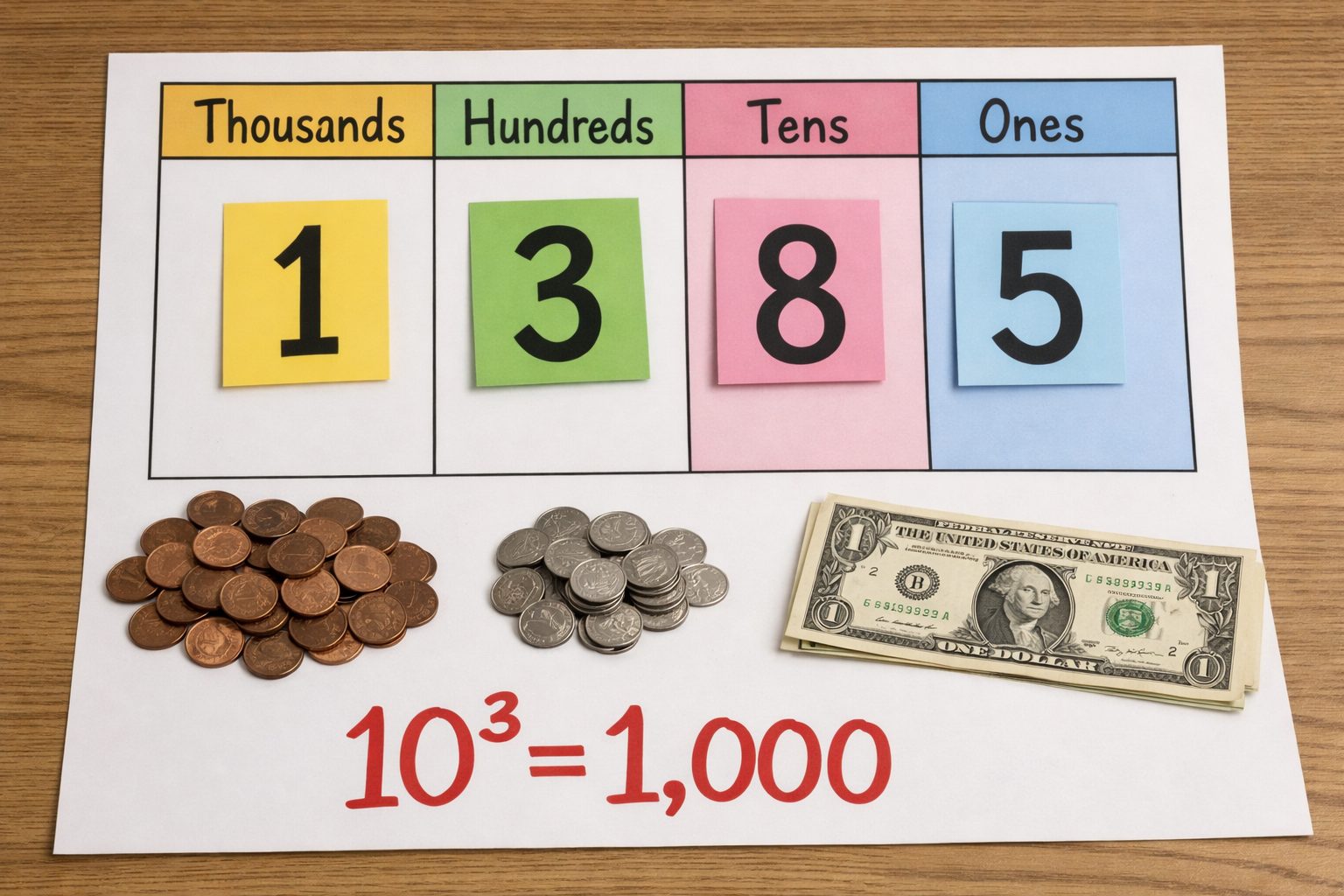
Your child will multiply decimal distances by 10 and 100, explain how the decimal point shifts, and build a scale model showing planet spacing.
Standards
5.NBT.2Math · Grade 5 · Number & Operations in Base Ten Explain patterns in the number of zeros of the product when multiplying a number by powers of 10, and explain patterns in the placement of the decimal point when a decimal is multiplied or divided by a power of 10. Use whole-number exponents to denote powers of 10.
Materials
| Item | Quantity |
|---|
| Roll of toilet paper (at least 310 squares) | 1-2 rolls |
| Sticky notes or small paper labels | 10 |
| Pencil and the Planet distance table (below) | 1 each |
| Tape or small stones to hold labels down outside | 10 pieces |
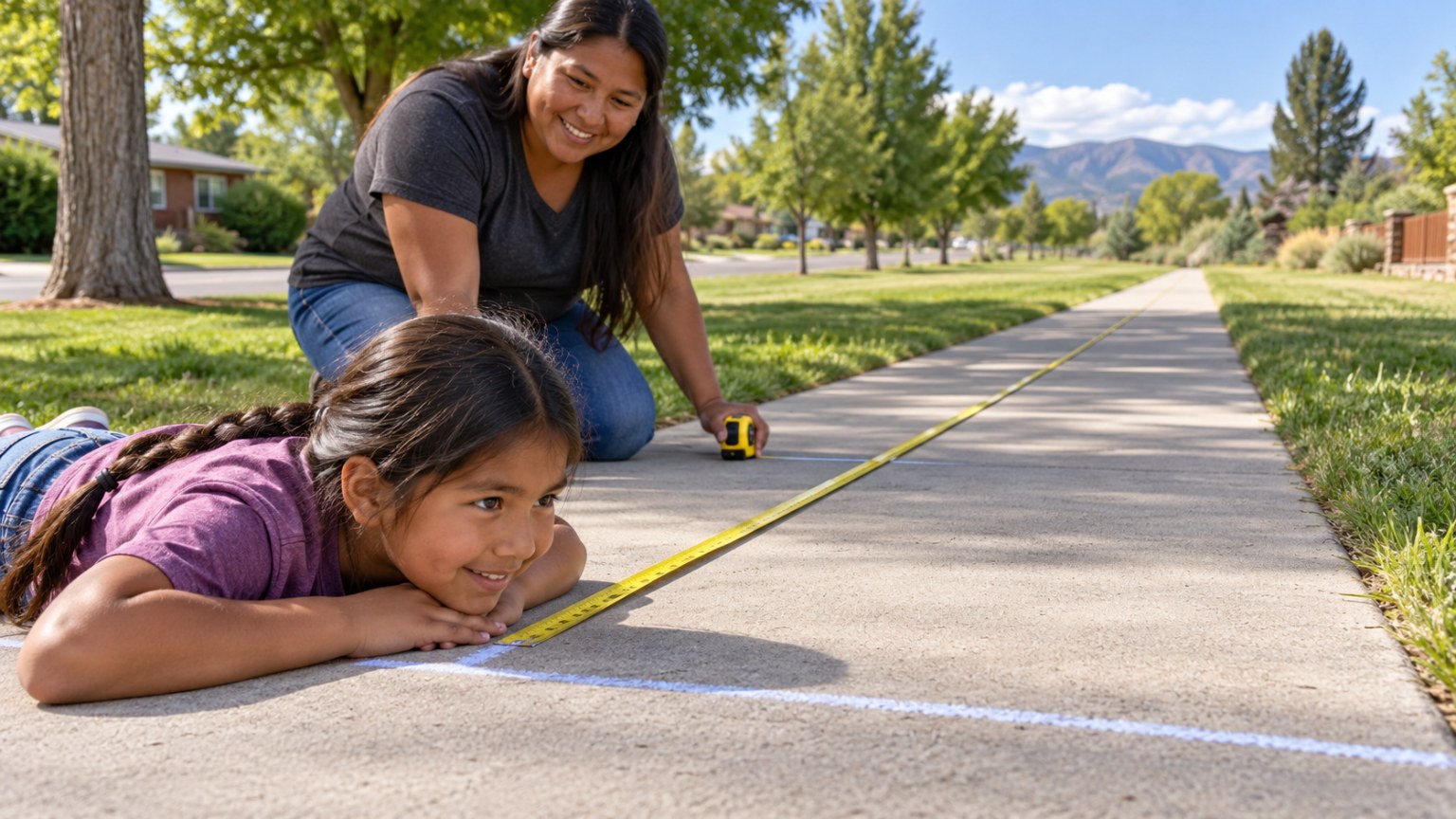
| A long hallway, sidewalk or yard (about 40 yards for the full model) | 1 |
Vocabulary
Astronomical unit (AU)
The average distance from Earth to the Sun, about 93 million miles; used to measure distances in the solar system.
Scale model
A model where every real distance is shrunk by the same amount.
Power of 10
A number like 10, 100 or 1,000 made by multiplying 10 by itself.
Decimal point
The dot that separates whole numbers from parts of a whole.
Preparation
- Copy the Planet distance table onto paper with a blank column labeled 'Squares (x 10)'.
- Choose a long space. Outside, pick a calm day so the paper doesn't blow away, or use a long hallway and stop at Saturn if space runs out.
Introduction
Show a picture of the solar system from a book or poster where all the planets look close together. Ask: do you think the planets are really this close? Let's build a model where the distances are to scale and find out.
What happens to a number when you multiply it by 10?
Which planet do you think is halfway between the Sun and Neptune?
Steps
1Step 1
Convert to squares
(10 min) Your child multiplies each AU distance in the table by 10 to find how many toilet-paper squares away from the Sun each planet goes (1 AU = 10 squares). Ask them to describe what happens to the decimal point each time, for example 0.39 x 10 = 3.9, and round to the nearest whole square.
2Step 2
Try the times-100 version
(5 min) Ask: what if 1 AU were 100 squares? Your child multiplies a few distances by 100 and explains why the decimal point moves two places, then decides why 10 squares per AU is more practical for a toilet-paper roll.
3Step 3
Place the Sun and inner planets
(8 min) Put a 'Sun' label at the start of the roll. Your child unrolls and counts squares, placing labeled sticky notes for Mercury (4), Venus (7), Earth (10) and Mars (15).
4Step 4
Unroll to the giants
(15 min) Keep counting to place Jupiter (52), Saturn (96), Uranus (192) and Neptune (300), plus dwarf planet Pluto (395) if you have room. Walk back from Neptune to the Sun together and notice how the four rocky planets are bunched near the Sun.
5Step 5
Reflect
(5 min) Your child answers: which two neighboring planets have the biggest gap? About how many Earth-to-Sun distances away is Neptune? Then they write one sentence about what surprised them.
Conclusion
Ask: why do most pictures of the solar system squeeze the planets together? On a true scale, the planets would be far too small to see at this spacing, which shows how empty most of space is.
Make your own lesson plan in minutes
Describe a topic and Resource Portal AI writes the objectives, materials and steps for your group.
Try Resource Portal AI