Lesson planHuman Body Bone Measuring: How Long Are My Arm and Leg Bones?
Math35 minutesGrades: 1st, 2nd
Overview
Measure your own bones with paper clips and a ruler.
Description
Your child learns the names of the big bones in the arm and leg, then measures their own upper arm, forearm, thigh and foot with paper clips and a ruler, compares them with a grown-up's, and discovers that the thigh bone is the longest bone in the body.
Objective
Your child will measure four body lengths in paper clips (and in inches for 2nd grade), record the data, and identify the longest bone.
Standards
1.MD.2Math · Grade 1 · Measurement & Data Express the length of an object as a whole number of length units, by laying multiple copies of a shorter object (the length unit) end to end; understand that the length measurement of an object is the number of same-size length units that span it with no gaps or overlaps.
2.MD.1Math · Grade 2 · Measurement & Data Measure the length of an object by selecting and using appropriate tools such as rulers, yardsticks, meter sticks, and measuring tapes.
Materials
| Item | Quantity |
|---|
| Large paper clips, all the same size | about 30 |
| Ruler or tape measure in inches | 1 |
| Bone measuring chart from this lesson | 1 per child |
| Pencil | 1 per child |
| Painter's tape or washable marker to mark joints | 1 |
Vocabulary
Skeleton
All the bones in your body together.
Joint
A place where two bones meet so you can bend, like your elbow or knee.
Humerus
The bone in your upper arm, from shoulder to elbow.
Femur
The thigh bone, from hip to knee. It is the longest bone in your body.
Length unit
The same-size thing you count to measure, like a paper clip or an inch.
Preparation
- Link or line up paper clips so they are ready to lay end to end.
- Copy the bone measuring chart from the additional sections.
Introduction
Have your child bend their elbow and knee. Say: "Your bones can't bend, but your joints can. Today we will measure the bones between your joints and find out which one is the longest."
Which do you think is longer, your arm or your leg?
How could we measure a bone that is inside your body?
Steps
1Step 1
Find the bones
(6 min) Your child squeezes their arm and leg to feel the hard bones inside. Point to and name each one: humerus from shoulder to elbow, forearm bones from elbow to wrist, femur from hip to knee, and the many small bones in the foot. Put a small piece of tape or a marker dot at each joint.

2Step 2
Measure with paper clips
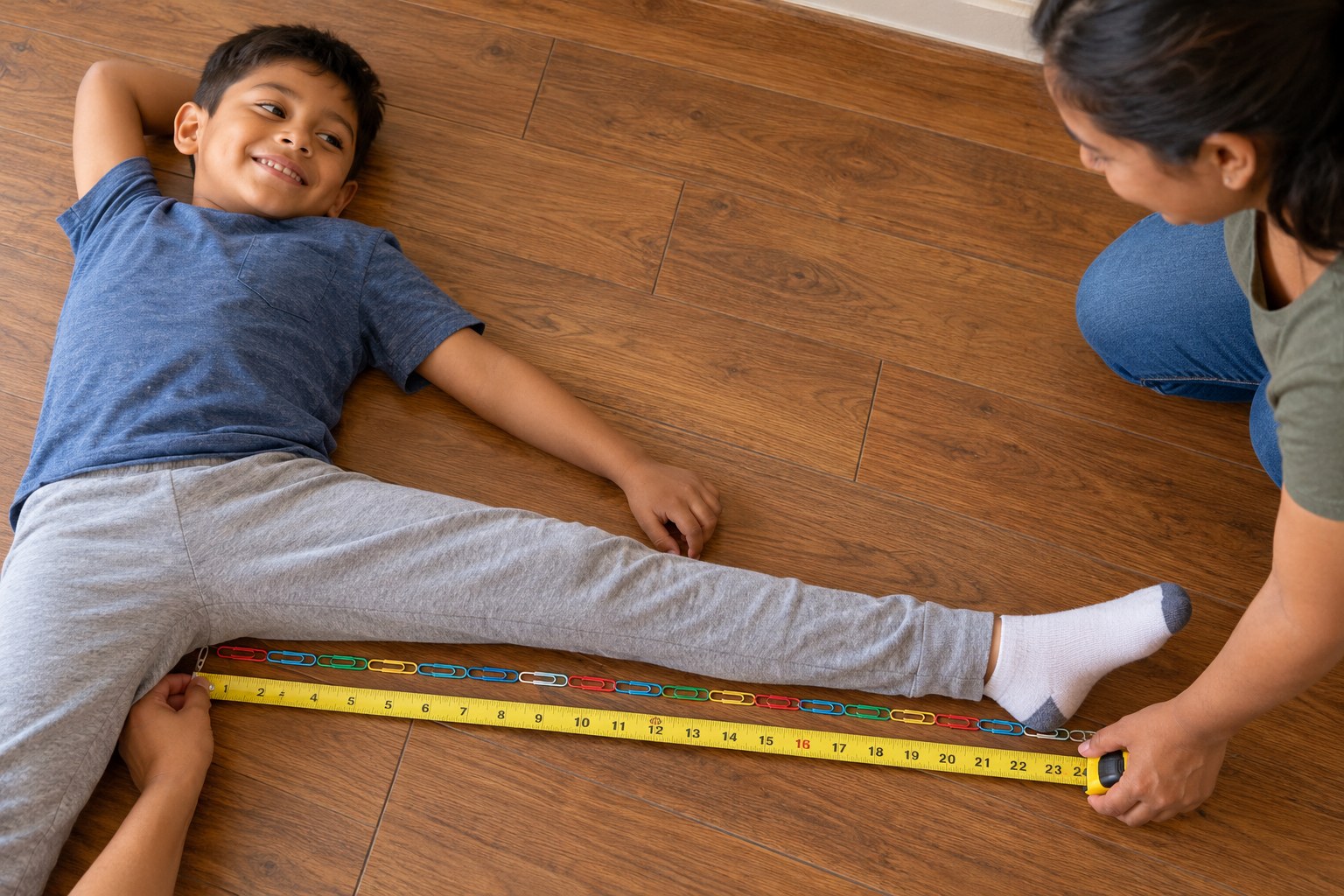
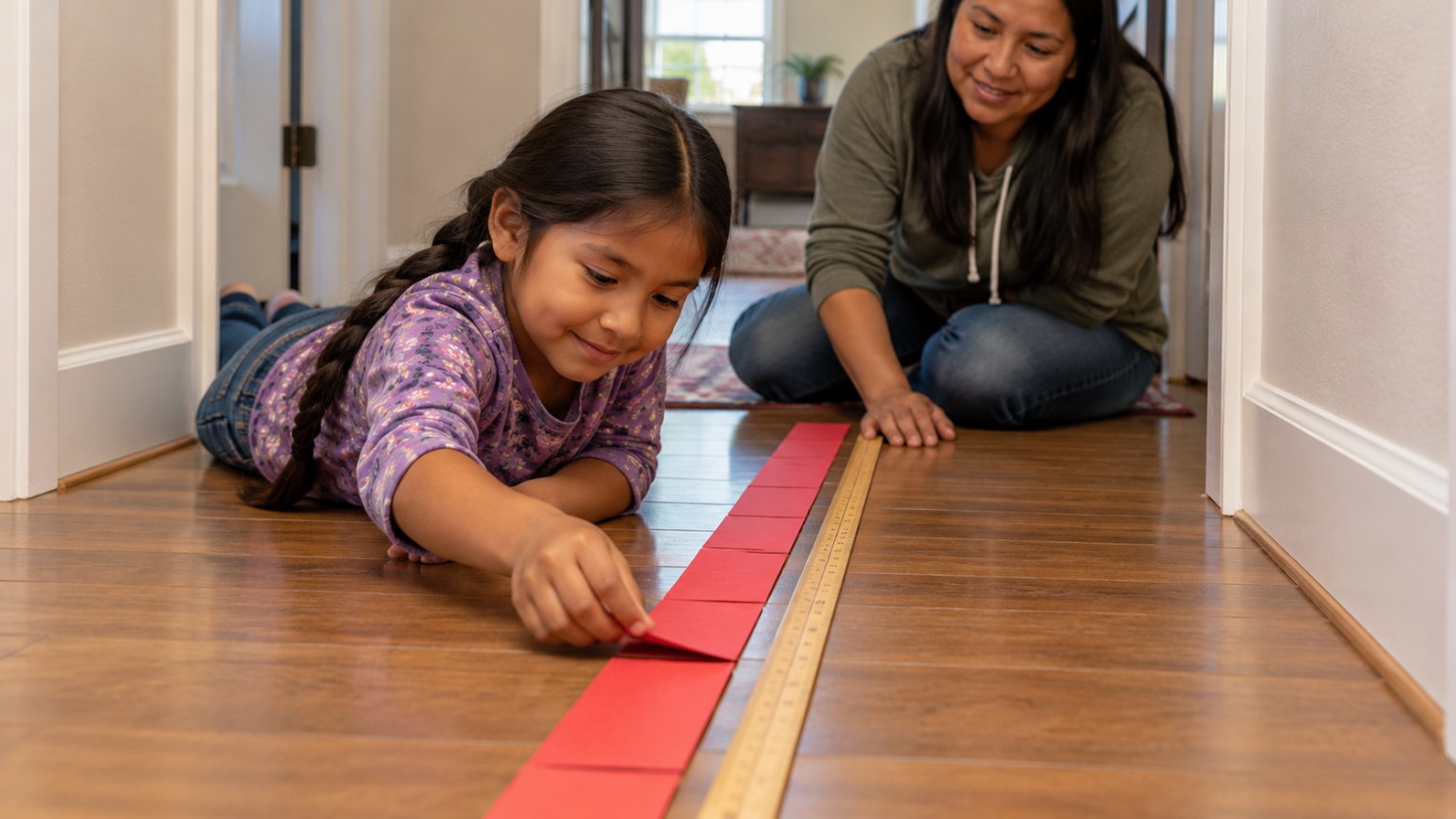
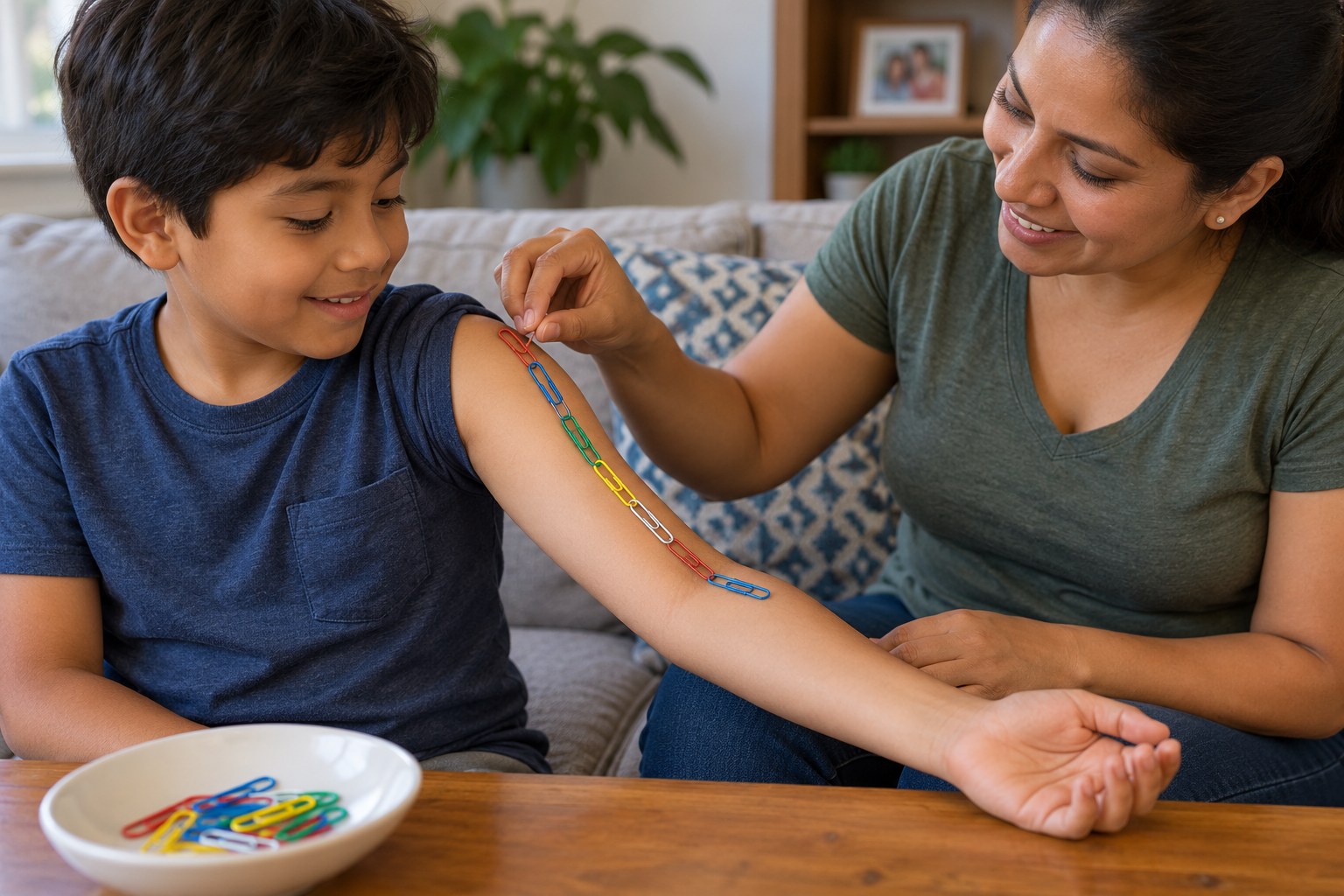
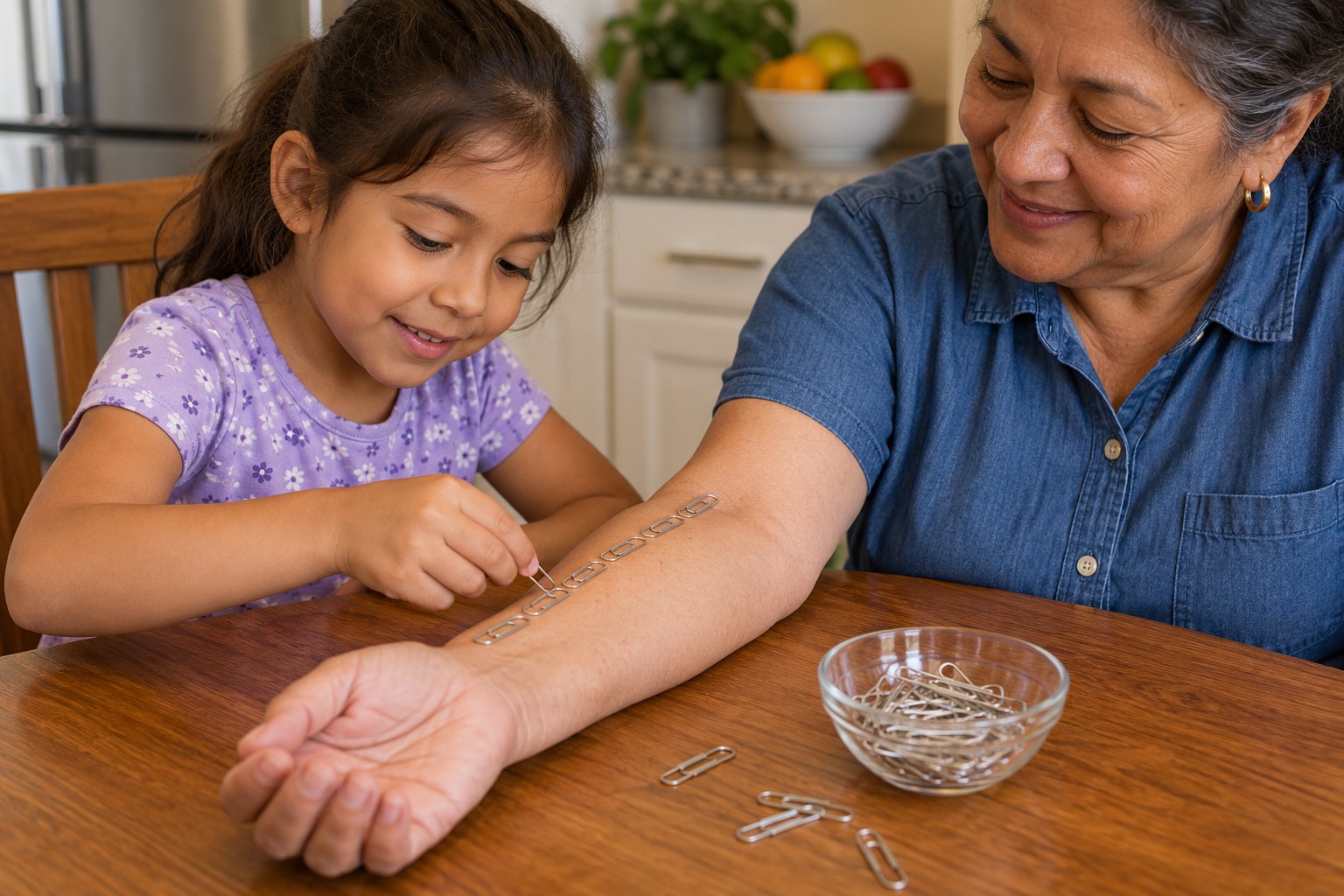
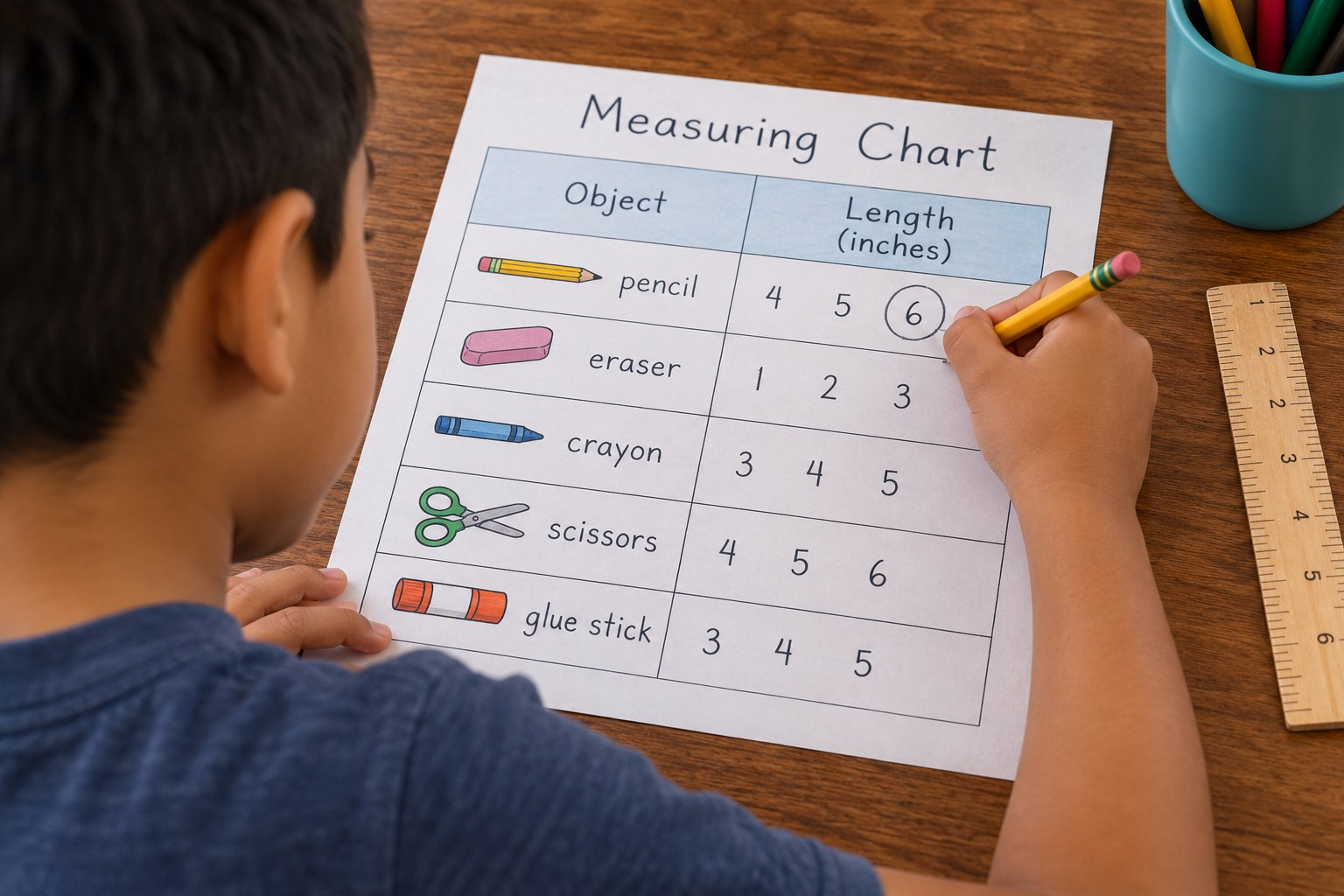
(10 min) Your child lays paper clips end to end along the outside of the upper arm from shoulder dot to elbow dot, with no gaps or overlaps, and counts them. Repeat for the forearm, the thigh (while sitting with legs out straight) and the foot from heel to big toe, and record each whole number on the chart.
3Step 3
Measure with a ruler
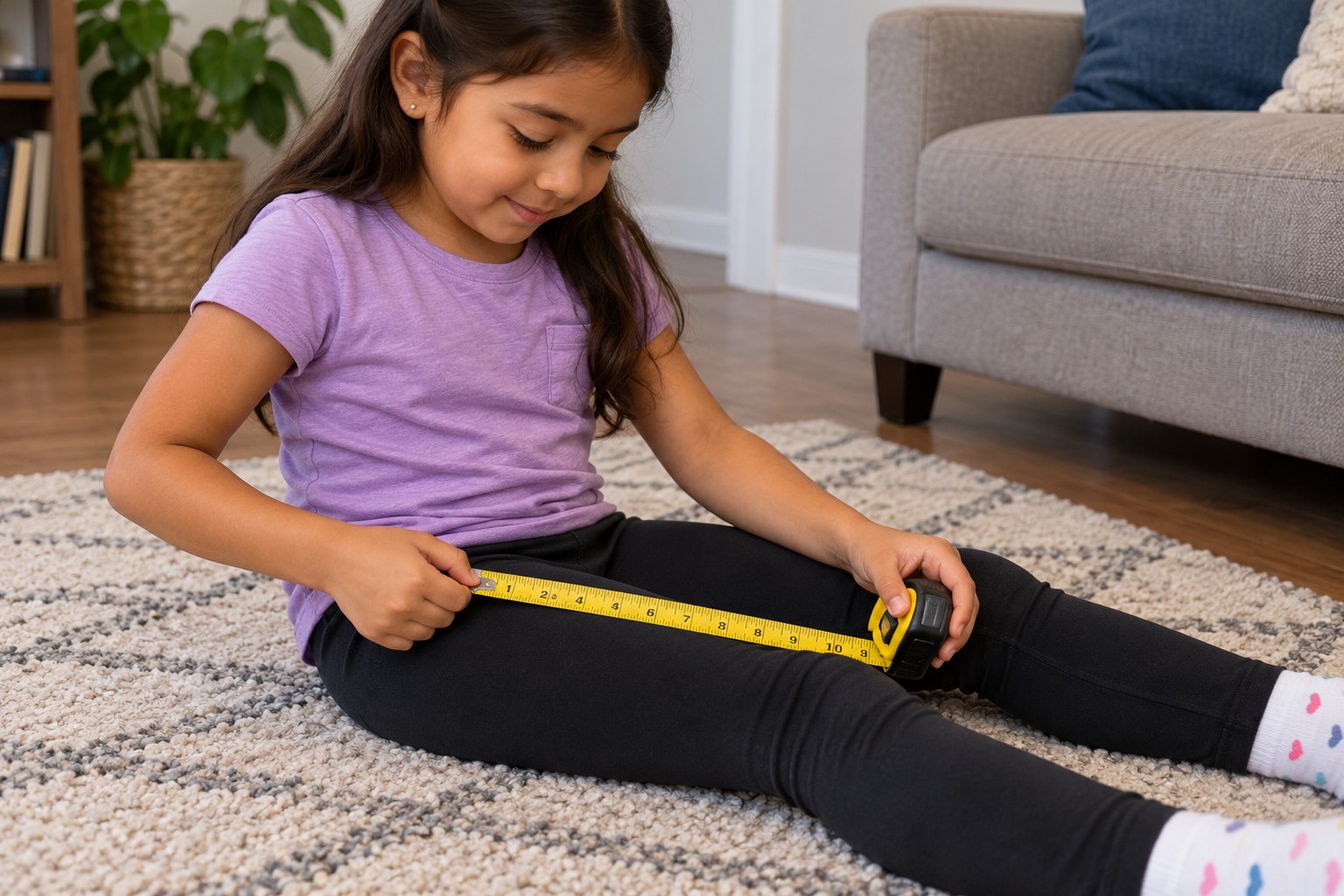
(8 min) Second graders measure the same four lengths with a ruler or tape measure to the nearest inch and write them in the inches column. First graders can help hold the ruler and count the inch marks.
4Step 4
Compare with a grown-up
(6 min) Your child measures one grown-up's forearm and femur the same way. Talk about how many more paper clips the grown-up needs, and how bones grow longer as kids grow.
5Step 5
Find the longest
(4 min) Your child circles the longest measurement on the chart and checks that it is the femur. Compare the forearm and the foot; for many people these two lengths are quite close.
Conclusion
Ask: which bone was the longest? How many paper clips longer was your femur than your humerus? Measure again in a few months to see if you have grown.
Make your own lesson plan in minutes
Describe a topic and Resource Portal AI writes the objectives, materials and steps for your group.
Try Resource Portal AI