Lesson planGreat Wall of China Paper-Brick Measuring
Math30 minutesGrades: K, 1st, 2nd
Overview
Build and measure walls with paper bricks.
Description
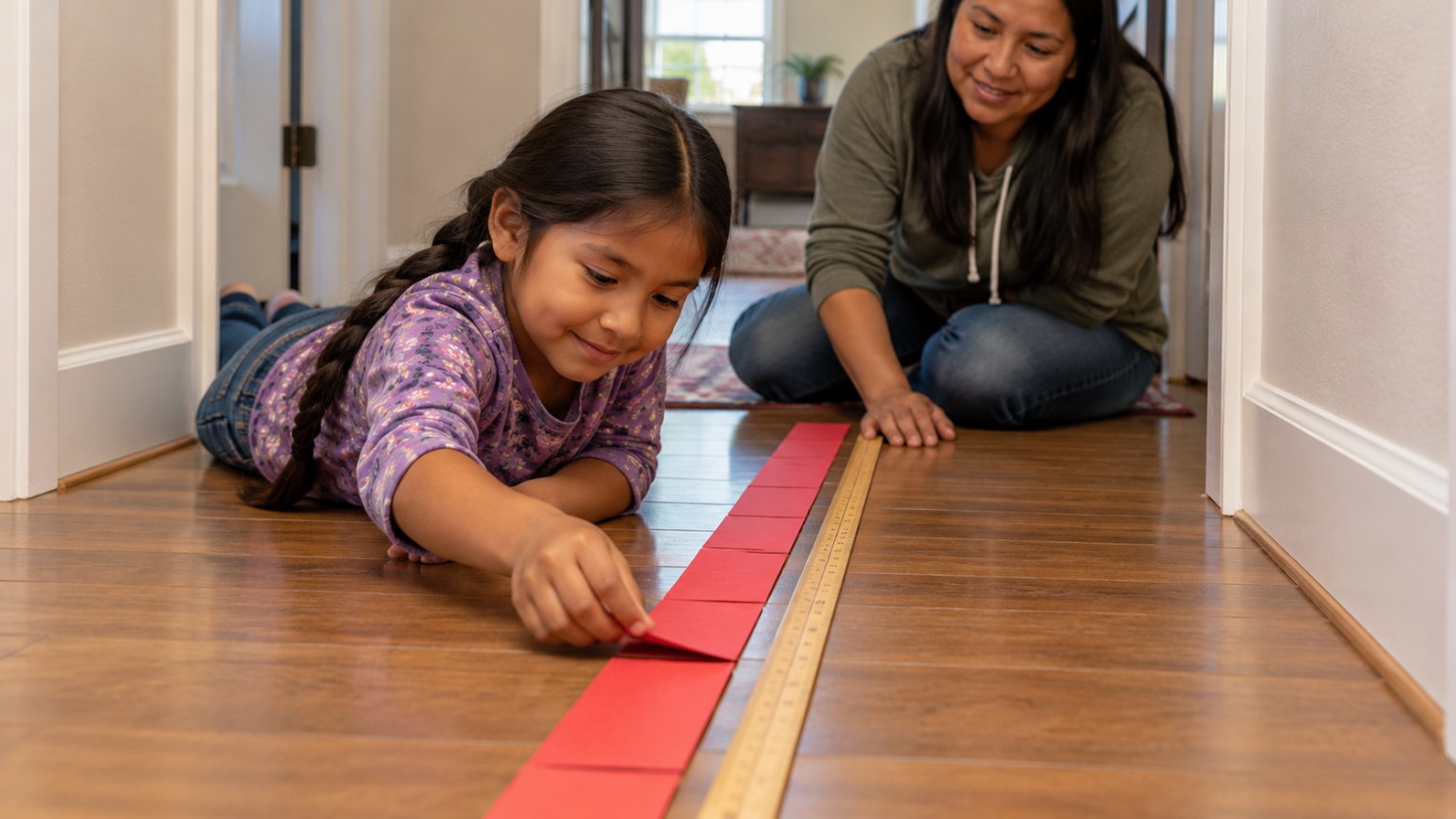
Your child cuts paper "bricks" all the same size and lays them end to end to build walls along a couch, a hallway and a table, measuring each "wall" in bricks, then checks one with a ruler and compares lengths, just as the Great Wall was built brick by brick.
Objective
Your child will measure objects by laying same-size units end to end with no gaps or overlaps, record the lengths, and (2nd grade) measure in inches with a ruler.
Standards
1.MD.2Math · Grade 1 · Measurement & Data Express the length of an object as a whole number of length units, by laying multiple copies of a shorter object (the length unit) end to end; understand that the length measurement of an object is the number of same-size length units that span it with no gaps or overlaps.
2.MD.1Math · Grade 2 · Measurement & Data Measure the length of an object by selecting and using appropriate tools such as rulers, yardsticks, meter sticks, and measuring tapes.
Materials
| Item | Quantity |
|---|
| Construction paper or cardstock (red, brown or gray) | 4 sheets |
| Scissors | 1 per child |
| Ruler or yardstick | 1 |
| Pencil and the recording chart from this lesson | 1 each |
| Painter's tape (optional, for a floor wall) | 1 roll |
| Photo of the Great Wall of China | 1 |
Vocabulary
Length
How long something is from one end to the other.
Unit
A same-size piece used to measure, like a paper brick or an inch.
End to end
Lined up so each piece touches the next one with no gaps and no overlaps.
Estimate
A smart guess about how many.
Preparation
- Fold and cut paper into bricks that are all the same size, about 2 by 4 inches. Make 40-50. Older children can help measure and cut.
- Copy the recording chart from the additional section onto paper.
Introduction
Show the photo of the Great Wall. Say: "Workers built this wall with millions of bricks and stones, one after another. How many bricks long do you think our couch is?"
Why do all the bricks need to be the same size to measure fairly?
What would happen if we left gaps between bricks?
Steps
1Step 1
Wall builders
(4 min) Look at the Great Wall photo and notice the rows of bricks. Explain that the wall winds for thousands of miles over mountains, and that some parts were built with bricks made from clay baked in kilns.
2Step 2
Estimate and build
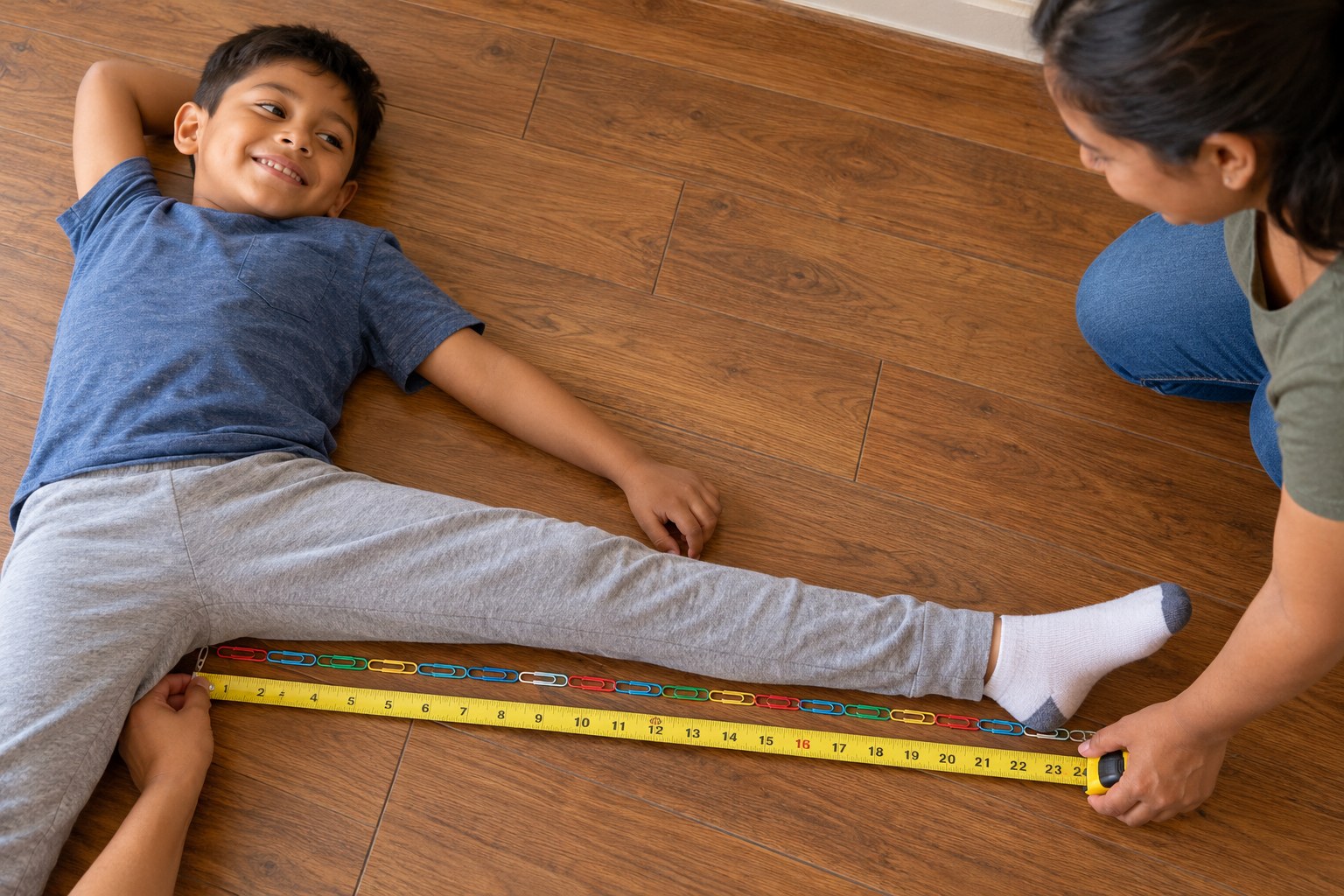
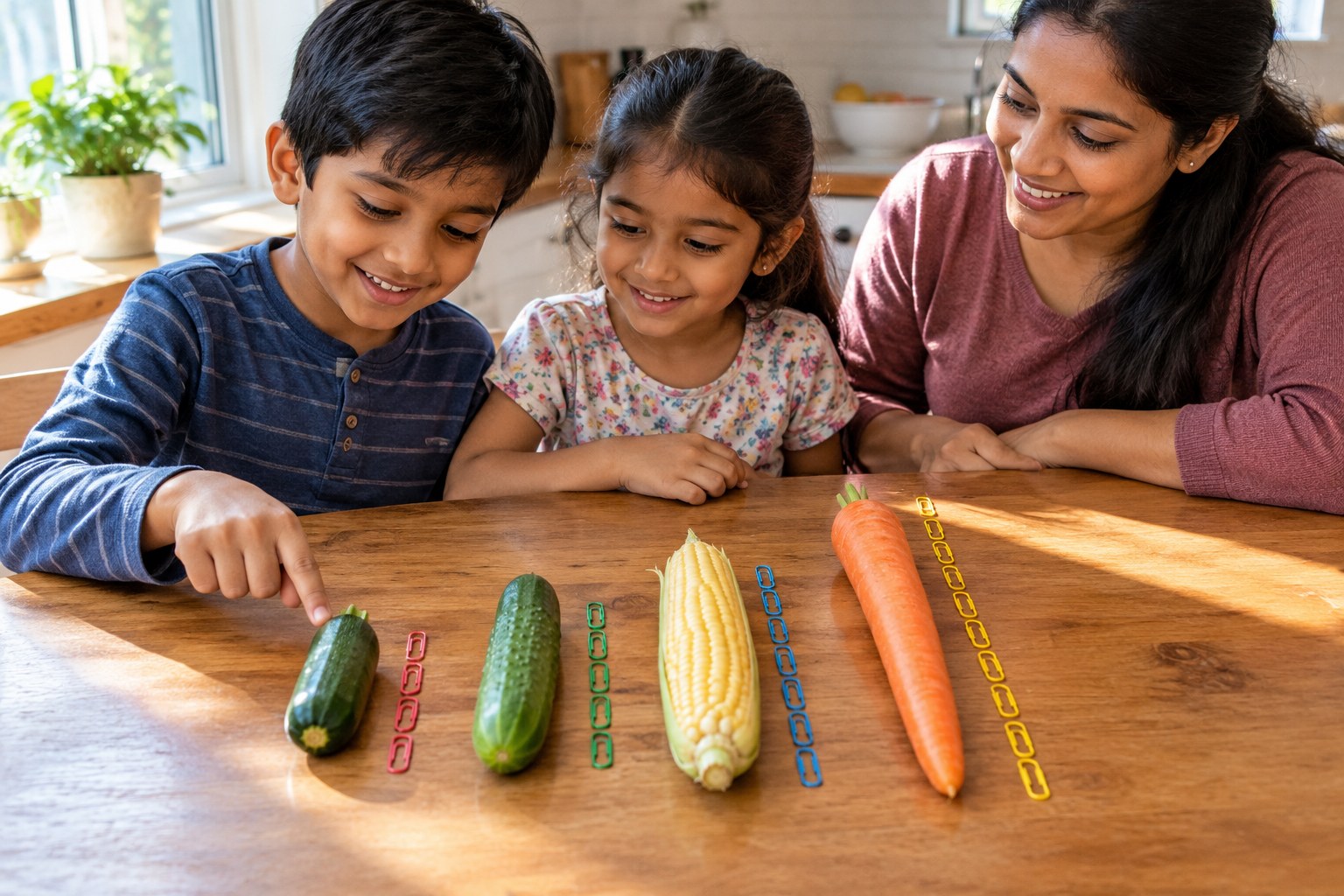
(10 min) Your child chooses something to measure, like the couch, a table edge or a hallway. They write an estimate on the chart, then lay paper bricks end to end along it with no gaps or overlaps, counting as they go.
3Step 3
Record and compare
(6 min) Your child writes the number of bricks for each wall on the chart and circles the longest wall. Ask how many more bricks the longest wall needs than the shortest.
4Step 4
Ruler check
(8 min) Measure one wall again with a ruler or yardstick in inches. Kindergartners and first graders can compare which is longer with you; second graders line the ruler up at zero and read the inches, then talk about why there are more inches than bricks (an inch is smaller).
Conclusion
Ask: "What was the longest wall you built? How many bricks would you need for our whole house?" Share that the Great Wall would need far more bricks than anyone could count in a day.
Make your own lesson plan in minutes
Describe a topic and Resource Portal AI writes the objectives, materials and steps for your group.
Try Resource Portal AI