Lesson planSummer Harvest Measure-Off: Zucchini, Corn and Cucumbers
Math35 minutesGrades: K, 1st, 2nd
Overview
Measure and compare summer vegetables to find the longest.
Description
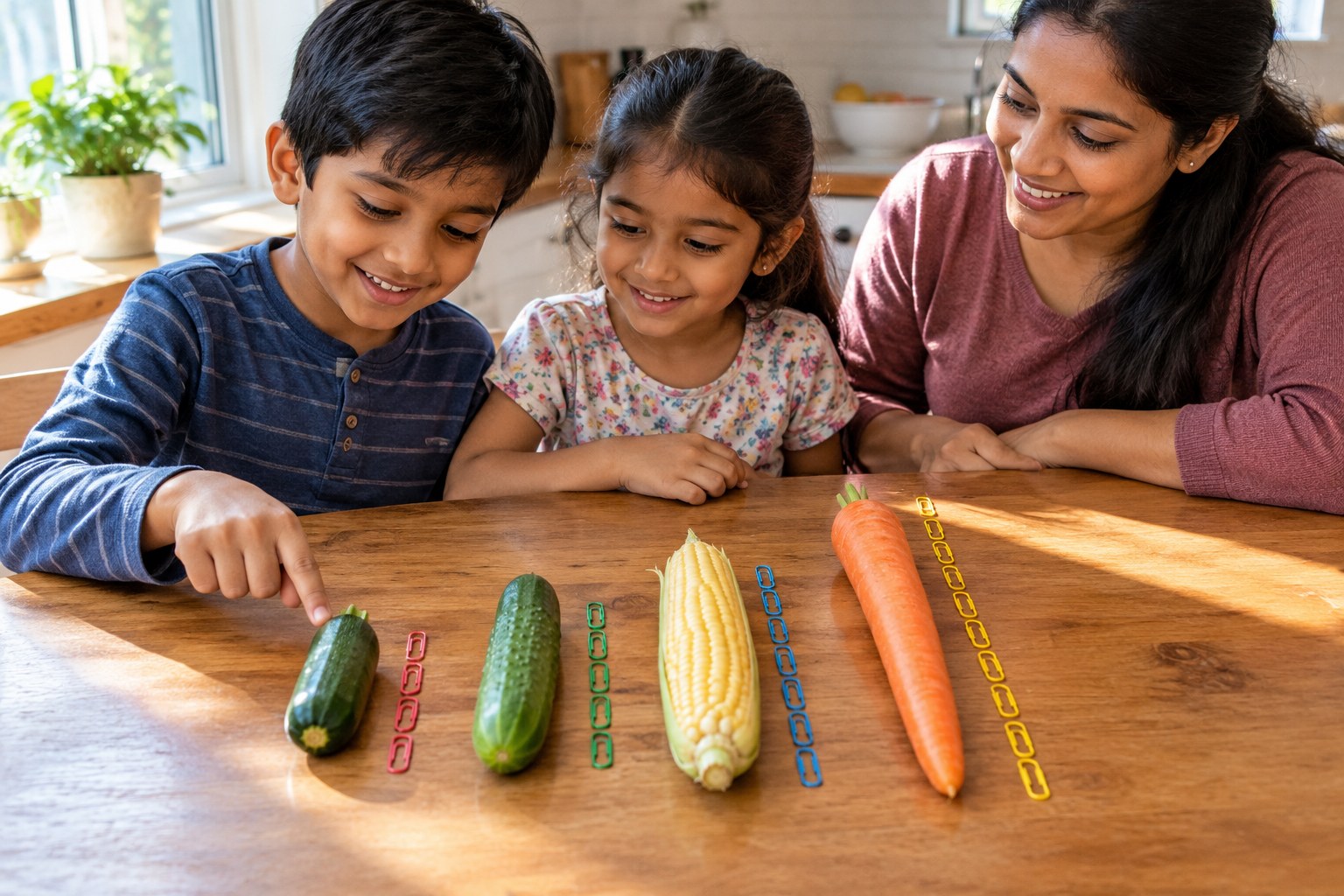
Your child measures summer vegetables (zucchini, corn on the cob, cucumbers, carrots or green beans) with paper clips, blocks or a ruler, compares which is longer and shorter, and puts them in order from shortest to longest.
Objective
Your child will compare lengths directly, order three or more vegetables by length, and measure each with same-size units (or inches for 2nd grade).
Standards
1.MD.1Math · Grade 1 · Measurement & Data Order three objects by length; compare the lengths of two objects indirectly by using a third object.
1.MD.2Math · Grade 1 · Measurement & Data Express the length of an object as a whole number of length units, by laying multiple copies of a shorter object (the length unit) end to end; understand that the length measurement of an object is the number of same-size length units that span it with no gaps or overlaps.
2.MD.1Math · Grade 2 · Measurement & Data Measure the length of an object by selecting and using appropriate tools such as rulers, yardsticks, meter sticks, and measuring tapes.
K.MD.2Math · Grade K · Measurement & Data Directly compare two objects with a measurable attribute in common, to see which object has "more of"/"less of" the attribute, and describe the difference.
Materials
| Item | Quantity |
|---|
| Summer vegetables of different lengths: zucchini, corn on the cob, cucumber, carrot, green beans | 4-6 |
| Same-size units: paper clips, LEGO-style bricks or 1-inch cubes | about 20 |
| Ruler with inches (2nd grade) | 1 per child |
| Paper and pencil for a measuring chart | 1 per child |
| Strip of tape on the table as a start line | 1 |
Vocabulary
Length
How long something is from one end to the other.
Longer
Having more length than something else.
Shorter
Having less length than something else.
Unit
The same-size thing we count to measure, like a paper clip or an inch.
Preparation
- Rinse the vegetables. Put a strip of tape across the table to be the start line so every vegetable starts at the same place.
- Draw a chart with three columns: Vegetable, Paper clips (or blocks), Inches (2nd grade).
Introduction
Hold up a zucchini and an ear of corn behind your back and bring out one at a time. Ask: 'Which summer vegetable do you think is longer? How could we find out for sure?'
Which vegetables grow in summer gardens or come to the farmers market?
What does it mean to be fair when we compare lengths?
Steps
1Step 1
Compare two
(5 min) Your child lines up two vegetables side by side with their ends on the tape start line. They say which is longer and which is shorter, and explain why lining up the ends makes it a fair comparison.
2Step 2
Put them in order
(6 min) Add the rest of the vegetables and have your child put them in a row from shortest to longest. Ask: 'Which one is the longest? Which is the shortest? Which is in the middle?'
3Step 3
Measure with units
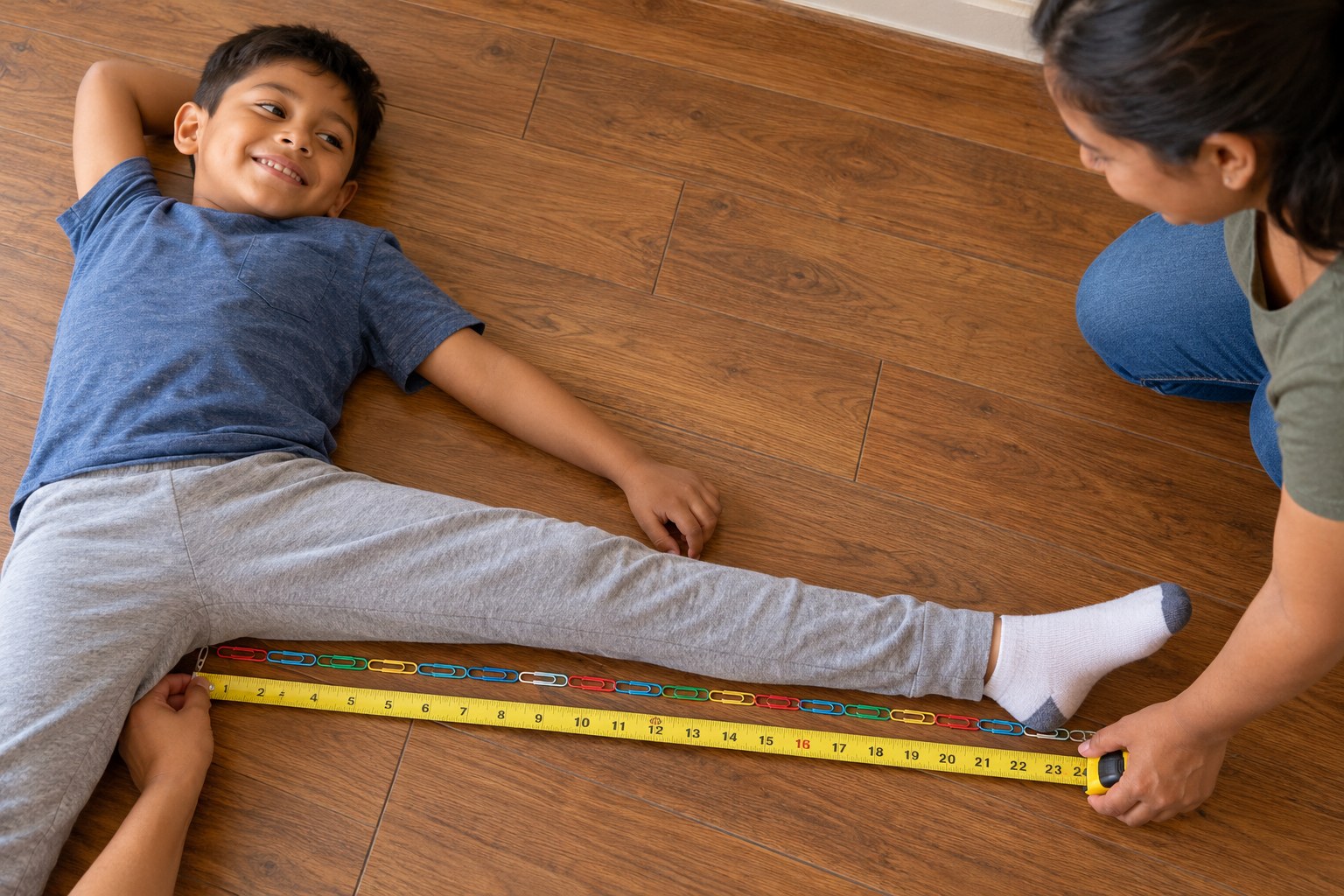
(10 min) Your child lays paper clips or blocks end to end, with no gaps or overlaps, along each vegetable and counts them. Record each number on the chart, rounding to 'about' when it lands between units.
4Step 4
Measure with a ruler (2nd grade)
(8 min) Second graders line up the zero end of the ruler with the end of each vegetable and read the length to the nearest inch. Compare inches to paper clips and talk about why the numbers are different.
5Step 5
Crown the champion
(5 min) Look at the chart and find the longest and shortest vegetable. Your child tells how many units longer the champion is than the shortest one.
Conclusion
Ask: 'How many paper clips long was the longest vegetable?' Use the vegetables in dinner tonight, like grilled zucchini or corn on the cob, and measure a new vegetable next week.
Make your own lesson plan in minutes
Describe a topic and Resource Portal AI writes the objectives, materials and steps for your group.
Try Resource Portal AI