Lesson planJack and the Beanstalk Giant Math: Scale Factors and Proportions
Math45 minutesGrades: 6th, 7th, 8th
Overview
Use one footprint to find how big the beanstalk giant is.
Description
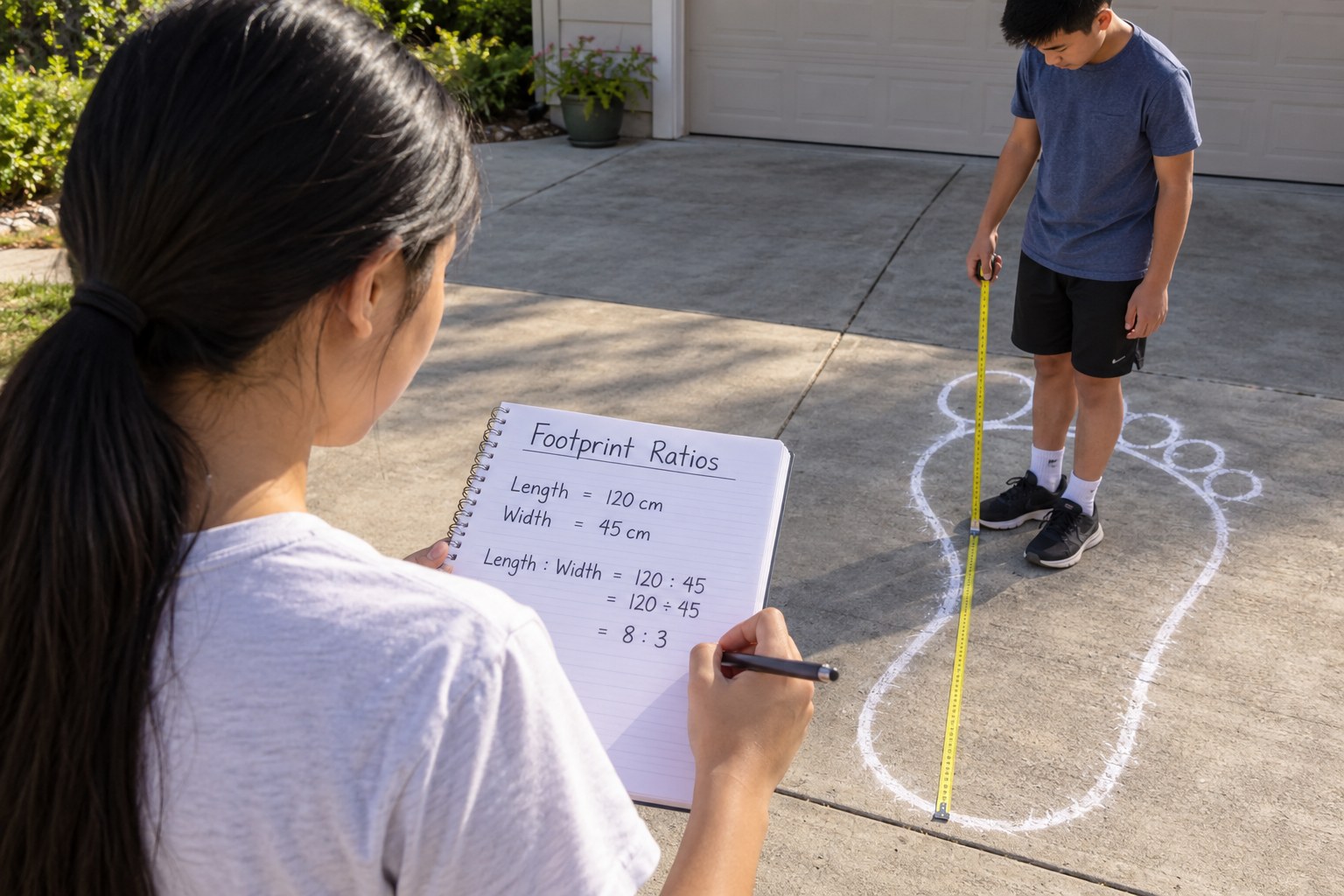
Your teen starts from one clue, a giant footprint, and uses proportional reasoning to figure out how tall the giant in Jack and the Beanstalk would be, then draws a giant-sized object at full scale on the floor or driveway and checks whether the relationships are proportional.
Objective
Your teen will measure body proportions, test whether foot length and height form a proportional relationship using a table, find a scale factor, and use it to calculate and draw giant-sized lengths.
Standards
7.G.1Math · Grade 7 · Geometry Solve problems involving scale drawings of geometric figures, including computing actual lengths and areas from a scale drawing and reproducing a scale drawing at a different scale.
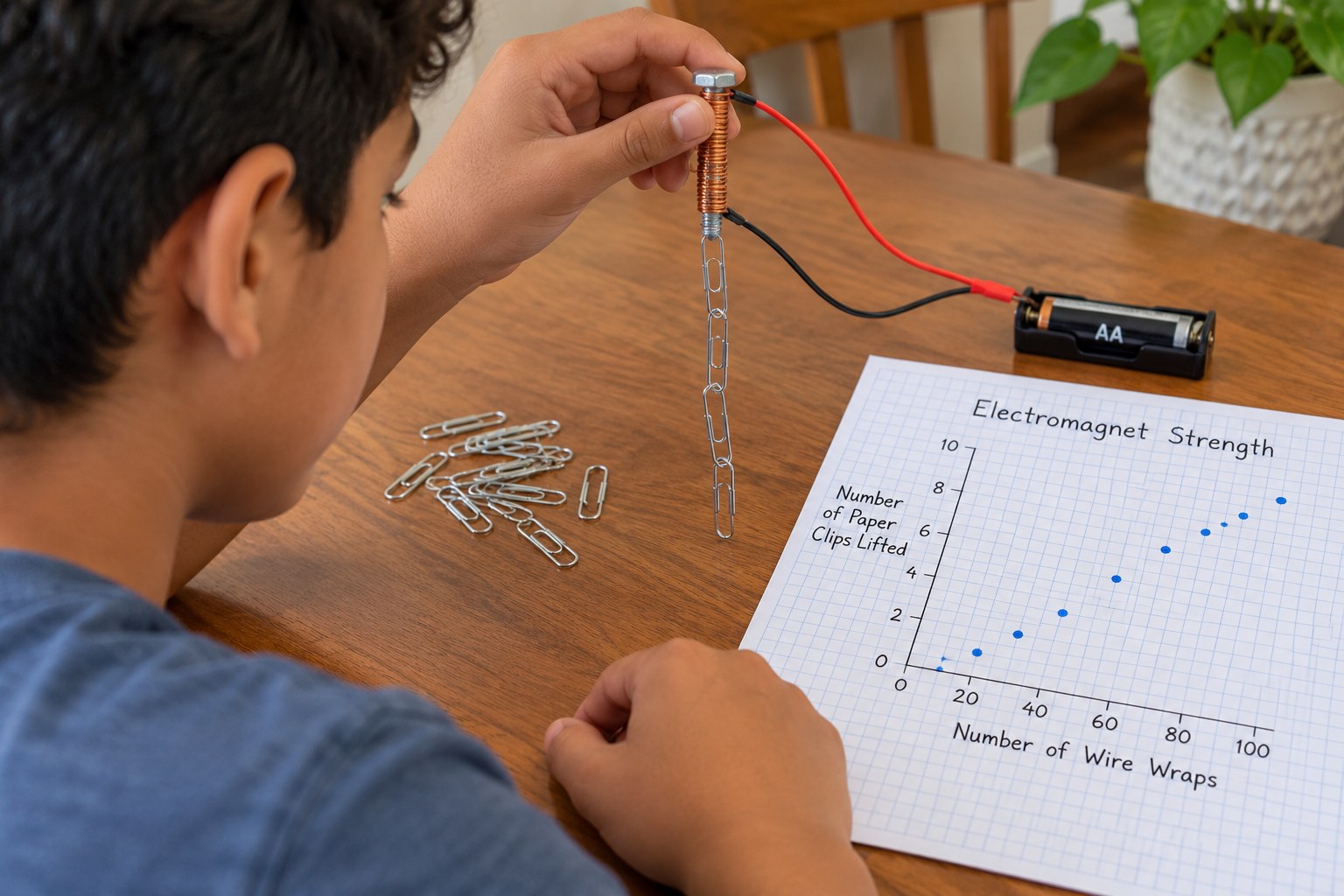
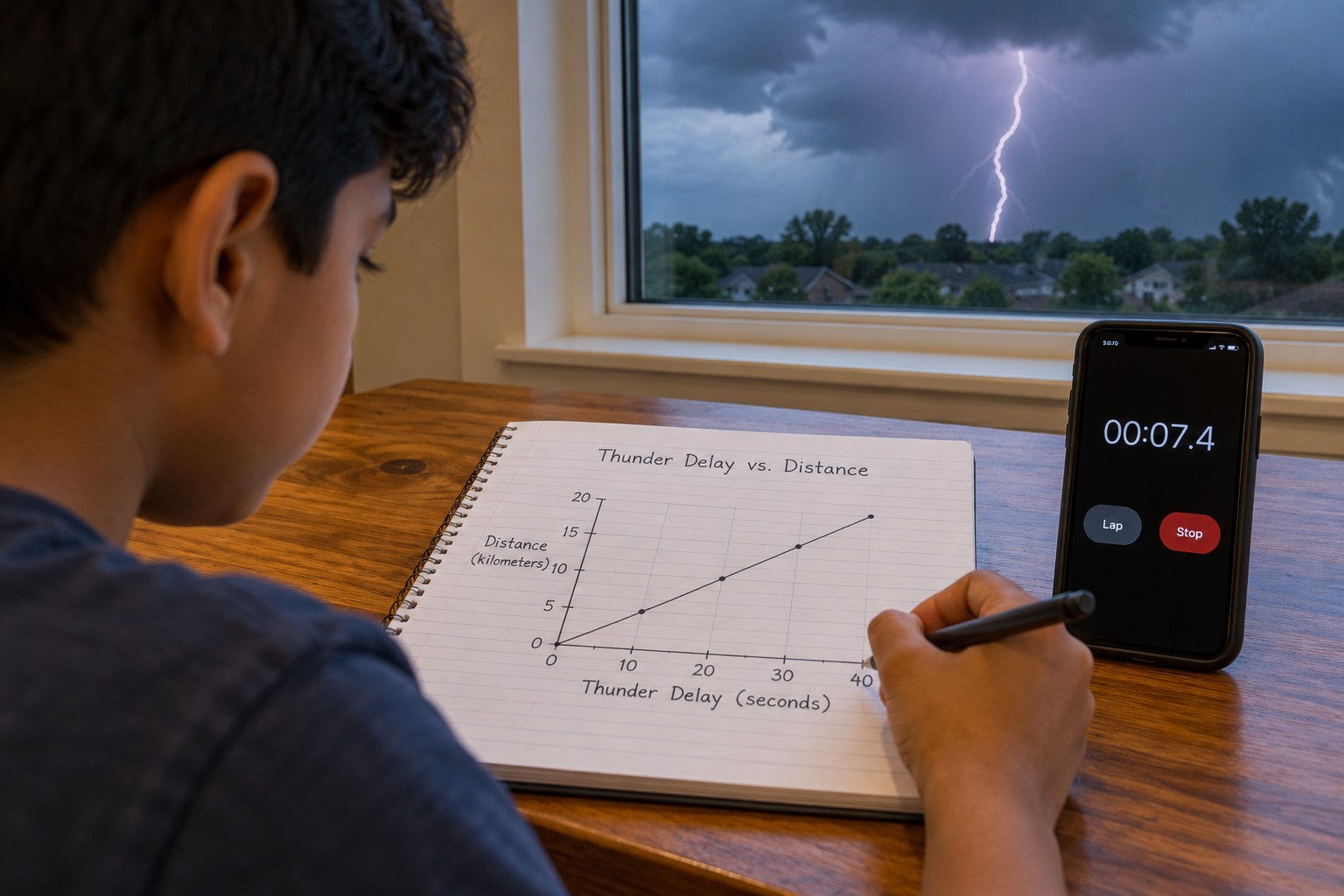
7.RP.2aMath · Grade 7 · Ratios & Proportional Relationships Decide whether two quantities are in a proportional relationship, e.g., by testing for equivalent ratios in a table or graphing on a coordinate plane and observing whether the graph is a straight line through the origin.
Materials
| Item | Quantity |
|---|
| Measuring tape (inches or centimeters) | 1 |
| Sidewalk chalk or painter's tape | 1 box or 1 roll |
| Calculator | 1 |
| Paper, pencil and graph paper | several sheets |
| Family members or friends willing to be measured | 3-5 people |
Vocabulary
Ratio
A comparison of two quantities, such as foot length to height.
Proportional
When two quantities always have the same ratio, so one is a constant multiple of the other.
Scale factor
The number you multiply by to make something bigger or smaller while keeping its shape.
Constant of proportionality
The unchanging ratio in a proportional relationship, like height divided by foot length.
Preparation
- Find an open driveway, sidewalk or long hallway where you can draw or tape a large shape.
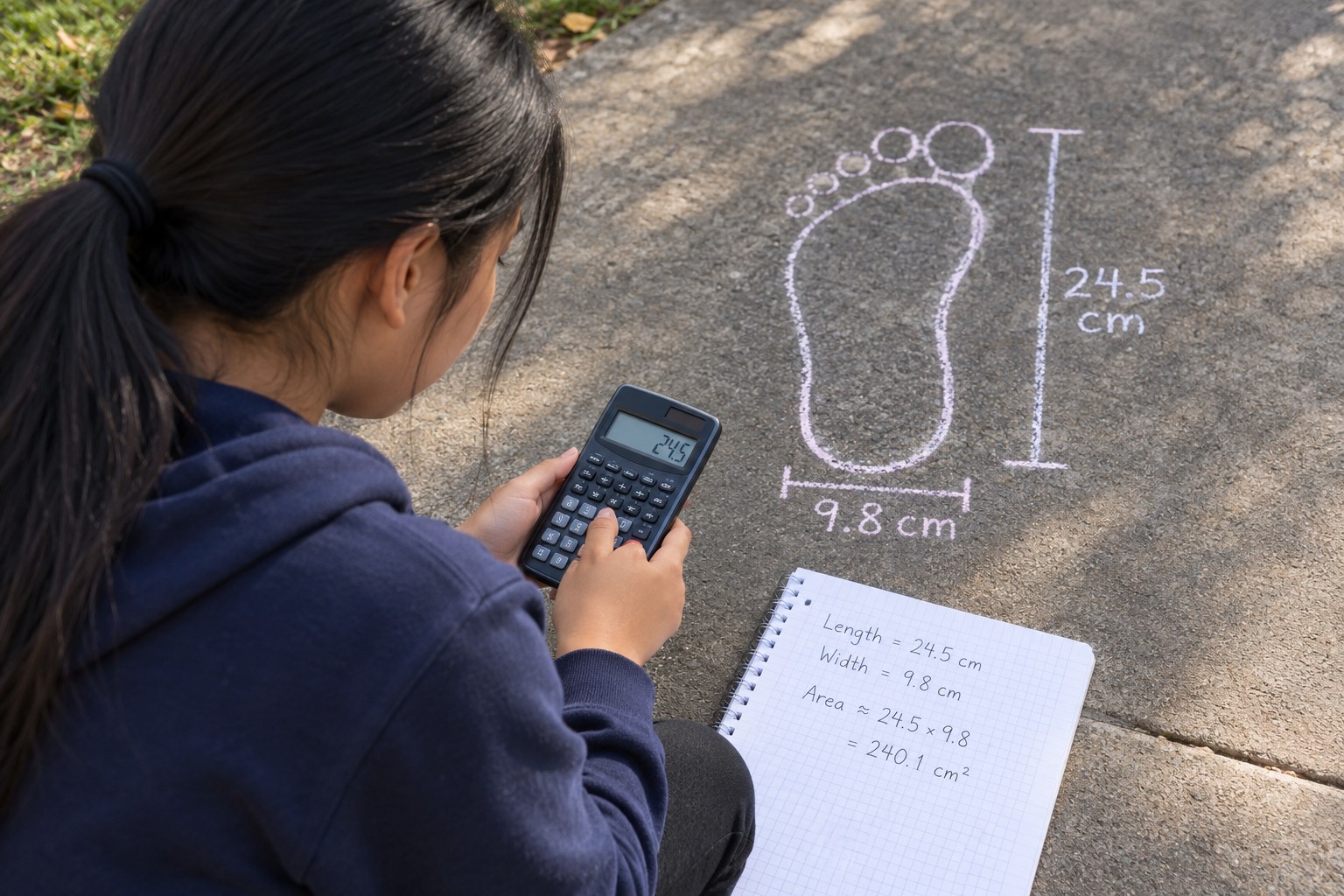
- Draw a giant footprint 60 inches (5 feet) long with chalk or tape, or write the clue on a card: 'The giant's footprint is 60 inches long.'
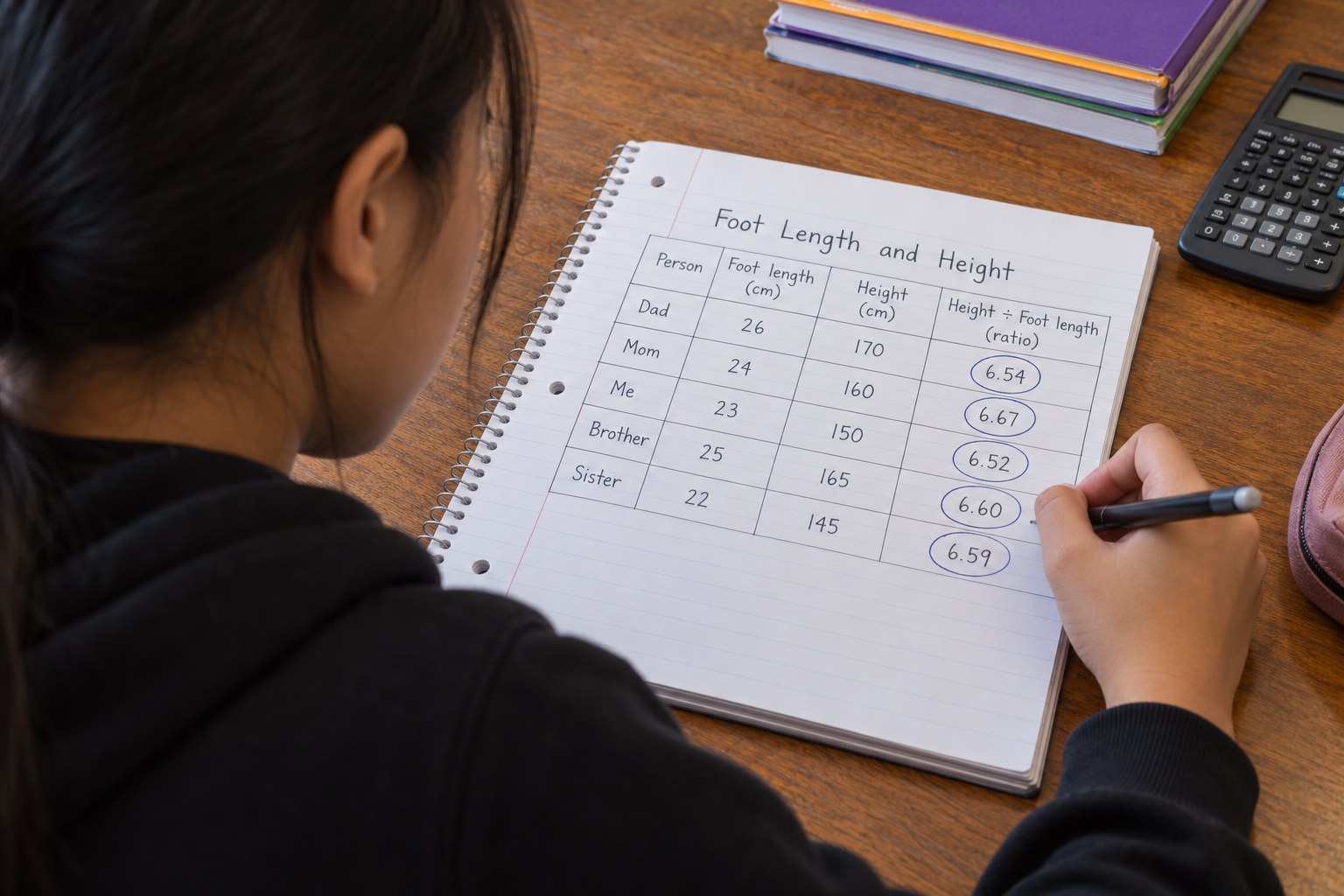
- Make a blank table with columns: Person, Foot length, Height, Height ÷ Foot length.
Introduction
Show your teen the giant footprint and say: 'Jack found this outside the castle in the clouds. How tall is the giant who made it?' Let them make a quick guess before doing any math.
Do taller people usually have longer feet?
What would you need to know to turn one footprint into a height?
Steps
1Step 1
Measure real people
(10 min) Your teen measures foot length (heel to longest toe, without shoes) and height for 3 to 5 people and fills in the table. They calculate height ÷ foot length for each person, rounding to one decimal place.

2Step 2
Test for proportionality
(7 min) Your teen looks at the ratios: are they close to the same number? Many people's height is roughly 6 to 7 times their foot length. They decide whether the relationship is approximately proportional and find an average constant of proportionality.
3Step 3
Find the giant's height
(8 min) Using the average ratio, your teen multiplies the giant's 60-inch foot by the constant to find the giant's height, then converts it to feet. Then they find the scale factor between the giant and themself (giant height ÷ your teen's height).
4Step 4
Scale up an everyday object
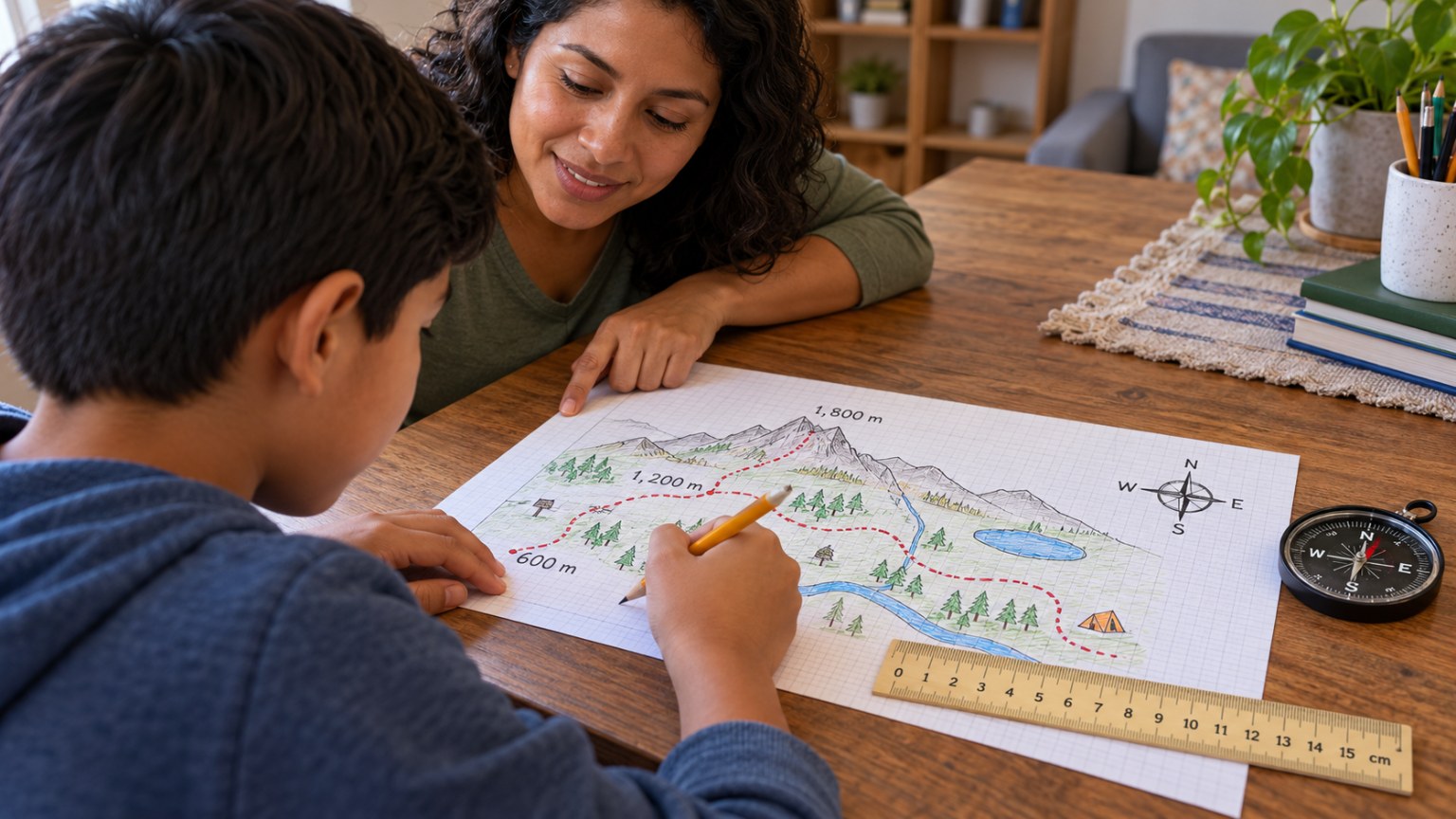
(12 min) Your teen picks something Jack would see in the castle, such as the giant's spoon or a coin, measures the real object, multiplies by the scale factor and draws it full size with chalk or tape. Then they make a small scale drawing of the same object on graph paper with a stated scale (for example 1 square = 6 inches).

5Step 5
Check and reflect
(6 min) Your teen checks one length by working backward: divide the giant measurement by the scale factor and see if it matches the real object. They write 2 sentences: is the giant's body truly proportional to a human's, and what assumption did they make?

Conclusion
Ask your teen how confident they are in the giant's height and why the answer is an estimate. Proportional reasoning is how scientists estimate the size of dinosaurs from a single bone and how forensic investigators estimate height from footprints.
Make your own lesson plan in minutes
Describe a topic and Resource Portal AI writes the objectives, materials and steps for your group.
Try Resource Portal AI