Hailstone Hunters: Measure and Sort Pretend Hail from Pea to Baseball
Overview
Roll pretend hail and measure it like a storm spotter.
Description
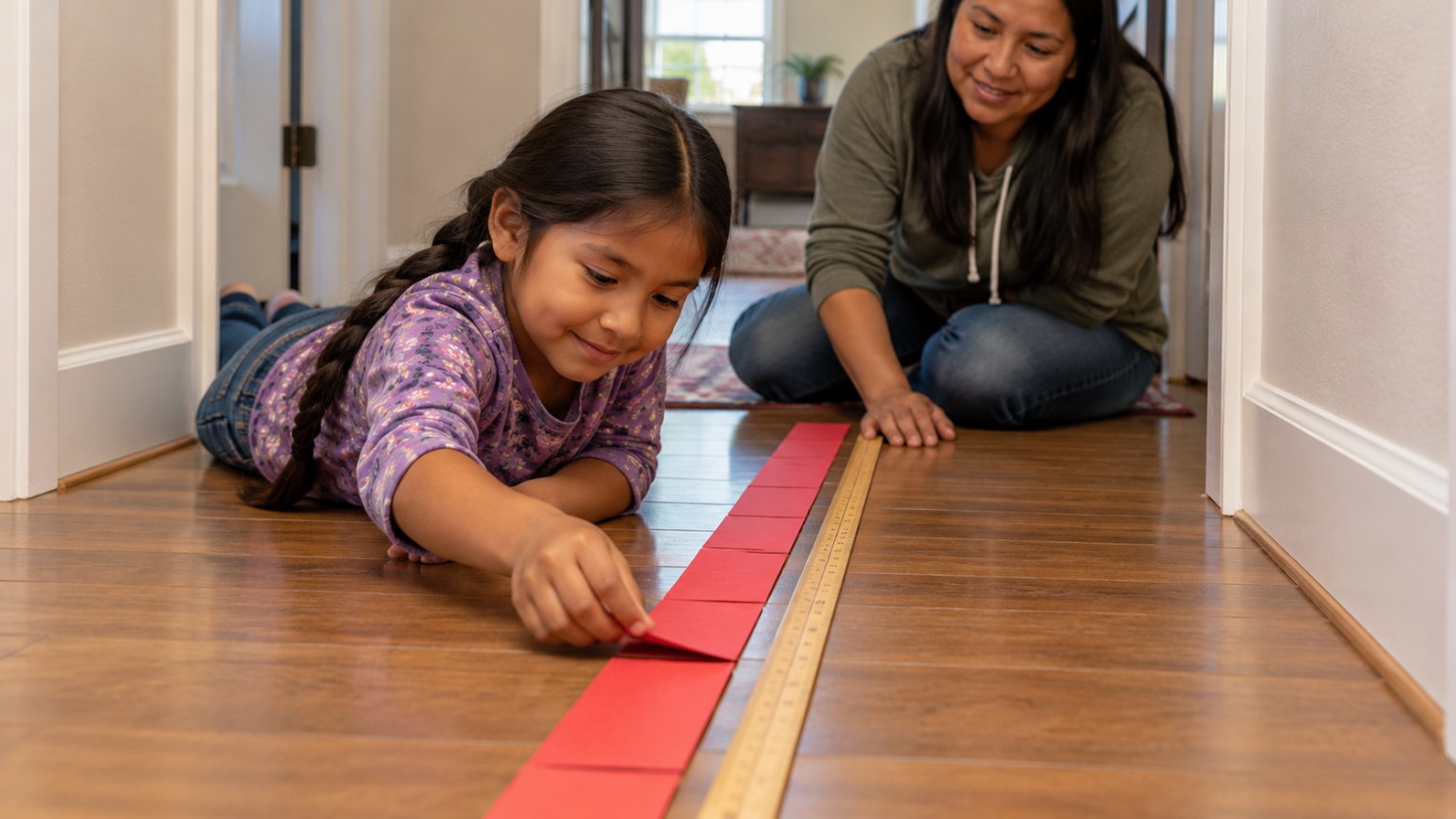
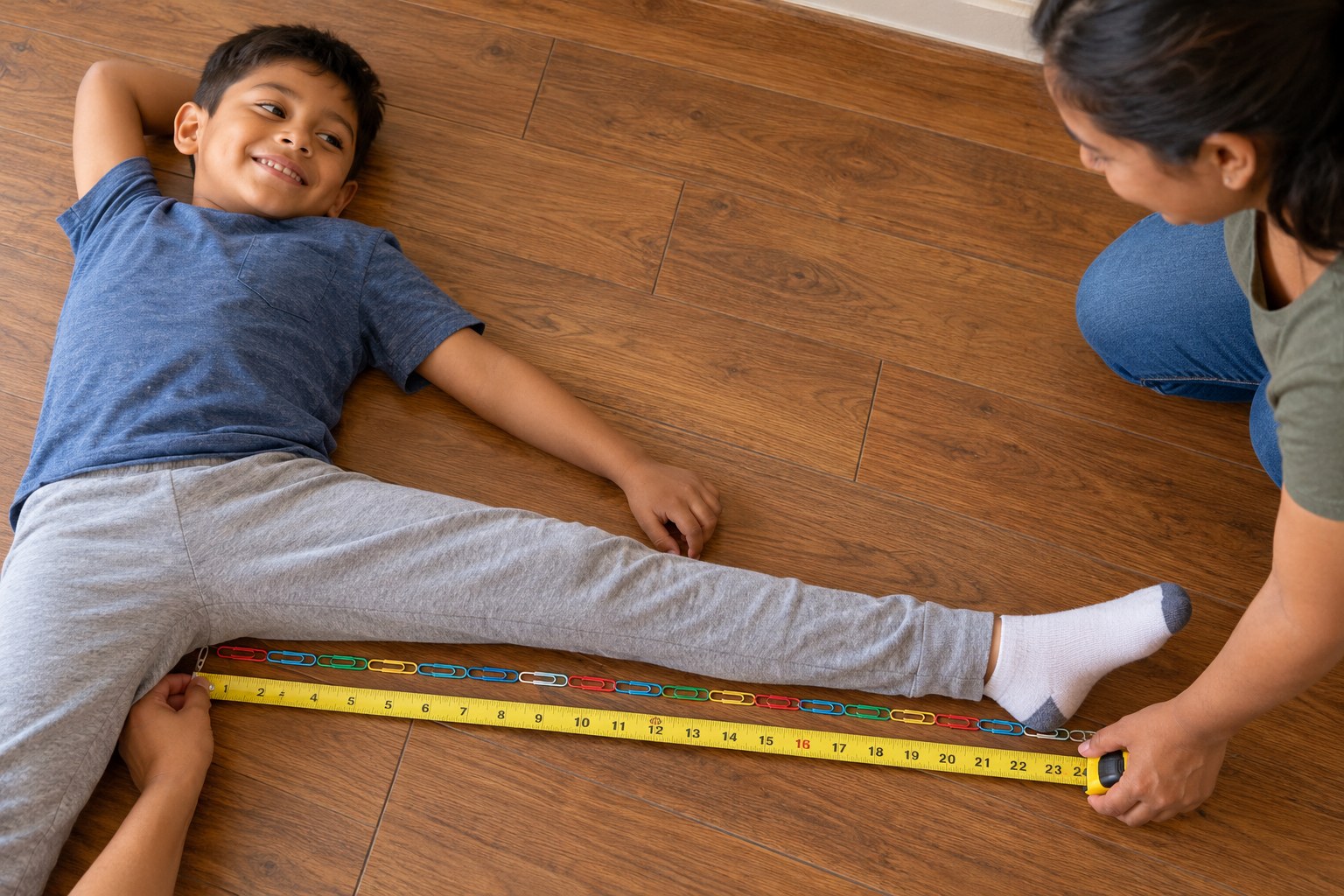
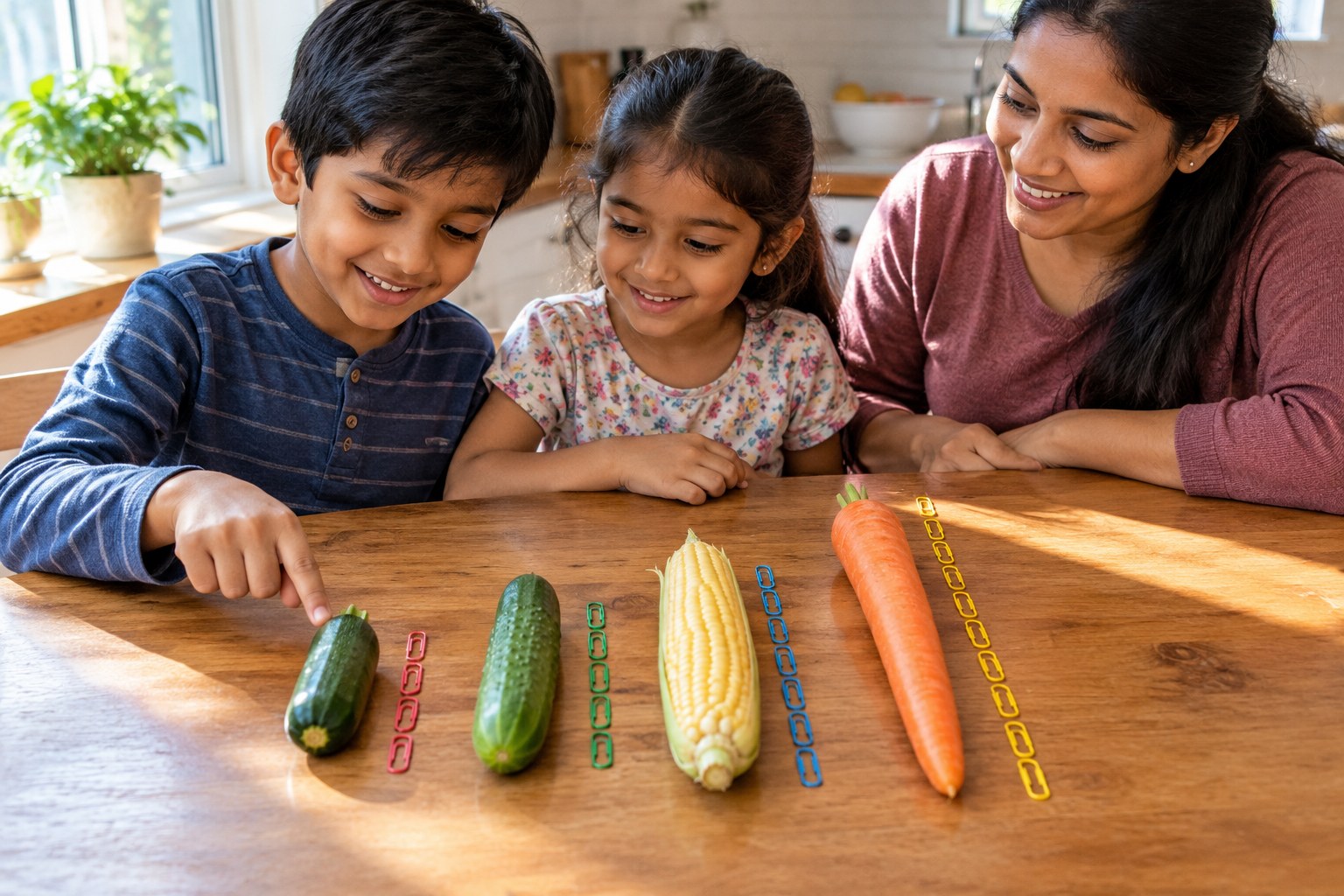
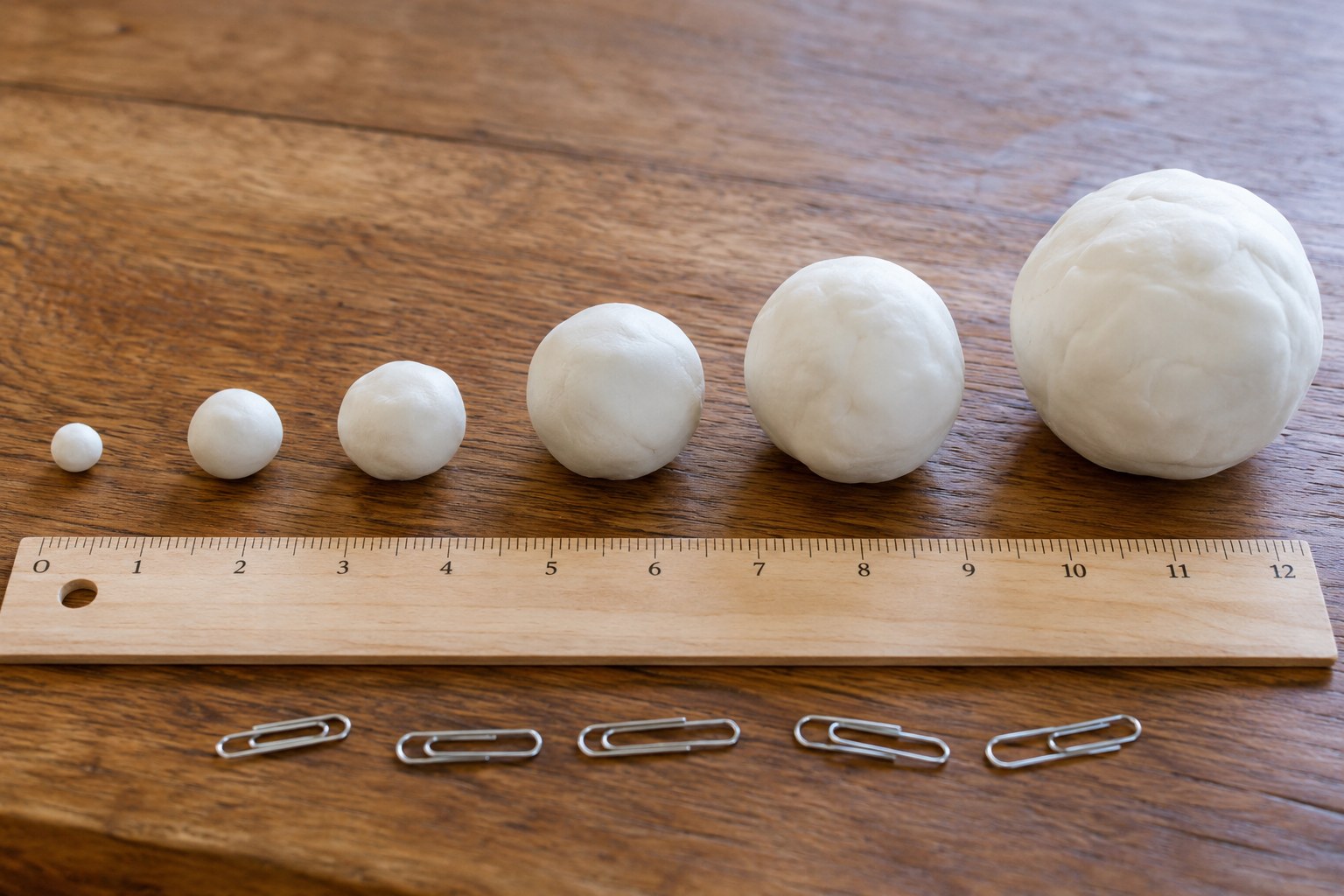
Your child rolls play-dough 'hailstones' to match real hail sizes, measures each one across with paper clips and an inch ruler, and lines them up from smallest to largest to find which ones forecasters call severe.
Objective
Your child will measure the width of pretend hailstones using paper clips (1st grade) or an inch ruler (2nd grade), order them by size and tell which are 1 inch or larger.
Standards
Materials
| Item | Quantity |
|---|---|
| Play dough or modeling clay (white or light colors) | 1 small tub per child |
| Small paper clips, all the same size | 10 per child |
| Ruler with inches | 1 per child |
| Real comparison objects: a dried pea, a penny, a quarter, a ping-pong ball or golf ball | 1 of each if you have them |
| Paper and pencil for a size chart | 1 each |
| Optional: 3-4 ice cubes in a bowl to see how real hail feels | 1 bowl |
Vocabulary
Preparation
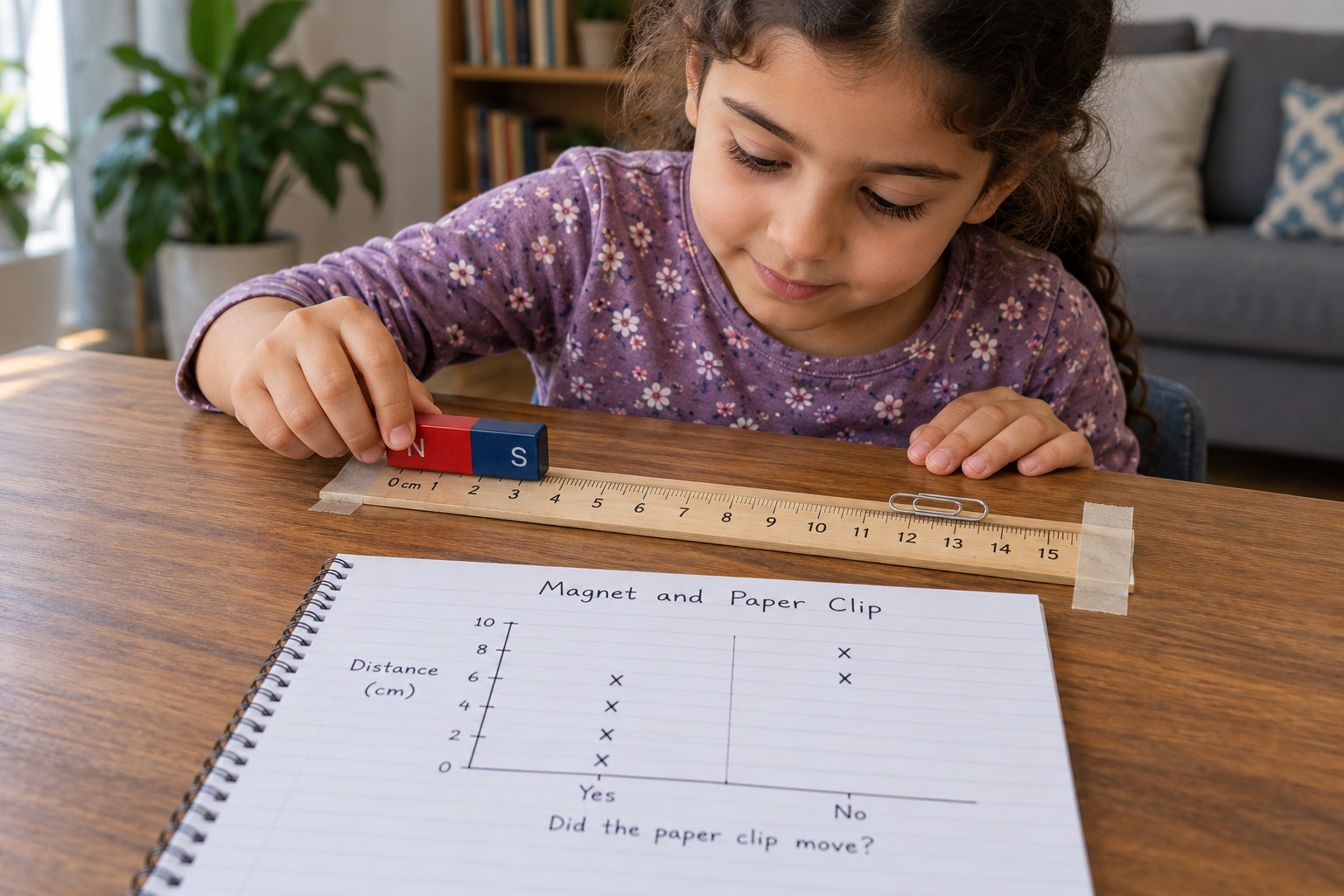
- Draw a chart with 6 rows: pea, penny, quarter, ping-pong ball, golf ball, baseball. Make columns for 'paper clips' and 'inches.'
- Set out the comparison objects on a plate. Keep peas and coins away from younger siblings (choking hazard).
Introduction
Hand your child an ice cube and ask: what if this fell from the sky? Explain that sometimes thunderstorms drop balls of ice called hail, and storm spotters measure hail to tell how strong a storm is.
Have you ever seen hail or heard it hit a roof or car?
How could we tell if one hailstone is bigger than another?
Steps
Conclusion
Ask: which hailstone took the most paper clips? How many of our hailstones were severe? Why might big hail be dangerous for cars, roofs and plants?
Make your own lesson plan in minutes
Describe a topic and Resource Portal AI writes the objectives, materials and steps for your group.
Try Resource Portal AI