Hot Cows: Do Dark or Light Coats Heat Up Faster?
Overview
Ice-cube test: which cow coat color soaks up the most sun?
Description
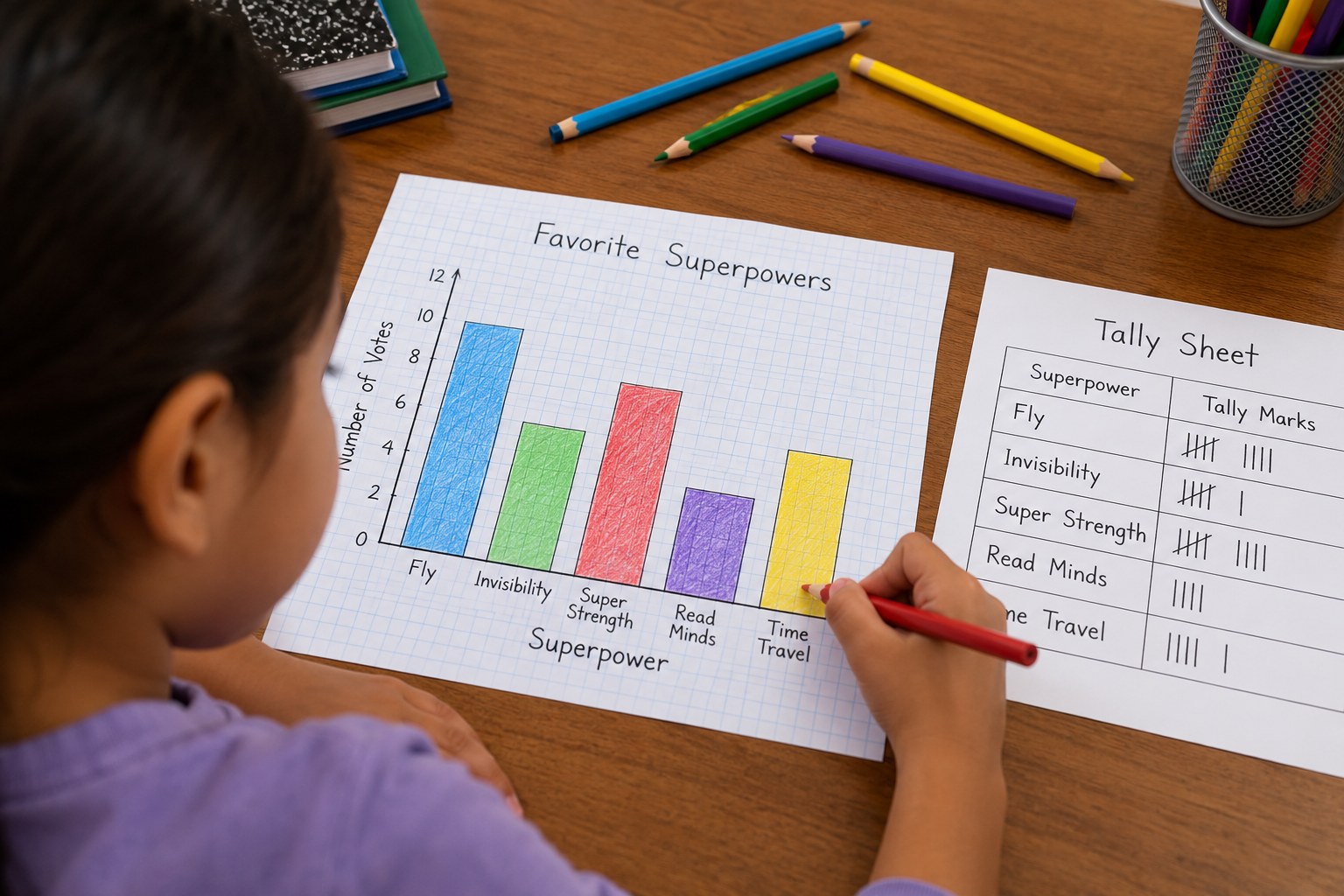
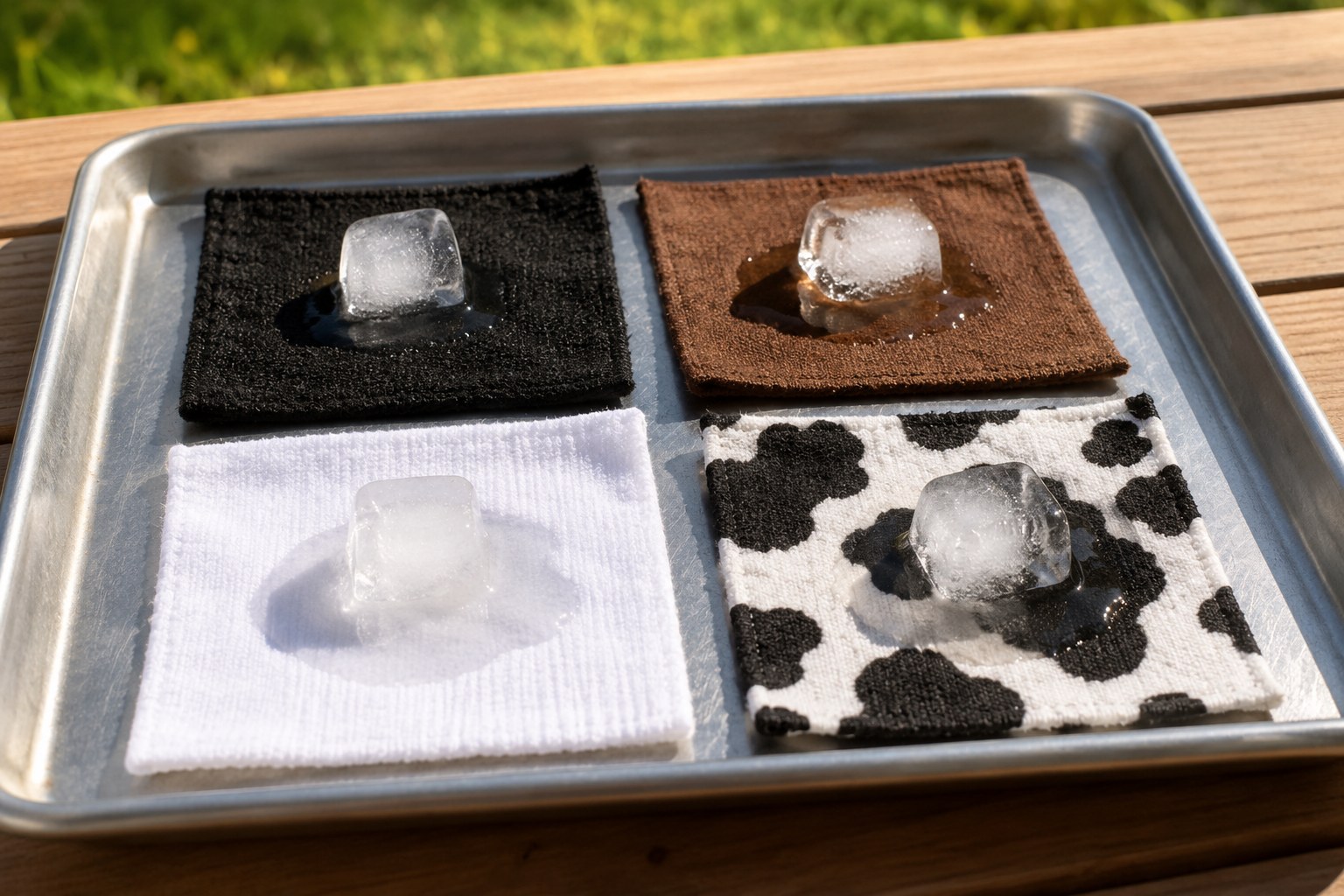
Your child tests why dairy farmers in the hot Central Valley give cows shade, fans and misters. Ice cubes sit in the sun on squares of black, brown, white and black-and-white patched cloth or paper (like Holstein, Jersey and white cattle coats), and your child times how long each takes to melt, then makes a scaled bar graph.
Objective
Your child will run a fair test comparing how fast ice melts on different colored 'coats' in sunlight, record the data, draw a scaled bar graph and explain how farmers protect cows from heat.
Standards
Materials
| Item | Quantity |
|---|---|
| Squares of cloth or construction paper: black, brown, white, and white with black patches (about 4 inches each) | 1 each |
| Ice cubes the same size | 4 (plus 4 for a second trial) |
| Sunny spot outdoors and a tray or cookie sheet | 1 |
| Timer or clock | 1 |
| Graph paper or lined paper and colored pencils | 1 set |
| Optional: kitchen thermometer | 1 |
Vocabulary
Preparation
- Cut the 4 squares the same size and lay them side by side on a tray in full sun. Make a data table with columns for each color and rows for checks every 5 minutes.
- Take ice cubes out of the freezer at the last moment so they start the same.
Introduction
Show a black-and-white Holstein cow photo and ask, 'It's 105°F in Fresno in July. Which part of this cow's coat do you think gets hotter, the black spots or the white?'
Have you ever touched a dark car seat on a sunny day? What happened?
What might farmers do to keep cows cool?
Steps
Conclusion
Dark colors absorb more sunlight and heat up faster. That is one reason Central Valley dairies build shade barns, run fans and misters, and give cows plenty of cool water in summer.
Make your own lesson plan in minutes
Describe a topic and Resource Portal AI writes the objectives, materials and steps for your group.
Try Resource Portal AI