Drawbridge Lift Lab: Where Should the Chain Attach?
Overview
Test how the height of the chain changes the force to lift a drawbridge.
Description
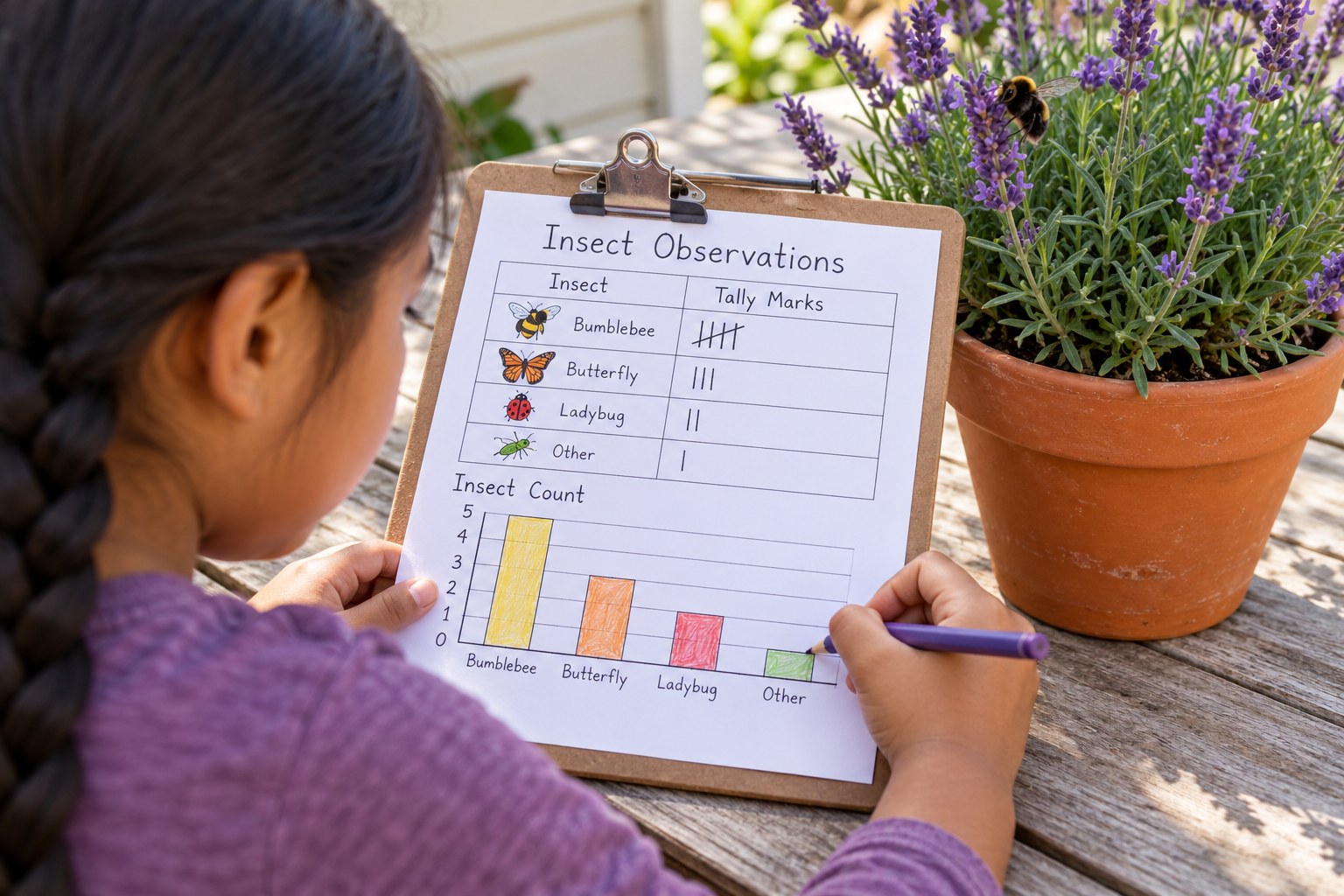
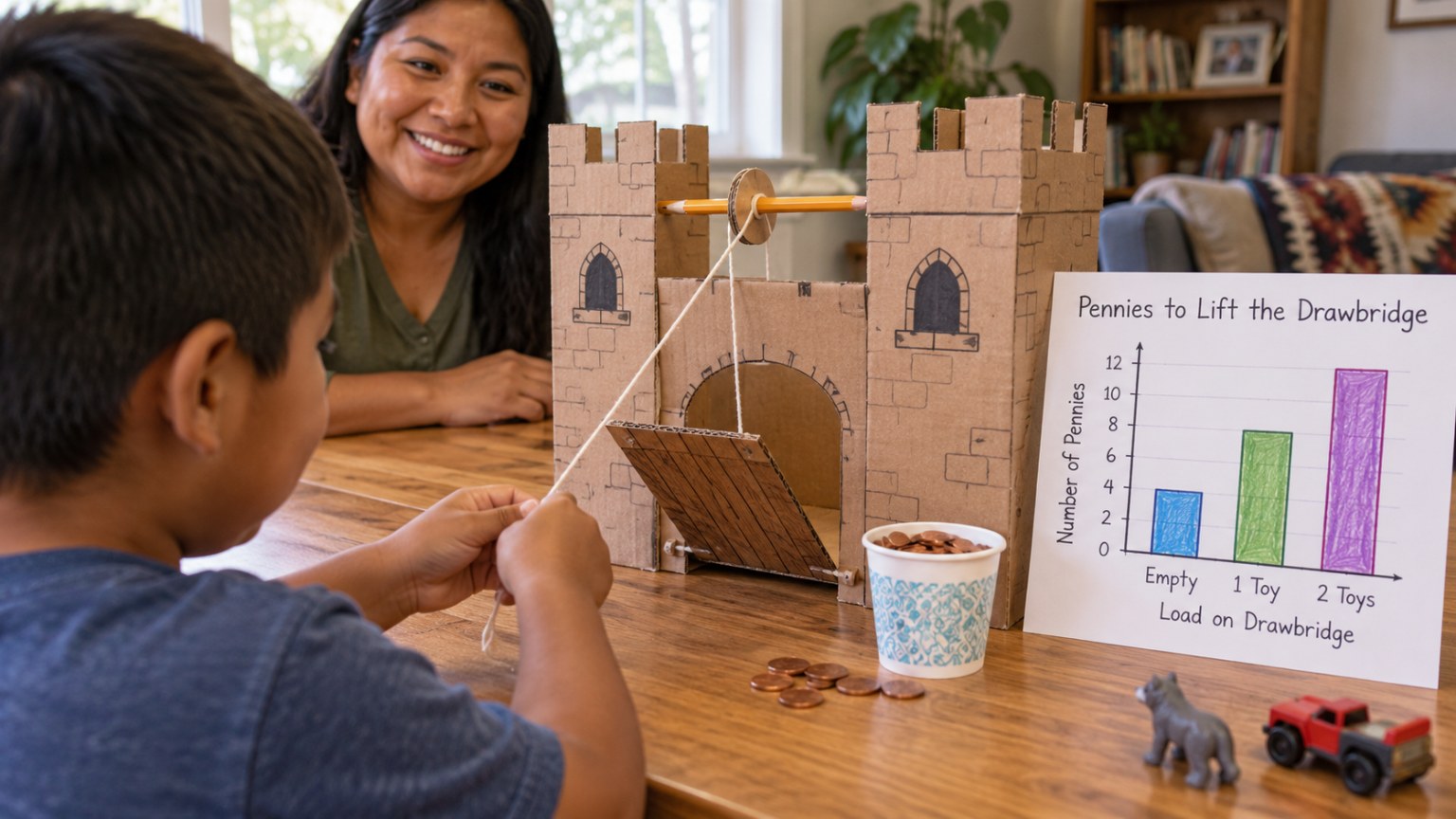
Your child builds a cardboard castle gate with a hinged drawbridge, runs a string from the bridge tip over a pencil "pulley" at three different heights on the castle wall, counts how many pennies in a hanging cup it takes to lift the bridge each time, and graphs the results.
Objective
Your child will run a fair test of a drawbridge model, record the pennies needed to lift it at 3 string heights, make a scaled bar graph, and explain why a higher attachment point takes less force.
Standards
Materials
| Item | Quantity |
|---|---|
| Cardboard box (shoe box or shipping box) for the castle wall | 1 |
| Piece of stiff cardboard for the drawbridge, about 4 by 7 inches | 1 |
| Masking or duct tape (for the hinge) | 1 roll |
| String | 3 feet |
| Round pencils, markers or a wooden dowel for the "pulley" | 1-2 |
| Small paper cup with a string handle | 1 |
| Pennies (or other identical coins or washers) | about 60 |
| Ruler, paper and pencil | 1 each |
| Coins or a small rock to tape on the bridge for weight | 4 coins or 1 small rock |
Vocabulary
Preparation
- Stand the box on its side as the castle wall. Cut a doorway in the lower front (adult job) and tape the bridge to the bottom edge of the doorway with a strong tape hinge so it lies flat on the table and can swing up.
- Tape 4 coins or a small rock to the middle of the bridge so it has some weight. Poke a small hole in the far end of the bridge and tie on the string.
- Make 3 marks up the front wall above the hinge: 3 inches, 6 inches and 9 inches high. You will tape the pencil "pulley" across the wall at each mark in turn.
Introduction
Ask your child to lift a heavy book lying flat by pulling a string tied to its far edge, first pulling almost sideways along the table, then pulling from high above. Which way was easier? Castle builders had the same puzzle with drawbridges.
Why did castles have drawbridges?
Do you think it is easier to lift the bridge with the chain pulling from high up or low down?
Steps
Conclusion
Compare the results with the prediction. Ask: what else could make lifting easier? Try taping a coin counterweight to a stick on the back side of the hinge, the way some real castles balanced their bridges.
Make your own lesson plan in minutes
Describe a topic and Resource Portal AI writes the objectives, materials and steps for your group.
Try Resource Portal AI