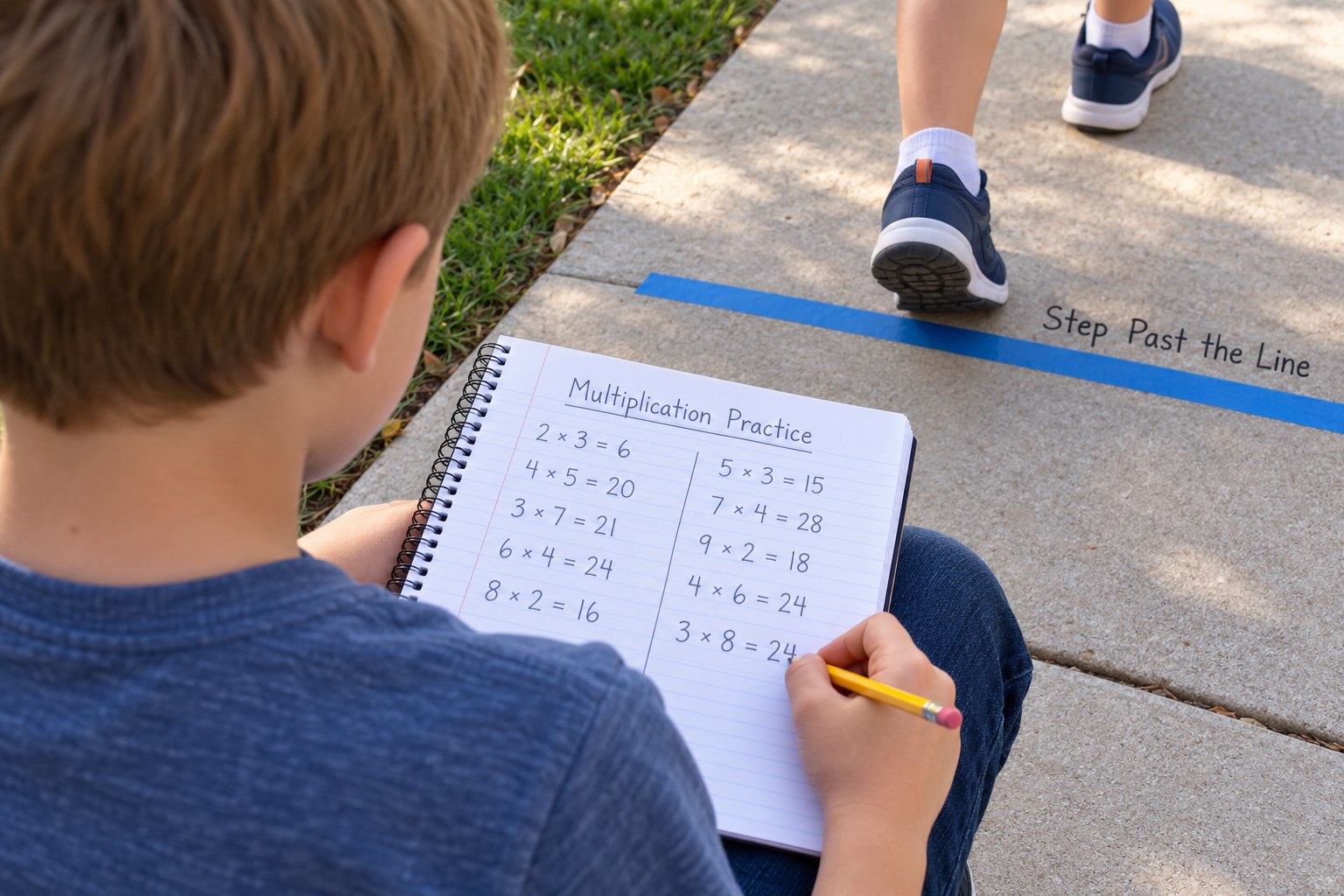
Full lesson previewSteps to Montgomery: Selma March Mileage Math for MLK Day
Math40 minutesGrades: 4th, 5th
Overview
Measure your step and calculate how many steps the Selma march took.
Description
Your child learns about the 1965 Selma to Montgomery march for voting rights, measures their own step length, converts the 54-mile route into feet and steps, and times a short walk to estimate how long the marchers walked each day.
Objective
Your child will measure step length, convert miles to feet, multiply multi-digit numbers to estimate the steps in 54 miles, and solve a time-and-distance word problem about the march.
Standards
4.MD.2Math · Grade 4 · Measurement & Data Use the four operations to solve word problems involving distances, intervals of time, liquid volumes, masses of objects, and money, including problems involving simple fractions or decimals, and problems that require expressing measurements given in a larger unit in terms of a smaller unit. Represent measurement quantities using diagrams such as number line diagrams that feature a measurement scale.
5.MD.1Math · Grade 5 · Measurement & Data Convert among different-sized standard measurement units within a given measurement system (e.g., convert 5 cm to 0.05 m), and use these conversions in solving multi-step, real world problems.
5.NBT.5Math · Grade 5 · Number & Operations in Base Ten Fluently multiply multi-digit whole numbers using the standardalgorithm.
Materials
| Item | Quantity |
|---|
| Tape measure or yardstick | 1 |
| Painter's tape or chalk | 1 |
| Paper and pencil | 1 each per child |
| Timer or phone stopwatch | 1 |
| Hallway, driveway or sidewalk at least 20 feet long | 1 |
| Calculator for checking (optional) | 1 |
Vocabulary
Voting rights
The right of citizens to vote in elections without unfair barriers.
Step length
The distance from one footprint to the next when you walk.
Convert
To change a measurement into a different unit, such as miles into feet.
Estimate
A careful, reasonable guess based on numbers you know.
Preparation
- Mark a start line with tape or chalk on a hallway, driveway or sidewalk.
- Copy the 'Selma march worksheet' onto paper for each child.
Introduction
Ask: how many steps do you think it takes to walk 54 miles? Write down a guess. In March 1965, thousands of people walked that far, from Selma to Montgomery, Alabama, so that Black citizens could vote freely.
Why might people walk such a long way instead of driving?
Why is voting important?
Steps
1Step 1
Learn about the march
(6 min) Read the 'About the Selma to Montgomery march' section together. Talk about why people marched for voting rights and what the Voting Rights Act changed.
2Step 2
Measure your step
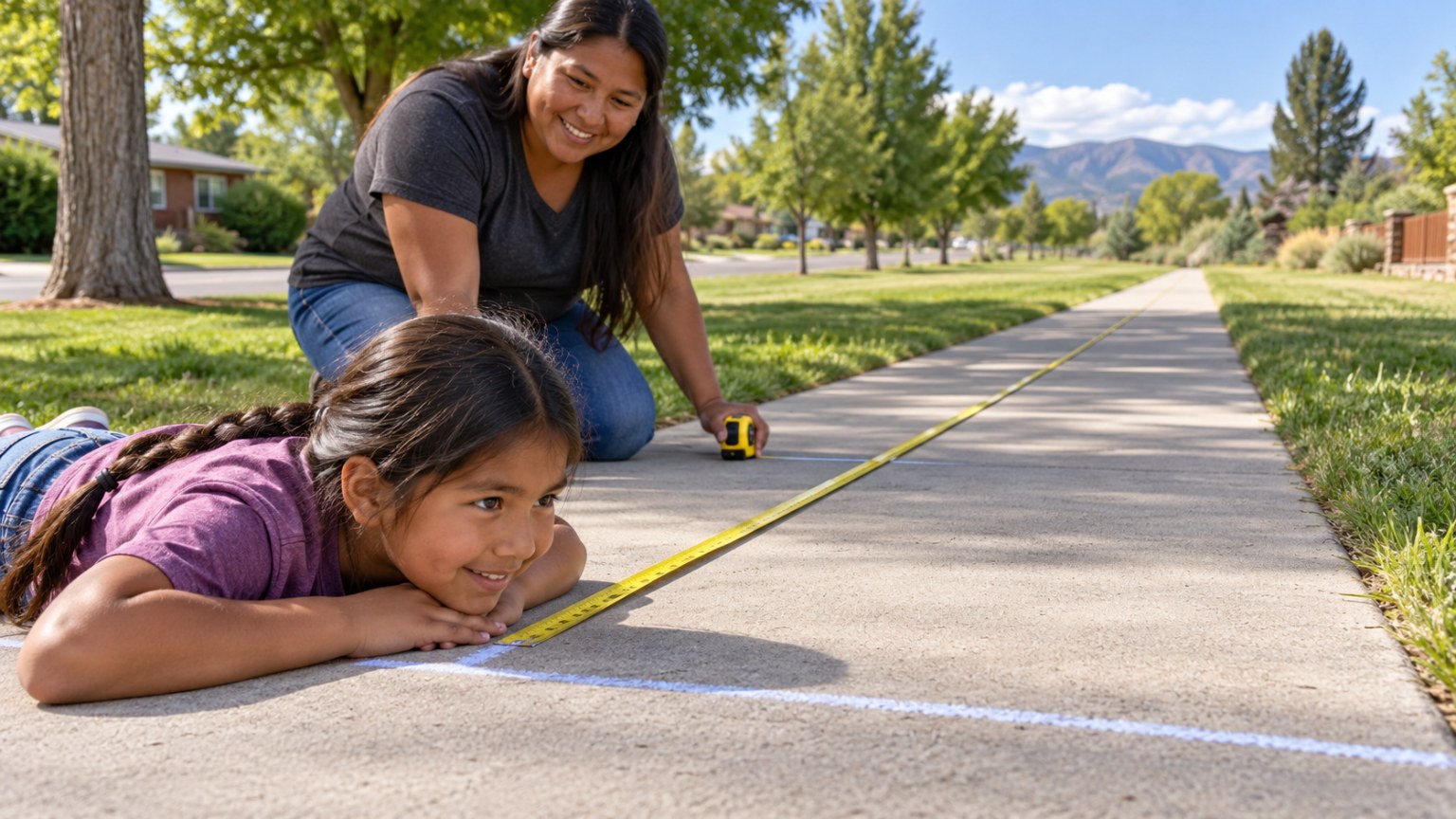
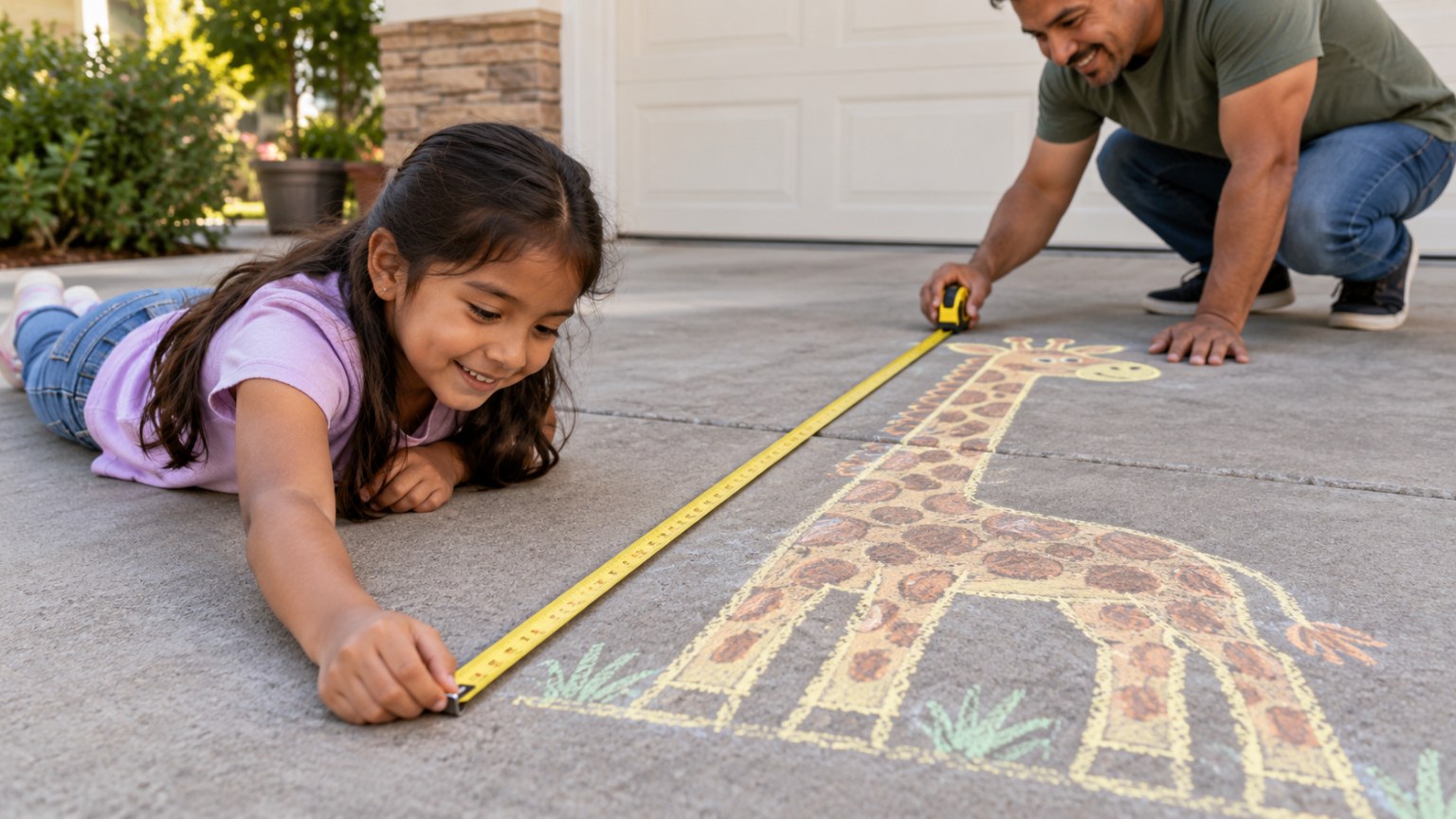
(8 min) Your child stands on the start line and walks 10 normal steps, and you mark where the heel of the last step lands. Measure the distance in feet and divide by 10 to find one step length, rounding to the nearest half foot (for example, 20 feet divided by 10 is 2 feet).
3Step 3
Convert miles to steps
(10 min) Your child multiplies 54 miles by 5,280 feet per mile to find the route in feet (285,120 feet). Then they divide by their step length to estimate the number of steps; with a 2-foot step that is 142,560 steps.
4Step 4
Time a walk
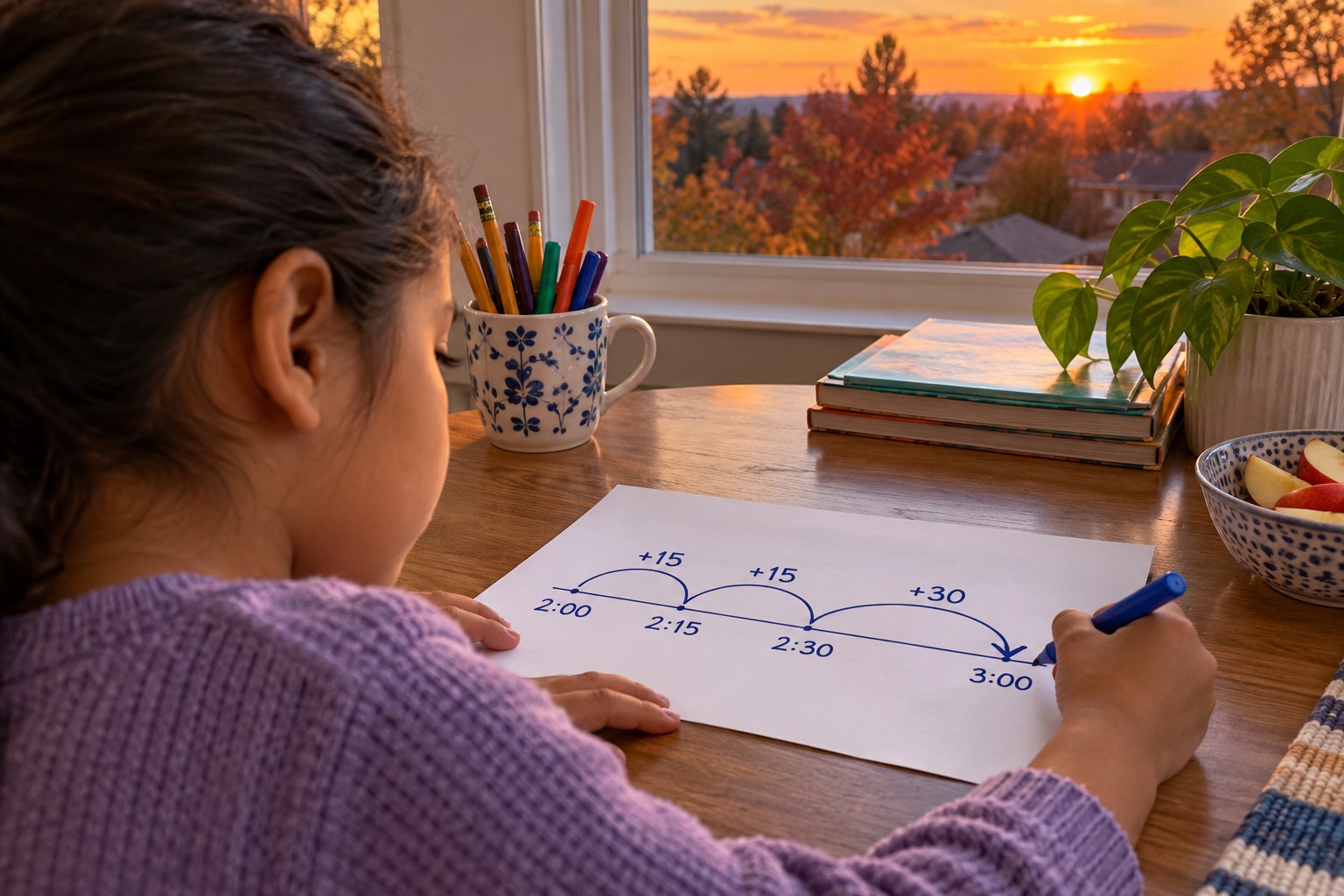
(8 min) Your child walks 100 steps at a steady pace while you time it. Use the time and the step total to estimate how many minutes and hours it would take your child to walk 54 miles, then compare with the marchers, who walked about 10 to 12 miles a day for 5 days.
5Step 5
Reflect
(5 min) Compare the final answer with the guess from the start. Ask: what does this number tell you about how much the marchers cared about voting rights?
Conclusion
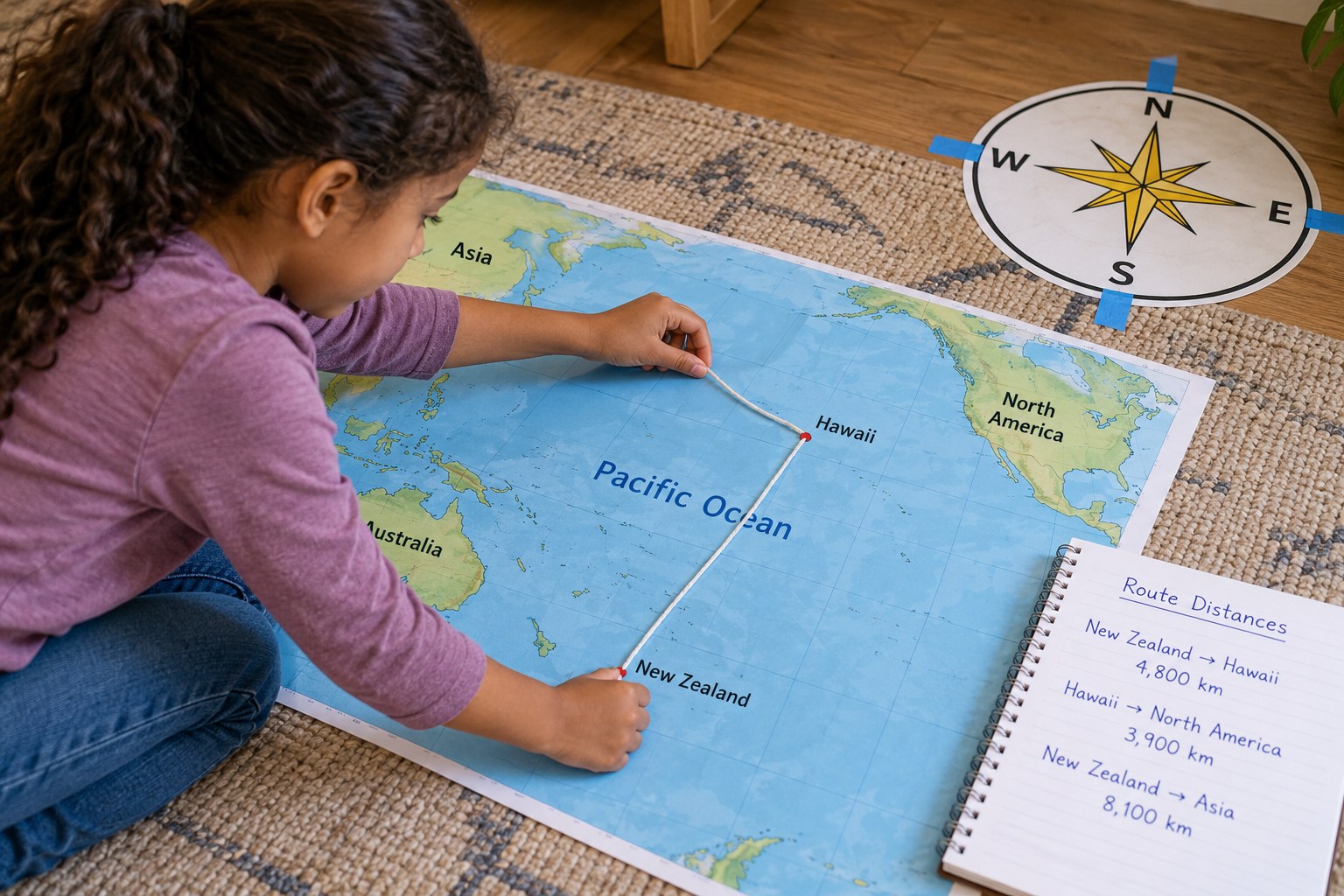
Ask: what was the hardest part of the march to imagine? Find Selma and Montgomery on a map and trace the route along U.S. Route 80.
Make your own lesson plan in minutes
Describe a topic and Resource Portal AI writes the objectives, materials and steps for your group.
Try Resource Portal AI