Lesson planHow Long Was a Dinosaur? Measuring in Footsteps
Math35 minutesGrades: K, 1st, 2nd
Overview
Mark out life-size dinosaurs and measure them in footsteps.
Description
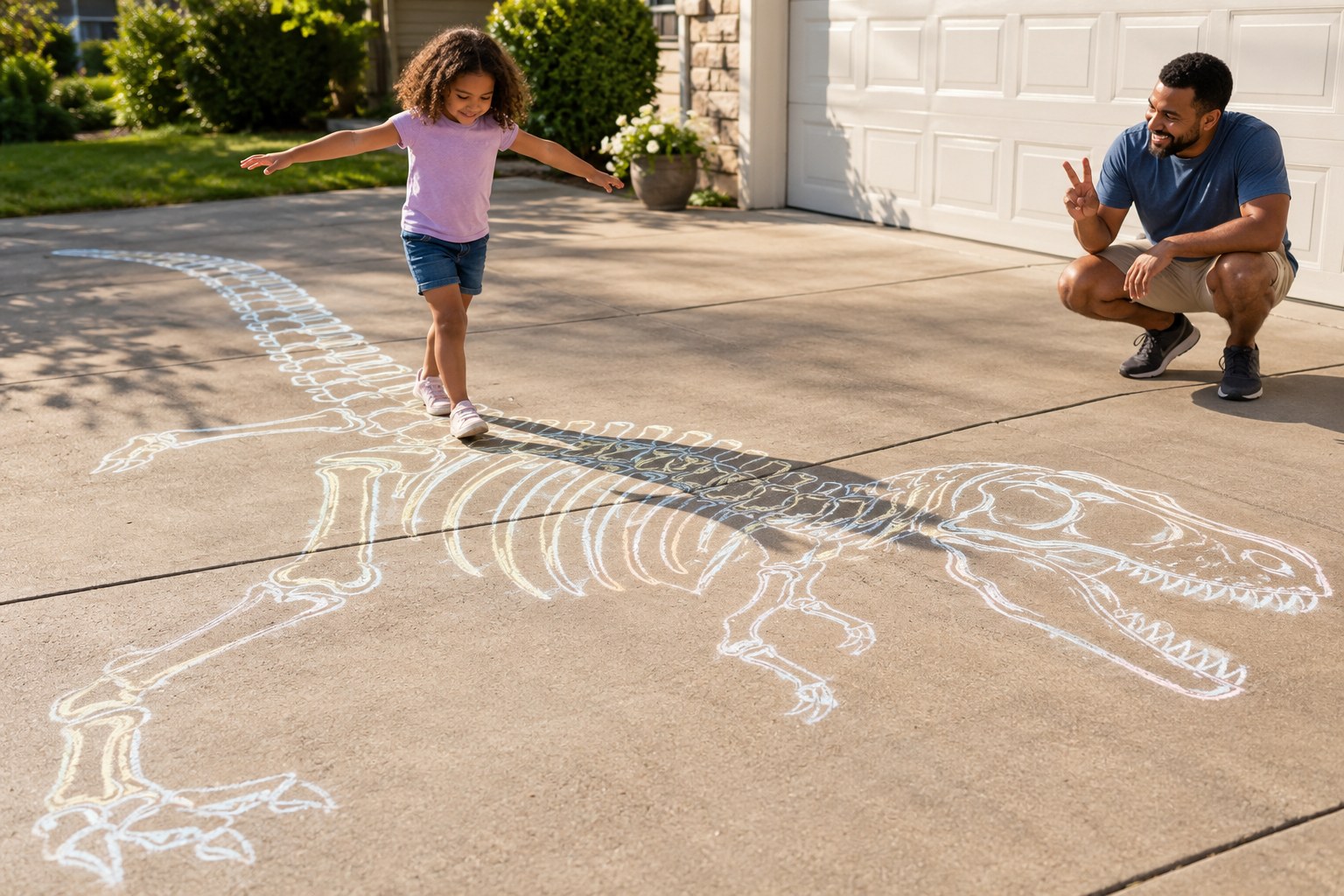
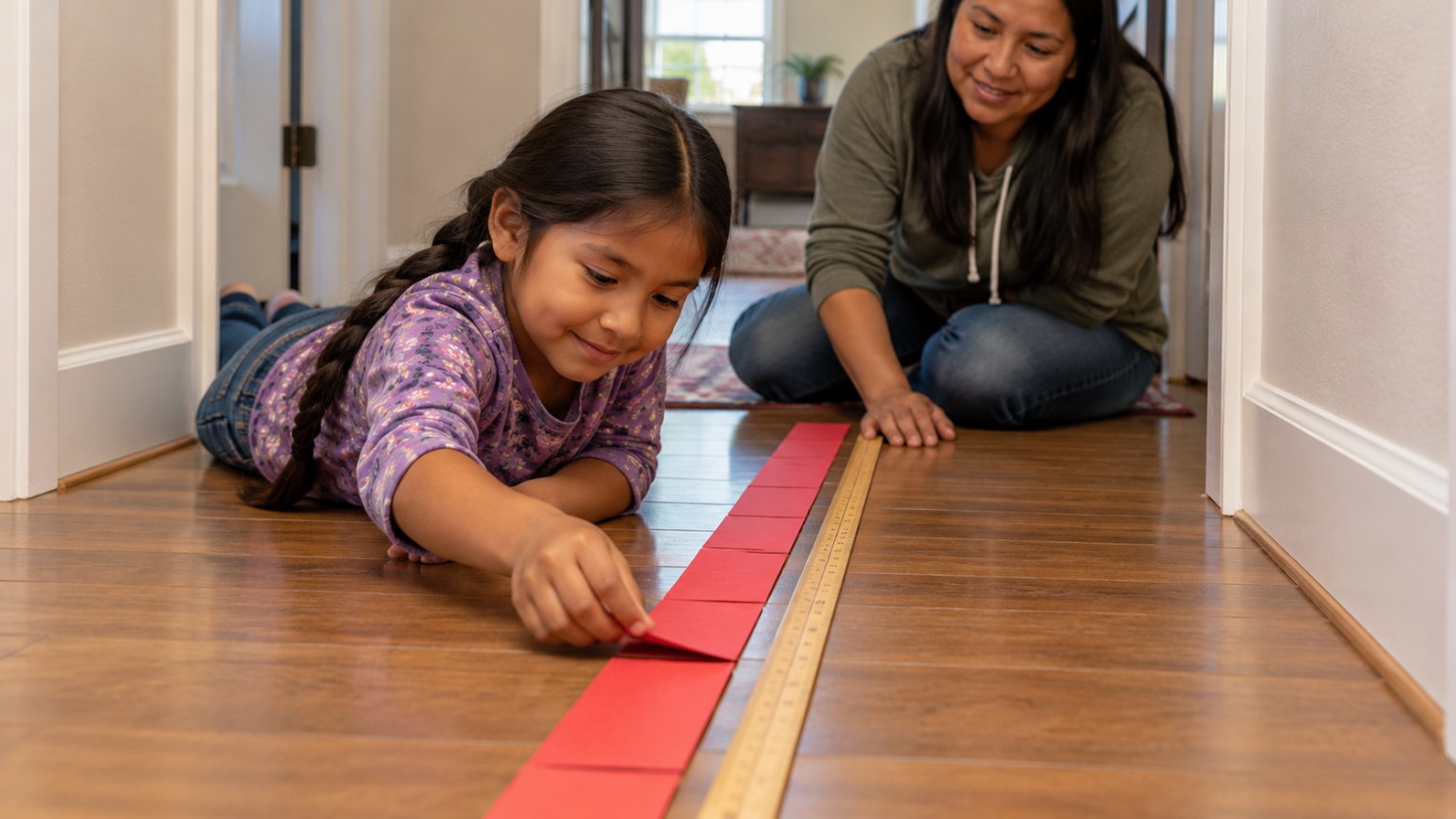
Your child marks out the real lengths of a Velociraptor, a Triceratops and a T. rex with chalk or string outside, measures each one in their own footsteps and in a grown-up's footsteps, and compares the results.
Objective
Your child will measure long lengths by laying down footsteps end to end, compare which dinosaur is longer, and (grades 1-2) explain why the number of child steps is bigger than the number of grown-up steps.
Standards
1.MD.2Math · Grade 1 · Measurement & Data Express the length of an object as a whole number of length units, by laying multiple copies of a shorter object (the length unit) end to end; understand that the length measurement of an object is the number of same-size length units that span it with no gaps or overlaps.
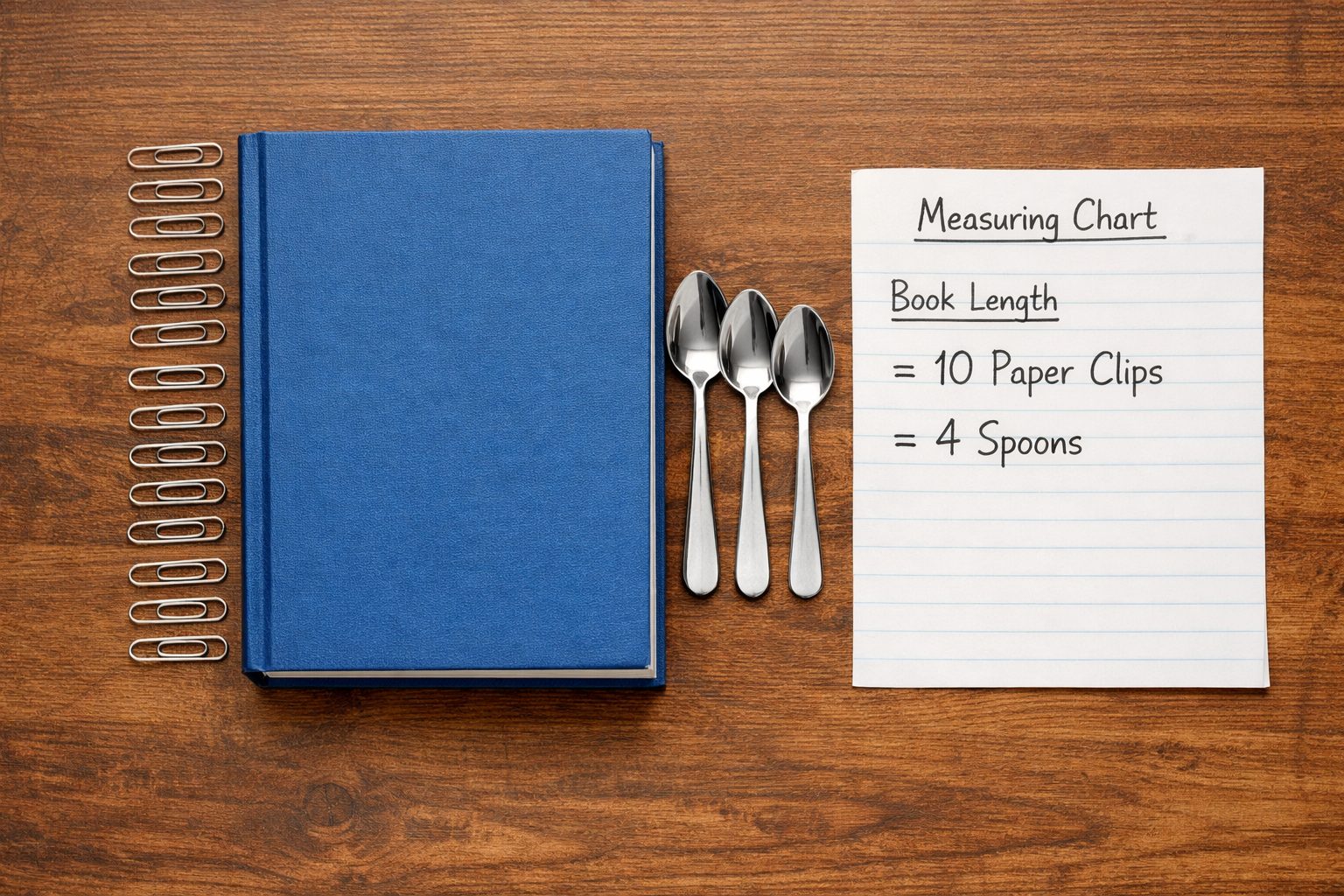
2.MD.2Math · Grade 2 · Measurement & Data Measure the length of an object twice, using length units of different lengths for the two measurements; describe how the two measurements relate to the size of the unit chosen.
2.MD.4Math · Grade 2 · Measurement & Data Measure to determine how much longer one object is than another, expressing the length difference in terms of a standard length unit.
K.MD.2Math · Grade K · Measurement & Data Directly compare two objects with a measurable attribute in common, to see which object has "more of"/"less of" the attribute, and describe the difference.
Materials
| Item | Quantity |
|---|
| Sidewalk chalk, or yarn/string and 6 small markers like shoes or cones | 1 box chalk or 1 ball of yarn |
| Tape measure or yardstick (for the grown-up) | 1 |
| Paper and pencil or the recording chart below | 1 per child |
| Driveway, sidewalk, park path or hallway at least 40 feet long | 1 |
Vocabulary
Length
How long something is from one end to the other.
Measure
To find out how long, tall or heavy something is.
Unit
The same-size thing you use again and again to measure, like a footstep or an inch.
Compare
To look at two things to see how they are the same or different.
Preparation
- Use the tape measure to mark three dinosaur lengths from one starting line: Velociraptor about 6 feet, Triceratops about 30 feet, and T. rex about 40 feet. Draw a small dinosaur head with chalk at the end of each line.
- Copy the recording chart onto paper for each child.
Introduction
Stand at the starting line and point to the far end of the T. rex line. Ask: "Do you think a T. rex was longer than our car? Longer than our house? Let's find out by measuring."
Which dinosaur line do you think is longest?
How could we measure it without a ruler?
Steps
1Step 1
Guess first
(4 min) Walk along each line with your child and ask them to guess which dinosaur is shortest and which is longest. Write or draw their guess on the chart.
2Step 2
Measure in kid steps
(10 min) Your child walks heel-to-toe along each line, counting every footstep out loud, while you help keep the count. Record the number of child steps for each dinosaur.
3Step 3
Measure in grown-up steps
(8 min) Now the grown-up walks heel-to-toe along the same lines while your child counts. Record the grown-up steps and ask why the grown-up numbers are smaller when the dinosaur did not change.
4Step 4
Compare the dinosaurs
(8 min) Lie down next to the Velociraptor line: are you longer or shorter? Then use your kid-step numbers to find how many more steps the T. rex is than the Triceratops, and the Triceratops than the Velociraptor (grades 1-2).
5Step 5
Share what you found
(5 min) Your child tells you the longest and shortest dinosaur and one thing that surprised them. Kindergartners can simply point and say "longer" and "shorter" out loud.
Conclusion
Ask: what did we use as our units? Why do we get different numbers with different-size feet? This is why people agreed on standard units like inches and feet.
Make your own lesson plan in minutes
Describe a topic and Resource Portal AI writes the objectives, materials and steps for your group.
Try Resource Portal AI