Rainforest Drip-Tip Leaf Test
Overview
Test whether pointed drip tips help leaves shed rain.
Description
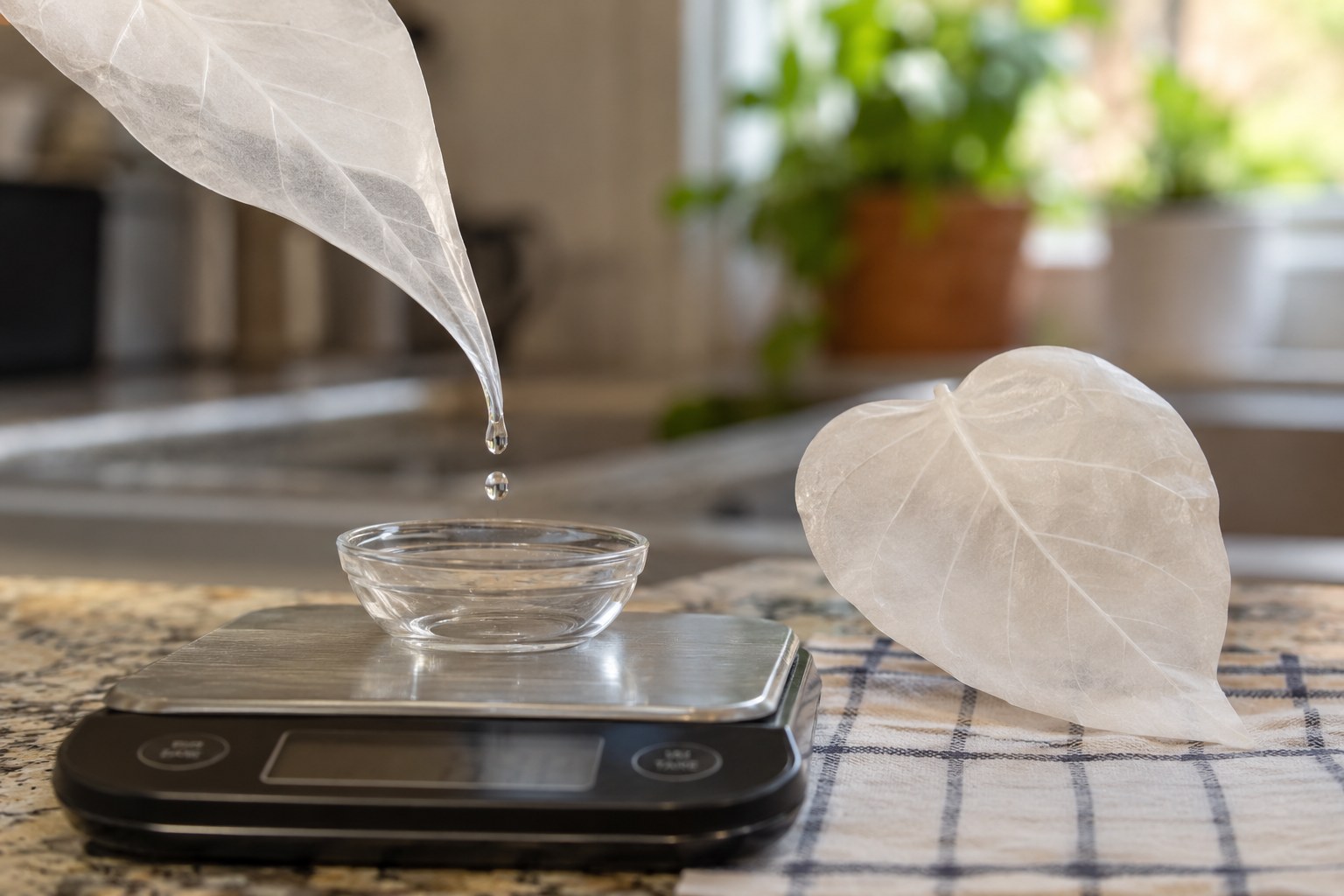
Your child learns that many rainforest leaves end in a long pointed 'drip tip', then cuts paper leaves with and without drip tips, waterproofs them, sprays them with 'rain' and weighs how many grams of water each leaf holds on a kitchen scale.
Objective
Your child will run a fair test comparing leaf shapes, measure the mass of water left on each leaf in grams, and explain how drip tips help rainforest plants.
Standards
Materials
| Item | Quantity |
|---|---|
| Wax paper or a plastic folder to cut leaves from | 2 sheets |
| Scissors | 1 |
| Kitchen scale that reads grams | 1 |
| Spray bottle with water | 1 |
| Small plate or plastic lid to weigh leaves on | 1 |
| Pencil, ruler and paper for a results table | 1 each |
| Real leaves from outside or a houseplant (optional) | 3-4 |
Vocabulary
Preparation
- Cut 2 leaf shapes from wax paper or the folder that are the same size (about the size of a hand): one rounded at the end, one with a long pointed drip tip about 1 inch long.
- Set the scale to grams and make a table with columns: Leaf, Mass dry (g), Mass after spray (g), Water held (g). For a group, give each pair one set of leaves.
Introduction
Spray water on a flat paper plate and on a tilted spoon. Ask: which one keeps the water and which one lets it slide off? Rainforest leaves get rained on almost every day. Too much water sitting on a leaf lets mold, algae and moss grow on it.
Why might a leaf want to get rid of rainwater quickly?
Which leaf shape do you predict will hold less water?
Steps
Conclusion
Ask: did the drip tip help? How does that help a plant that gets rained on almost every day? Look for pointed leaves on houseplants like a pothos or a philodendron, which come from tropical forests.
Make your own lesson plan in minutes
Describe a topic and Resource Portal AI writes the objectives, materials and steps for your group.
Try Resource Portal AI