Pirate Ship Ballast Lab: Why Heavy Stones Keep a Ship Upright
Overview
Test how low, heavy ballast keeps a sailing ship upright.
Description
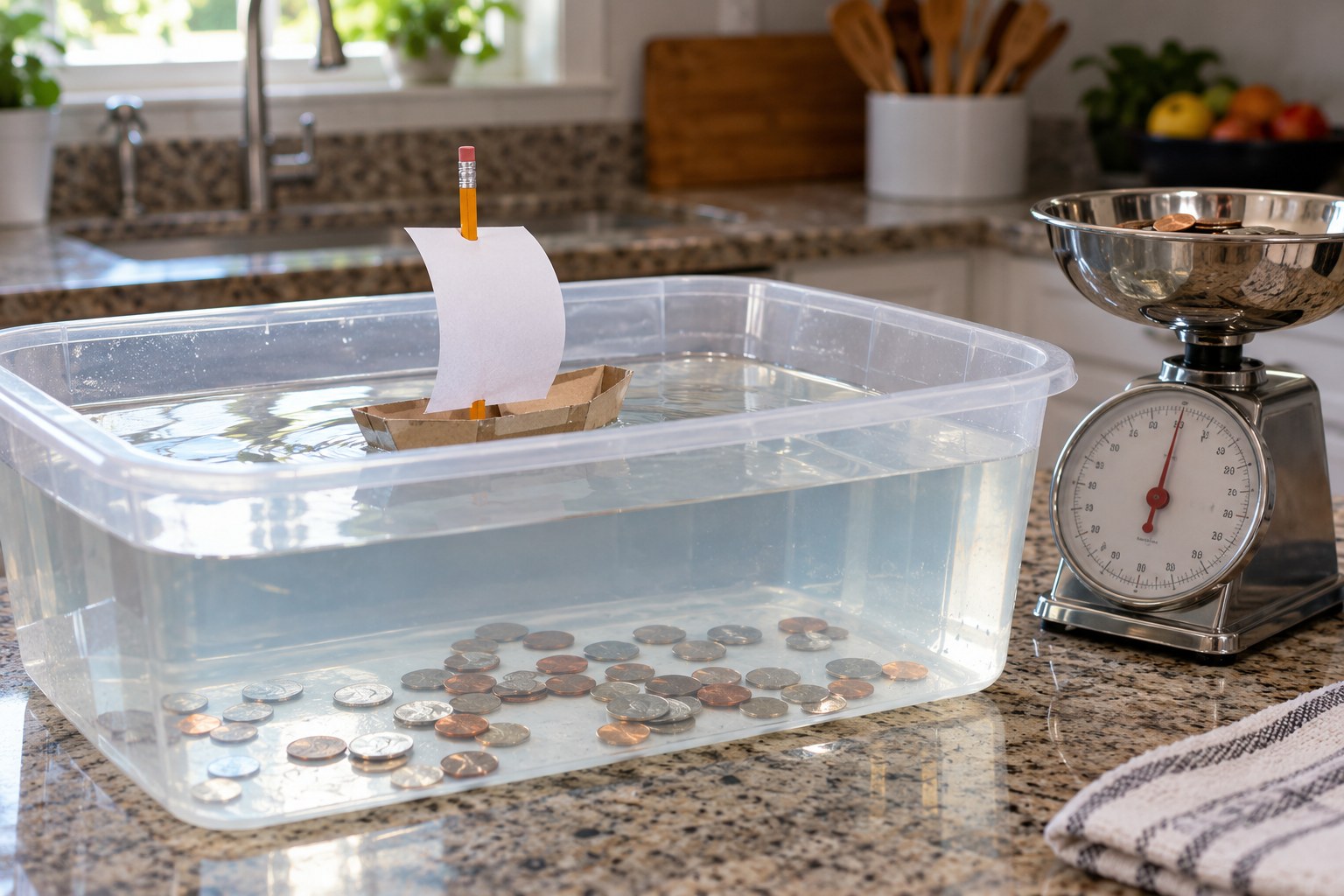
Your child builds a tall-masted model ship from a plastic container, measures ballast in grams on a kitchen scale, and tests how much a 'wind gust' it can take when the weight sits low versus high.
Objective
Your child will measure masses in grams, test a model ship with ballast placed low and high, and explain why sailing ships carried heavy ballast at the bottom of the hull.
Standards
Materials
| Item | Quantity |
|---|---|
| Plastic food container or small loaf pan that floats (about 4 by 6 inches) | 1 |
| Pencil or chopstick and modeling clay for a mast | 1 pencil, 1 lump of clay |
| Index card for a sail and tape | 1 card, 1 roll |
| Coins, washers or small stones as ballast | about 200 grams |
| Kitchen scale that reads grams | 1 |
| Sink, bathtub or large tub of water; a hand fan or folded cardboard to make wind | 1 each |
Vocabulary
Preparation
- Stick the pencil mast upright in a lump of clay. Tape the index card to it as a sail.
- Fill the tub with a few inches of water. Weigh out two equal piles of about 100 grams of coins or stones.
Introduction
Float the empty container with the mast stuck on top and blow on the sail. It flips! Ask: 'Real sailing ships had huge sails. Why didn't they tip over?'
What happens when you stand on a bus with your feet close together versus wide apart?
Where would you put heavy things in a boat?
Steps
Conclusion
Ask: 'Why did the low ballast work better? What would happen if a ship carried its heavy cargo up on the deck?' Low weight lowers the center of gravity, so the ship rights itself when wind pushes the sails.
Make your own lesson plan in minutes
Describe a topic and Resource Portal AI writes the objectives, materials and steps for your group.
Try Resource Portal AI