Lesson planNarwhal Tusk Line Plot: Measure Spiral Tusks to the Quarter Inch
Math40 minutesGrades: 3rd, 4th
Overview
Measure scale-model narwhal tusks and make a line plot.
Description
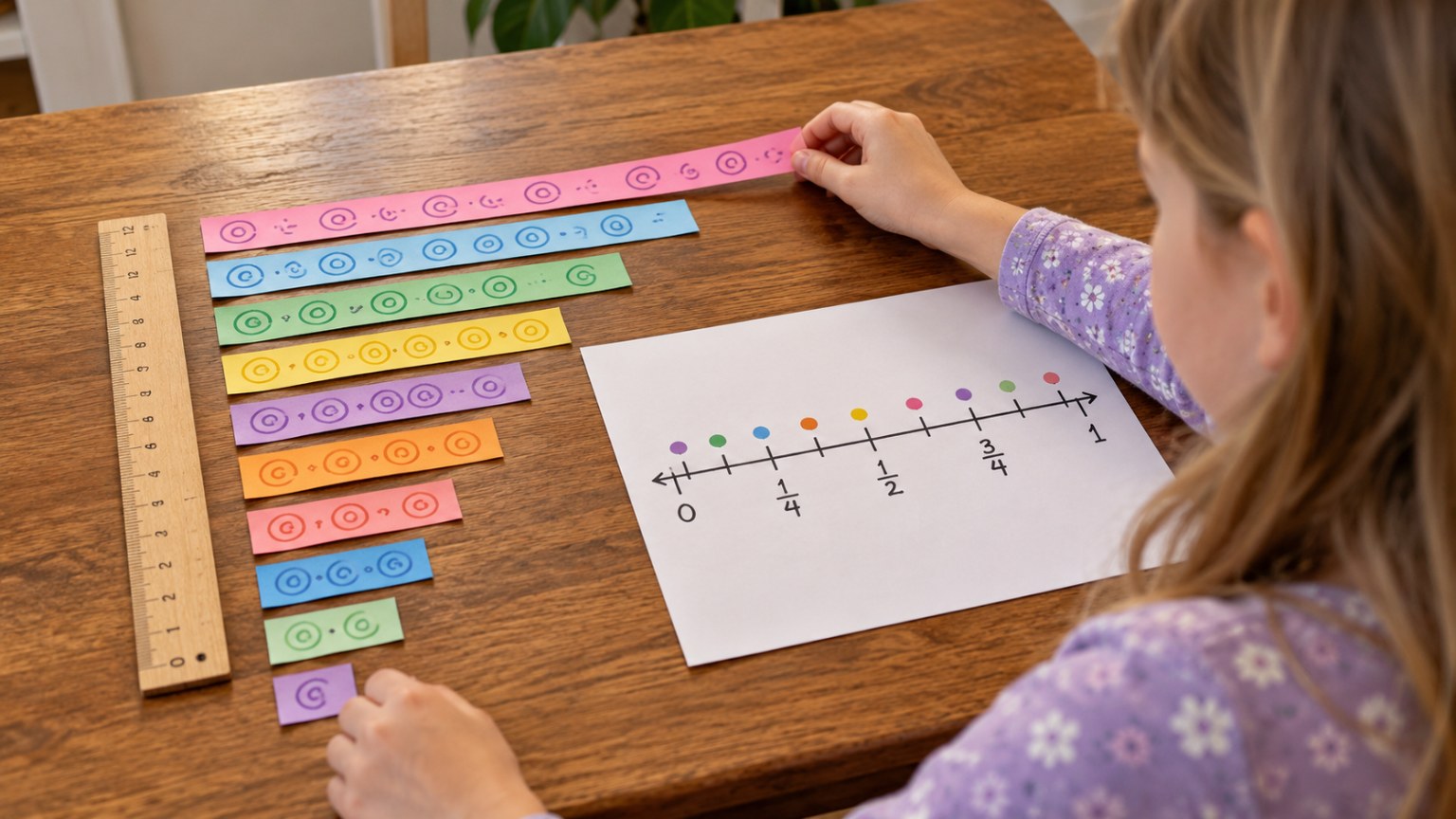
Your child makes 10 spiral paper 'narwhal tusks' from a scale chart (1 inch stands for 1 foot), measures each one to the nearest quarter inch, builds a line plot and answers questions about the longest, shortest and most common tusk lengths.
Objective
Your child will measure lengths to the nearest quarter inch, display the data on a line plot marked in fourths, and solve addition and subtraction problems using the plot.
Standards
3.MD.4Math · Grade 3 · Measurement & Data Generate measurement data by measuring lengths using rulers marked with halves and fourths of an inch. Show the data by making a line plot, where the horizontal scale is marked off in appropriate units— whole numbers, halves, or quarters.
4.MD.4Math · Grade 4 · Measurement & Data Make a line plot to display a data set of measurements in fractions of a unit (1/2, 1/4, 1/8). Solve problems involving addition and subtraction of fractions by using information presented in line plots.
Materials
| Item | Quantity |
|---|
| Strips of paper about 1 inch wide (cut from printer paper or paper bags) | 10 |
| Ruler marked in quarter inches | 1 per child |
| Pencil and markers | 1 each |
| Scissors | 1 pair |
| Paper for the line plot | 1 sheet |
| Tape | 1 roll |
Vocabulary
Narwhal
A medium-sized whale of the Arctic Ocean; most males have one long spiral tusk.
Tusk
A very long tooth that sticks out of the mouth.
Scale
A rule that relates model lengths to real lengths, like 1 inch for every 1 foot.
Line plot
A number line with an X for each data value, showing how often each value occurs.
Preparation
- Using the 'Tusk data card' in the additional sections, an adult cuts the 10 paper strips to the listed lengths and numbers them 1-10 on the back (do not write the lengths on the strips).
- Draw a number line on the line-plot paper from 5 to 9 1/2, with a mark at every quarter inch.
Introduction
Ask your child: a narwhal is a whale with what looks like a unicorn horn. Is that horn a horn, a nose or a tooth? (It's a tooth!) Tell them real tusks can be as long as a car is wide, and today they will measure a pod of model tusks.
What do the small lines between the inch marks on a ruler mean?
If 1 inch stands for 1 foot, how long is a 7-inch model tusk in real life?
Steps
1Step 1
Meet the narwhal
(5 min) Read the 'About narwhals' section together. Explain the scale: each inch on a paper strip stands for 1 foot on a real tusk.
2Step 2
Decorate the tusks
(6 min) Your child draws a spiral line twisting along each strip, going the same direction every time, like a real narwhal tusk. Keep the numbers on the back visible.
3Step 3
Measure to the quarter inch
(12 min) Your child lines up each tusk with the zero mark on the ruler and measures to the nearest quarter inch, recording 'Tusk 1: ___ inches' in a list. Check any that seem off by measuring together.
4Step 4
Build the line plot
(8 min) For each measurement, your child draws an X above the matching mark on the number line, stacking X's when lengths repeat. Title it 'Narwhal tusk lengths (feet)'.
5Step 5
Answer the questions
(8 min) Your child uses the line plot to answer the 'Line plot questions' and checks with the answer key. Then they tape the tusks to a wall in order from shortest to longest.
Conclusion
Ask: what was the most common tusk length? How much longer was the longest tusk than the shortest? What would that be in real feet?
Make your own lesson plan in minutes
Describe a topic and Resource Portal AI writes the objectives, materials and steps for your group.
Try Resource Portal AI