How Long Is a Blue Whale? Measure Ocean Giants in Kid-Lengths
Overview
Use your own height to measure a blue whale.
Description
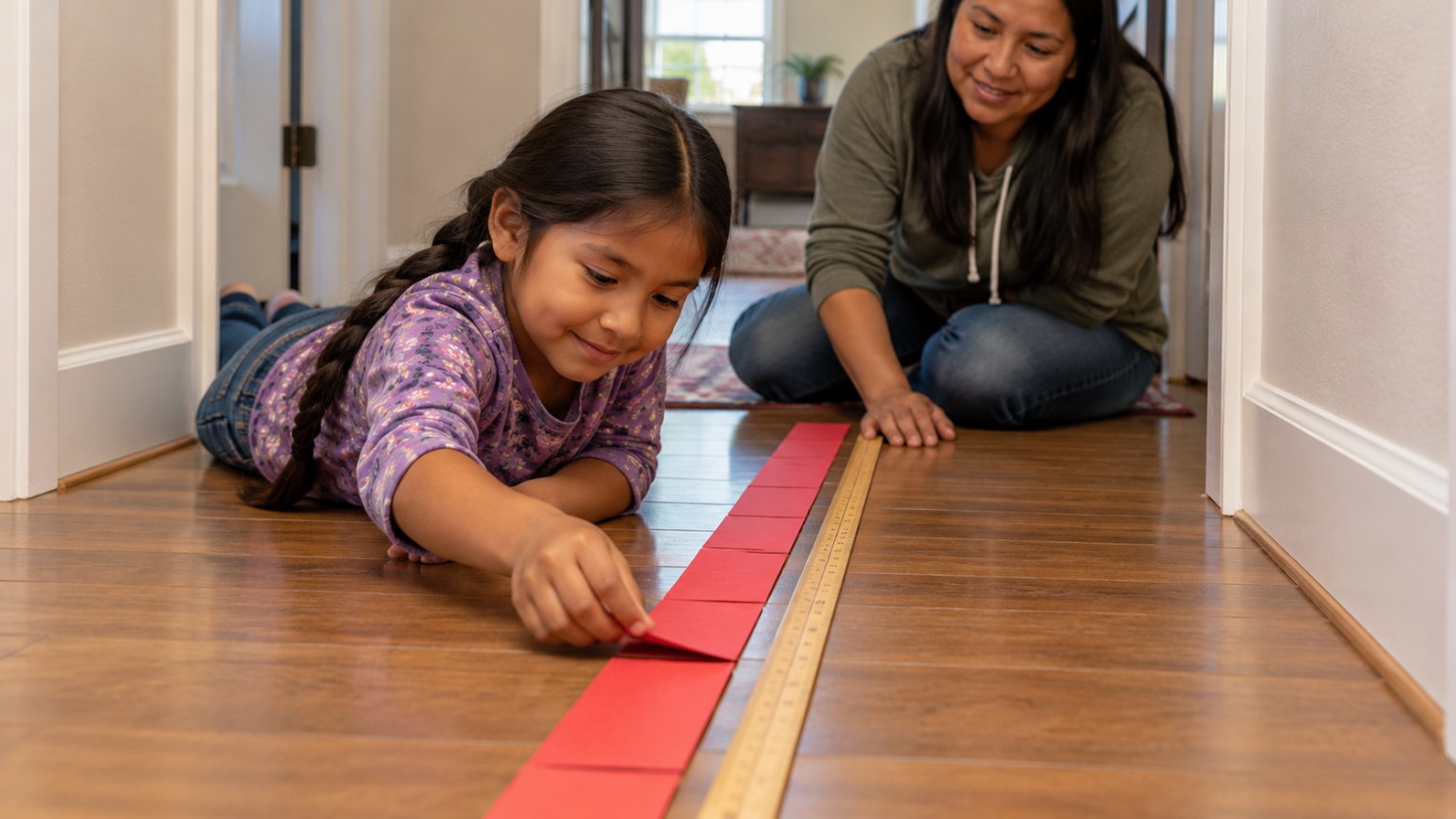
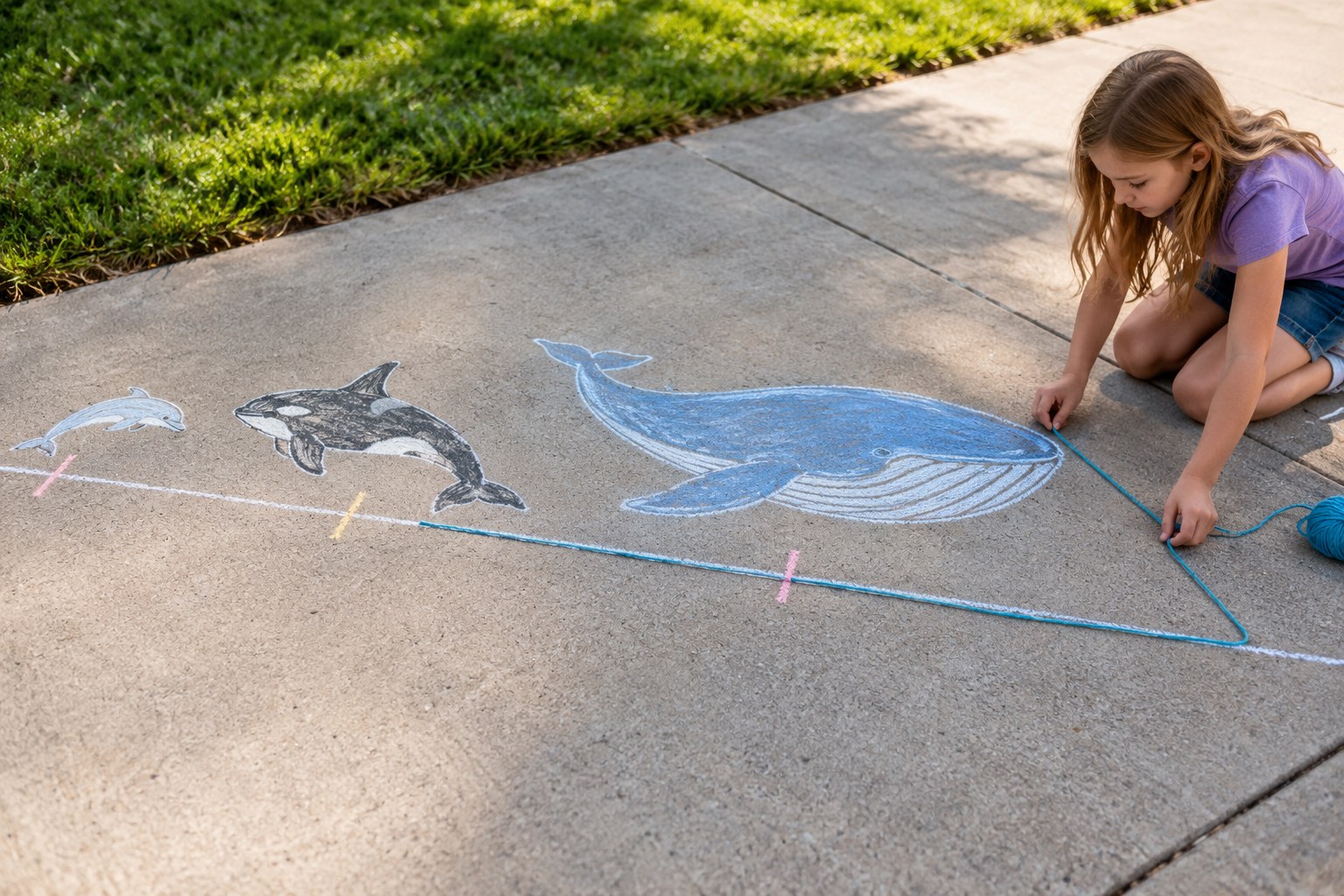
Your child cuts a piece of string exactly as long as they are tall, then lays it end to end along chalk outlines on the sidewalk to find how many 'kid-lengths' long a dolphin, an orca, a whale shark and a blue whale are.
Objective
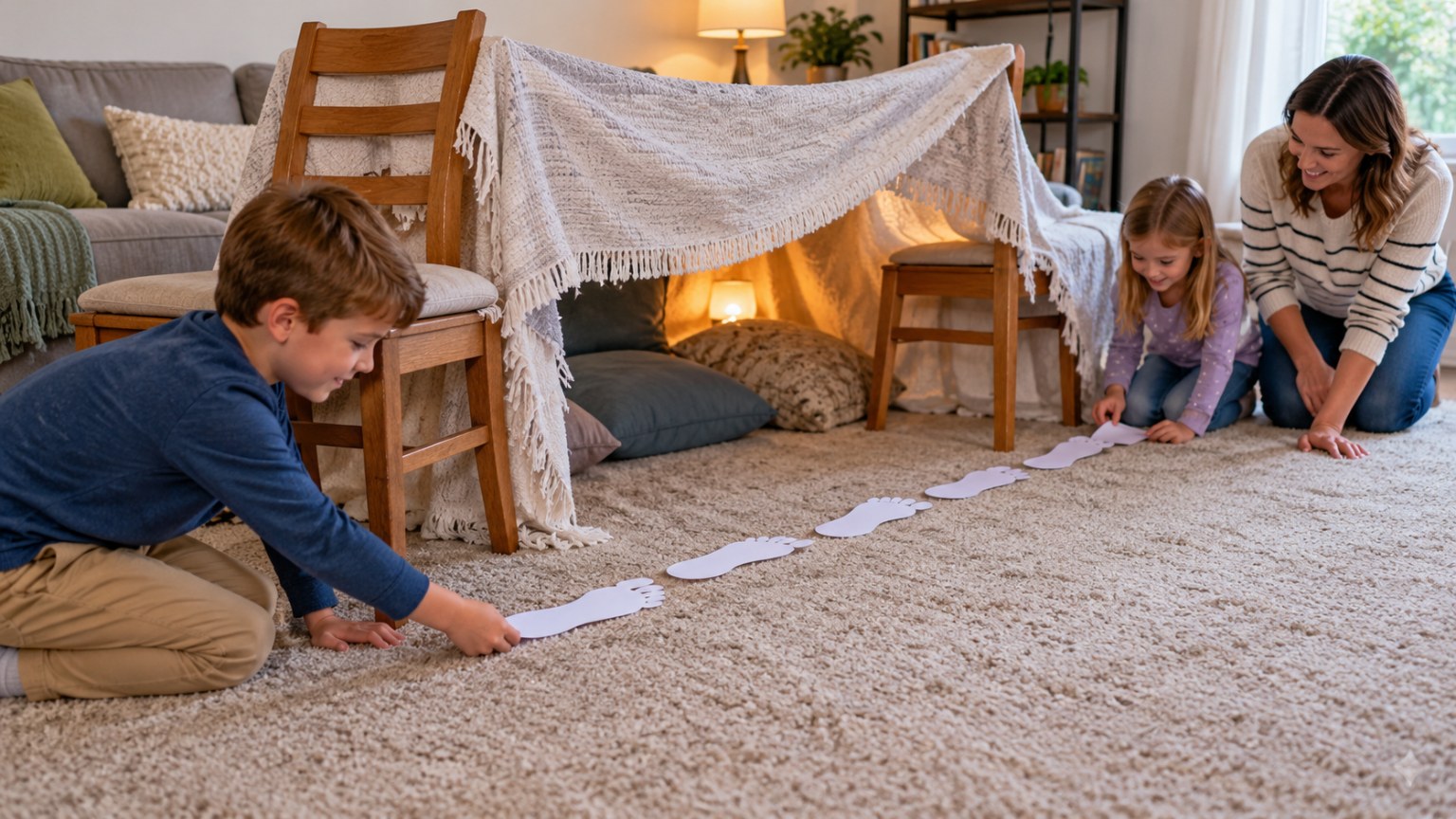
Your child will measure lengths by laying a same-size unit end to end with no gaps or overlaps and tell how many units long each ocean animal is.
Standards
Materials
| Item | Quantity |
|---|---|
| String, yarn or rope | 1 ball (about 10 feet for the unit, plus spare) |
| Sidewalk chalk | 4-5 colors |
| Tape measure (adult use) | 1 |
| Scissors (adult use) | 1 |
| Paper and pencil for a recording chart | 1 each |
| Long sidewalk, driveway, playground or park path about 100 feet long | 1 |
Vocabulary
Preparation
- Find a long safe sidewalk, empty parking-lot edge or park path away from traffic.
- With the tape measure, mark a start line and then finish lines for each animal in its own chalk color: sea otter 4 feet, bottlenose dolphin 10 feet, orca 25 feet, whale shark 40 feet, blue whale 100 feet. Write the animal's first letter at its line (or draw a small picture).
Introduction
Stand at the start line and point all the way down to the blue whale line. Say: a blue whale can be THIS long! How many of you lying head to toe do you think it would take to make one blue whale?
Which ocean animal do you think is the longest? The shortest?
How could we measure something way bigger than a ruler?
Steps
Conclusion
Ask: why did we have to start each string exactly where the last one ended? A blue whale is so big that its heart is about the size of a small car, and it grows that big by eating tiny shrimp-like animals called krill.
Make your own lesson plan in minutes
Describe a topic and Resource Portal AI writes the objectives, materials and steps for your group.
Try Resource Portal AI