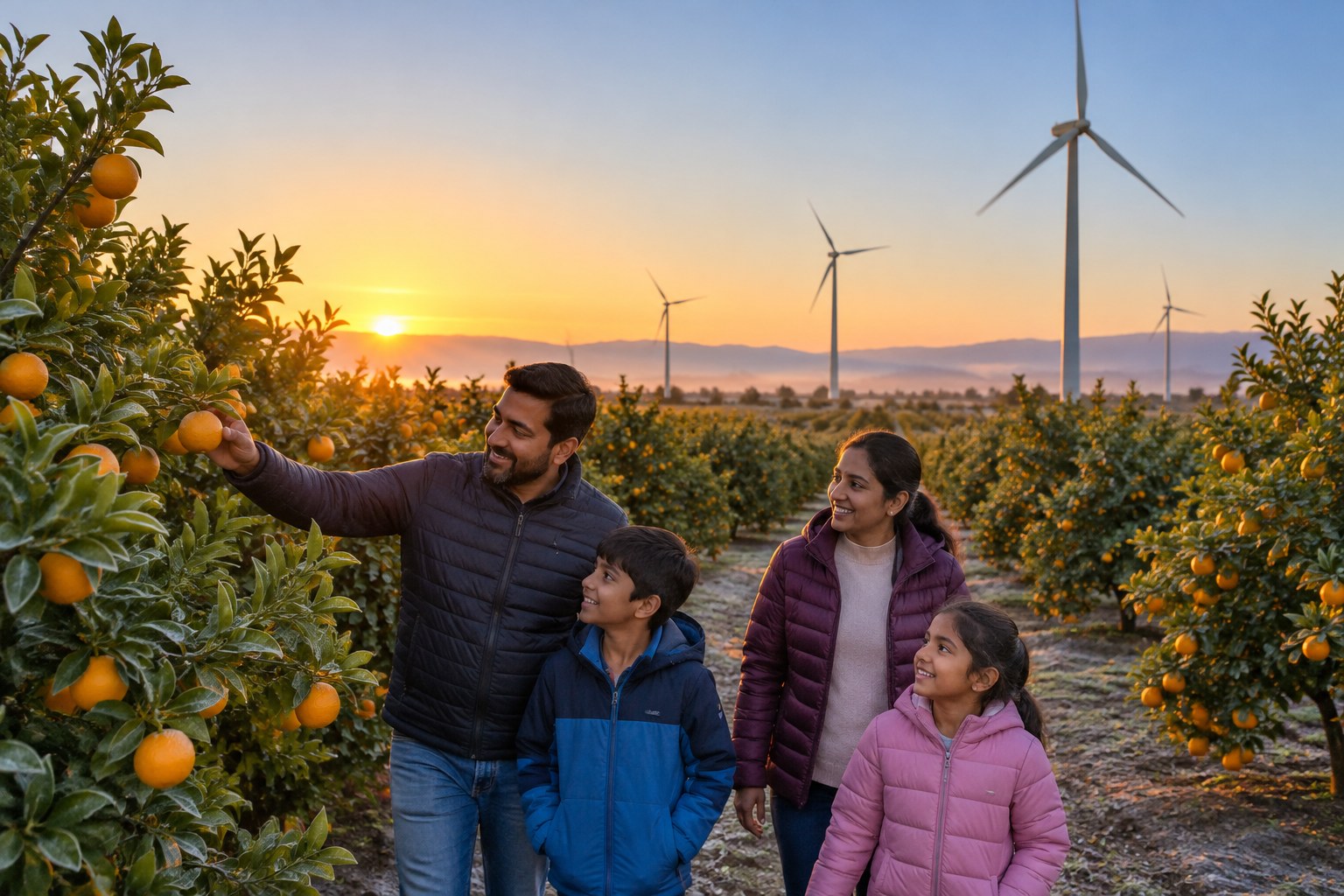
Lesson planFrost Night in the Orange Groves: How Valley Growers Protect Winter Citrus
Agriculture45 minutesGrades: 6th, 7th, 8th
Overview
Read how growers save winter citrus and test the science behind it.
Description
Your teen reads an informational article about how Central Valley citrus growers fight freezing nights with wind machines, irrigation and careful monitoring. They test the article's surprising claim that water can help keep fruit warm with an ice-water thermometer demo, then map how the ideas, events and people in the article connect.
Objective
Your teen will analyze how individuals, events and ideas interact in an informational text, cite evidence to support their analysis, and test one scientific claim from the text.
Standards
RI.7.1ELA · Grade 7 · Reading: Informational Text Cite several pieces of textual evidence to support analysis of what the text says explicitly as well as inferences drawn from the text.
RI.7.3ELA · Grade 7 · Reading: Informational Text Analyze the interactions between individuals, events, and ideas in a text (e.g., how ideas influence individuals or events, or how individuals influence ideas or events).
Materials
| Item | Quantity |
|---|
| The article in this lesson, printed or on a screen | 1 copy |
| Kitchen or candy thermometer | 1 |
| Bowl of ice and a little cold water | 1 |
| Highlighters in 2 colors | 2 |
| Paper and pencil | 1 each |
| An orange or mandarin to examine (optional) | 1 |
Vocabulary
Freeze warning
An alert that temperatures are expected to drop low enough to damage crops or plants.
Temperature inversion
When a layer of warmer air sits above colder air near the ground.
Wind machine
A tall fan in an orchard that pulls warmer air from above down to the trees.
Latent heat
Heat released or absorbed when a substance changes state, such as water freezing.
Preparation
- Fill a bowl with ice and add a small amount of cold water so it is a slushy mix.
- Print or open the article and the cause-and-effect organizer from the additional sections.
Introduction
Ask your teen: if a frost is coming tonight, would you spray water on an orange tree to protect it? Most people say no. By the end of this lesson they'll know why growers sometimes do something close to that.
Why might a single cold night matter so much to a farm?
Where does the fruit in our kitchen come from in January?
Steps
1Step 1
Read and mark
(12 min) Your teen reads the article, highlighting people and groups (growers, forecasters, workers) in one color and actions or events (freeze warning, running wind machines, irrigating) in another. They jot one question in the margin.
2Step 2
Test the water claim
(8 min) Your teen puts the thermometer in the ice slush and checks it every minute for 5 minutes. They notice the temperature stays near 32°F (0°C) as long as ice and water are both present, which is the idea behind the article's claim that freezing water releases heat and keeps things from getting colder than 32°F.
3Step 3
Map the connections
(12 min) Using the organizer, your teen draws arrows showing how one thing leads to another, for example: clear, calm night leads to cold air settling, which leads to the freeze warning, which leads to growers turning on wind machines. They add at least one quote from the article to each arrow.
4Step 4
Discuss impact
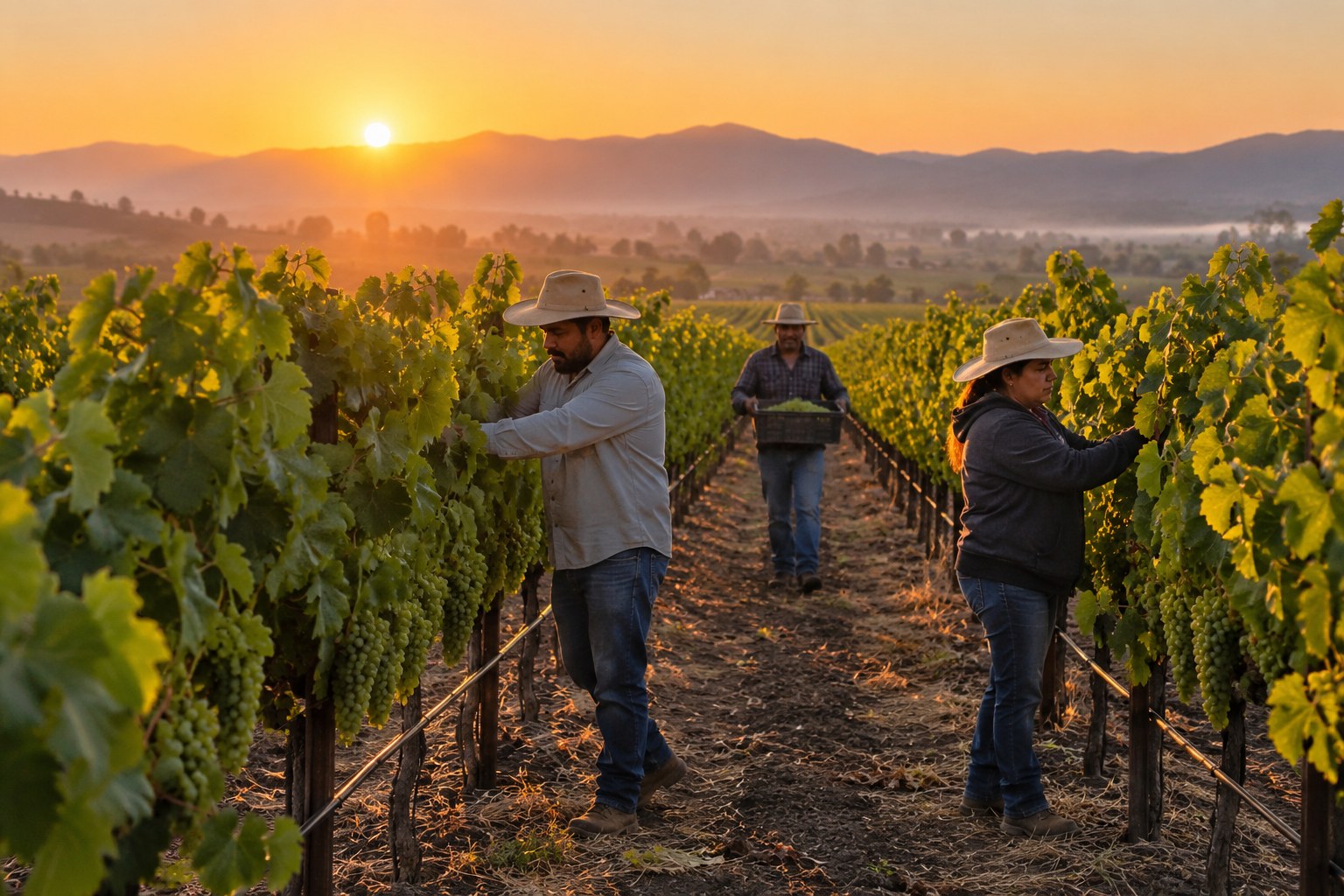
(8 min) Talk together: who is affected when a freeze damages a crop? Your teen explains how growers, farmworkers, packing houses and shoppers are connected, using evidence from the article.
Conclusion
Ask: which protection method surprised you most, and why does it work? Next time you buy oranges in winter, check the label to see where they were grown.
Make your own lesson plan in minutes
Describe a topic and Resource Portal AI writes the objectives, materials and steps for your group.
Try Resource Portal AI