Free lesson planHuman Body Touch Map: The Two-Point Skin Sense Test
Science40 minutesGrades: 3rd, 4th, 5th
Overview
Discover which parts of your skin are the most sensitive.
Description
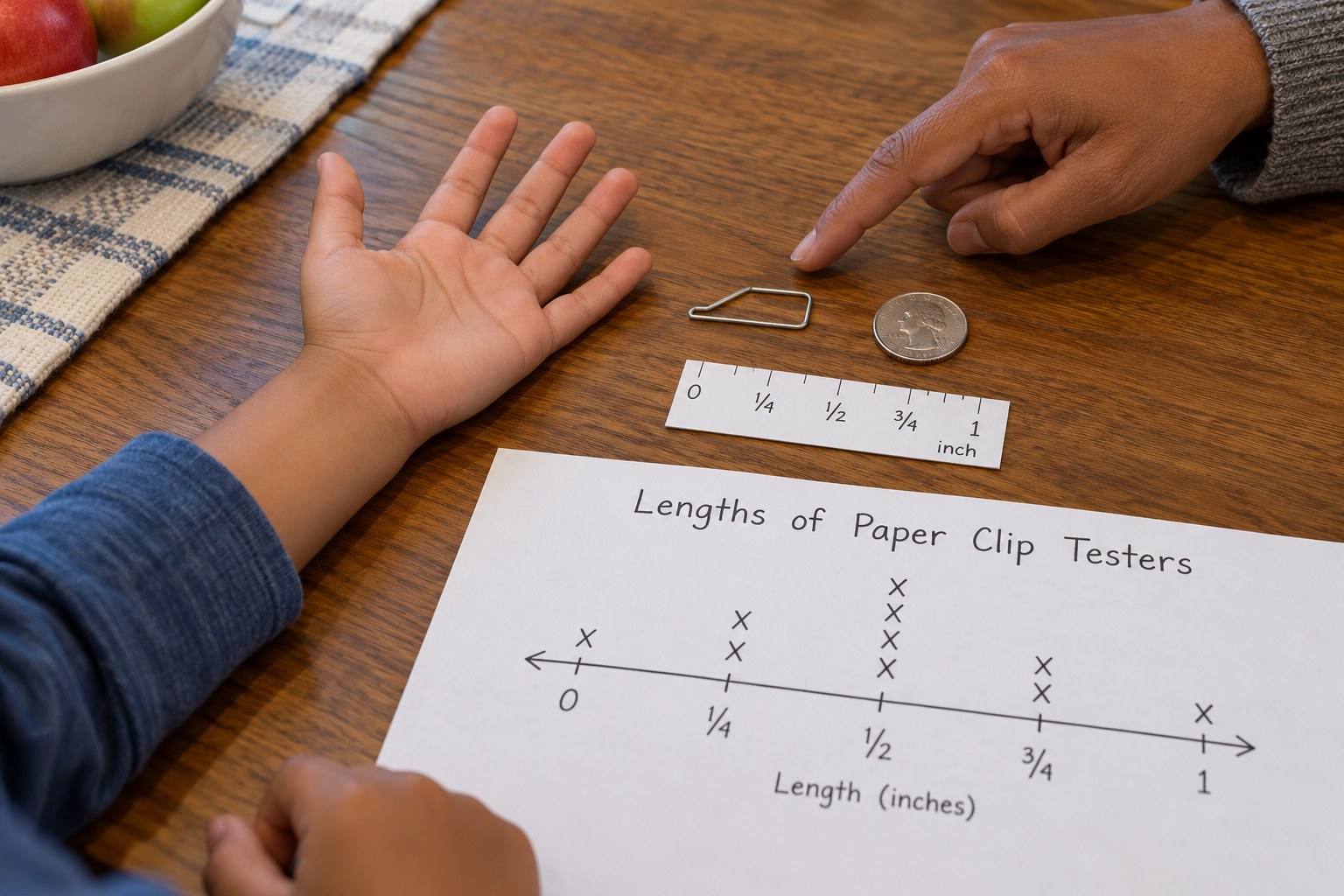
Your child bends a paper clip into a two-pronged tester, measures the gap between the points in fractions of an inch, and tests family members' fingertips, palms, forearms and shoulders with eyes closed to find out which parts of the skin can tell one point from two, then shows the results on a line plot.
Objective
Your child will measure distances to the nearest quarter inch, collect two-point touch data on several body areas, display the data on a line plot and explain why fingertips are more sensitive.
Standards
3.MD.4Math · Grade 3 · Measurement & Data Generate measurement data by measuring lengths using rulers marked with halves and fourths of an inch. Show the data by making a line plot, where the horizontal scale is marked off in appropriate units— whole numbers, halves, or quarters.
Materials
| Item | Quantity |
|---|
| Large paper clips | 2 per tester |
| Ruler marked in quarter inches | 1 |
| Touch map recording sheet from this lesson | 1 per child |
| Pencil | 1 per child |
| Optional: blindfold or sleep mask | 1 |
Vocabulary
Receptor
A tiny nerve ending in your skin that senses things like pressure, heat or pain.
Sensitive
Able to notice very small changes.
Two-point threshold
The smallest gap between two touches that you can feel as two separate points.
Nerve
A body cord that carries messages between your body and your brain.
Line plot
A number line with X marks that shows how often each value appears.
Preparation
- Unbend each paper clip into a U shape with two straight legs, and file or check that the tips are smooth and not sharp.
- Copy the recording sheet; one family member or classmate will be the tester and one the subject, then switch.
Introduction
Without letting your child look, touch the back of their forearm with two fingertips held close together. Ask: "Was that one finger or two?" Then do the same on their fingertip.
Which part of your body do you use to feel if something is soft or bumpy?
Why might some parts of your skin need to feel more than others?
Steps
1Step 1
Make and measure the tester
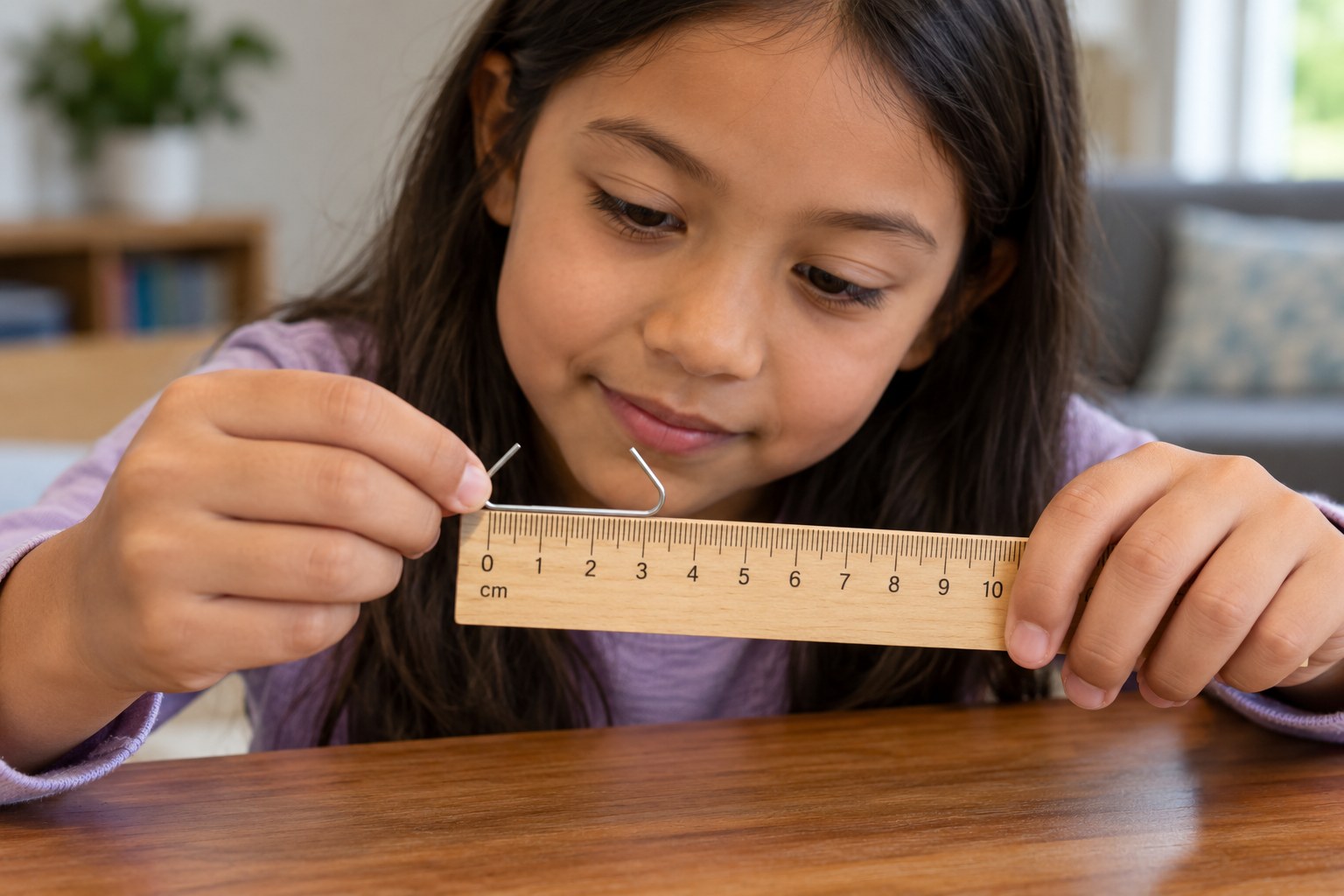
(7 min) Your child adjusts the U-shaped paper clip so the two tips are 1/4 inch apart, checking against the ruler. They practice changing the gap to 1/2, 3/4, 1, 1 1/2 and 2 inches and measuring each one carefully to the nearest quarter inch.
2Step 2
Practice fair testing
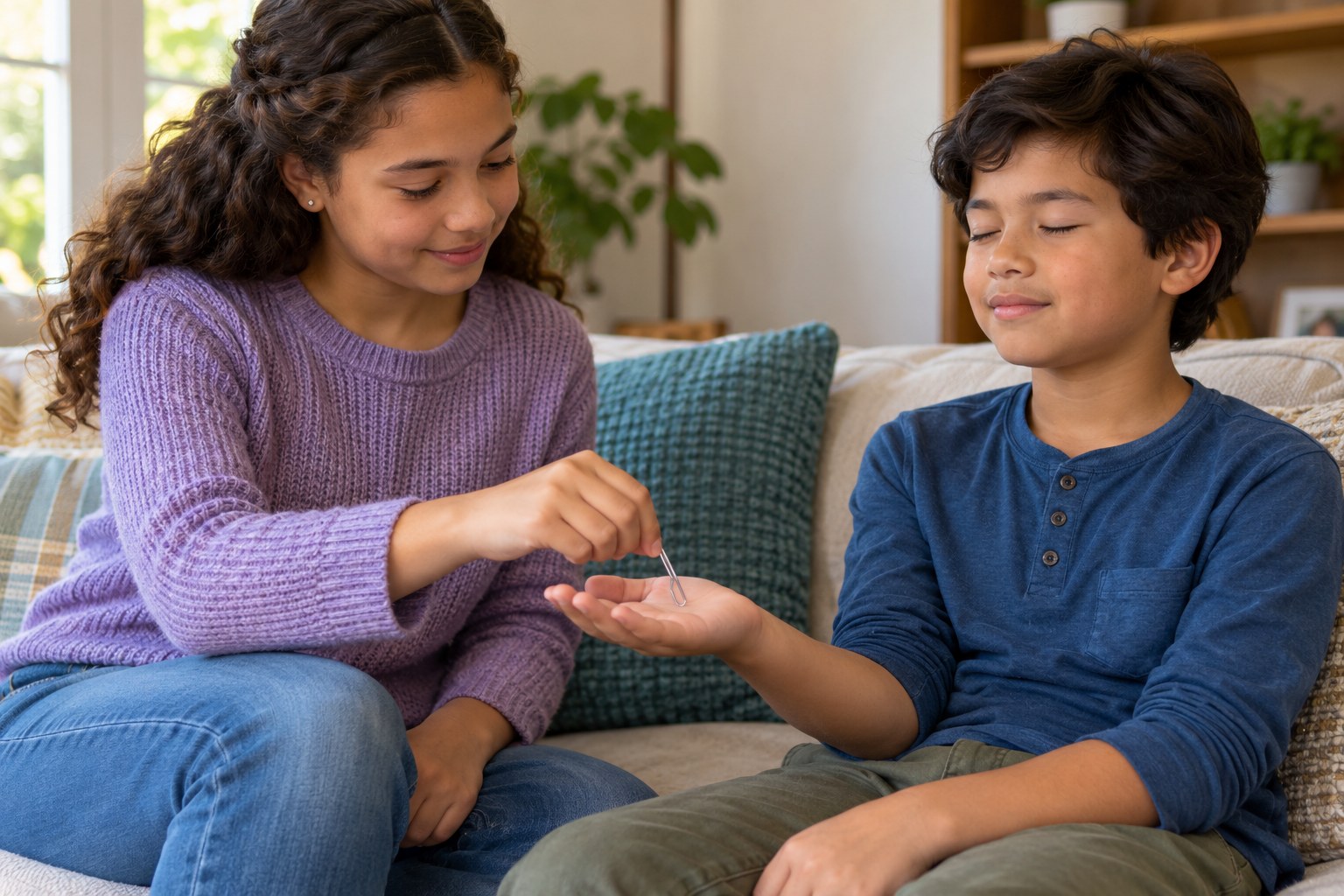
(5 min) Explain the rules: the subject closes their eyes, the tester touches gently and at the same time with both tips (or only one tip, as a trick), and the subject says "one" or "two." Mixing in single-tip touches keeps the subject honest. Press lightly; this test should never hurt.
3Step 3
Test four body spots
(14 min) For each spot (fingertip, palm, back of the forearm, back of the shoulder) start at the 2-inch gap and make it smaller, testing three times at each gap. Record the smallest gap the subject correctly calls "two" at least two out of three times.
4Step 4
Switch and collect more data
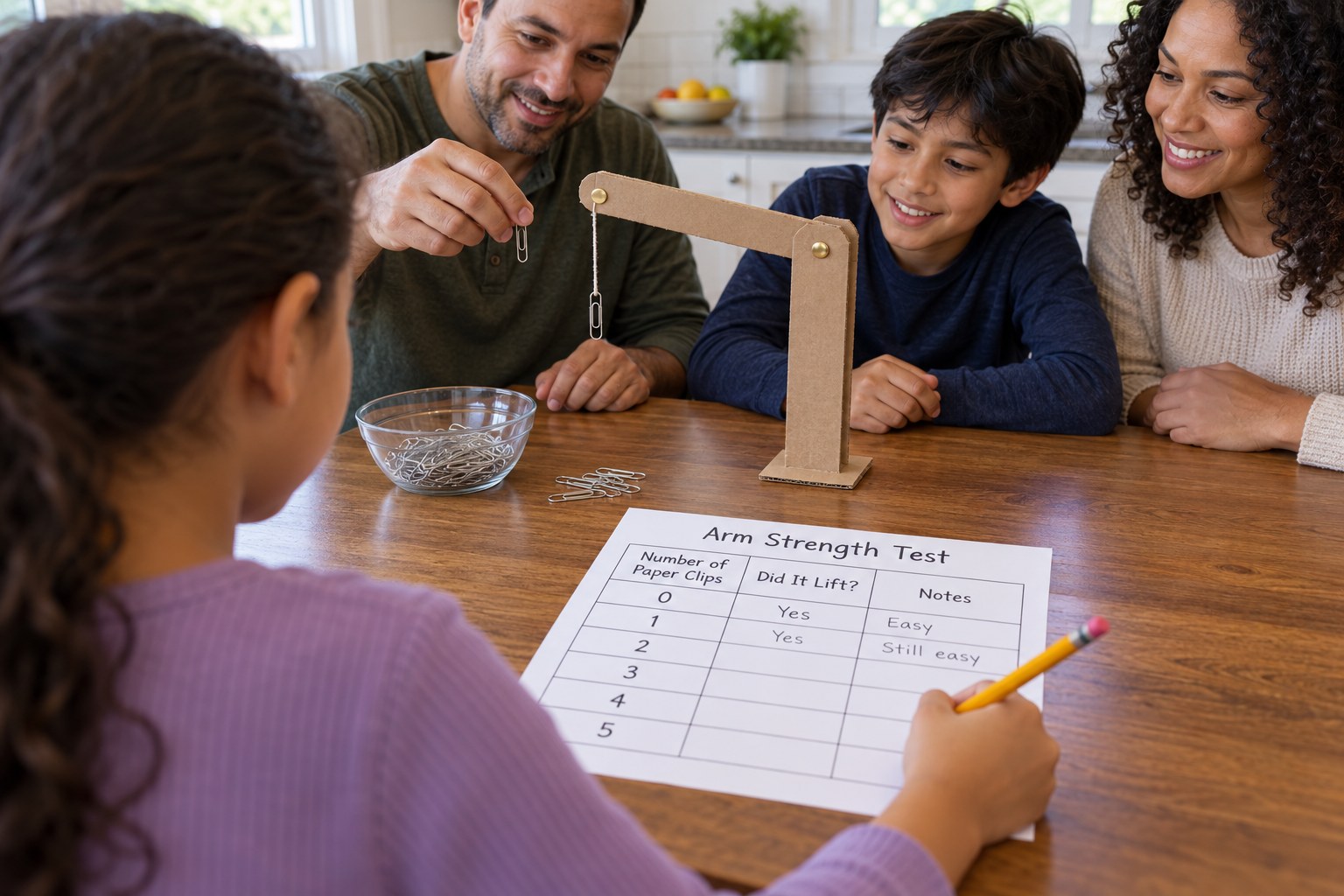
(6 min) Switch roles and test at least two more people, or combine data with a classmate group, so you have 3 to 6 fingertip results and 3 to 6 forearm results. More data makes the pattern easier to trust.
5Step 5
Make a line plot
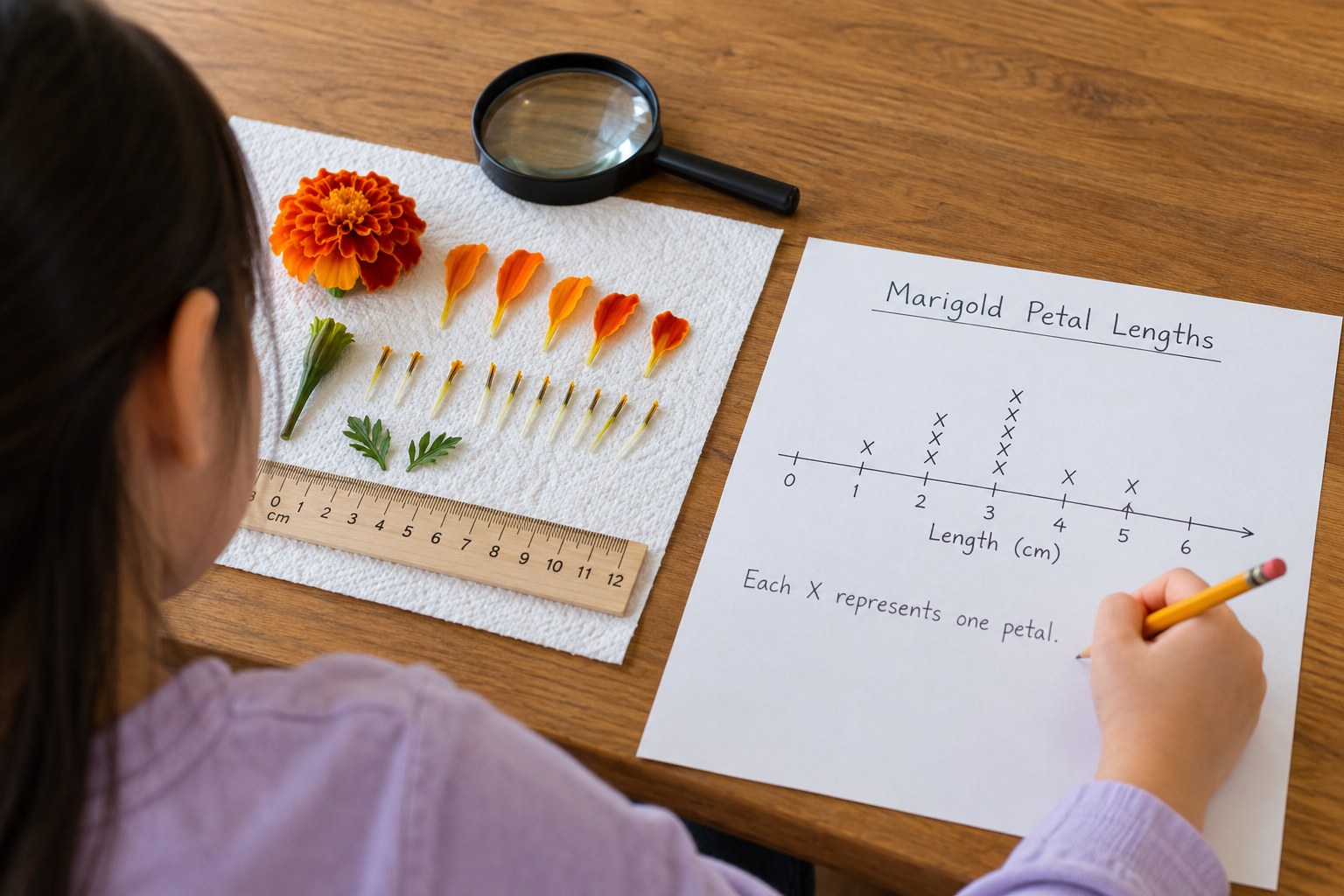
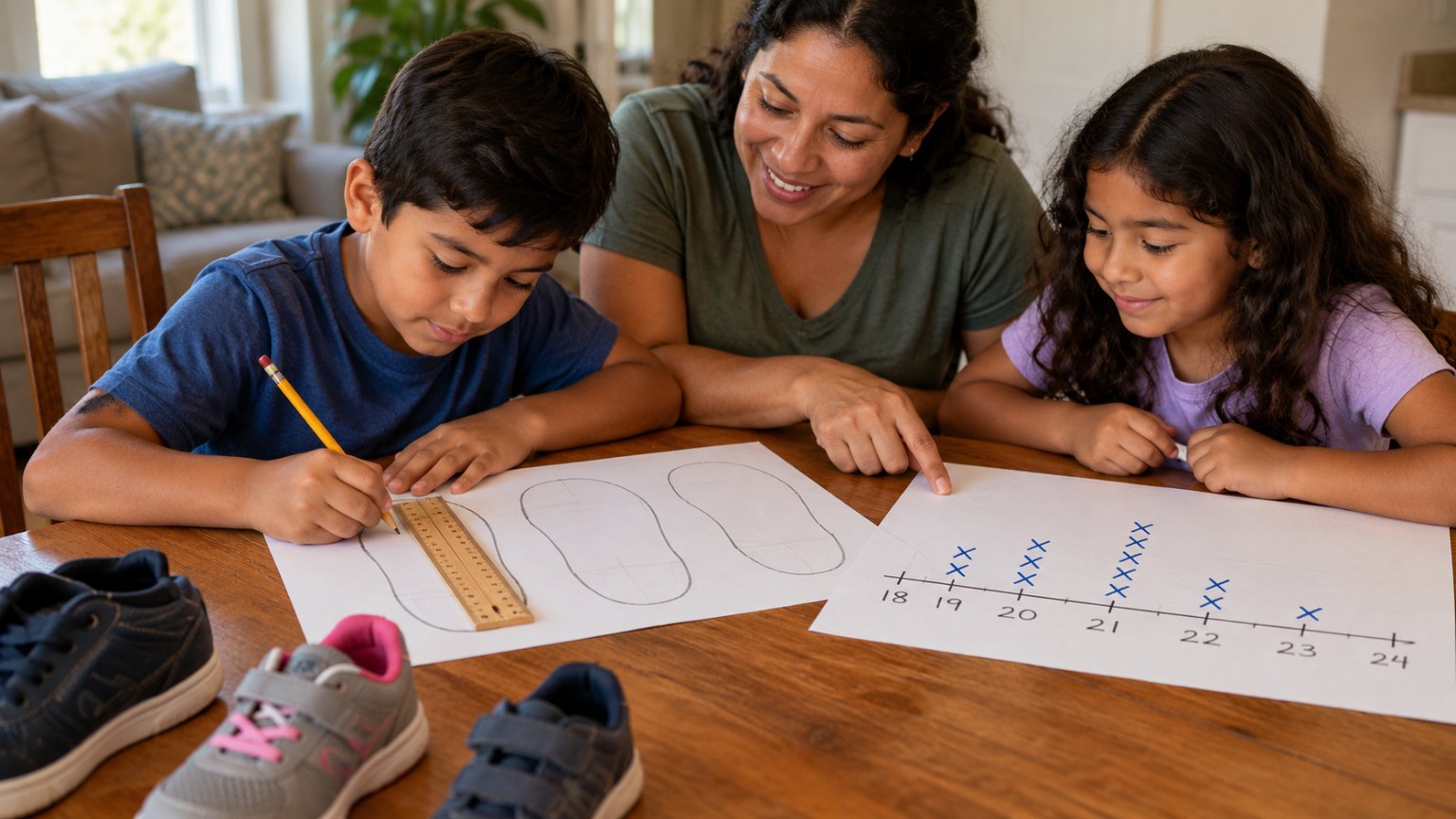
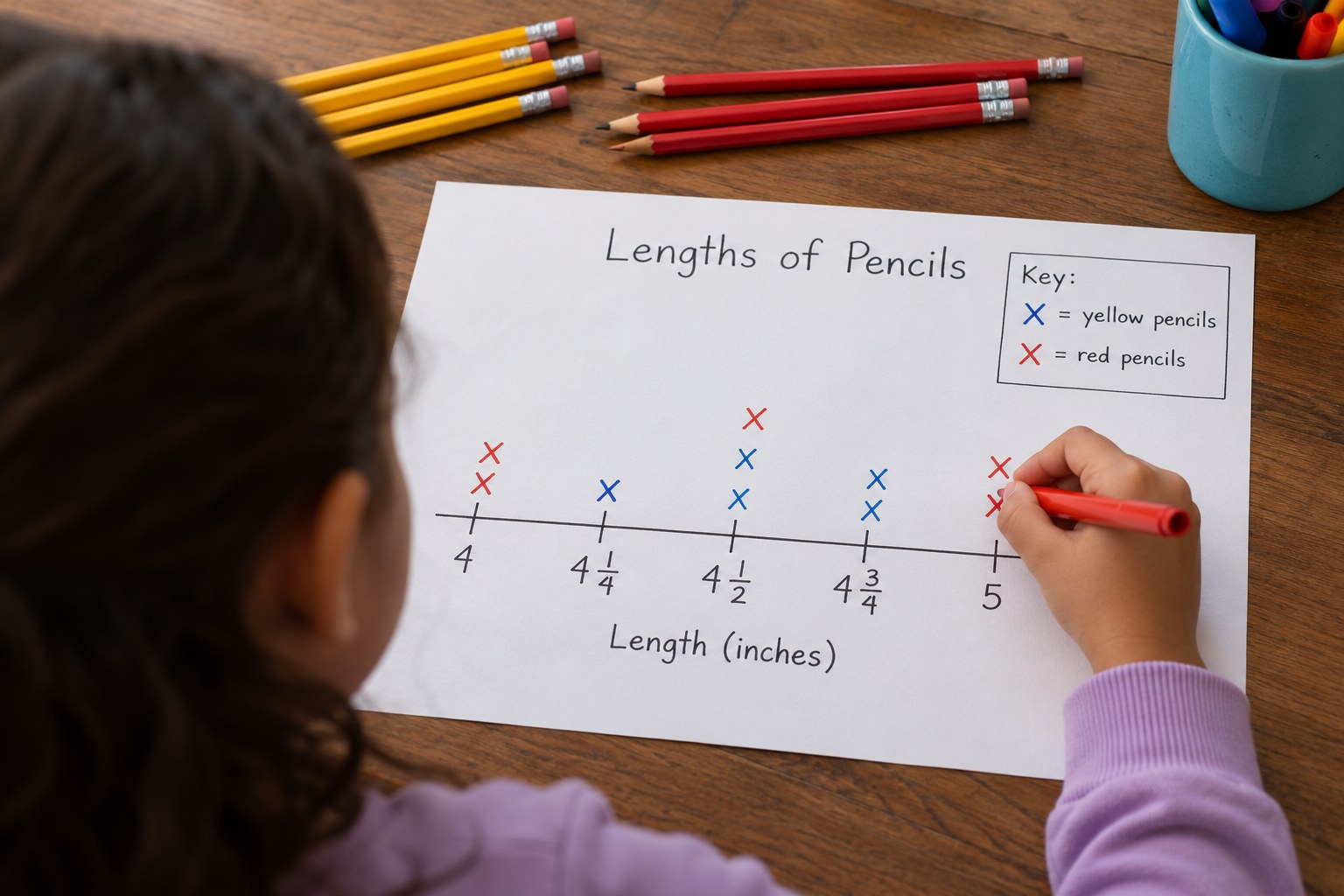
(8 min) Your child draws a number line from 0 to 2 inches marked in quarter inches and puts an X above the value for each fingertip result in one color and each forearm result in another. Discuss which spot needed the smallest gap and why.
Conclusion
Ask: which body part could feel two points closest together? Why would it help to have very sensitive fingertips? Try the test on your lips or the bottom of your foot another day and predict first.
Make your own lesson plan in minutes
Describe a topic and Resource Portal AI writes the objectives, materials and steps for your group.
Try Resource Portal AI