Poinsettia Detective: Leaf or Flower?
Overview
Find out what the poinsettia's red 'petals' really are.
Description
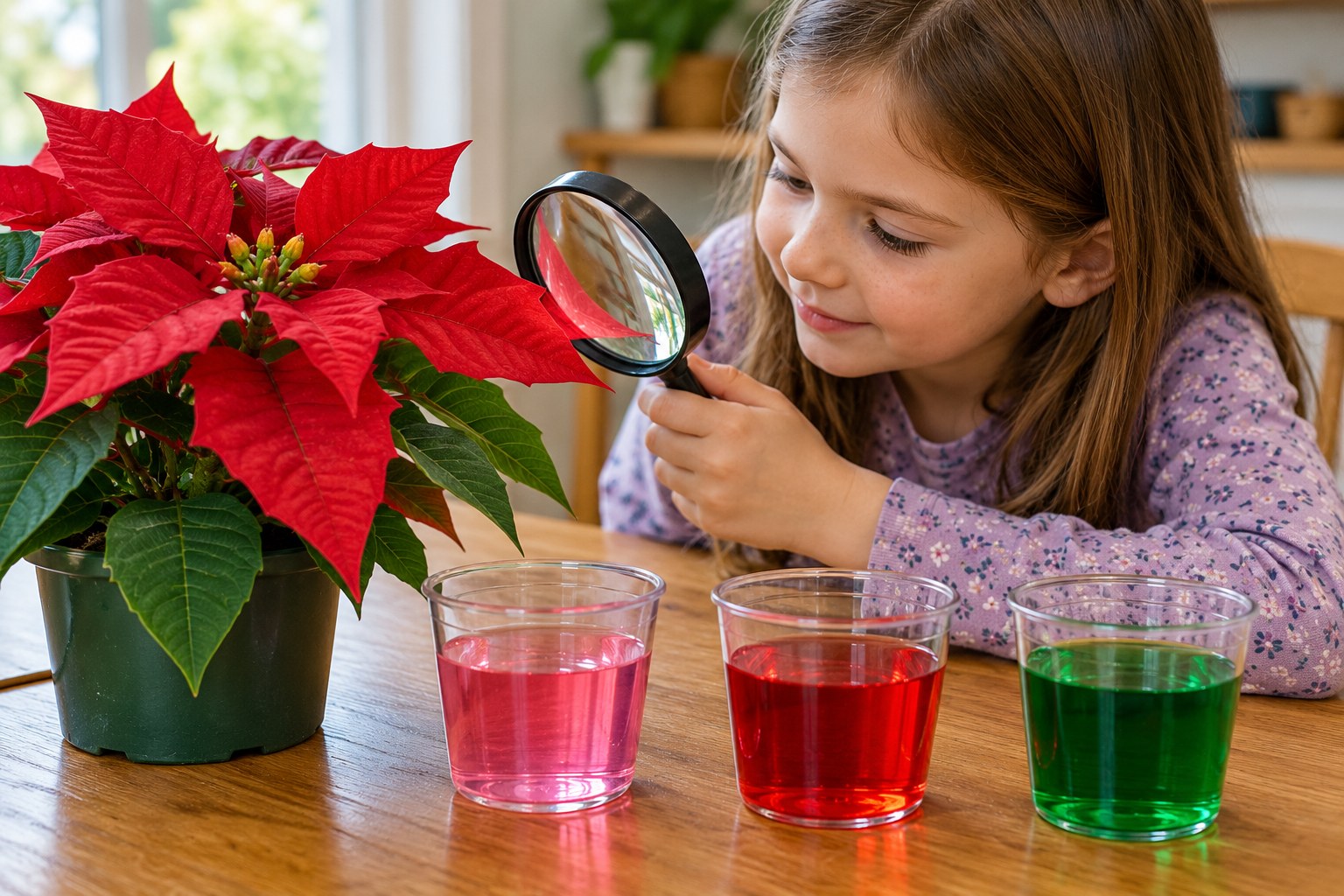
Your child investigates a poinsettia, the red Christmas plant from Mexico, discovers that its red 'petals' are actually colored leaves called bracts, then makes a color-changing juice from them to test vinegar and baking soda.
Objective
Your child will identify a poinsettia's bracts, true flowers and leaves, explain how each part helps the plant, and use bract juice as an acid-base indicator.
Materials
| Item | Quantity |
|---|---|
| Poinsettia plant (or 2 to 3 fallen red bracts from one) | 1 |
| Magnifying glass | 1 |
| Disposable gloves | 1 pair per person |
| Hot tap water and a heat-safe bowl | 1 cup |
| White vinegar and baking soda dissolved in water | 2 tablespoons each in separate cups |
| Clear cups and a spoon | 3 cups |
| Paper and colored pencils | 1 set |
Vocabulary
Preparation
- Put on gloves when handling the plant; the milky sap can irritate skin and eyes. Keep the plant away from pets and small children.
- Set up three clear cups and label them 'juice only', 'vinegar' and 'baking soda'.
Introduction
Point to the red part of a poinsettia and ask: are these flower petals? Most people say yes, but a scientist would look closer.
What jobs do flowers and leaves do for a plant?
Why might a plant have bright colors?
Steps
Conclusion
Ask: so is the poinsettia's red part a leaf or a flower? (A colored leaf.) Challenge: test other kitchen liquids like lemon juice or soapy water.
Make your own lesson plan in minutes
Describe a topic and Resource Portal AI writes the objectives, materials and steps for your group.
Try Resource Portal AI