Lesson planValentine's Day Unit Rates: Roses, Chocolate and Cupcakes
Math40 minutesGrades: 6th, 7th
Overview
Use unit rates to find the best Valentine deals.
Description
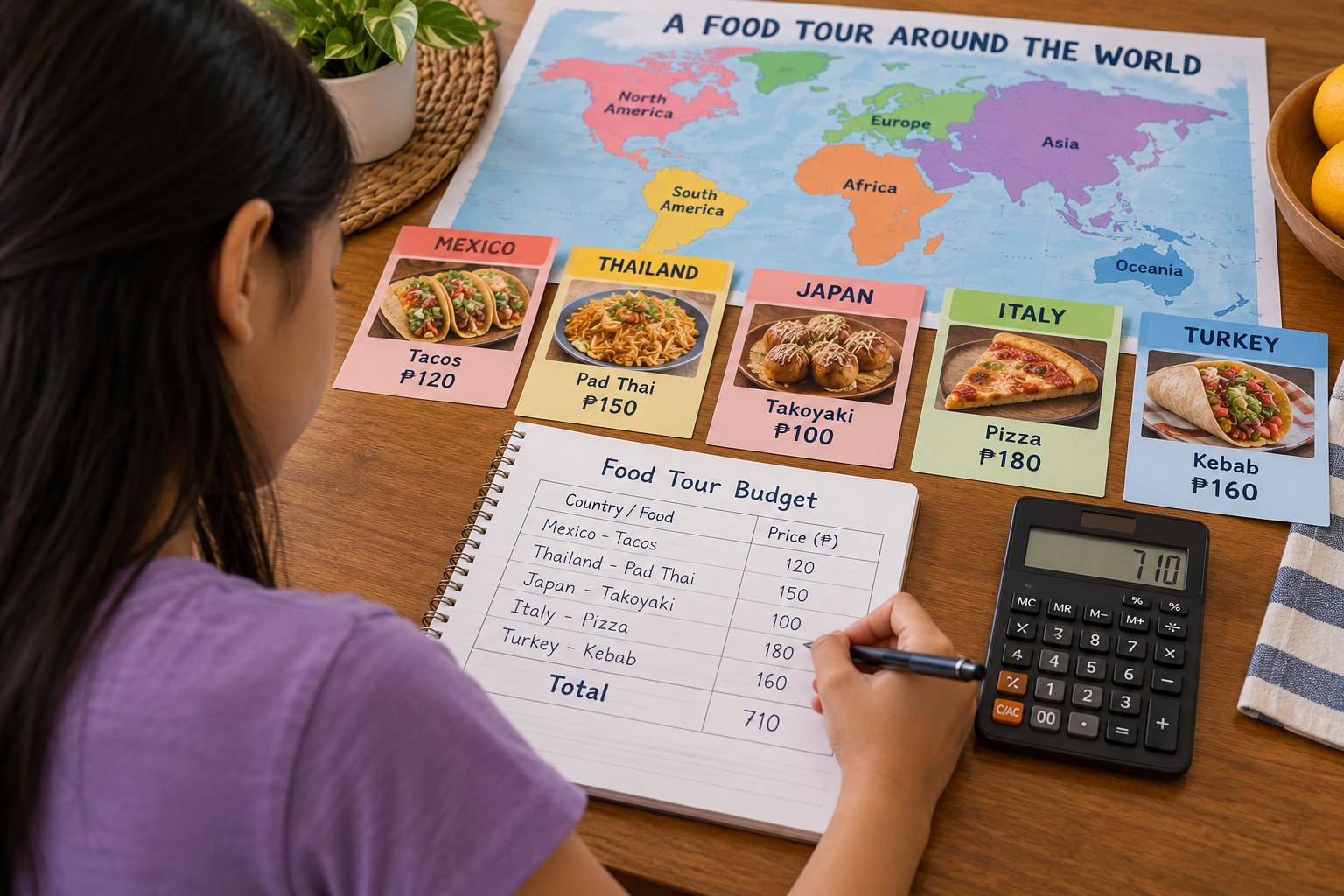
Your teen compares Valentine's Day prices for roses, boxes of chocolate and party cupcakes by calculating unit prices, tests whether each store's prices are proportional, and recommends the best buys for a class party.
Objective
Your teen will compute unit prices to compare deals, decide whether price and quantity are in a proportional relationship using a table, and justify a purchase recommendation with math.
Standards
6.RP.3bMath · Grade 6 · Ratios & Proportional Relationships Solve unit rate problems including those involving unit pricing and constant speed.
7.RP.2aMath · Grade 7 · Ratios & Proportional Relationships Decide whether two quantities are in a proportional relationship, e.g., by testing for equivalent ratios in a table or graphing on a coordinate plane and observing whether the graph is a straight line through the origin.
Materials
| Item | Quantity |
|---|
| Price sheet from the section below | 1 copy |
| Graph paper and pencil | 2 sheets and 1 pencil per teen |
| Calculator | 1 |
| Grocery store flyer or website prices (optional, for a real comparison) | 1 |
Vocabulary
Unit rate
A rate that compares a quantity to 1 unit of another, such as dollars per rose.
Unit price
The cost for one item or one unit of measure, like dollars per ounce.
Proportional relationship
Two quantities whose ratio stays the same, so the table has equivalent ratios and the graph is a straight line through the origin.
Bulk pricing
A lower price per item when you buy a larger amount.
Preparation
- Copy the price sheet. If you want real data, have your teen look up current prices for roses or chocolate at two local stores.
Introduction
Say: a florist sells one rose for $3.50, but a dozen for $30. Is the dozen really a deal, or just a bigger number? Let's find out what one rose actually costs in each deal.
Why might rose prices go up in early February?
How can you compare two packages that are different sizes?
Steps
1Step 1
Rose unit prices
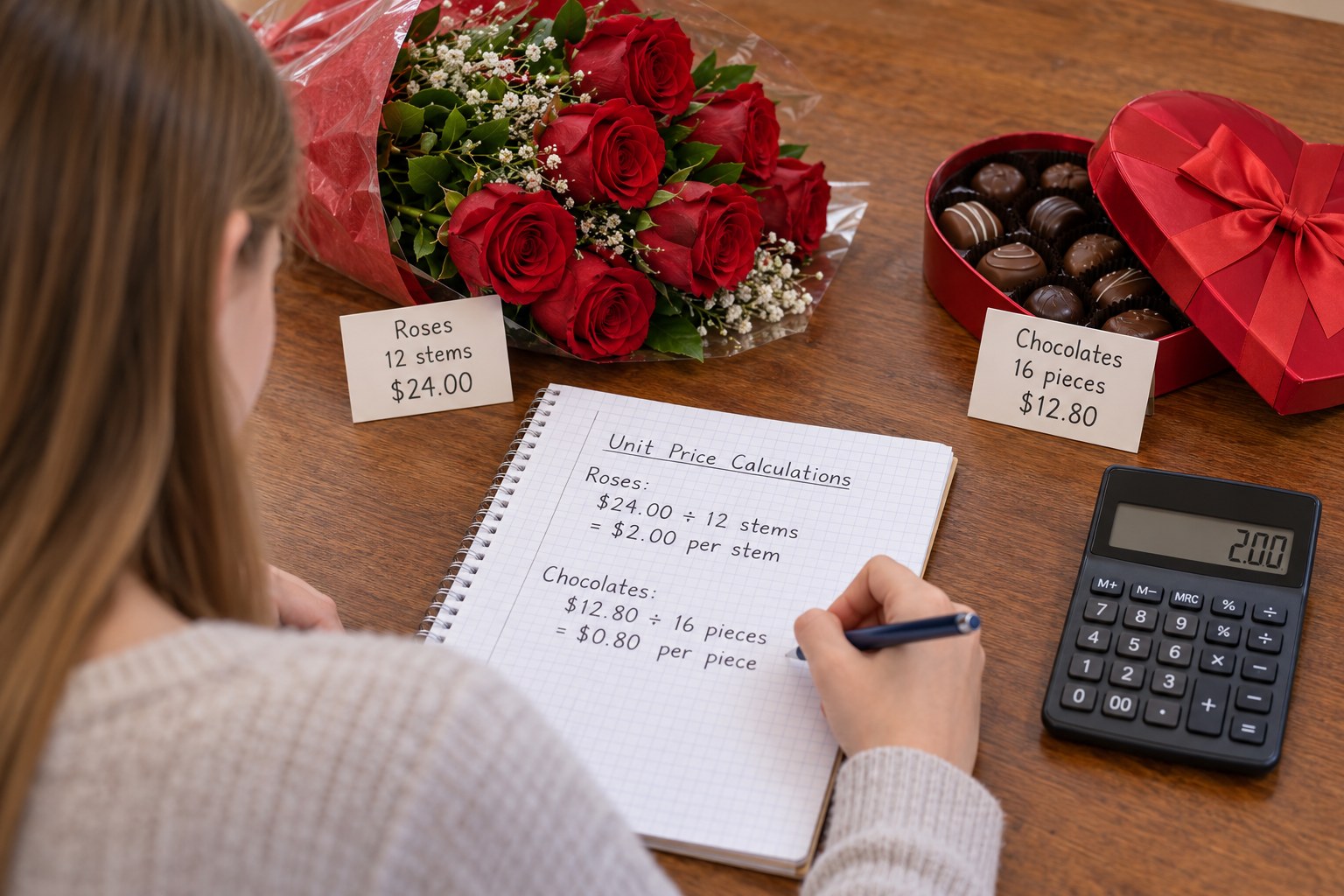
(8 min) Your teen finds the price per rose for the single, dozen and 24-rose bundle. They rank the options and explain whether buying more always saves money.
2Step 2
Chocolate by the ounce
(8 min) Your teen calculates the price per ounce for the 3 chocolate boxes, rounding to the nearest cent. They note that the middle-size box costs more per ounce than the small one, and suggest why stores price things that way.
3Step 3
Proportional or not?
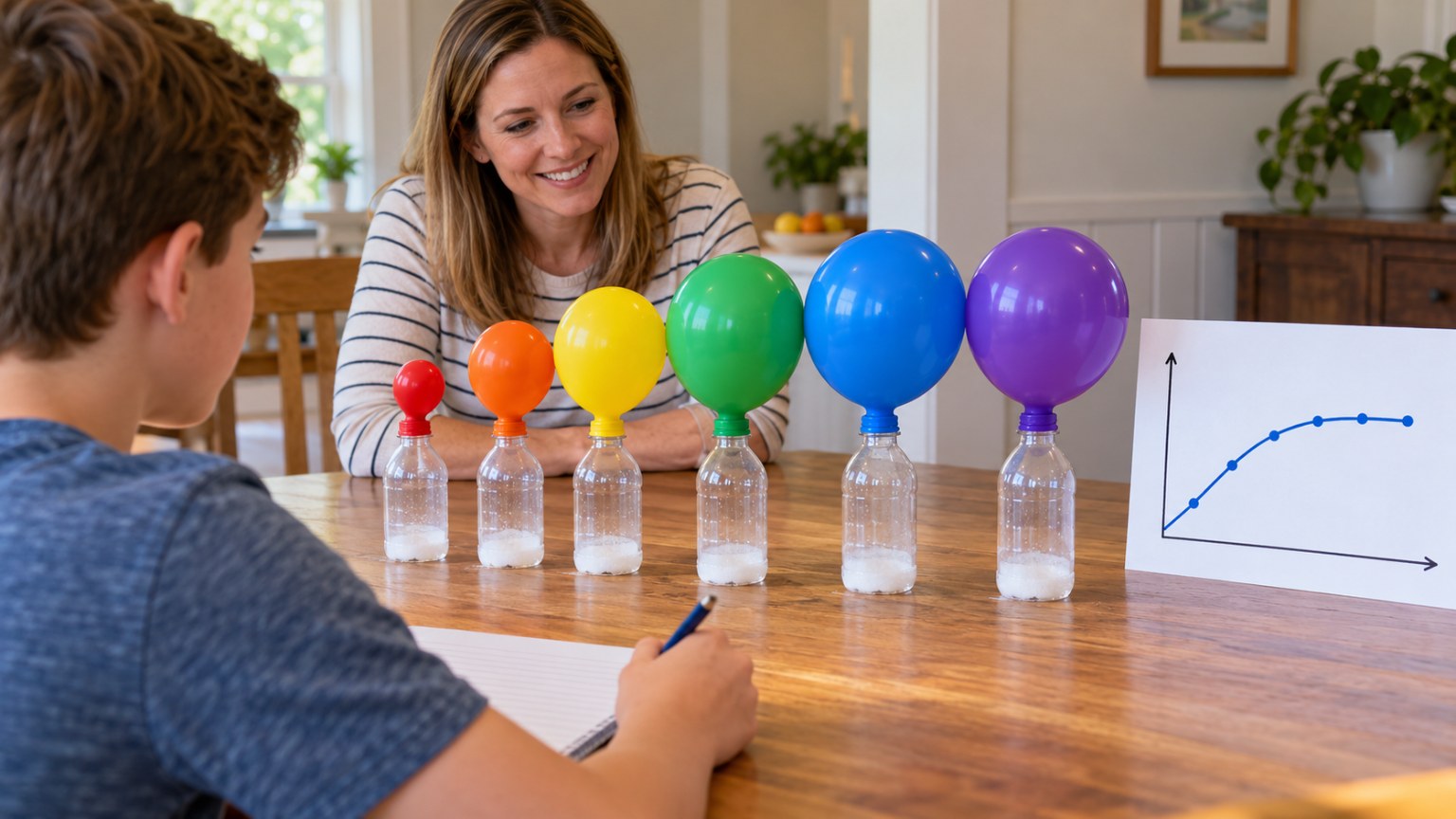
(10 min) Your teen makes a table of quantity and total price for Store A's cupcakes (sold individually) and Store B's cupcakes (individual or 24-pack). They test each table for equivalent ratios and graph both on the same axes to see which line goes straight through the origin.
4Step 4
Plan the party
(8 min) Your teen needs 30 cupcakes and 2 dozen roses for a class party and finds the cheapest combination using the unit prices. They write a short recommendation with the total cost and the math that supports it.
5Step 5
Check with real prices
(4 min) If you collected real prices, your teen calculates one unit price from a real store and compares it to the price sheet. Discuss how demand around holidays can change prices.
Conclusion
Ask: how will you use unit prices the next time you shop? Unit rates are one of the most useful math tools for everyday money decisions.
Make your own lesson plan in minutes
Describe a topic and Resource Portal AI writes the objectives, materials and steps for your group.
Try Resource Portal AI