Free lesson planAncient Greek Science: Measure Shadow Angles Like Eratosthenes
Science45 minutesGrades: 4th, 5th
Overview
Use shadows and a protractor to see how a Greek scholar measured Earth.
Description
Your child learns how Eratosthenes, a Greek scholar in Alexandria, used shadows and angles to estimate the size of Earth over 2,000 years ago, tests shadows on a flat board and a curved board with a flashlight, measures the shadow angles with a protractor, and repeats his famous calculation.
Objective
Your child will measure angles with a protractor, explain why shadows differ on a curved surface, and use the fraction 7.2/360 to estimate Earth's circumference as Eratosthenes did.
Standards
4.MD.5aMath · Grade 4 · Measurement & Data An angle is measured with reference to a circle with its center at the common endpoint of the rays, by considering the fraction of the circular arc between the points where the two rays intersect the circle. An angle that turns through 1/360 of a circle is called a "one-degree angle," and can be used to measure angles.
4.MD.6Math · Grade 4 · Measurement & Data Measure angles in whole-number degrees using a protractor. Sketch angles of specified measure.
Materials
| Item | Quantity |
|---|
| Two sharpened pencils or short sticks | 2 |
| Modeling clay or tape to stand them up | 1 small lump |
| A piece of flat cardboard and a long strip of thin cardboard (cereal box) to bend into a curve | 1 each |
| Flashlight (or bright sun outdoors) | 1 |
| Protractor | 1 per child |
| String and a ruler | 1 each |
| Paper and pencil | 1 per child |
Vocabulary
Angle
The amount of turn between two lines that meet at a point, measured in degrees.
Protractor
A tool for measuring angles in degrees.
Circumference
The distance all the way around a circle or sphere.
Estimate
A careful, reasoned guess using the information you have.
Preparation
- Gather the materials and test that the flashlight makes clear shadows in a dim room.
- Cut a cardboard strip about 4 inches wide and 18 inches long that can bend into an arch.
- Practice lining up a protractor yourself: center point on the vertex, zero line on one side of the angle.
Introduction
Around 240 BCE, a scholar named Eratosthenes ran the great library in Alexandria, a city in Egypt where many Greek scholars worked. With no satellites or airplanes, he figured out how big the whole Earth is using shadows, angles and a little math.
How could a shadow tell you anything about the shape of the Earth?
If the ground were flat, would shadows in two cities look the same at noon?
What tools could a scientist use 2,000 years ago?
Steps
1Step 1
Flat Earth test
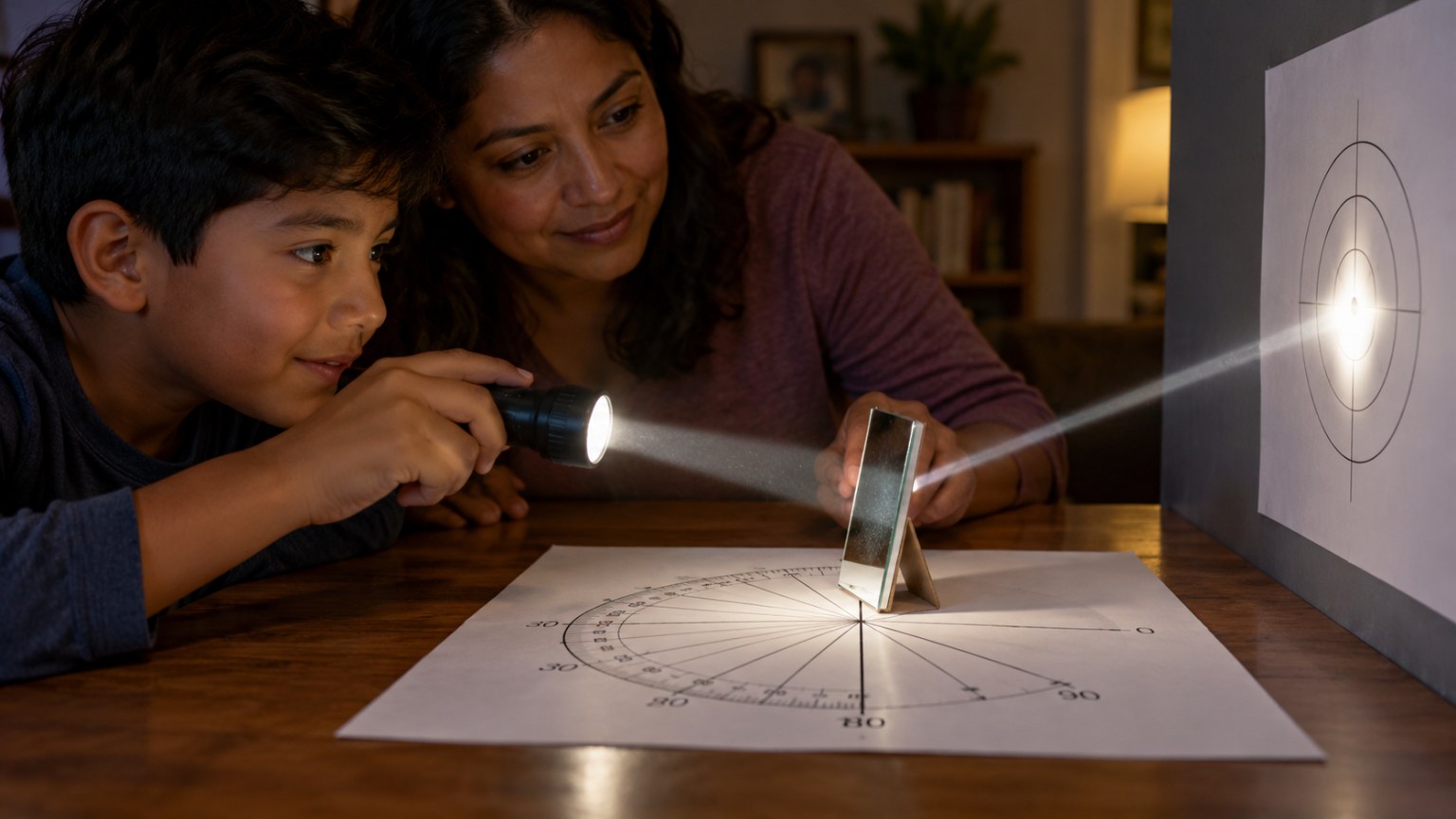
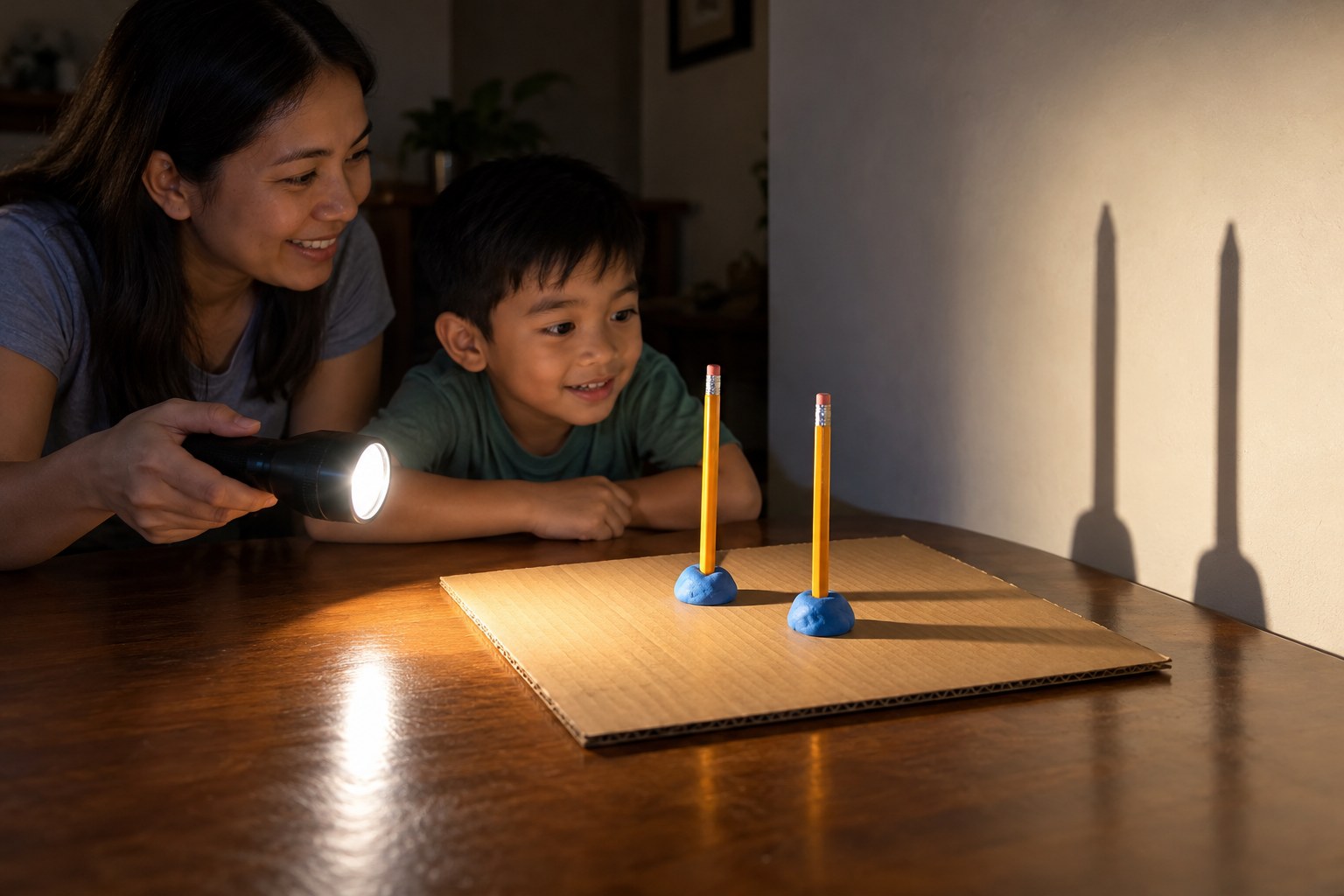
(7 min) Stand two pencils upright in clay on the flat cardboard, far apart, and shine the flashlight from far away straight above one pencil. Your child notices that when the light comes from far away, both shadows look about the same on a flat surface.
2Step 2
Curved Earth test
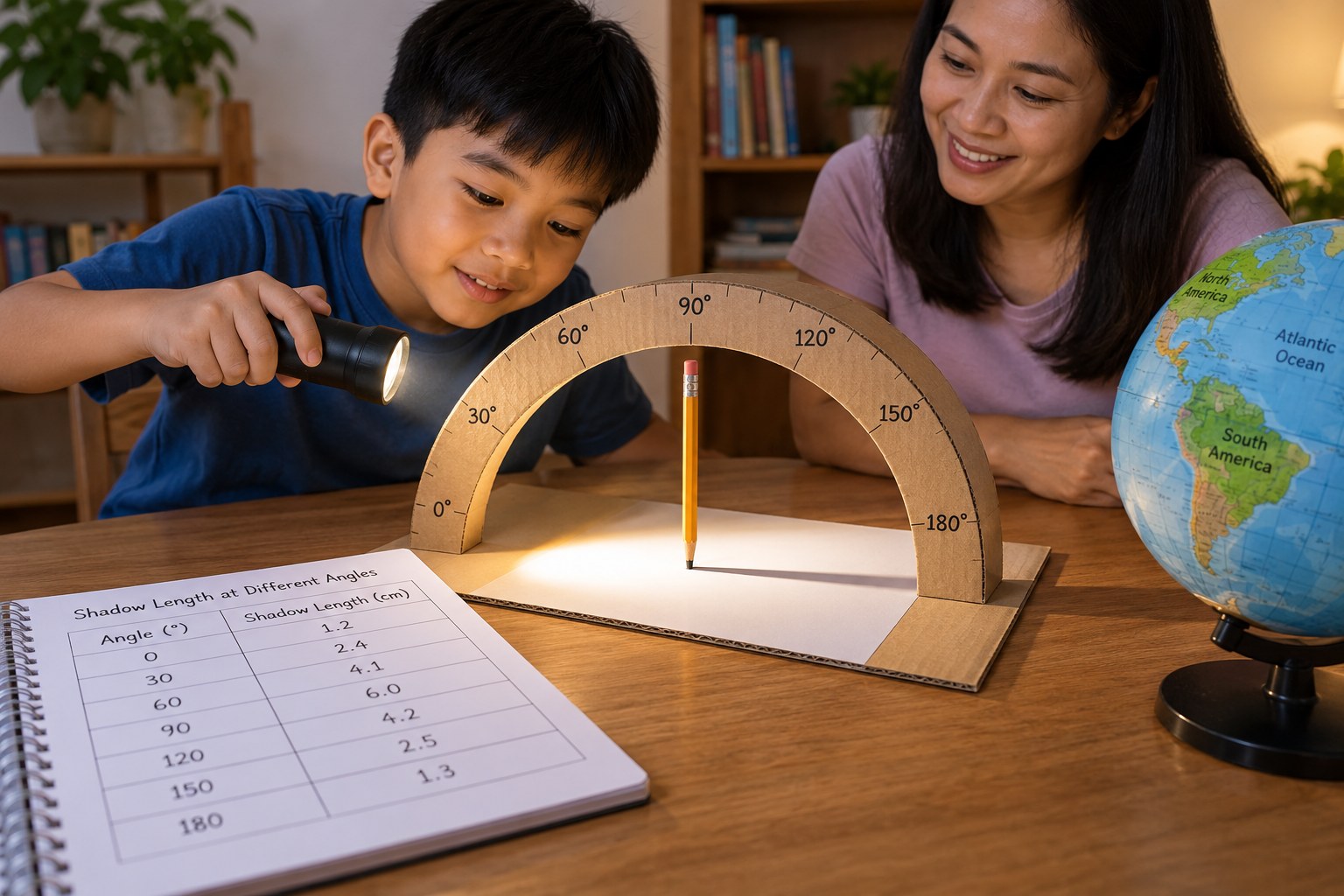
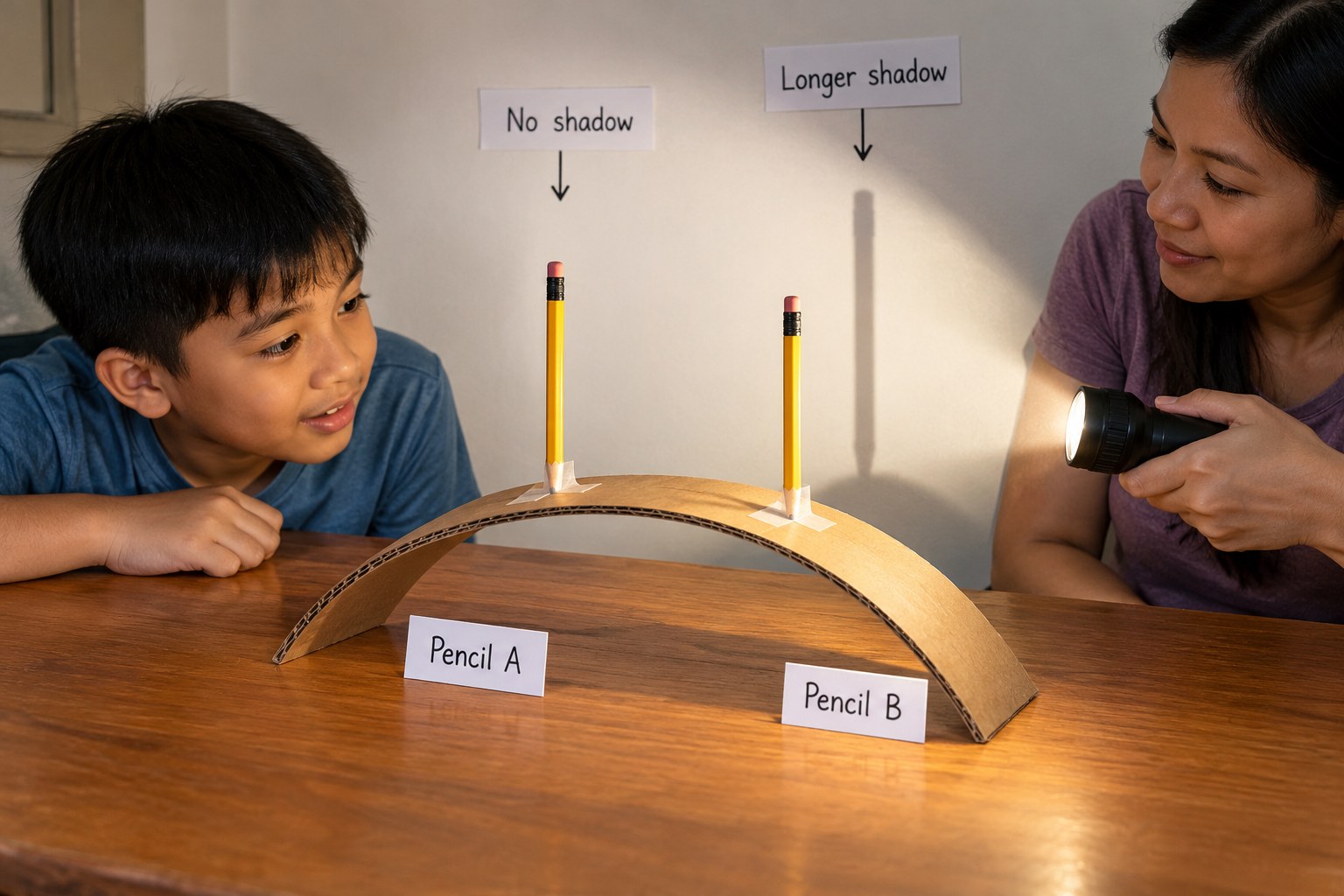
(8 min) Tape the pencils to the bent cardboard arch, one at the top and one partway down the curve, and shine the light straight down from far above the top pencil. The top pencil has almost no shadow while the other casts a longer one, which is just what Eratosthenes noticed between two cities.
3Step 3
Measure the shadow angle
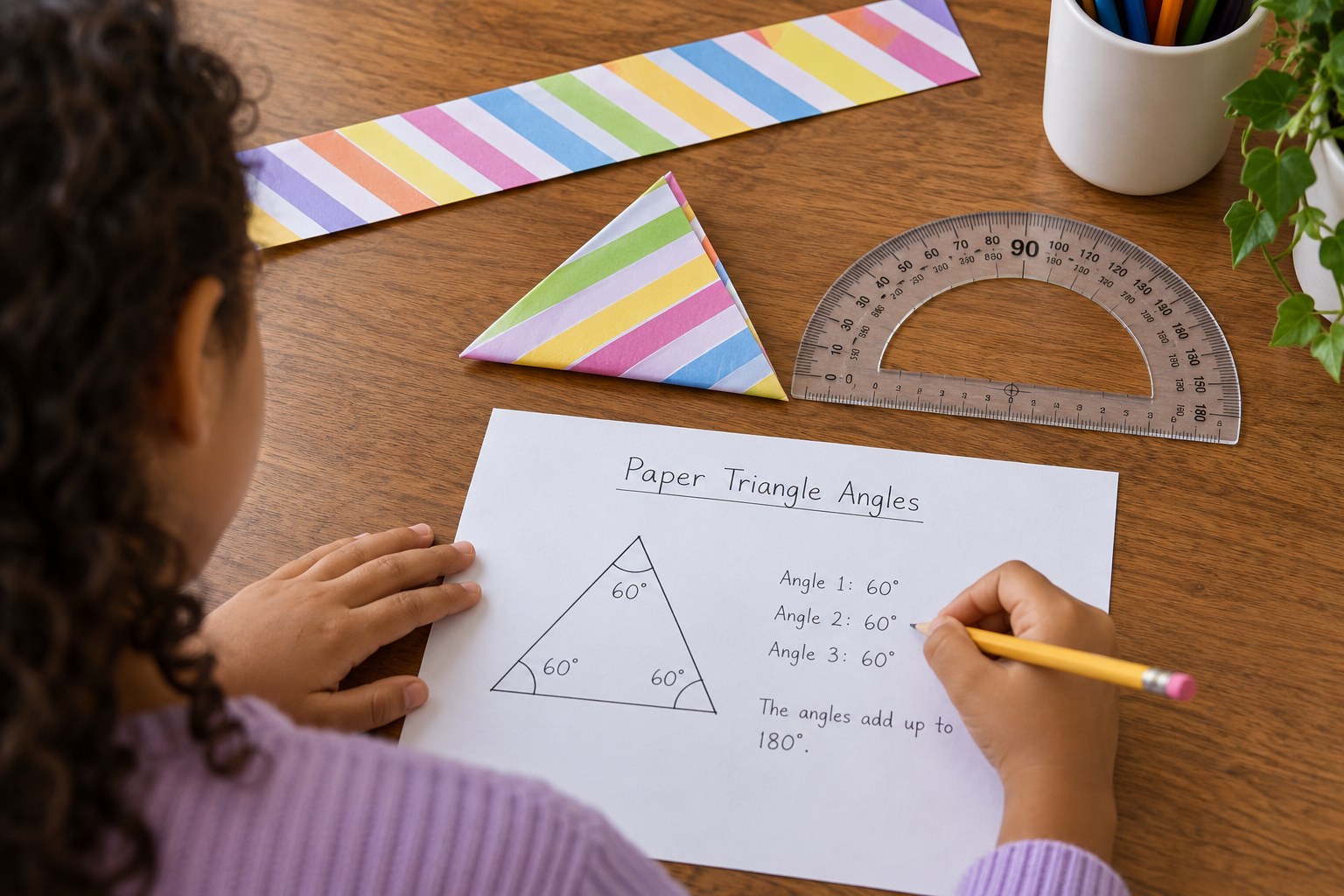
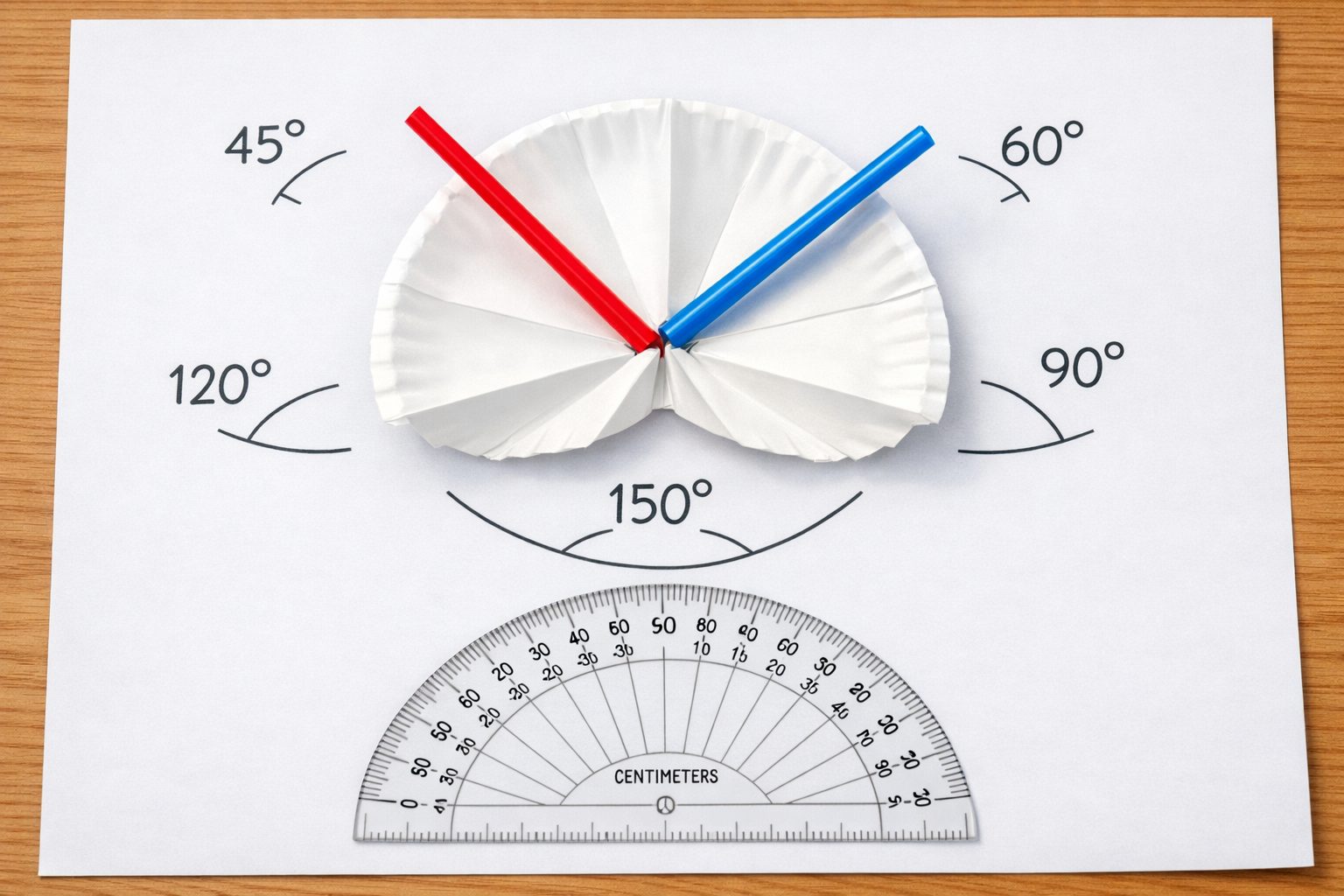
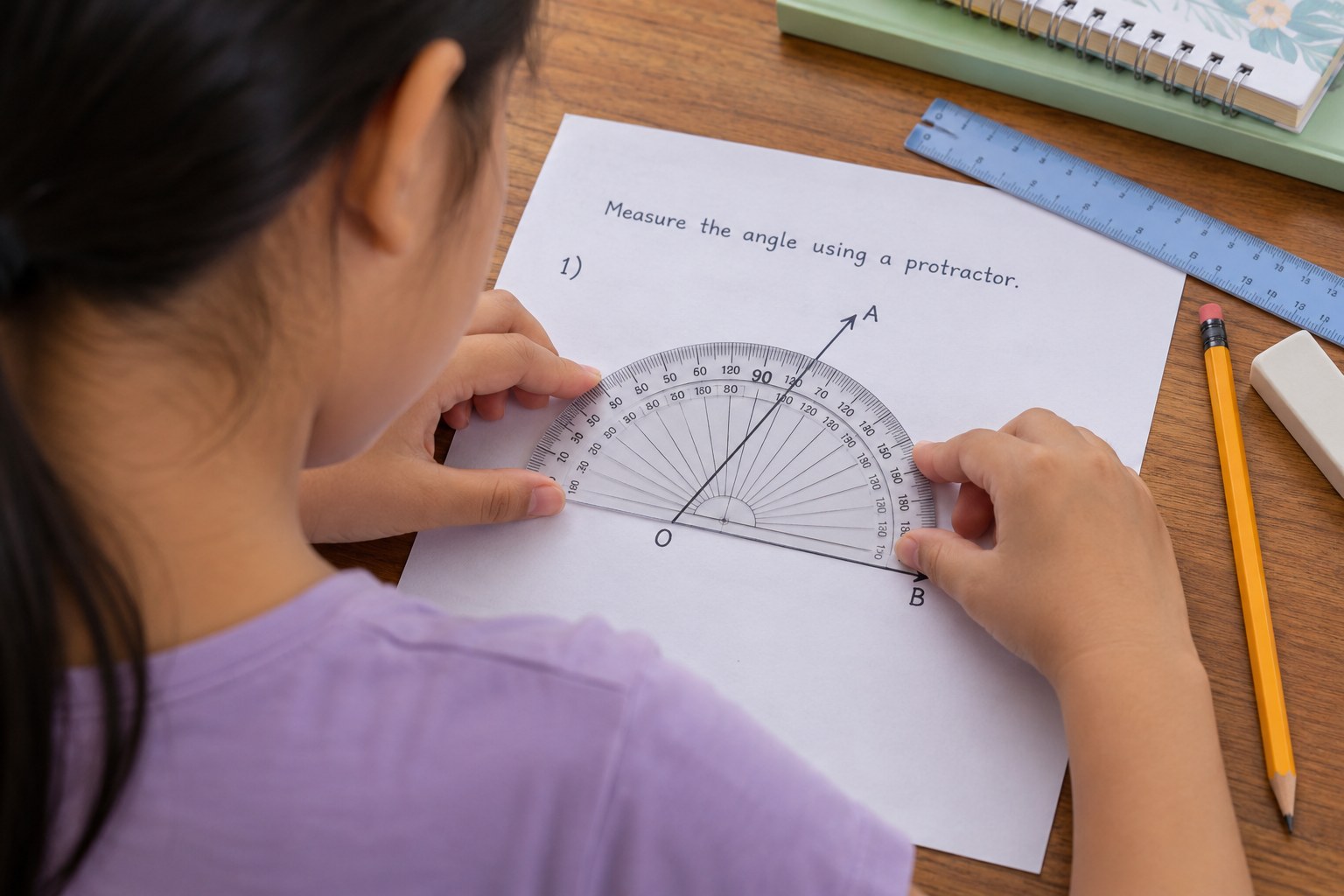
(10 min) Stretch a string from the tip of the shadowed pencil to the tip of its shadow and trace the angle between the pencil and the string onto paper. Your child measures it with a protractor, then practices by measuring three more angles you sketch.
4Step 4
Angles as part of a circle
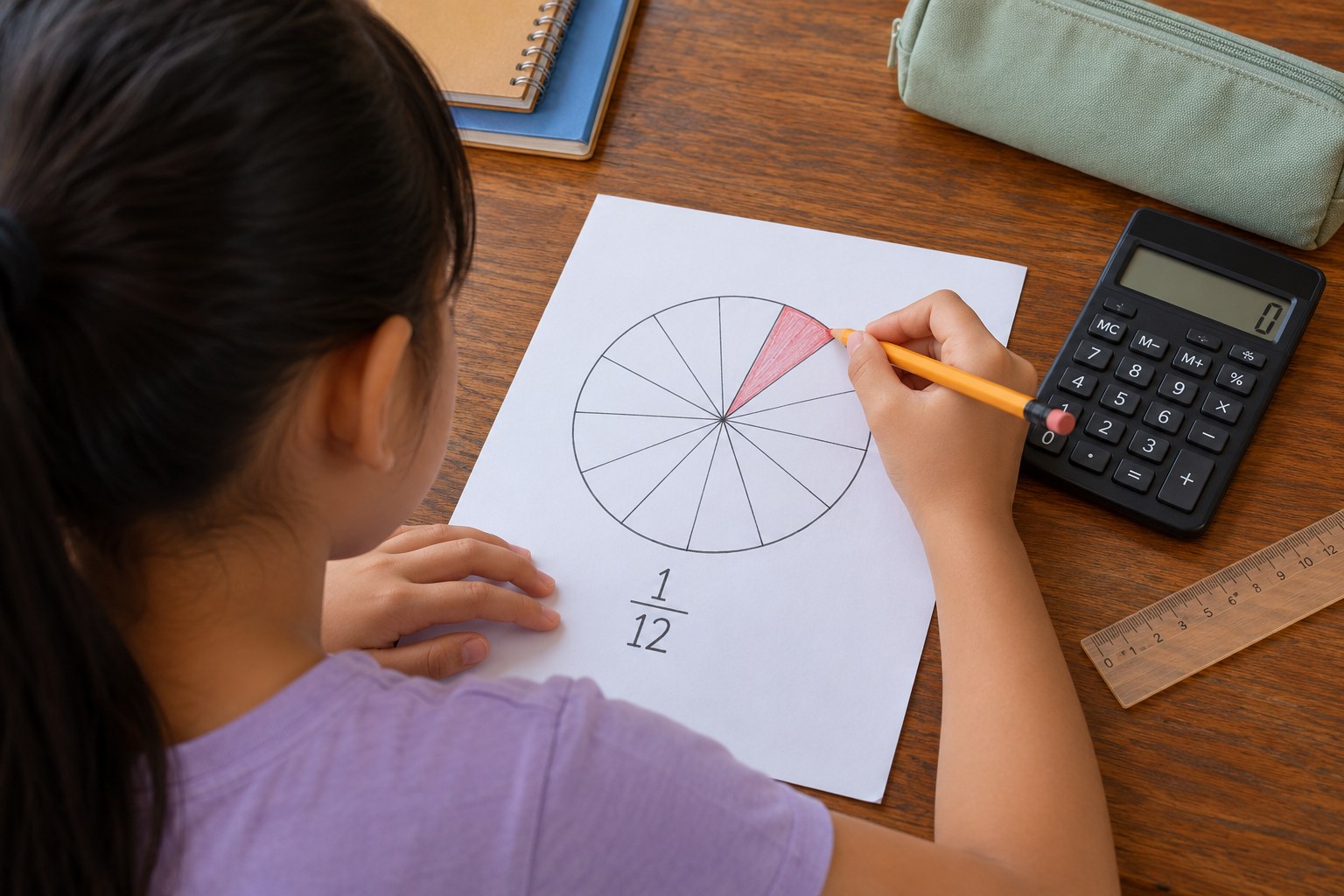
(10 min) Explain that Eratosthenes measured a shadow angle of about 7.2 degrees in Alexandria at noon on the day the Sun was straight overhead in Syene, a city to the south. Your child figures out how many 7.2-degree slices fit in a 360-degree circle (360 / 7.2 = 50) and shades one slice on a paper circle.
5Step 5
Estimate Earth's size
(8 min) If the distance between the two cities is one-fiftieth of the way around the Earth, then multiply that distance by 50. Using about 500 miles between the cities, your child calculates 500 x 50 = 25,000 miles and compares it with the modern measurement of about 24,900 miles.
Conclusion
Your child explains in their own words how a shadow angle showed that Earth is curved and helped estimate its size. Point out that his answer was remarkably close, even though historians still debate exactly how long his units of distance were.
Make your own lesson plan in minutes
Describe a topic and Resource Portal AI writes the objectives, materials and steps for your group.
Try Resource Portal AI