Where the River Meets the Sea: Salt Water Layers in a Glass
Overview
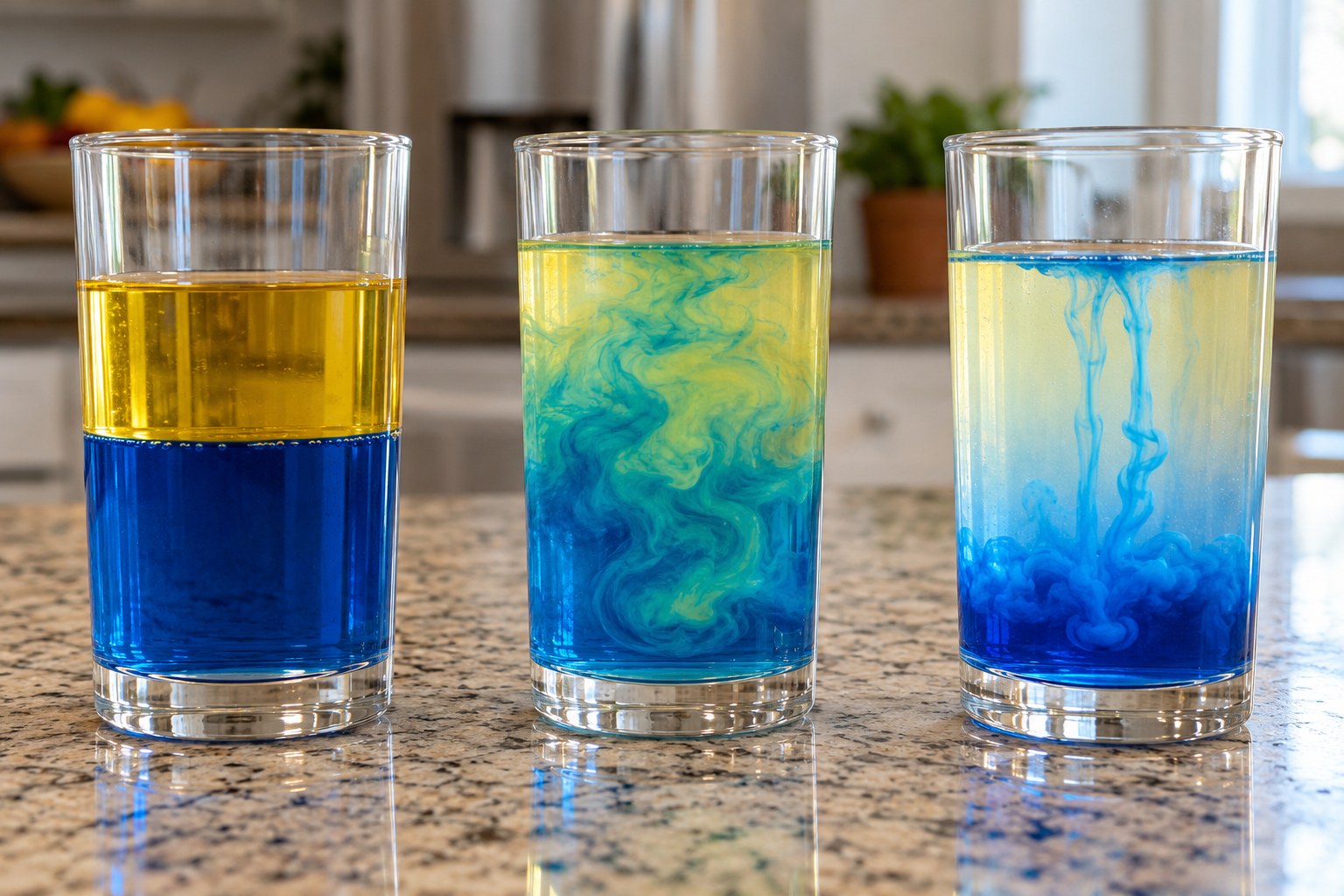
Layer fresh and salty water to model a river meeting the sea.
Description
Your child colors fresh water and salt water, then layers them carefully in a glass to see the salty water sink and the fresh water float, just like a river meeting the sea, and tests cold and warm water to discover what drives deep ocean currents.
Objective
Your child will predict, test and explain that salty water and cold water are denser than fresh water and warm water, and connect this to estuaries and ocean currents.
Materials
| Item | Quantity |
|---|---|
| Clear glasses or jars | 3 |
| Cups for mixing | 4 |
| Table salt | about 1/3 cup |
| Food coloring (2 colors, such as blue and yellow) | 1 set |
| Spoon | 1 |
| Ice cubes and warm tap water | 1 tray and 2 cups |
| Paper and pencil for predictions | 1 each |
Vocabulary
Preparation
- Make salt water: stir 3 tablespoons of salt into 1 cup of room-temperature water until dissolved and add blue food coloring.
- Make fresh water: 1 cup of room-temperature water with yellow food coloring.
- Make ice water in a cup with a few drops of blue, and warm tap water in another cup.
Introduction
Hold up the blue salty cup and the yellow fresh cup and ask: when a river (yellow) pours into the ocean (blue), do they mix right away into one green color, or does something else happen?
Which do you think is heavier for the same amount, salt water or fresh water?
Where on Earth do fresh water and salt water meet?
Steps
Conclusion
Ask: what two things made water sink? Salty and cold ocean water is denser, so it sinks, and this sinking helps move water all around the world's oceans in a slow, giant conveyor belt.
Make your own lesson plan in minutes
Describe a topic and Resource Portal AI writes the objectives, materials and steps for your group.
Try Resource Portal AI