Sturdy Castle Walls: Stacked Bricks vs. Overlapping Bricks
Overview
Test which brick pattern makes the strongest castle wall.
Description
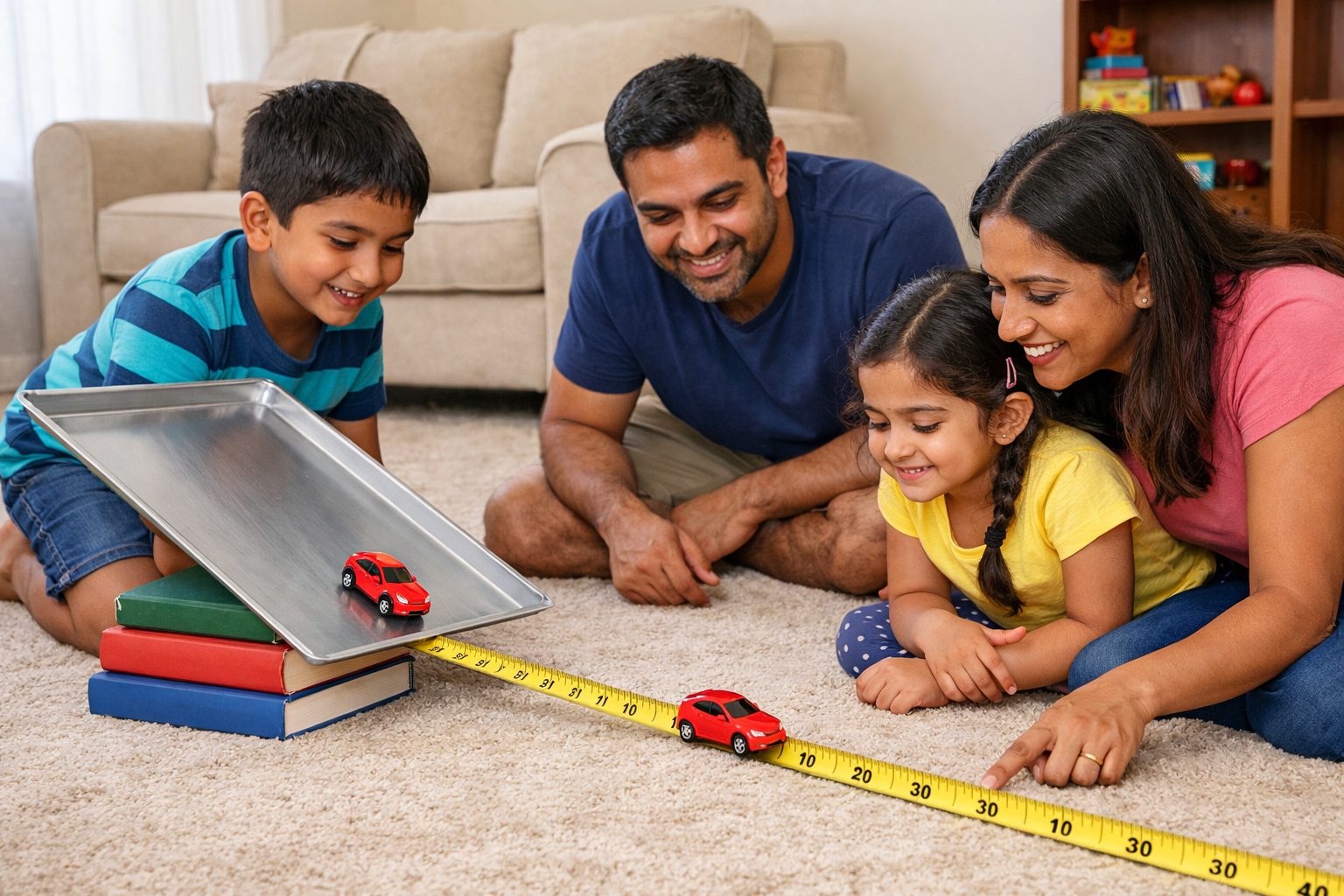
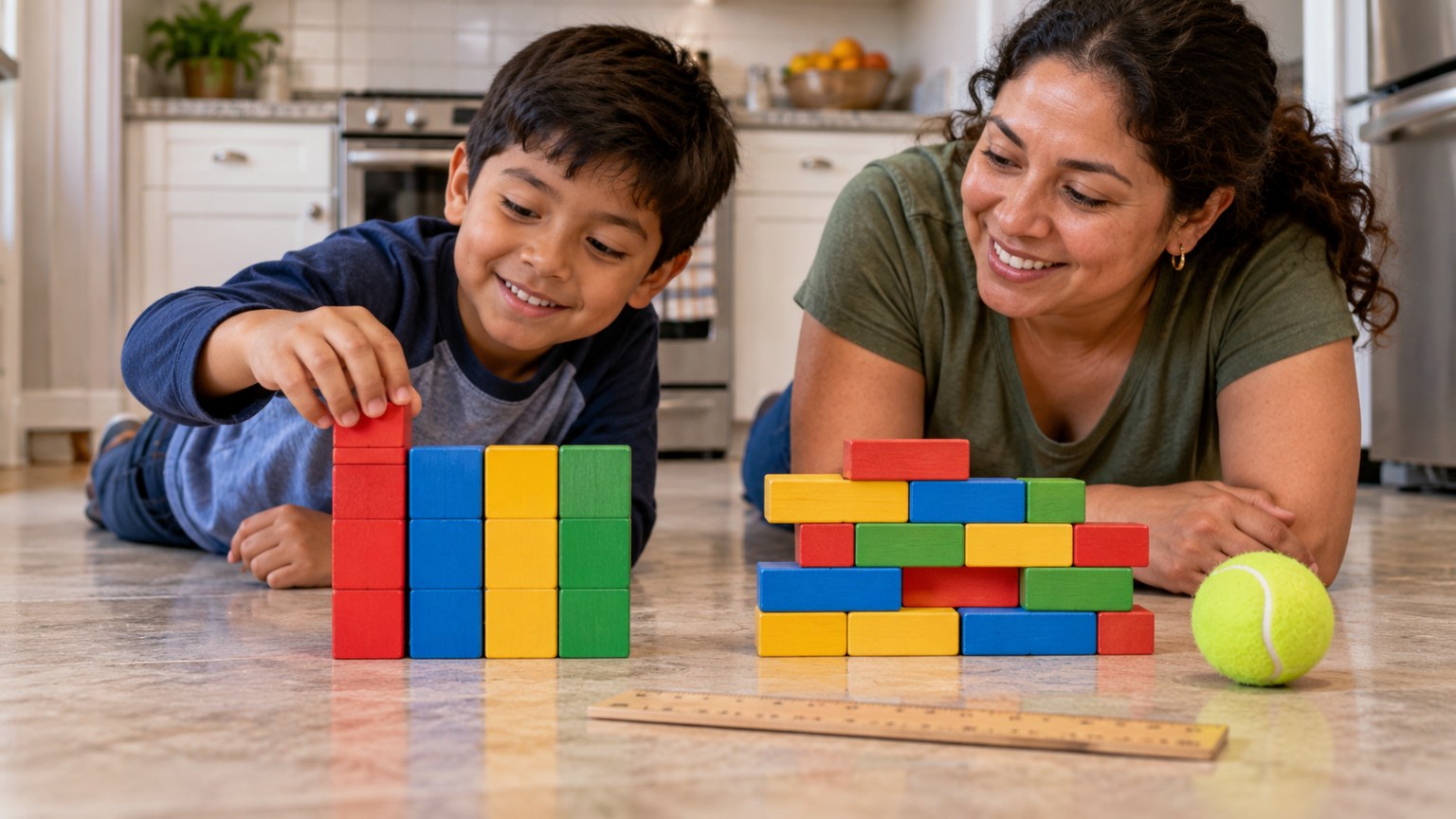
Your child builds two castle walls from the same blocks, one with bricks stacked straight up in columns and one with bricks overlapping like real castle stonework, measures both walls with a ruler, and tests which one survives a rolling "siege ball."
Objective
Your child will build and measure two walls of equal height, compare which is stronger after a rolling-ball test, and explain why overlapping bricks hold together better.
Standards
Materials
| Item | Quantity |
|---|---|
| Same-size building blocks, toy bricks or small boxes (wooden blocks, plastic bricks, juice boxes) | about 24 |
| Ruler or tape measure | 1 |
| Soft ball, such as a tennis ball or rolled socks | 1 |
| Masking tape to mark a rolling line | 1 strip |
| Paper and pencil for the results chart | 1 each |
| Books to make a ramp (optional) | 2-3 plus a flat board or tray |
Vocabulary
Preparation
- Clear a hard floor or table. Put a tape line about 3 feet from where the walls will stand; that is where the ball starts.
- If you have a board, prop one end on 2-3 books to make a ramp so every roll starts the same way.
- Draw the results chart from the Results chart section.
Introduction
Show your child a picture in your mind: a real stone castle wall. Ask them to look at the bricks on a brick wall, a fireplace or a picture online. Do the bricks sit right on top of each other in straight lines, or do they overlap?
Why would castle builders want very strong walls?
Which wall do you predict will fall first: straight stacks or overlapping bricks?
Steps
Conclusion
Ask: if you were a castle builder, which pattern would you use? Real castle walls were often 6 to 20 feet thick, and builders overlapped the stones for the same reason.
Make your own lesson plan in minutes
Describe a topic and Resource Portal AI writes the objectives, materials and steps for your group.
Try Resource Portal AI