Lesson planGenerations Hand-Span Line Plot for Caregiver's Day
Math40 minutesGrades: 4th, 5th
Overview
Measure family hand spans and build a fraction line plot.
Description
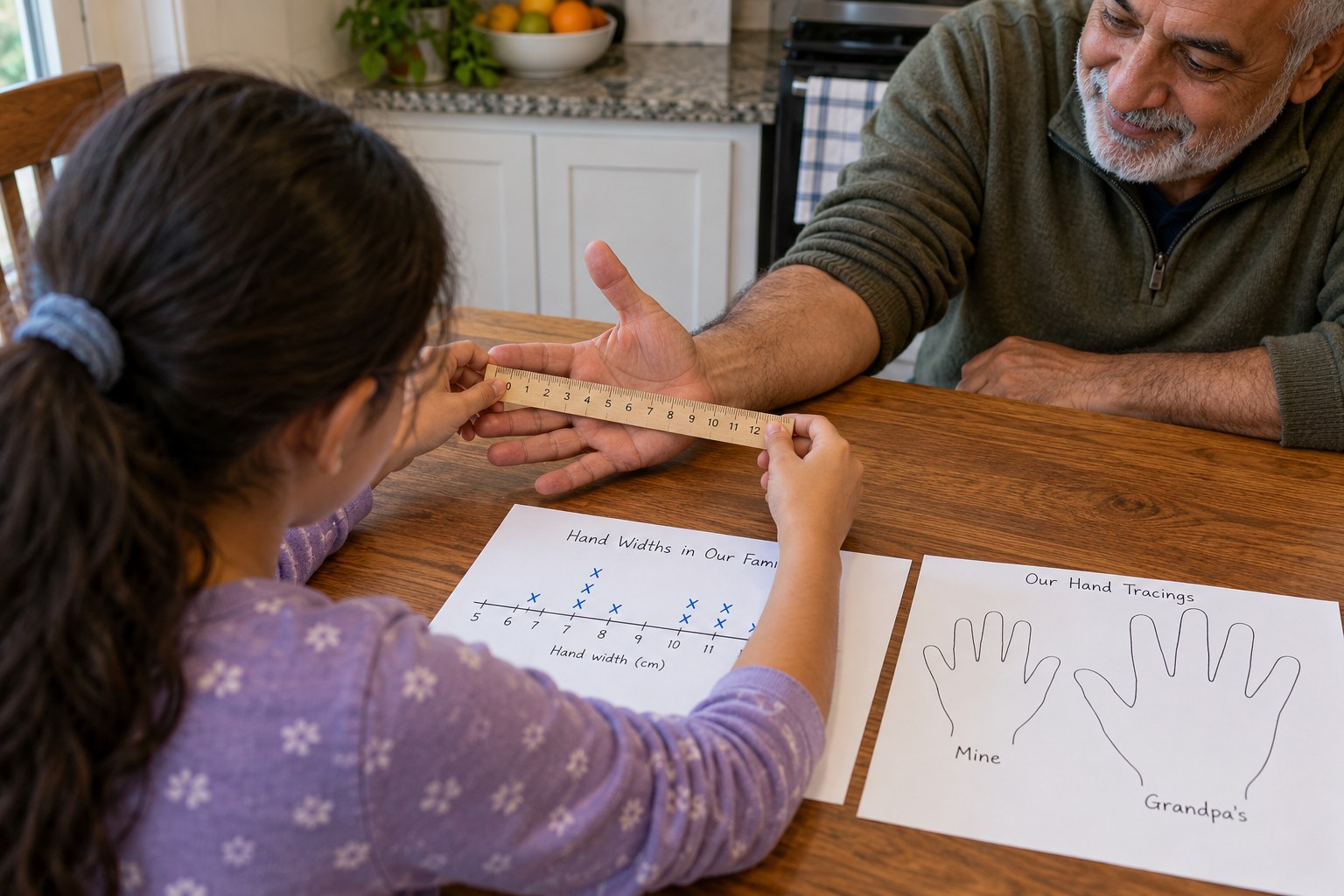
Your child measures the hand spans of family members across generations to the nearest quarter inch, builds a line plot, and solves fraction problems about the data, then traces the biggest and smallest hands together on a keepsake card for Mother's Day, Father's Day or Grandparents Day.
Objective
Your child will measure hand spans to the nearest 1/4 inch, display the data on a line plot, and add and subtract fractions to find the range and other differences; 5th graders also find the fair-share (average) hand span.
Standards
4.MD.4Math · Grade 4 · Measurement & Data Make a line plot to display a data set of measurements in fractions of a unit (1/2, 1/4, 1/8). Solve problems involving addition and subtraction of fractions by using information presented in line plots.
5.MD.2Math · Grade 5 · Measurement & Data Make a line plot to display a data set of measurements in fractions of a unit (1/2, 1/4, 1/8). Use operations on fractions for this grade to solve problems involving information presented in line plots.
Materials
| Item | Quantity |
|---|
| Ruler marked in quarter inches | 1 |
| Paper | 3 sheets |
| Pencil and colored pencils | 1 set |
| Phone for video-calling relatives (optional) | 1 |
Vocabulary
Hand span
The distance from the tip of the thumb to the tip of the little finger with the hand stretched wide.
Line plot
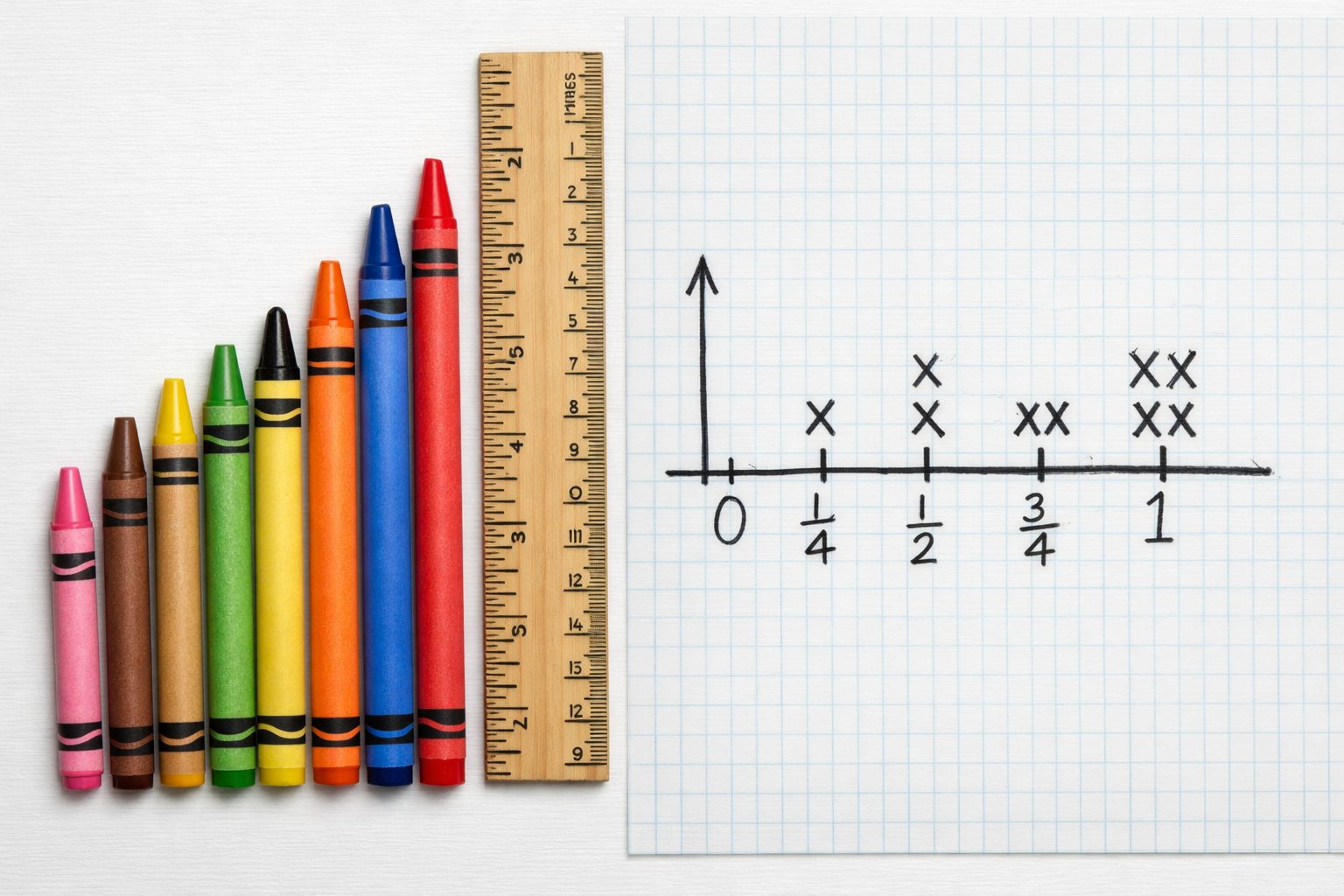
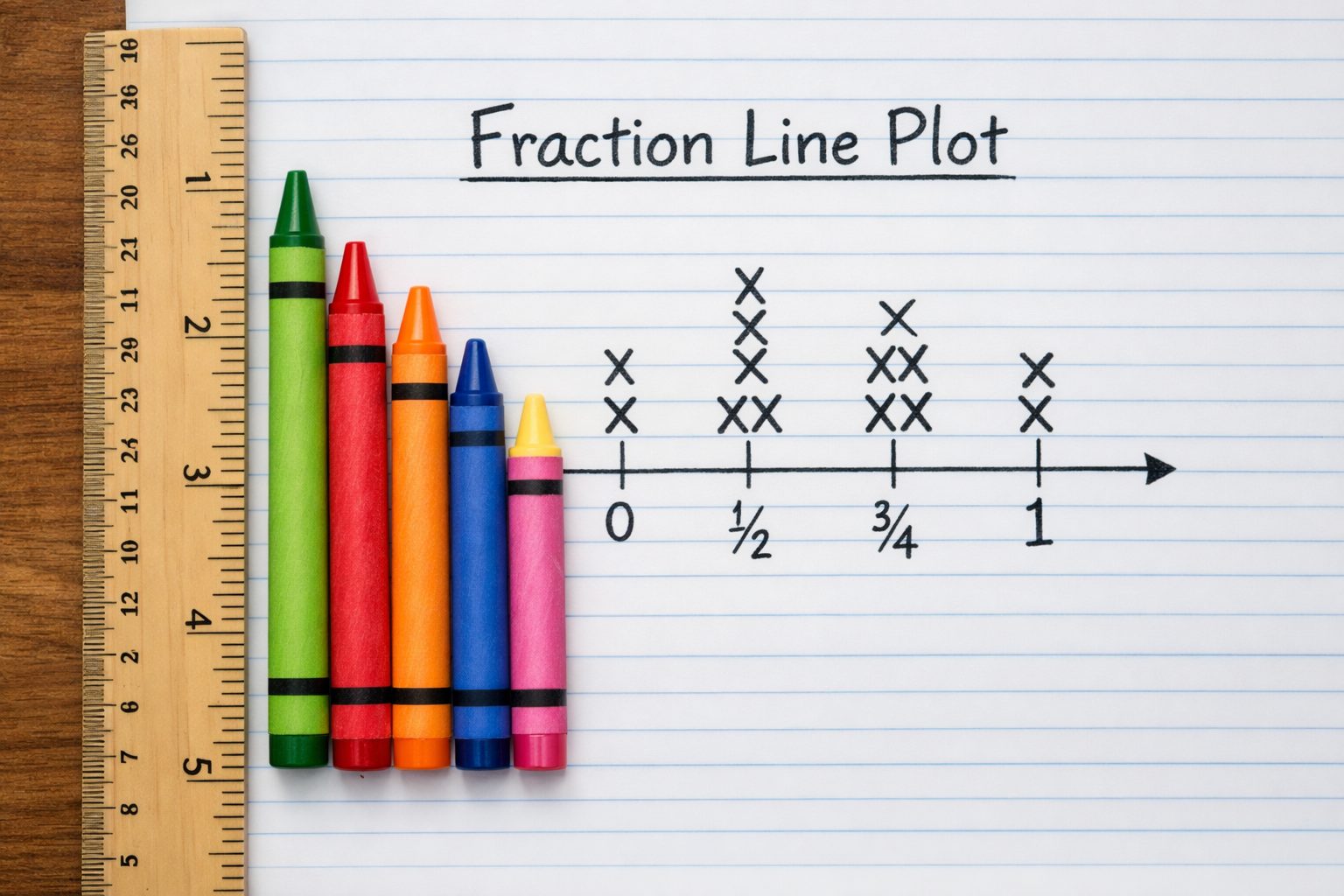
A number line with an X above each value to show how often it appears in a data set.
Range
The difference between the largest and smallest values.
Generation
People born around the same time, like grandparents, parents and children.
Preparation
- List at least 6 people to measure from different generations: grandparents, parents, aunts or uncles, older and younger kids. Relatives far away can measure on a video call and read their number to your child.
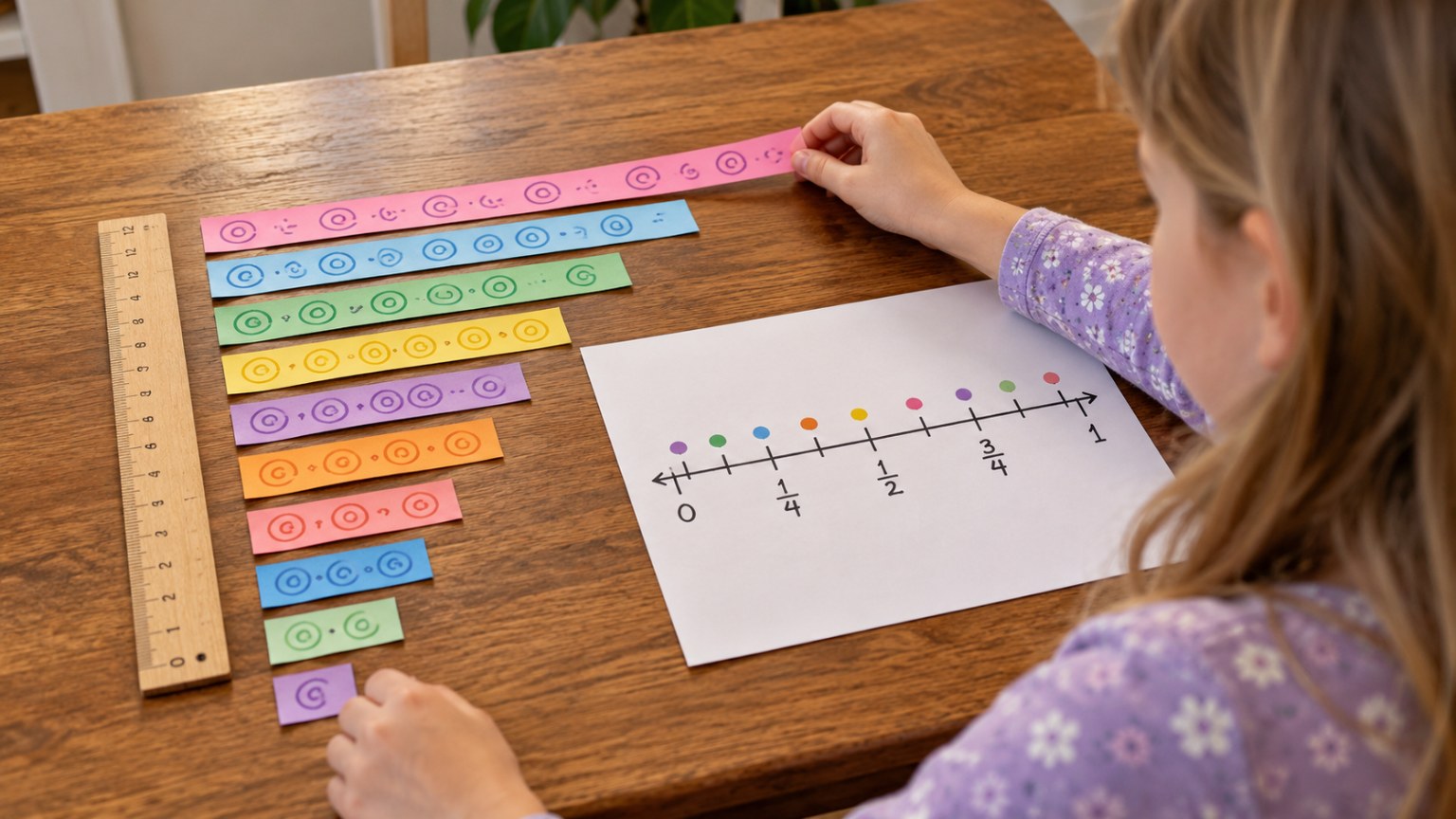
- Practice reading quarter-inch marks on the ruler: the long line between whole inches is 1/2, the shorter lines are 1/4 and 3/4.
Introduction
Stretch your hand flat against your child's hand. Ask: does the oldest person in our family always have the biggest hands? Let's collect data and find out.
Whose hand do you predict is the biggest in our family?
How could we measure a hand fairly so everyone is measured the same way?
Steps
1Step 1
Measure fairly
(10 min) Each person spreads one hand flat on paper as wide as it goes while your child marks the tip of the thumb and the tip of the pinky. Your child measures between the marks to the nearest 1/4 inch and records name, generation and measurement in a table.
2Step 2
Build the line plot
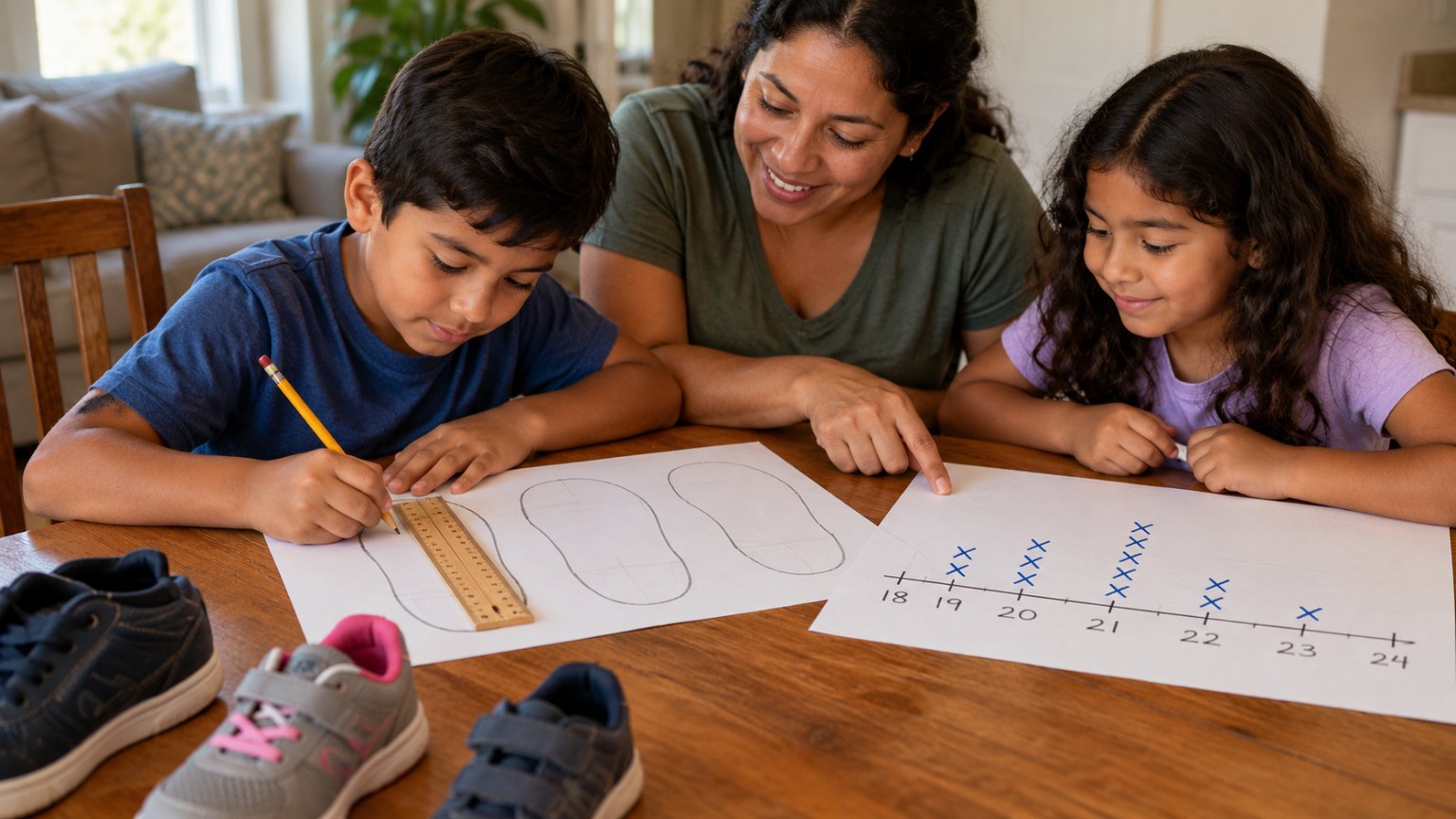
(8 min) Your child draws a number line from the smallest to the largest whole inch in the data, with marks every 1/4 inch. They put an X above the number for each person and title the plot.
3Step 3
Ask the data
(10 min) Your child finds the range (largest minus smallest), the most common span, and the difference between their hand and the oldest person's hand. 5th graders add all the spans and share the total equally to find the fair-share span.
4Step 4
Practice set
(7 min) Your child solves the practice problems below using the sample family data. Then they check each answer with the answer key and fix any errors.
5Step 5
Keepsake tracing
(5 min) Trace the largest and smallest hands in the family overlapping on a sheet, label each with its span, and write a thank-you to the caregiver. A simple message works well: Thank you for helping my hands grow.
Conclusion
Was the oldest person's hand the biggest? Ask your child what the line plot shows that a list of numbers does not. Give the keepsake to the caregiver being celebrated.
Make your own lesson plan in minutes
Describe a topic and Resource Portal AI writes the objectives, materials and steps for your group.
Try Resource Portal AI