Lesson planHedy Lamarr's Frequency Hopping: A Secret-Signal Probability Game
Math45 minutesGrades: 7th, 8th
Overview
Hop a secret message across 8 channels and calculate the odds of getting caught.
Description
Your teen learns how actress and inventor Hedy Lamarr and composer George Antheil patented 'frequency hopping' in 1942, then plays a cup-and-slip game where a message hops among 8 channels while an eavesdropper tries to catch it, comparing experimental results with a uniform probability model.
Objective
Your teen will build a uniform probability model for guessing a hopping channel, compare predicted and observed results, and find the probability of a compound event.
Standards
7.SP.6Math · Grade 7 · Statistics & Probability Approximate the probability of a chance event by collecting data on the chance process that produces it and observing its long-run relative frequency, and predict the approximate relative frequency given the probability.
7.SP.7aMath · Grade 7 · Statistics & Probability Develop a uniform probability model by assigning equal probability to all outcomes, and use the model to determine probabilities of events.
7.SP.8aMath · Grade 7 · Statistics & Probability Understand that, just as with simple events, the probability of a compound event is the fraction of outcomes in the sample space for which the compound event occurs.
Materials
| Item | Quantity |
|---|
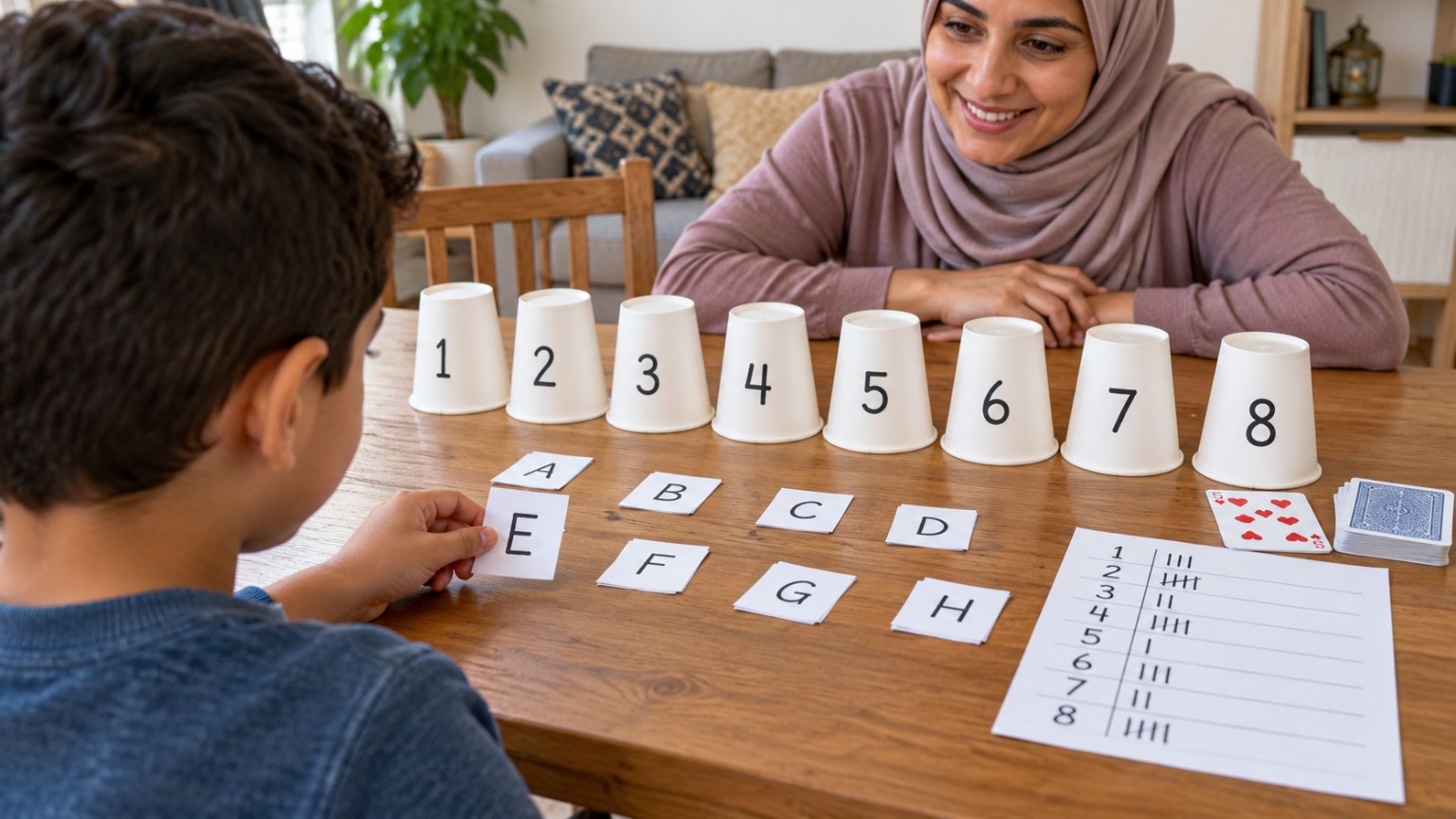
| Paper or plastic cups labeled 1-8 (the 'channels') | 8 |
| Playing cards ace through 8 of one suit, or 8 numbered slips | 1 set |
| Small paper slips for message letters | 16 |
| Paper and pencil for the hop list and tally sheet | 1 each per player |
| Optional: calculator | 1 |
Vocabulary
Frequency
A specific radio 'channel' a signal is sent on.
Frequency hopping
Switching a signal among many frequencies in a secret, shared order so it is hard to jam or intercept.
Uniform probability model
A model where every outcome has the same chance.
Compound event
An event made of two or more simple events, like guessing right twice in a row.
Preparation
- Line up the 8 cups upside down and label them 1-8. Choose a 16-letter secret message (for example INVENTORSROCKNOW) and write each letter on a slip.
- Print or copy the tally sheet: Hop # | Channel used | Eavesdropper guess | Caught? (Y/N).
Introduction
Tell your teen: in 1942, a famous movie star got a patent for a secret-communication idea now linked to the technology in wireless devices. Ask: how could you send a radio message that an enemy can't easily block or listen to?
If a message always uses the same channel, how hard is it to find?
If there are 8 channels and you guess one, what is your chance of being right?
Steps
1Step 1
Read about Hedy Lamarr
(6 min) Read 'About Hedy Lamarr and frequency hopping' together. Ask your teen to explain in their own words why the hopping order had to be shared by sender and receiver but secret from everyone else.
2Step 2
Make the hop list
(5 min) The sender and receiver shuffle the 8 cards, write the order down, shuffle again and write a second order, giving 16 secret hops. The eavesdropper must not see the list.
3Step 3
Play the hopping round
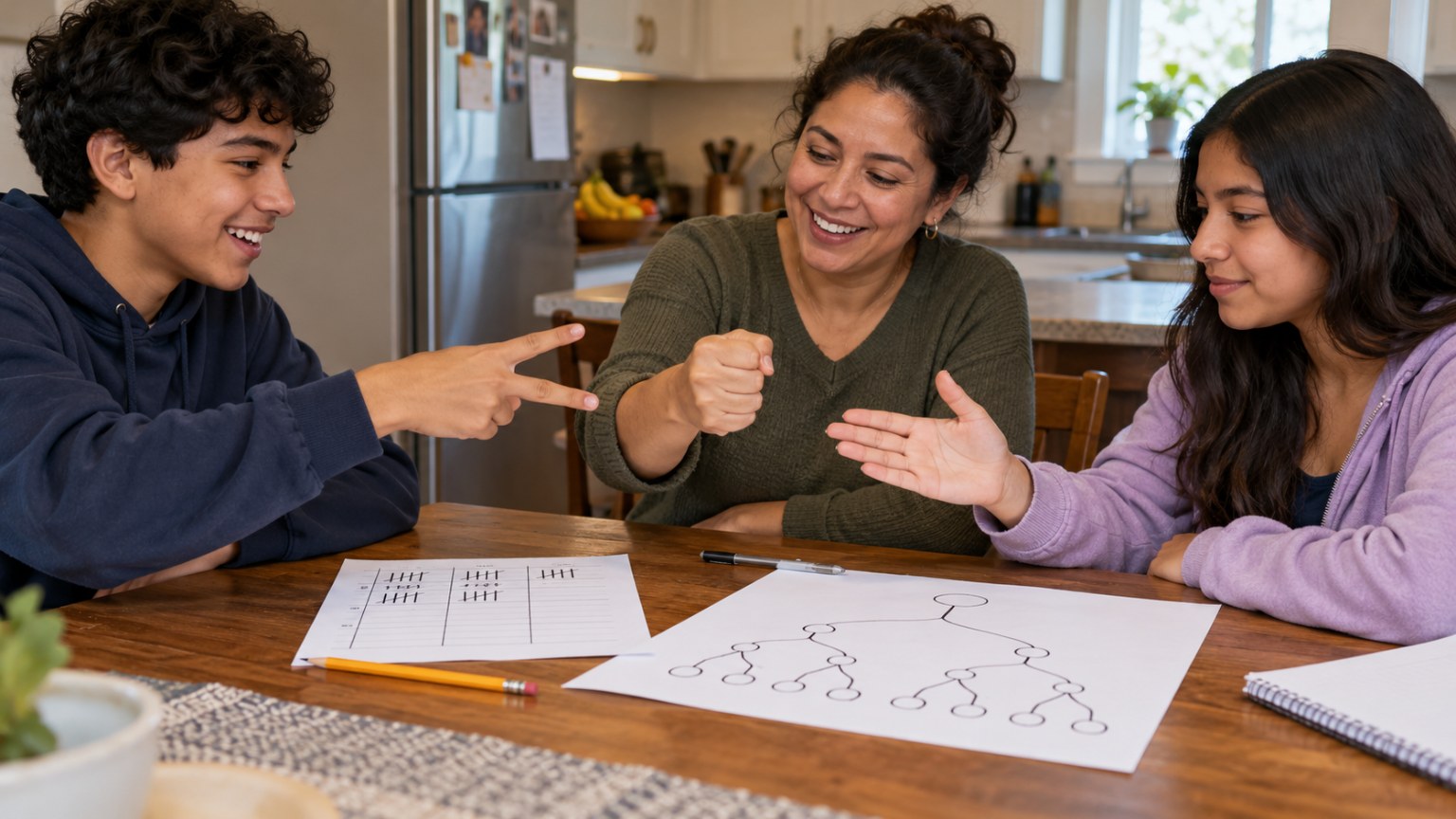
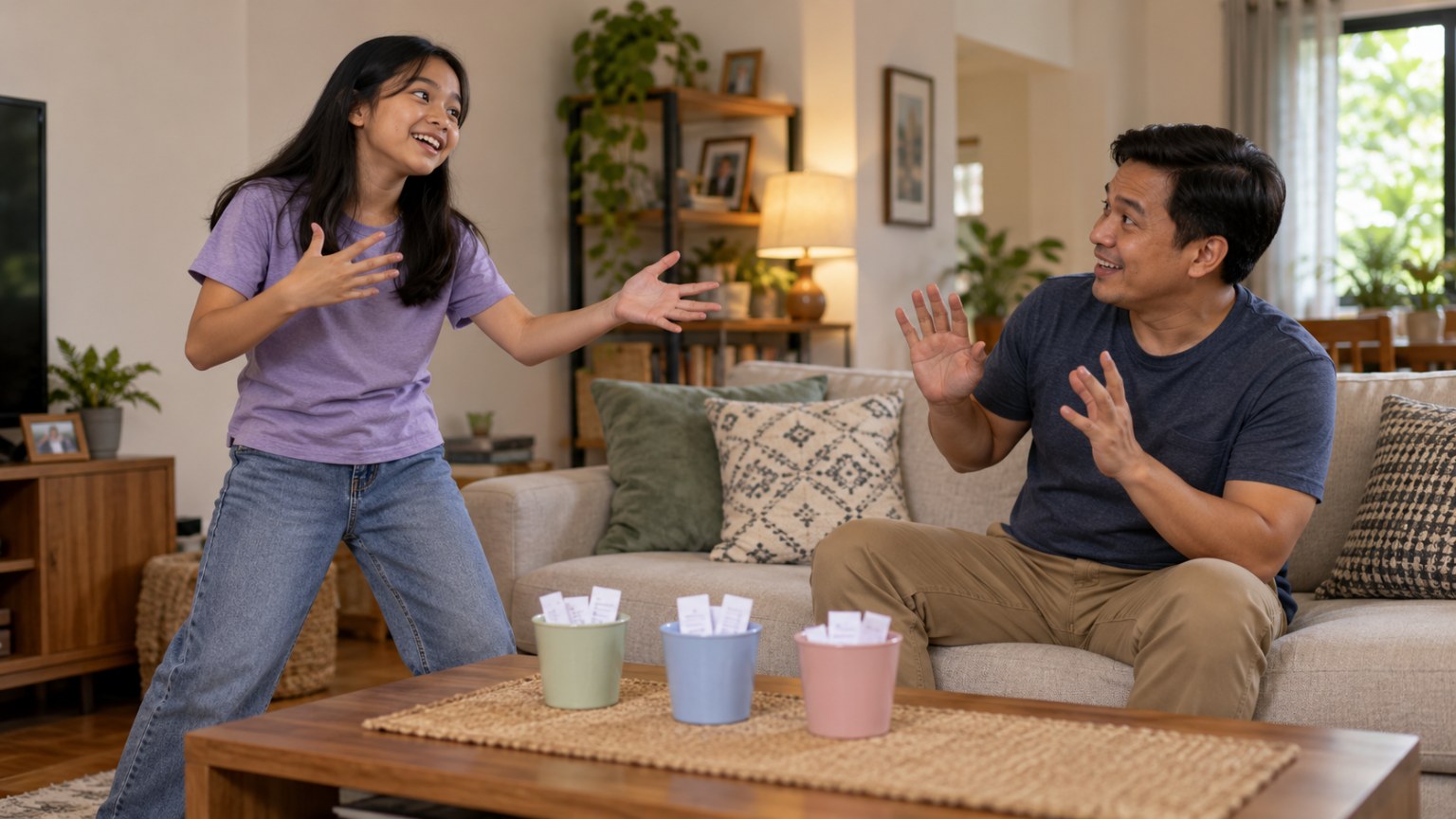
(12 min) For each hop, the sender hides the next letter slip under the cup on the hop list while the eavesdropper looks away. The eavesdropper lifts one cup to guess; the receiver lifts the correct cup and collects the letter. Record every hop on the tally sheet.
4Step 4
Fixed-channel round
(6 min) Play 8 hops where the sender always uses channel 5. Once the eavesdropper finds it, they catch everything. Compare how many letters were caught in each round.
5Step 5
Build the model
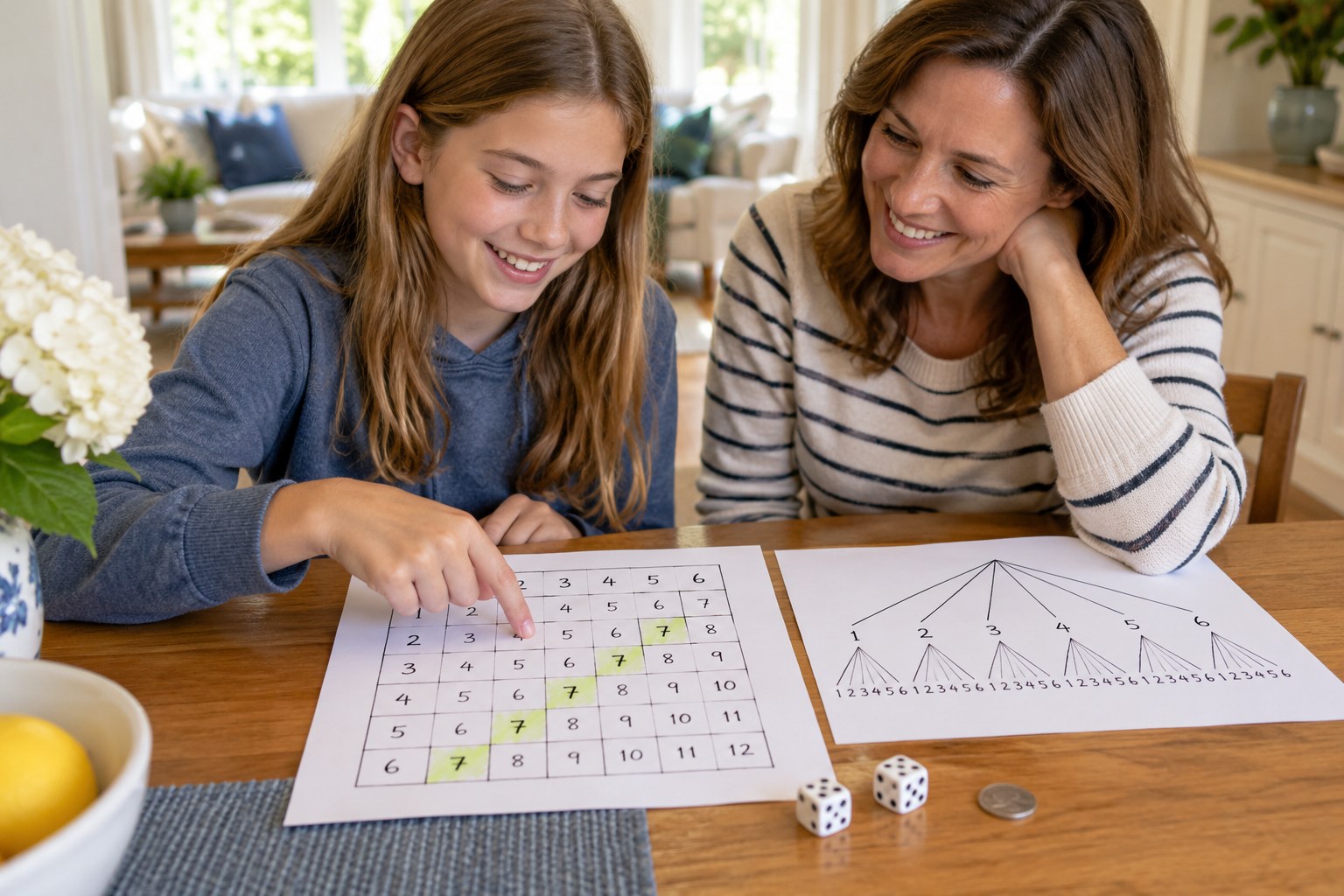
(12 min) Your teen writes the uniform model: P(catch one hop) = 1/8. They predict expected catches in 16 hops (16 × 1/8 = 2), compare with the observed catches, and explain the difference. Then they find P(catching two hops in a row) = 1/8 × 1/8 = 1/64 and list the 64 outcomes as an 8-by-8 grid to check.
Conclusion
Ask: why does hopping make a signal harder to intercept or jam? Combine your results with another family or classmate's rounds and see whether the observed rate gets closer to 1/8.
Make your own lesson plan in minutes
Describe a topic and Resource Portal AI writes the objectives, materials and steps for your group.
Try Resource Portal AI