Lucky Penny Lab: Why Copper Turns Green
Overview
Clean dull pennies and turn them green with a chemical change.
Description
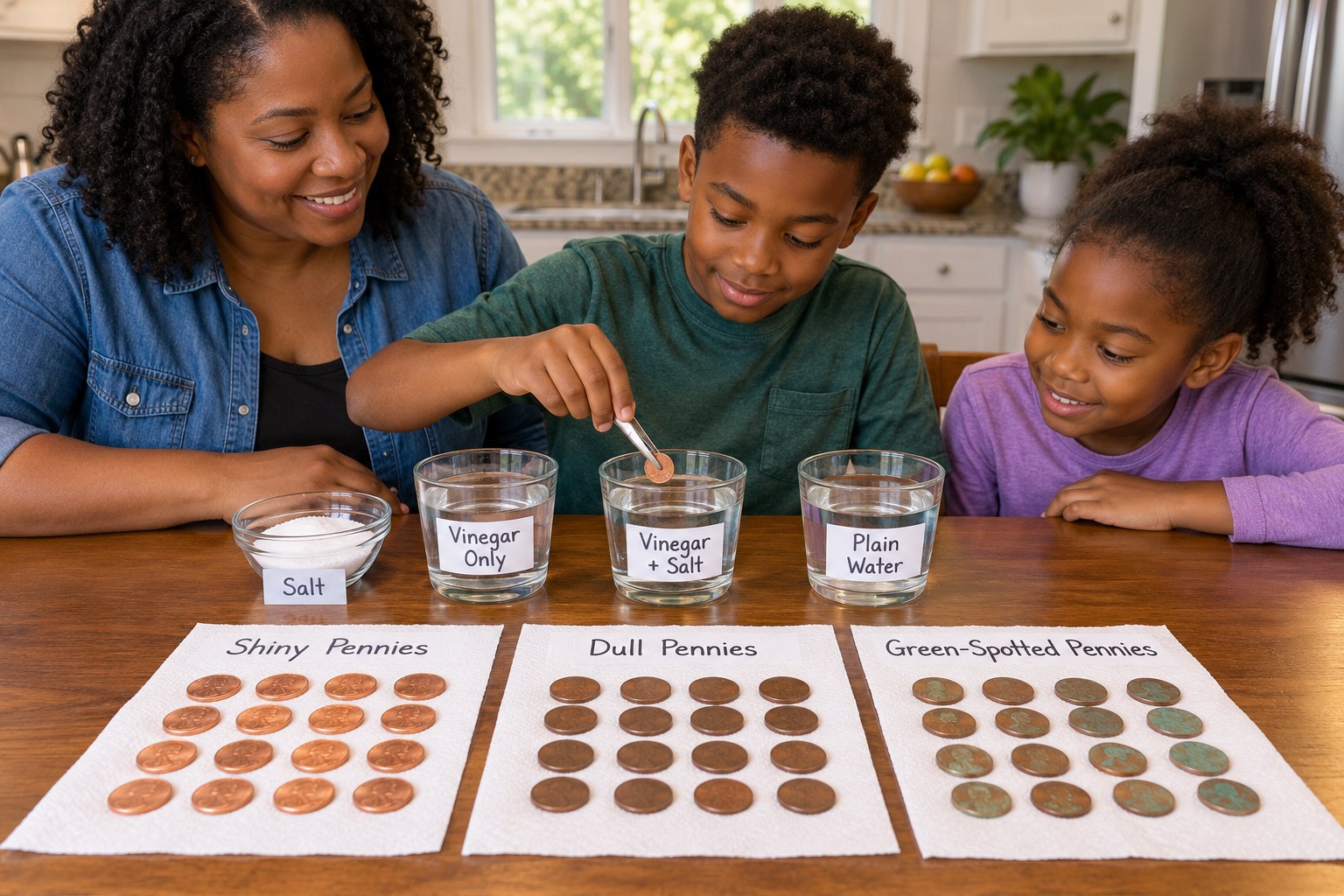
Your child cleans dull 'lucky pennies' with vinegar and salt, then sets up a test to make some of them turn green overnight, discovering the same chemical change that turned the copper Statue of Liberty green.
Objective
Your child will observe that vinegar and salt remove the dark coating from copper, set up a fair test with a control, and explain that the green coating is a new substance formed by a chemical change.
Materials
| Item | Quantity |
|---|---|
| Dull, brown pennies (older pennies work best) | 12 |
| White vinegar | 1/2 cup |
| Table salt | 1 teaspoon |
| Small non-metal bowls or cups | 3 |
| Paper towels | 4 sheets |
| Plastic spoon, paper and pencil for a recording chart | 1 each |
Vocabulary
Preparation
- Copy the recording chart from the section below onto paper.
- Set out three cups labeled A (water only), B (vinegar only) and C (vinegar + salt).
Introduction
Hold up a dull penny and a picture of the Statue of Liberty. Tell your child that the statue is made of copper and was once shiny and brown like a new penny. On St. Patrick's Day, people hunt for lucky pennies and wear green; today you will find out what turns copper green.
Why do you think old pennies look dark and dull?
What could make a metal change color?
Steps
Conclusion
Check the pennies the next morning: the unrinsed pennies should show blue-green spots and the rinsed ones should stay shiny. Ask: was the green a new substance? How do you know?
Make your own lesson plan in minutes
Describe a topic and Resource Portal AI writes the objectives, materials and steps for your group.
Try Resource Portal AI