Cranberry Bounce Test: The Science of Sorting the Harvest
Overview
Bounce cranberries to find the freshest ones.
Description
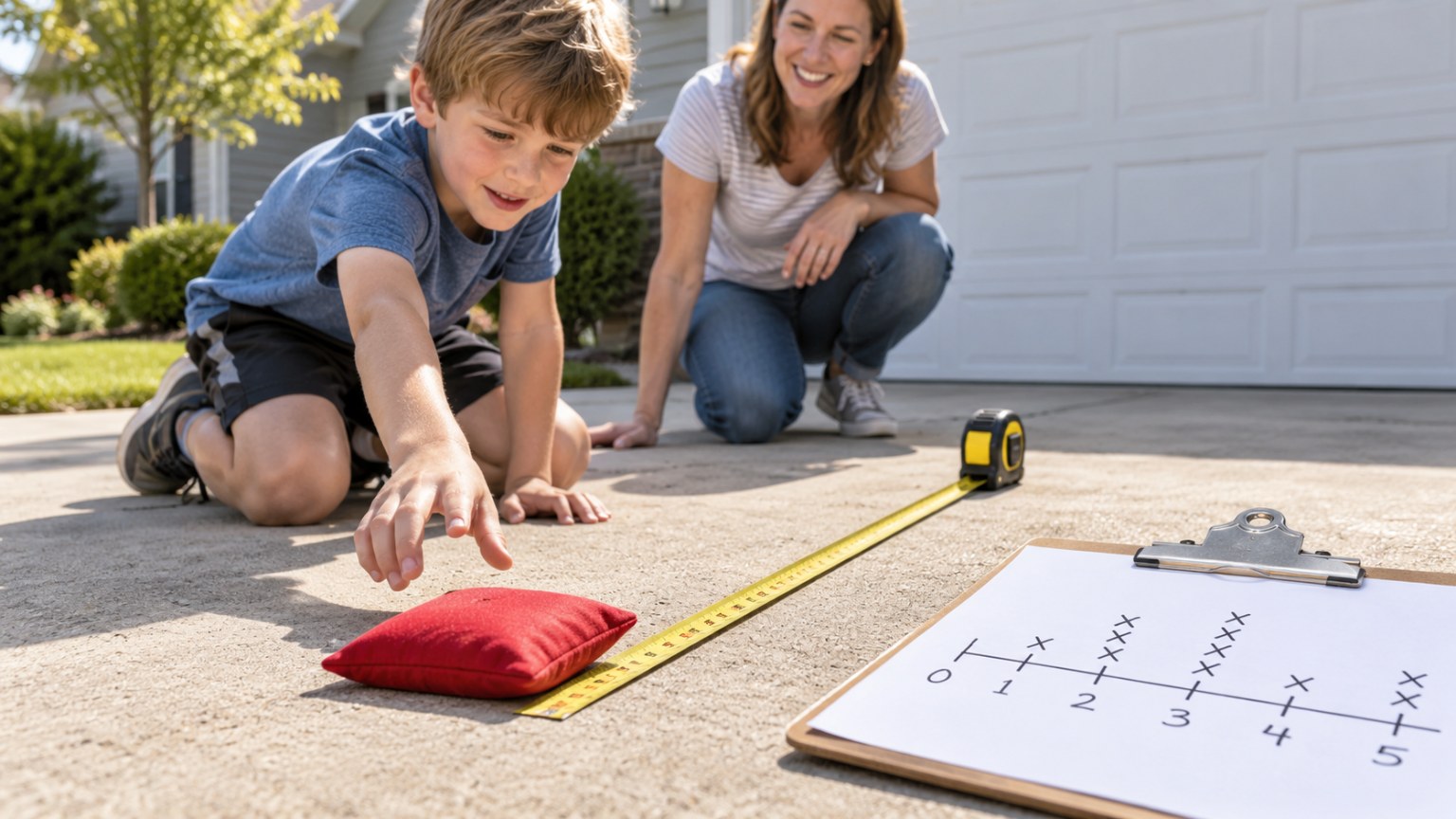
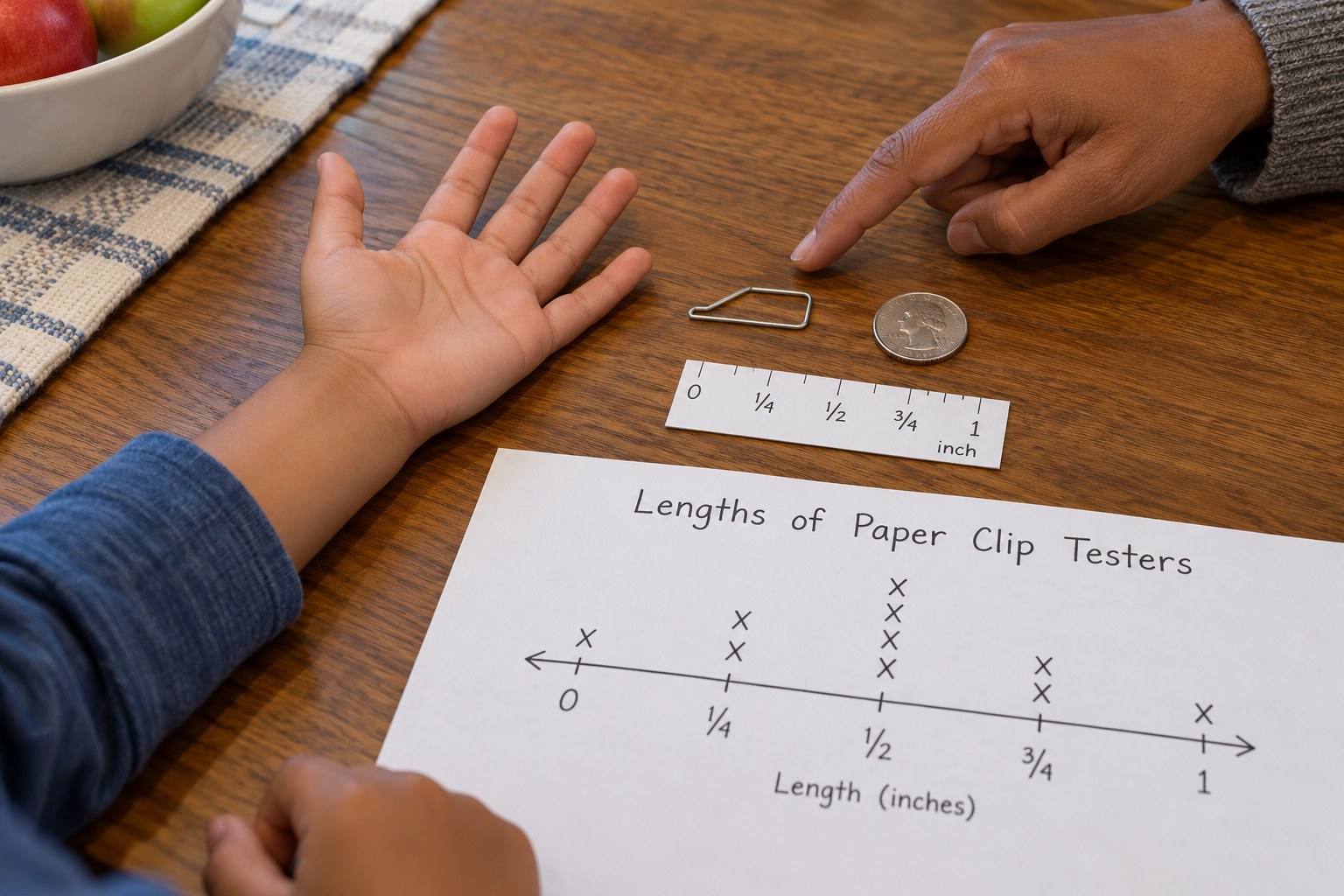
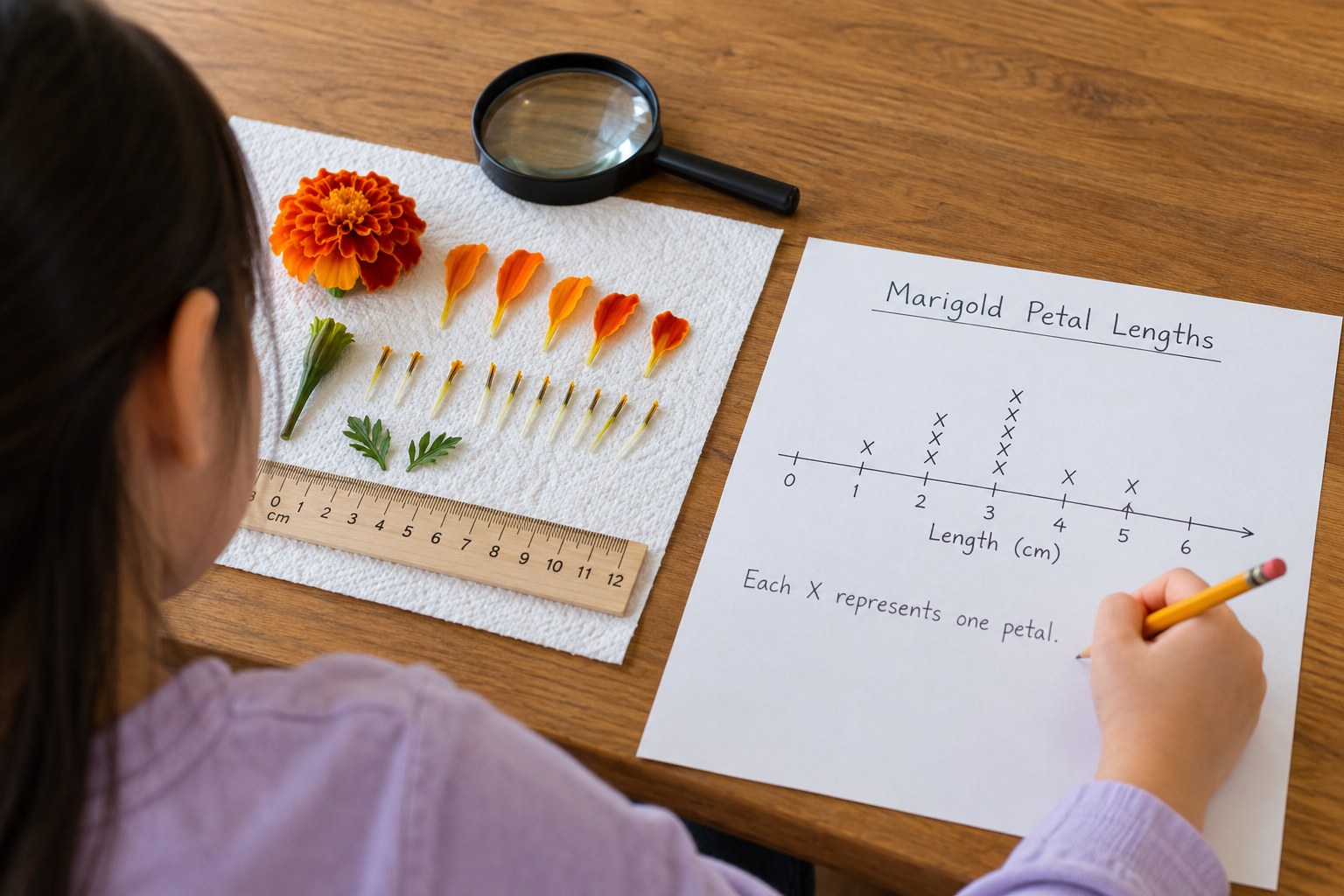
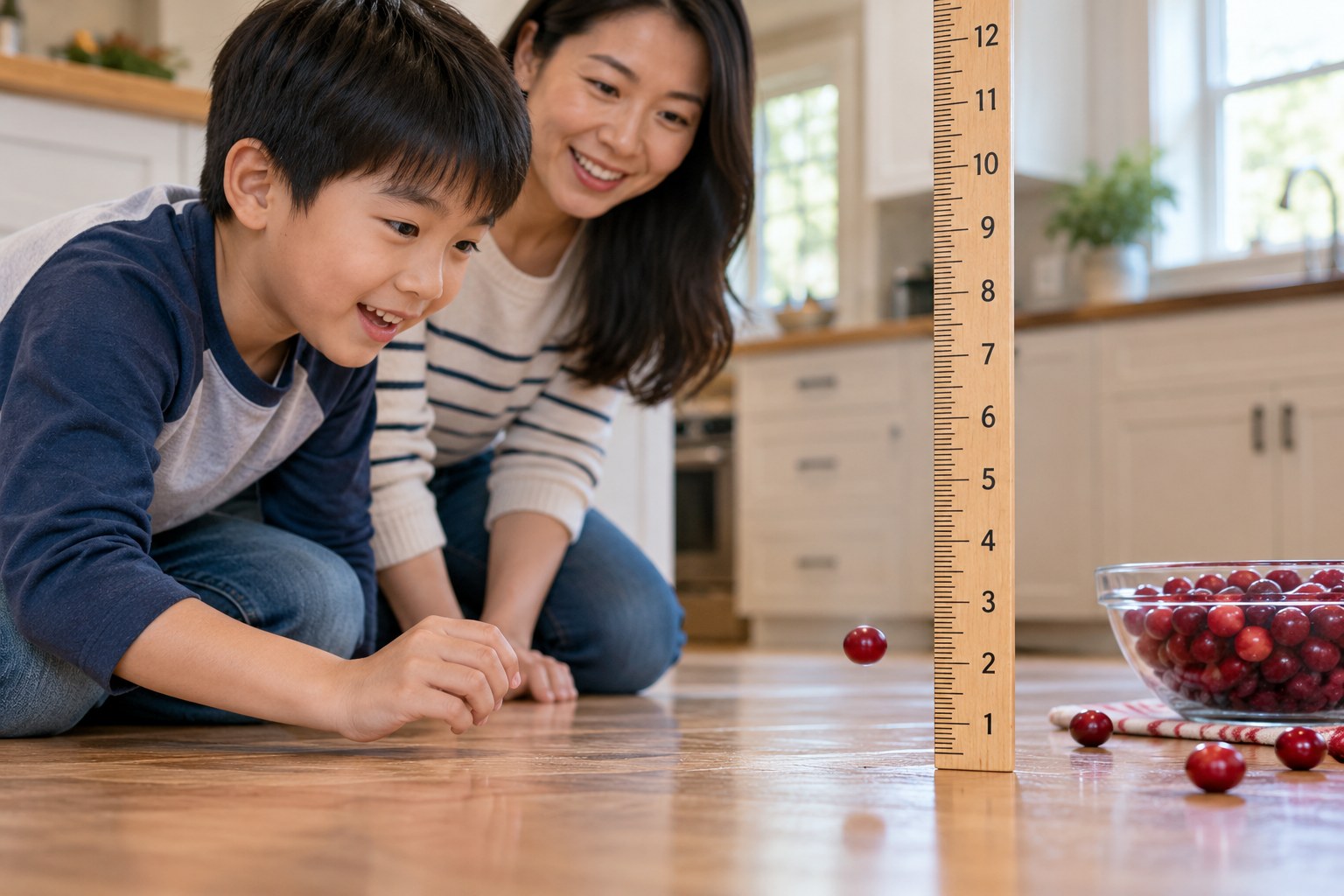
Your child learns that cranberry packers sort good berries from soft ones by bouncing them, then runs a bounce test: dropping firm and soft cranberries from 12 inches, measuring each bounce to the nearest quarter inch, and comparing the results on a line plot.
Objective
Your child will measure bounce heights to the nearest 1/4 inch, record them on a line plot, and explain why firm cranberries bounce higher than soft ones.
Standards
Materials
| Item | Quantity |
|---|---|
| Fresh, firm cranberries | 10 |
| Soft cranberries (leave some out on the counter for a few days, or thaw frozen ones) | 10 |
| Ruler or yardstick marked in quarter inches, taped upright to a wall or box | 1 |
| Hard, flat surface such as a cutting board on the floor | 1 |
| Phone or tablet with slow-motion video (optional but helpful) | 1 |
| Pencil and recording sheet | 1 each |
Vocabulary
Preparation
- A few days early, leave 10 cranberries out of the fridge so they soften, or thaw frozen cranberries (thawed berries go soft).
- Tape the ruler upright against a wall or a box, with 0 at the cutting board. Copy the recording sheet.
Introduction
Drop one firm cranberry onto the cutting board and watch it bounce. Say: 'Cranberry packers have used bouncing to sort berries for over a hundred years. Why would a bounce tell you if a berry is good?'
What do you think makes something bouncy?
Will a squishy berry bounce higher or lower than a firm one?
Steps
Conclusion
Your child explains in their own words why firm berries bounce: the air pockets inside and a firm skin spring back, while a soft berry squishes and absorbs the energy. Look for the bouncy ones when you shop for Thanksgiving.
Make your own lesson plan in minutes
Describe a topic and Resource Portal AI writes the objectives, materials and steps for your group.
Try Resource Portal AI