Backcountry Water Filter Challenge: Sand, Gravel and Charcoal Layers
Overview
Build a layered filter and measure the water that comes through.
Description
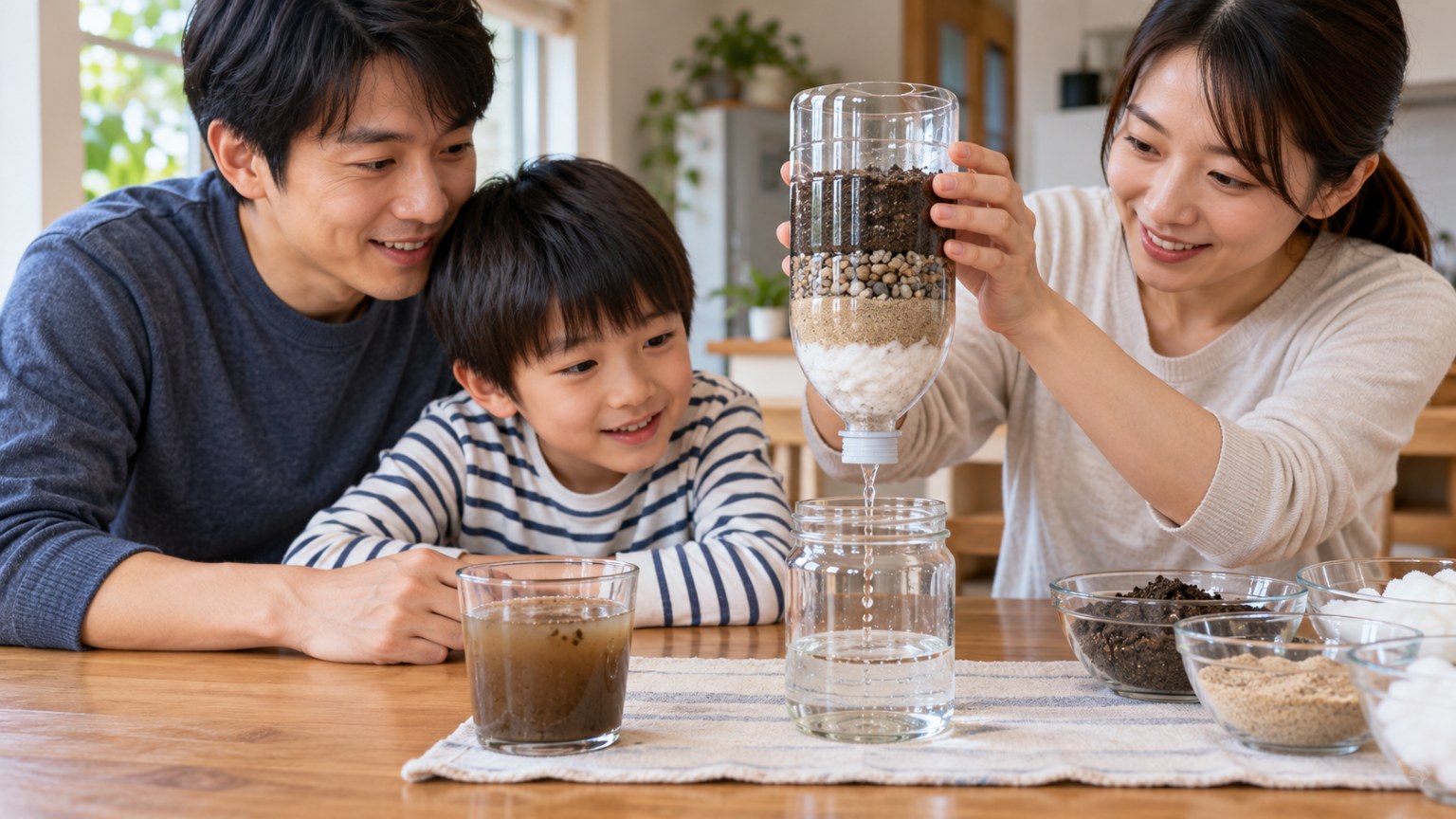
Your child builds a layered water filter from a cut plastic bottle, pours muddy 'creek water' through it, measures how many milliliters come out and compares cloudiness, then learns why campers still must boil or treat water.
Objective
Your child will build and test a layered filter, measure liquid volumes in milliliters before and after filtering, and explain why filtered water still is not safe to drink without treatment.
Standards
Materials
| Item | Quantity |
|---|---|
| Clean plastic bottle, 1 or 2 liter (adult cuts the bottom off) | 1 |
| Coffee filter or a square of cotton cloth | 2 |
| Clean sand | 1 cup |
| Small gravel or aquarium pebbles | 1 cup |
| Activated charcoal (aquarium supply), optional | 1/2 cup |
| Muddy water: tap water with a spoon of dirt and a few leaf bits | 500 mL |
| Measuring cup marked in milliliters | 1 |
| Clear glass or jar | 2 |
Vocabulary
Preparation
- An adult cuts the bottom off the plastic bottle and removes the cap. Rinse the sand and gravel until the water runs mostly clear.
- Mix the muddy water in a measuring cup: 500 mL of tap water and 1 spoonful of dirt.
Introduction
Pour a glass of the muddy water and say: 'You're backpacking and your water bottle is empty. This is the only creek nearby. How could you get the dirt out?'
What do you think is in creek water that you can't see?
Which layer do you think will trap the most dirt?
Steps
Conclusion
Ask: how many milliliters went in and how many came out? Where did the missing water go? (Some stays soaked in the sand and charcoal.)
Make your own lesson plan in minutes
Describe a topic and Resource Portal AI writes the objectives, materials and steps for your group.
Try Resource Portal AI