Kwanzaa Habari Gani Call-and-Response Rhythms

Overview
Compose call-and-response rhythms for the seven principles.
Description
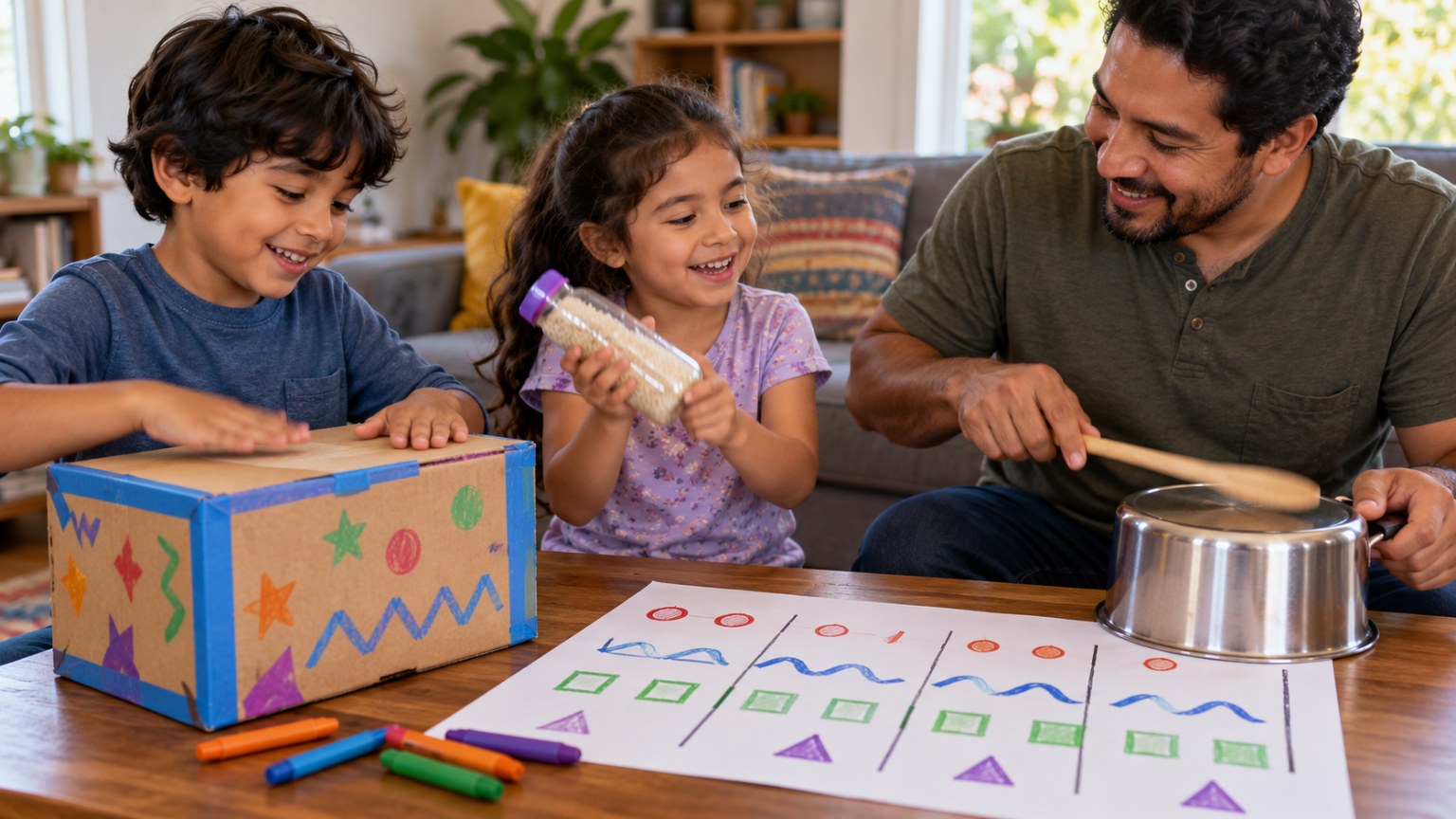
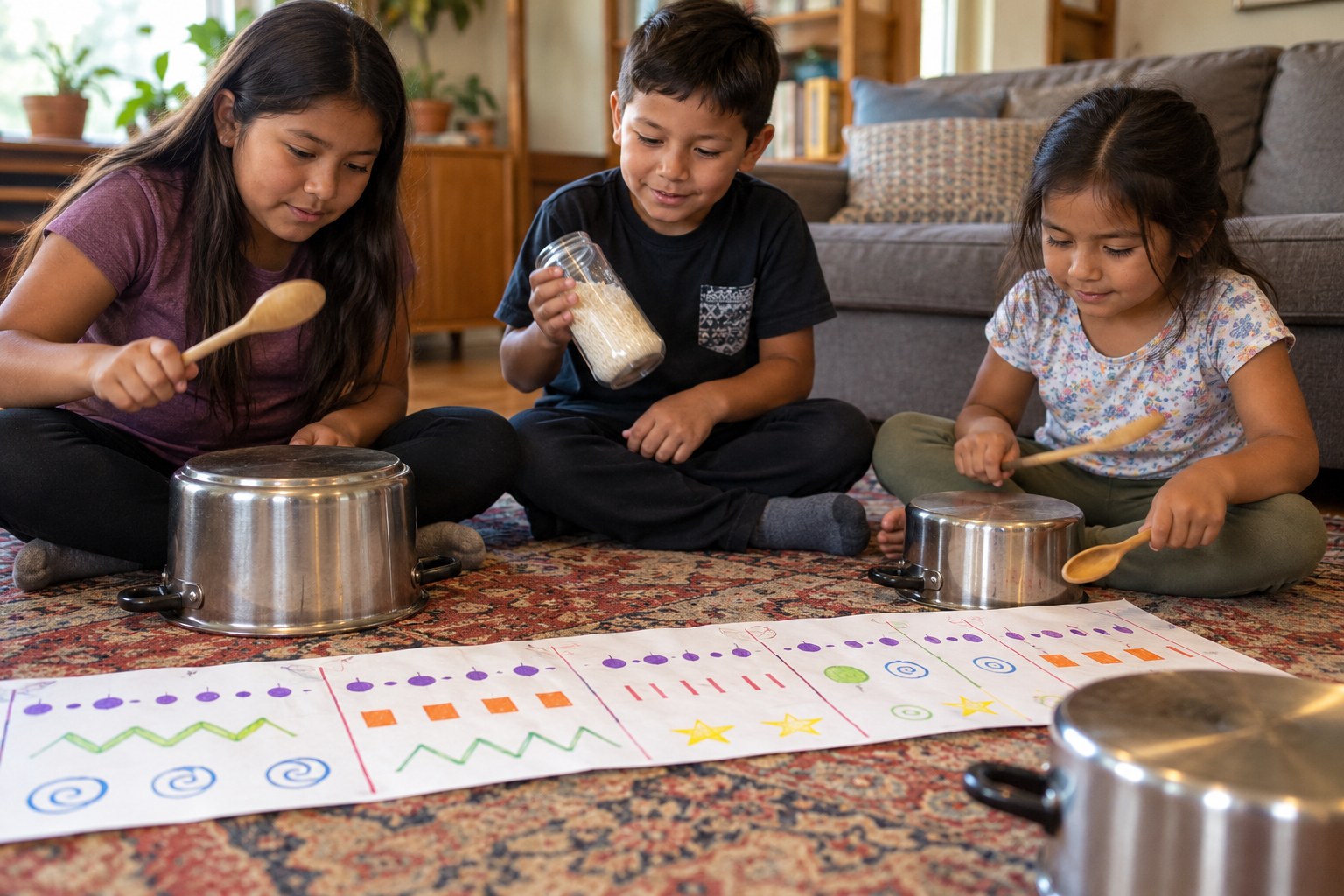
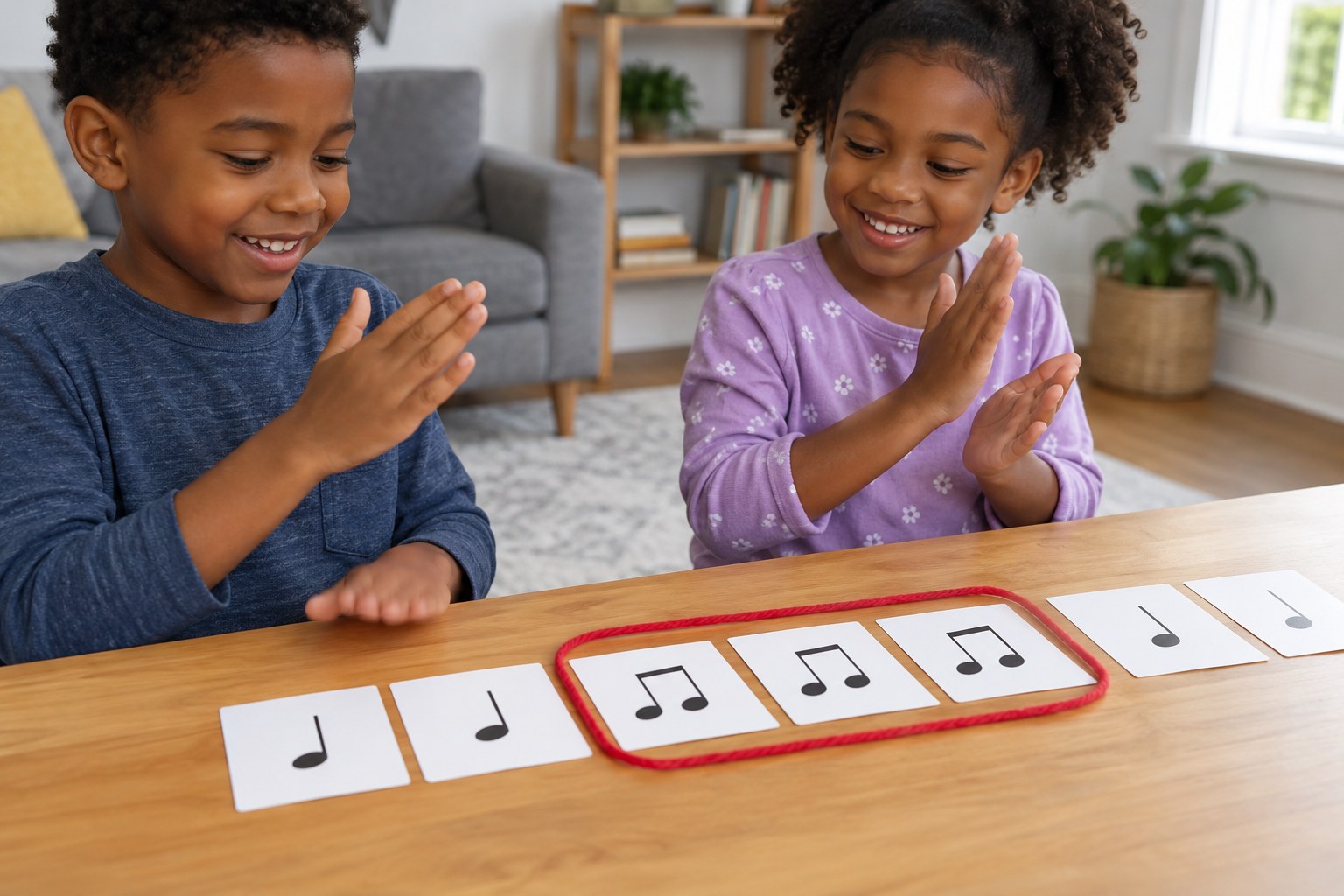
Your child learns the Kwanzaa greeting 'Habari gani?' and its answer, claps the syllables of all seven principles, composes a 4-beat response rhythm for each, and performs a call-and-response piece with body percussion.
Objective
Your child will clap the syllable rhythm of each Swahili principle, write a 4-beat rhythm using simple notation, and lead and answer in a call-and-response performance.
Materials
| Item | Quantity |
|---|---|
| Paper and pencil | 1 each per child |
| Index cards | 7 per child |
| Optional: a bucket, box or pot to drum on | 1 per child |
| Phone or device to record the performance (optional) | 1 |
Vocabulary
Preparation
- Write one principle on each of 7 index cards with its syllables marked, such as U-mo-ja and Ku-ji-cha-gu-li-a.
- Copy the rhythm key from 'Rhythm notation' onto a sheet of paper.
Introduction
Clap a quick rhythm and ask your child to echo it. Then say: in many African and African American musical traditions, a leader calls and the group answers. Kwanzaa even has a greeting that works this way.
What songs or chants do you know where a leader calls and a group answers?
How many syllables are in your name?
Steps
Conclusion
Ask: how does call and response bring a group together? During the real Kwanzaa week, greet your family each morning with 'Habari gani?' and answer with that day's rhythm.
Make your own lesson plan in minutes
Describe a topic and Resource Portal AI writes the objectives, materials and steps for your group.
Try Resource Portal AI