Robot Loop Beats: Code a Body Percussion Song with Repeat Blocks
Overview
Write a rhythm with repeat loops and perform it like a robot.
Description
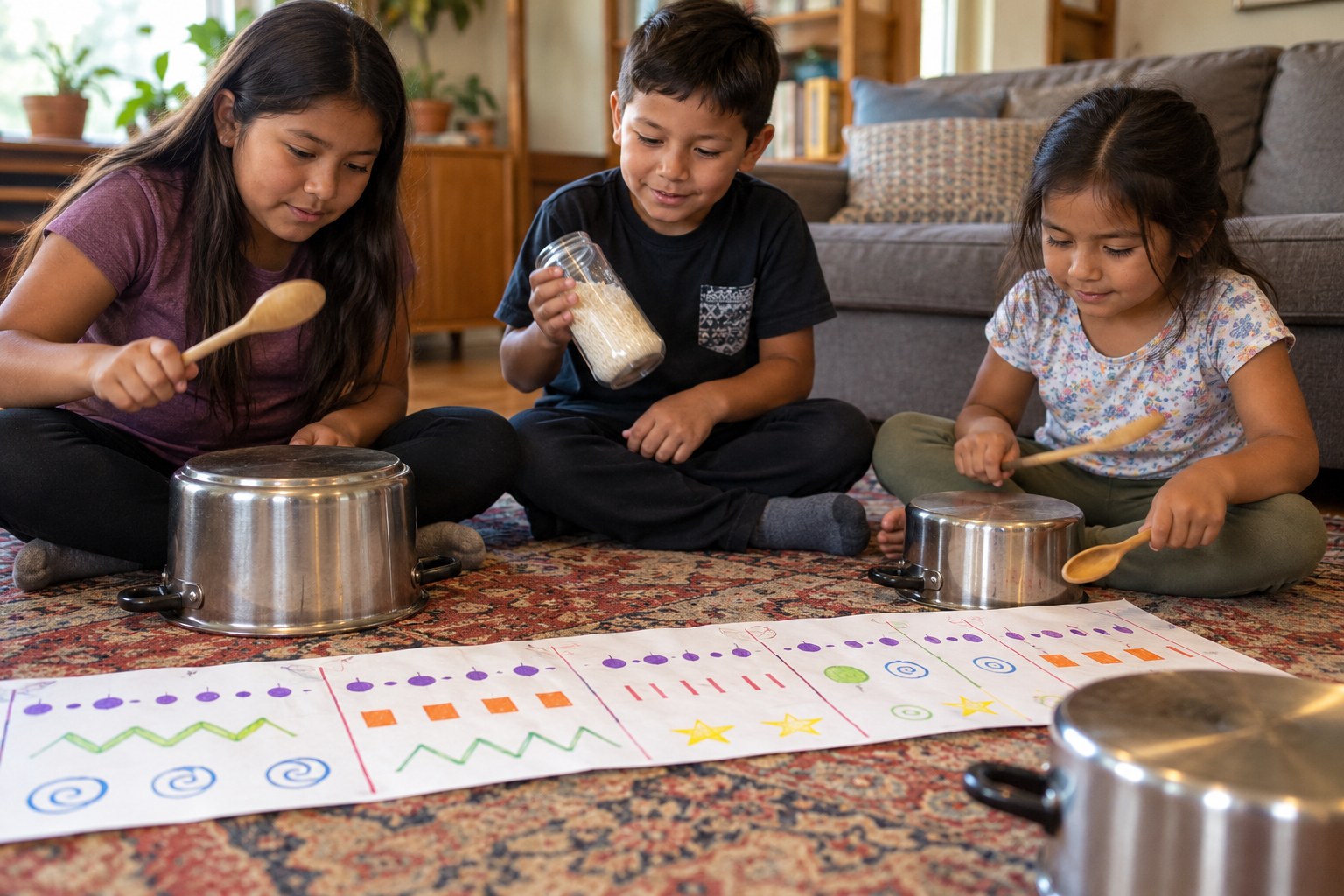
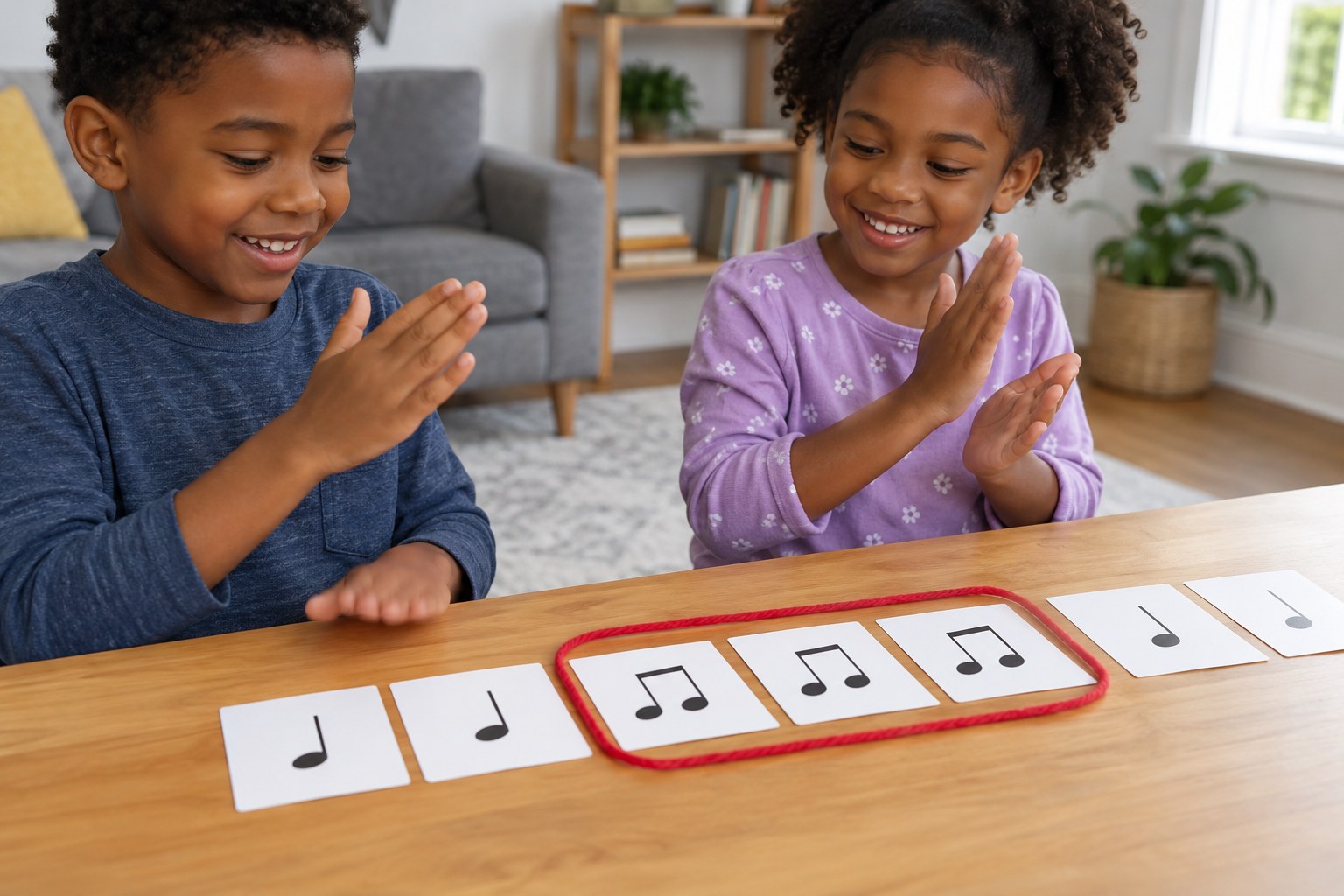
Your child writes a body-percussion song as robot code using sound cards (clap, pat, stomp, snap, rest) and repeat blocks, then performs it like a robot. They compare a long code written out step by step with a short code that uses loops.
Objective
Your child will compose a 16-beat body-percussion pattern, rewrite it using repeat (loop) blocks, perform it steadily, and explain why loops make code shorter.
Materials
| Item | Quantity |
|---|---|
| Index cards or paper squares | about 20 |
| Markers | 2-3 colors |
| Yarn or string to make loop circles | 2 pieces, about 3 feet each |
| Phone metronome app or a ticking clock (optional) | 1 |
| Open floor or table space | 1 |
Vocabulary
Preparation
- Make sound cards: 4 each of CLAP, PAT (knees), STOMP, SNAP and REST.
- Make 3 'repeat' cards that say REPEAT 2, REPEAT 3 and REPEAT 4.
Introduction
Lay out 12 cards in a row: pat, pat, clap, pat, pat, clap, pat, pat, clap, pat, pat, clap. Perform it robot-style. Ask: 'Is there a shorter way to tell a robot to do this?'
Where do you hear repeating patterns in songs you know?
Why might a programmer want to avoid writing the same step many times?
Steps
Conclusion
Ask: how many cards did the long code use, and how many did the loop code use? Loops make code shorter and easier to fix, which is why programmers use them constantly.
Make your own lesson plan in minutes
Describe a topic and Resource Portal AI writes the objectives, materials and steps for your group.
Try Resource Portal AI