Lesson planWright Brothers Flight Test: Measure How Far Paper Gliders Fly
Math40 minutesGrades: 1st, 2nd
Overview
Fly two gliders and measure which one goes farther.
Description
Your child learns how Orville and Wilbur Wright tested gliders before their first powered flight in 1903, then folds two paper gliders, flies them and measures the distances with paper clips, shoes and a tape measure.
Objective
Your child will measure flight distances with nonstandard units and a tape measure in feet, and find how much farther one glider flew than the other.
Standards
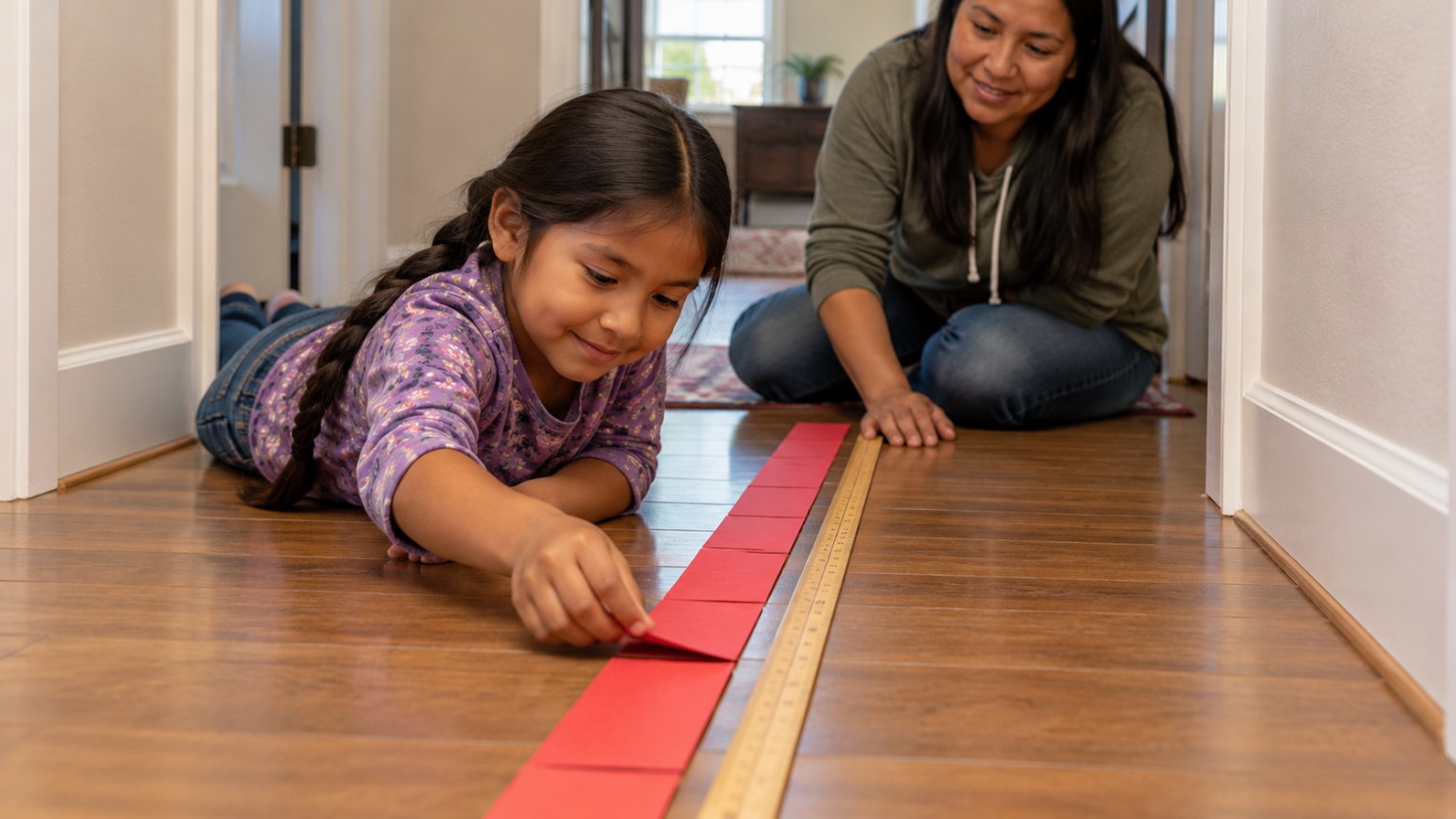
1.MD.2Math · Grade 1 · Measurement & Data Express the length of an object as a whole number of length units, by laying multiple copies of a shorter object (the length unit) end to end; understand that the length measurement of an object is the number of same-size length units that span it with no gaps or overlaps.
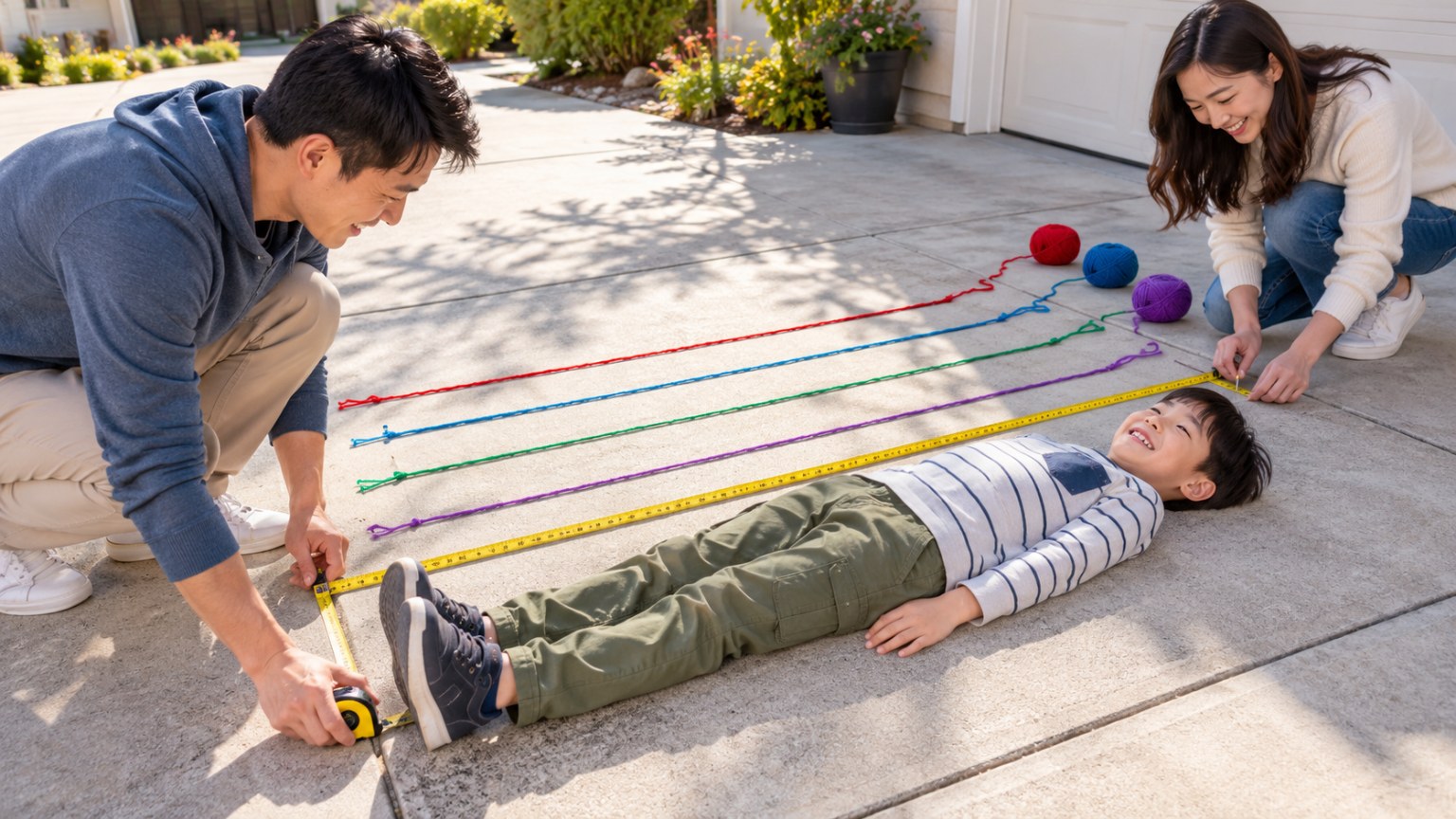
2.MD.1Math · Grade 2 · Measurement & Data Measure the length of an object by selecting and using appropriate tools such as rulers, yardsticks, meter sticks, and measuring tapes.
2.MD.4Math · Grade 2 · Measurement & Data Measure to determine how much longer one object is than another, expressing the length difference in terms of a standard length unit.
Materials
| Item | Quantity |
|---|
| Printer paper | 4 sheets per child |
| Tape measure or yardstick | 1 |
| Painter's tape or a jump rope for a start line | 1 |
| Sticky notes or coins to mark landing spots | 6 |
| Paper and pencil for the flight log | 1 each |
| Paper clips | 4 |
Vocabulary
Glider
An aircraft with wings and no engine that floats through the air.
Distance
How far it is from one place to another.
Foot
A unit of length equal to 12 inches.
Test
Trying something to see how well it works.
Preparation
- Clear a hallway or space at least 20 feet long, and mark a start line with tape.
- Fold one example dart glider ahead of time. Make a flight log with columns: Glider, Flight 1, Flight 2, Flight 3.
Introduction
Toss a flat sheet of paper and let it flutter down. Now toss your pre-folded glider. Ask: why did one fly farther? Two brothers named Orville and Wilbur asked questions like that for years before they flew.
How do you think birds and airplanes stay up?
How could we find out which glider flies farther?
Steps
1Step 1
Meet the Wright brothers
(5 min) Read 'About the Wright brothers' together. Point out that they tested many gliders and kept careful notes before their famous flight on December 17, 1903.
2Step 2
Fold two gliders
(10 min) Your child folds a dart glider and a wide-wing glider (see the folding guide), with help on the creases. Write A and B on the wings so you can tell them apart.
3Step 3
Fly and mark
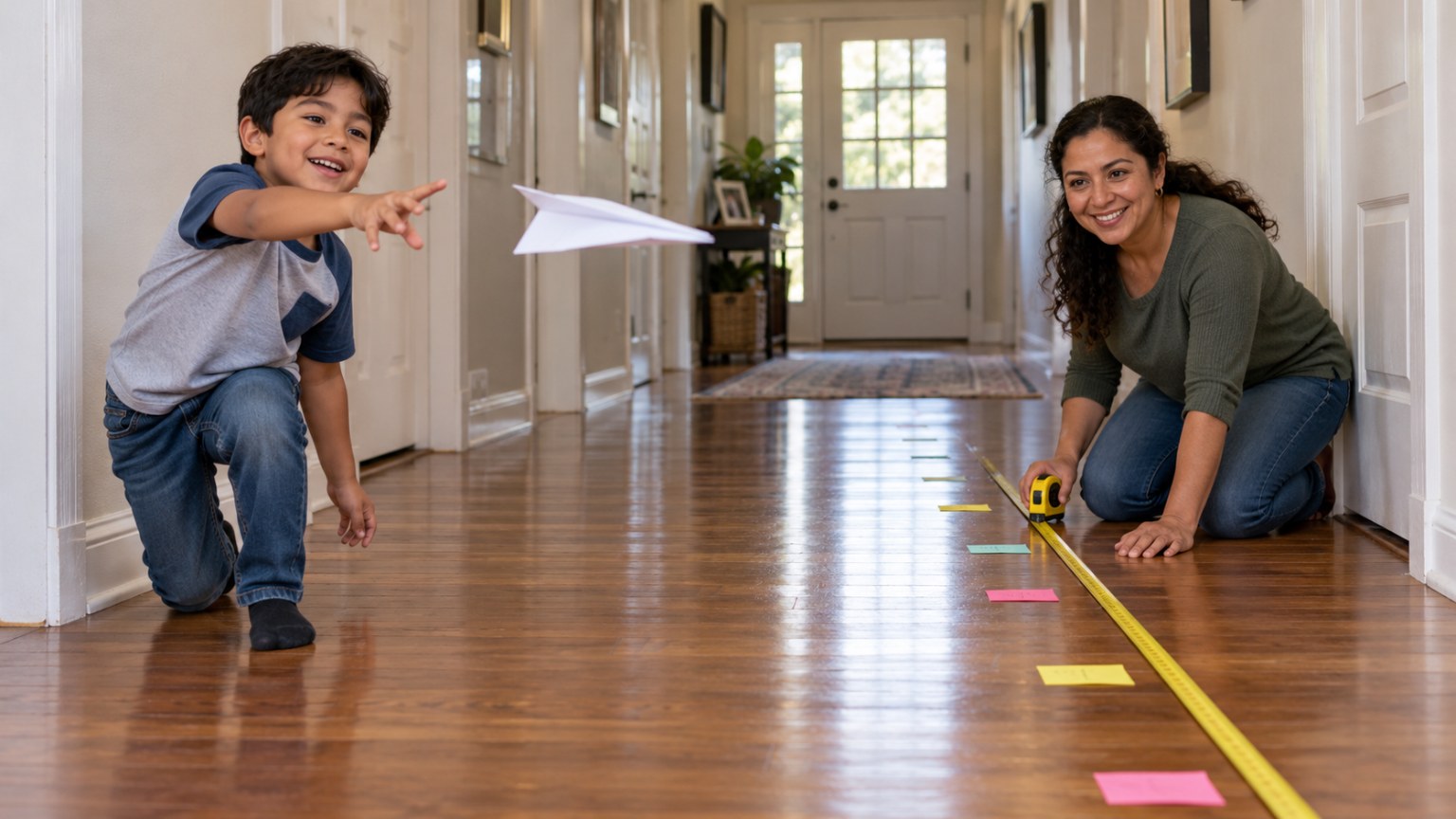
(8 min) Standing behind the start line, your child flies glider A three times and glider B three times. After each flight, put a sticky note where the nose landed.
4Step 4
Measure
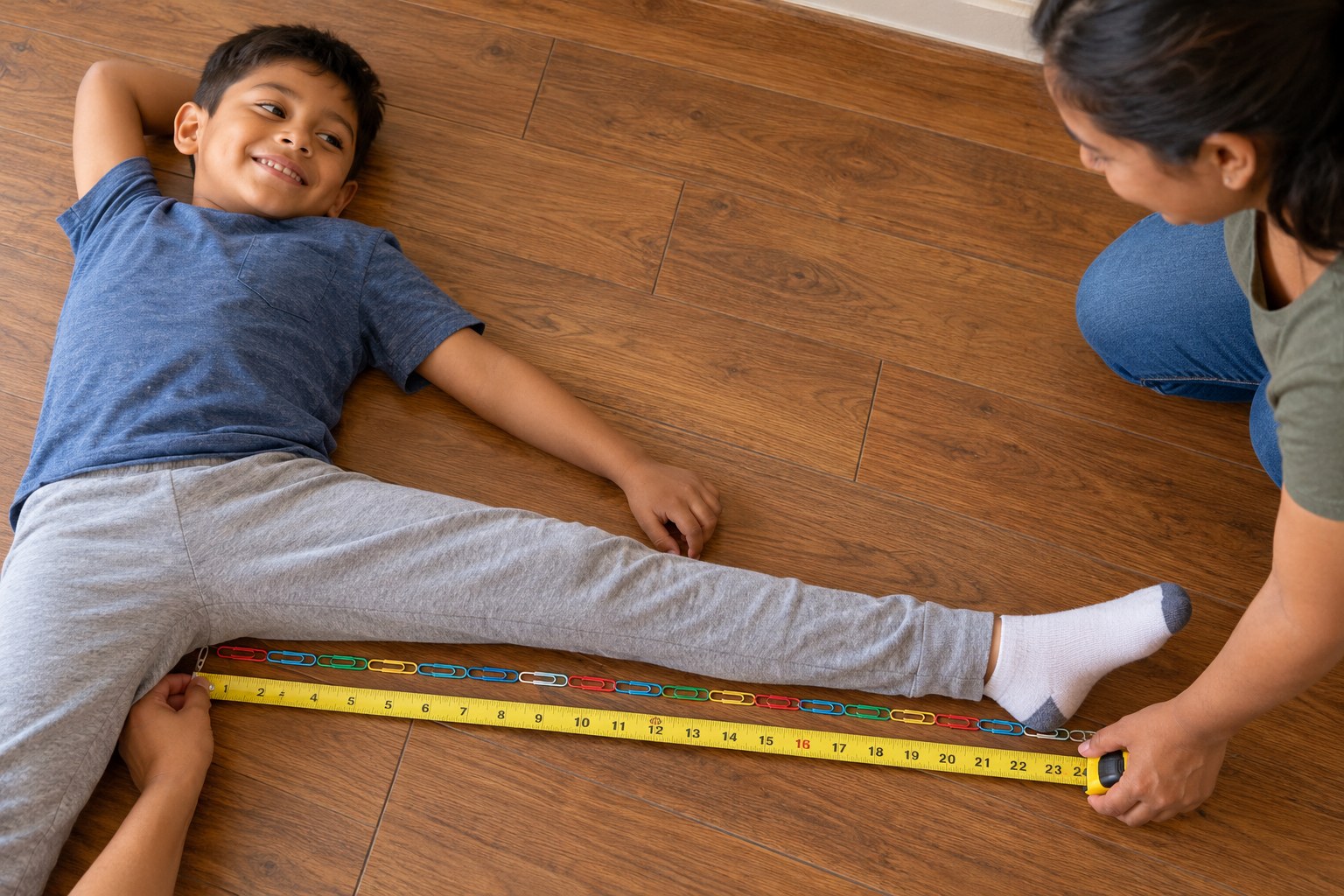
(10 min) Measure each landing first in heel-to-toe shoe lengths, then with the tape measure to the nearest foot. Write each distance in the flight log, and circle the longest flight for each glider.
5Step 5
Compare
(5 min) Subtract to find how many feet farther the best flight of one glider went than the other. Ask: which design would the Wright brothers pick, and what would you change?
Conclusion
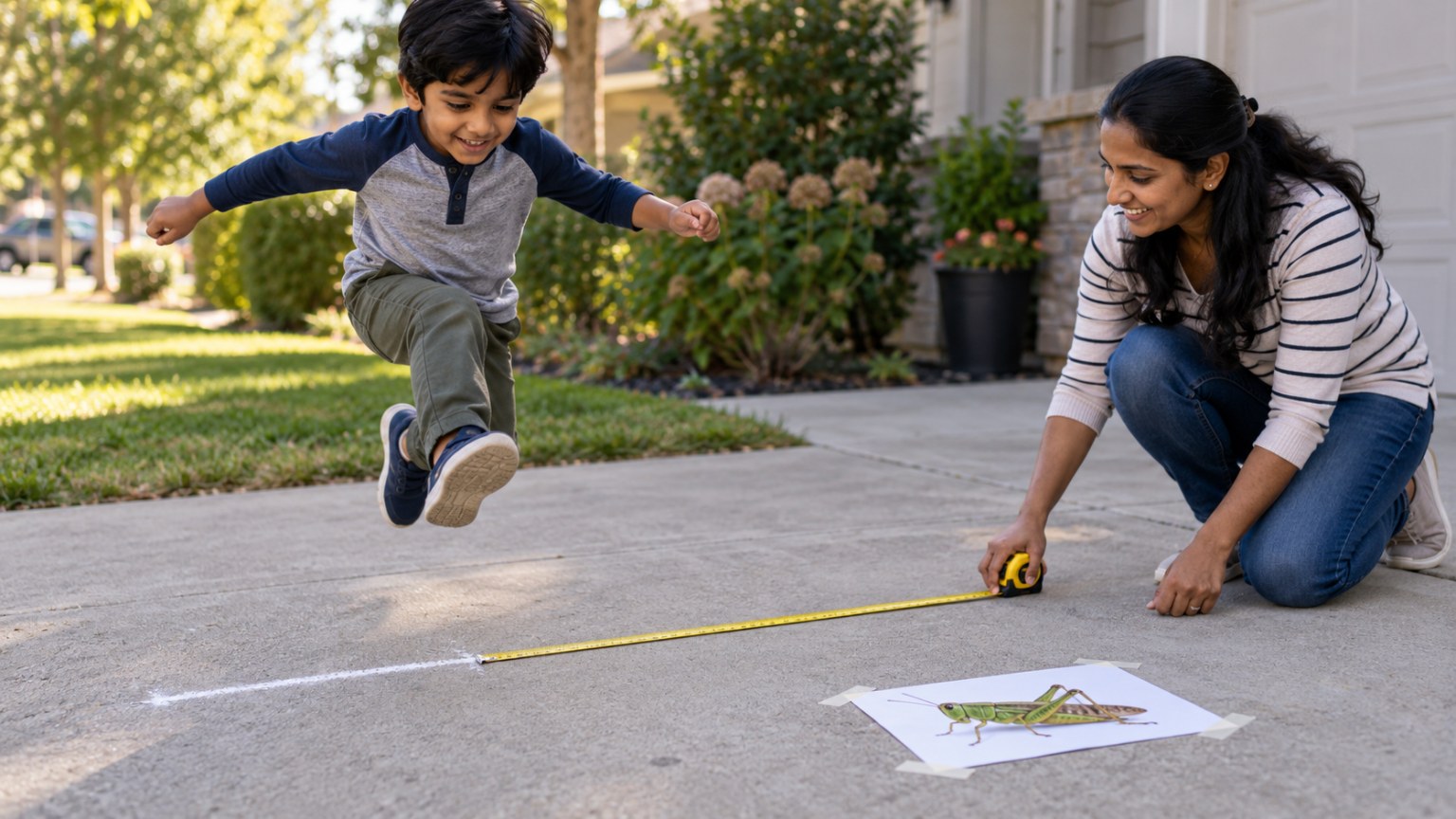
Ask: which glider won, and by how many feet? Orville's first powered flight went 120 feet. Measure 120 feet outside (about 40 big steps) to see how far that is.
Make your own lesson plan in minutes
Describe a topic and Resource Portal AI writes the objectives, materials and steps for your group.
Try Resource Portal AI