Librarian's Shelf Challenge: Order Dewey Call Numbers by Decimals
Overview
Compare decimals to shelve books like a librarian.
Description
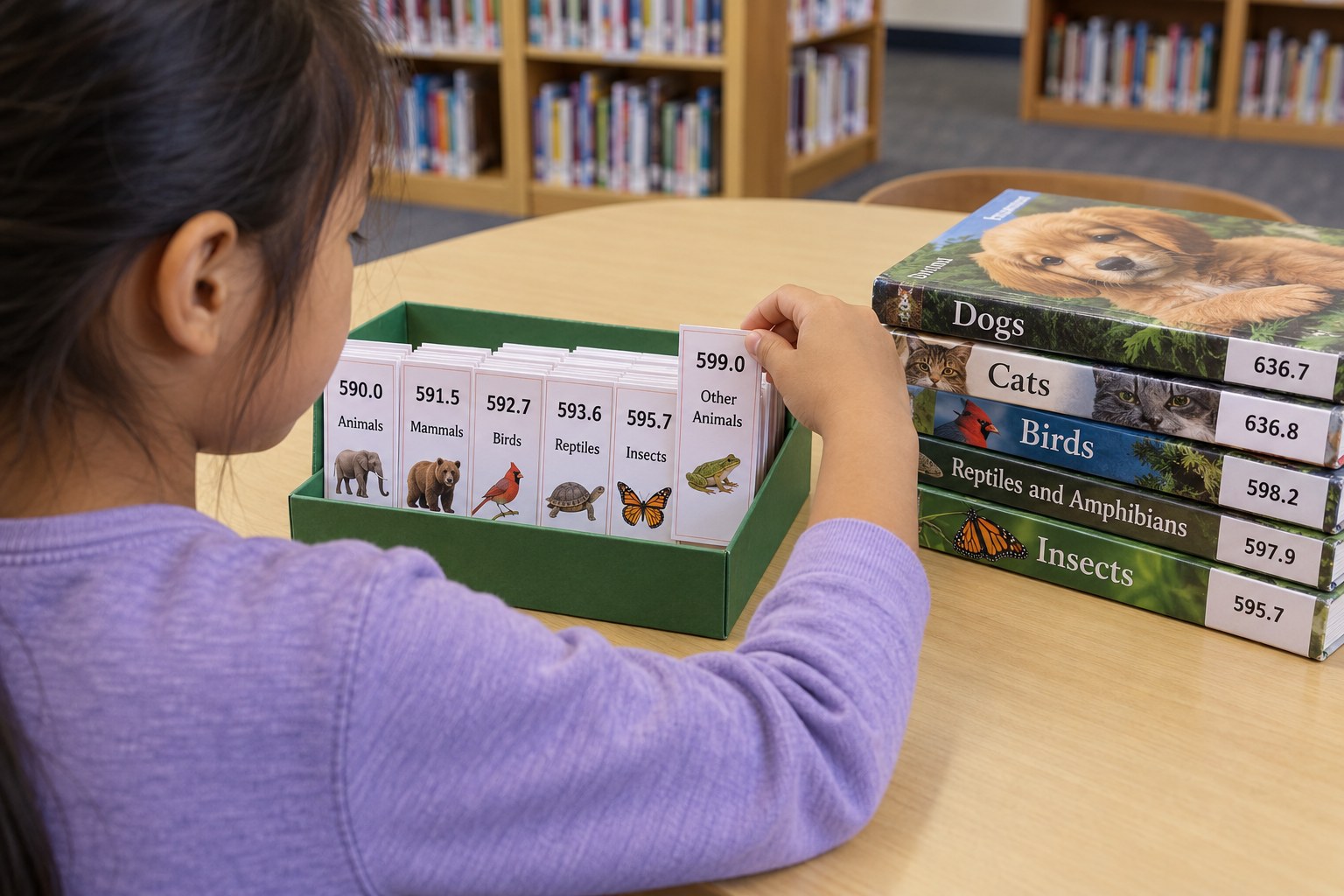
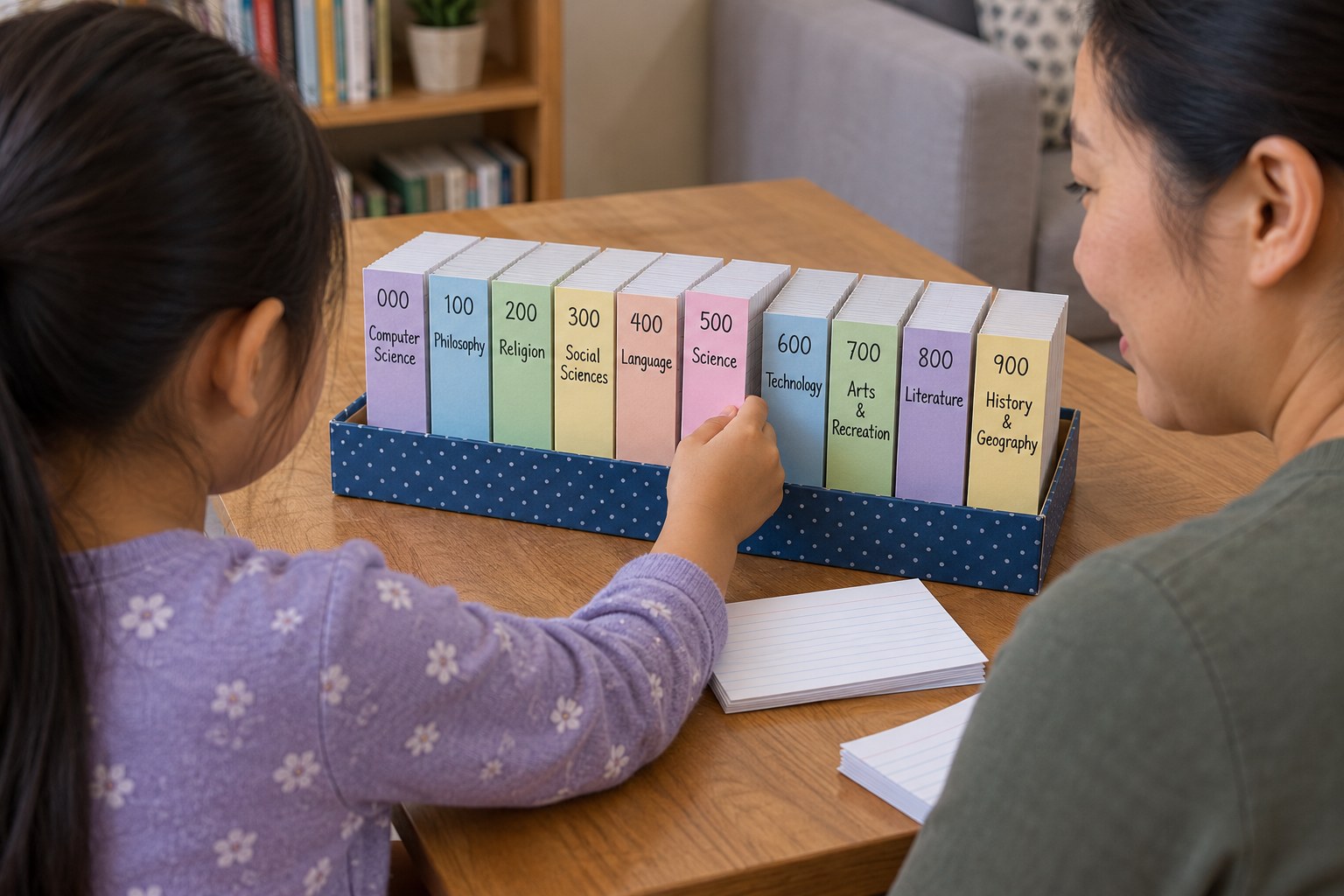
Your child learns how librarians organize nonfiction books with the Dewey Decimal System, then works as a library page: they compare call numbers with decimals to the hundredths, shelve a set of home-made book spines in the right order, and find the shelf mistakes a 'tired librarian' made.
Objective
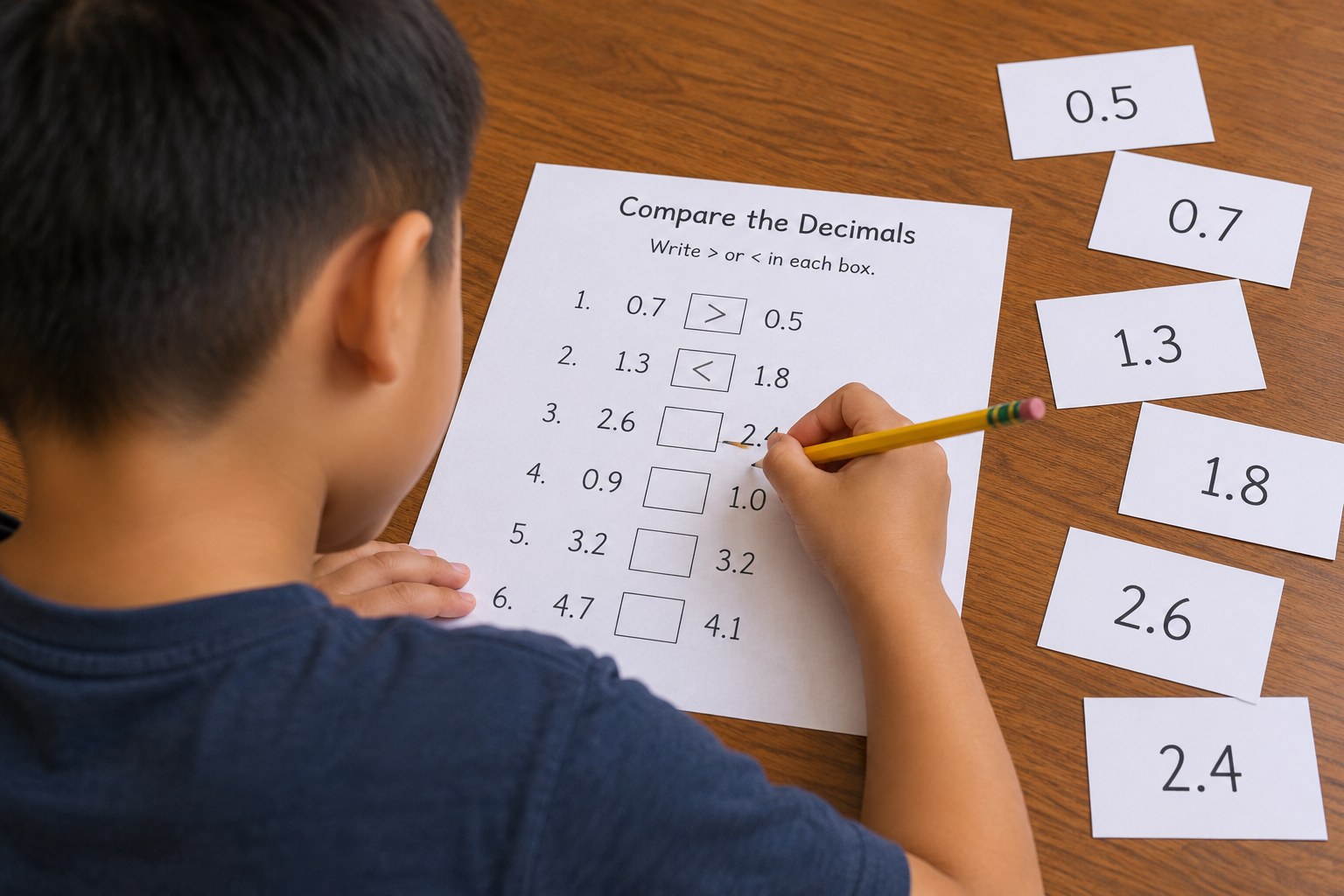
Your child will compare decimals to the hundredths using place value, record comparisons with >, = and <, and put Dewey call numbers in order from least to greatest.
Standards
Materials
| Item | Quantity |
|---|---|
| Index cards or strips of paper as book spines | 16 |
| Marker | 1 |
| Shoebox lid or a shelf space as the library shelf | 1 |
| Paper and pencil | 1 each |
| Optional: real nonfiction library books with Dewey labels | 4-6 |
Vocabulary
Preparation
- Write one call number on each of 16 cards, with a made-up book title: for example 598.2 Backyard Birds, 598.07 Bird Watching Guide, 598.47 Penguins, 597.9 Snakes, 599.75 Big Cats, 599.7 Wild Mammals, 599.53 Dolphins, 591.5 Animal Homes, 595.78 Butterflies, 595.7 Insects, 594.56 Octopuses, 596.1 Backbones, 597.3 Sharks, 599.36 Squirrels, 598.94 Eagles, 590.73 Zoos.
- Mix up the cards. For the 'tired librarian' step, also prepare a short row of 6 cards in an order with 2 mistakes.
Introduction
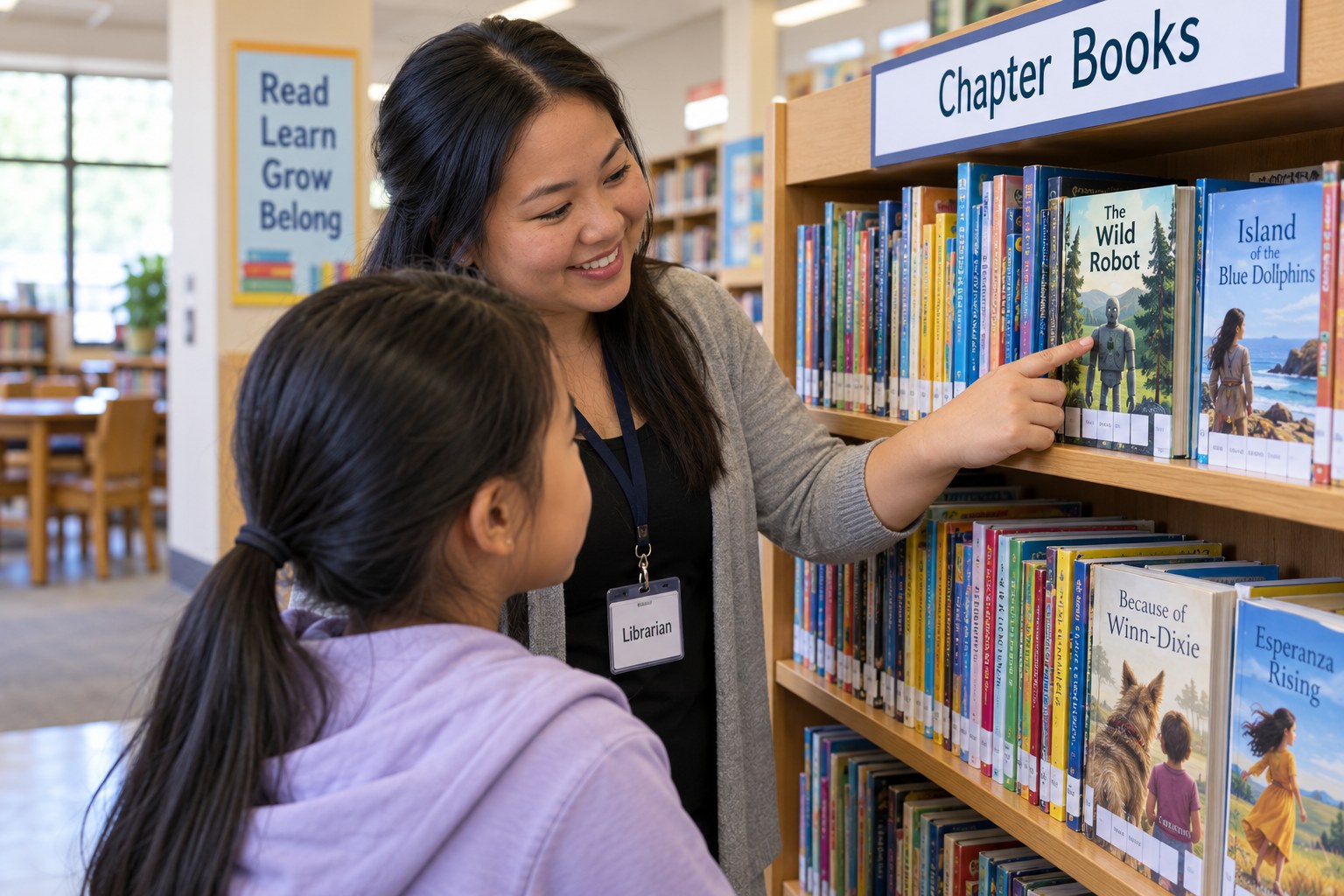
Ask your child: if a library had 50,000 books just thrown in a pile, how would you ever find the one about sharks? Librarians solved this problem with numbers, including decimals.
Where do you find books about animals at the library?
Which is bigger, 598.2 or 598.07? How do you know?
Steps
Conclusion
Ask: why does 598.2 come after 598.07 even though 07 looks like a bigger number than 2? On your next library visit, find the 590s and see the system in action, and say thank you to a librarian.
Make your own lesson plan in minutes
Describe a topic and Resource Portal AI writes the objectives, materials and steps for your group.
Try Resource Portal AI