Bubbly Rock Candy: Honeycomb and Pumice Science
Overview
Make honeycomb candy and discover how pumice gets its bubbles.
Description
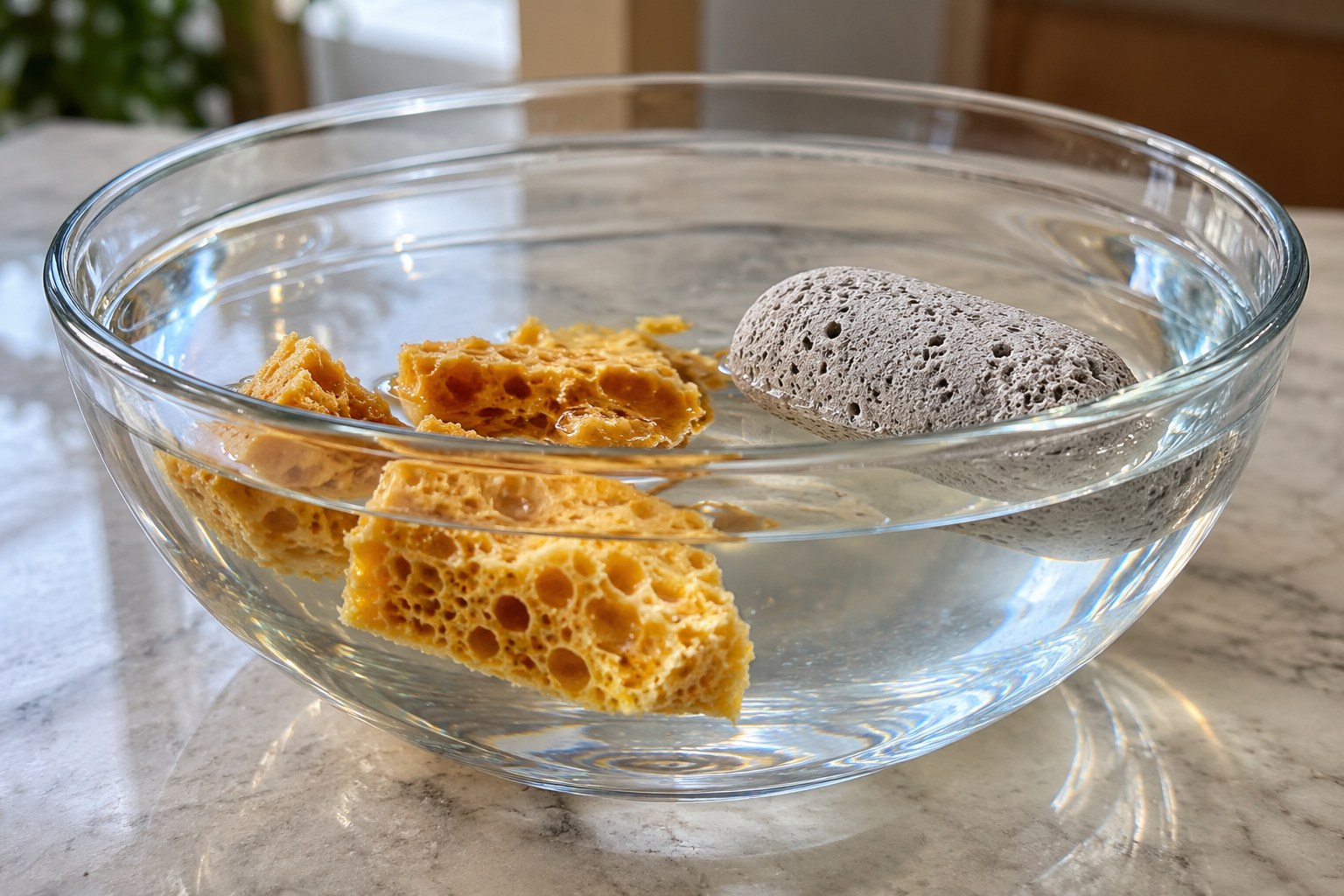
With an adult handling the hot syrup, your child helps make honeycomb toffee, watching baking soda fill hot sugar with gas bubbles that freeze in place. While it cools, they test how bubbles make some 'rocks' float, then break the candy open to compare it with pumice, a real volcanic rock full of holes.
Objective
Your child will measure ingredients, observe a gas-producing reaction, and explain how trapped gas bubbles make pumice light enough to float.
Materials
| Item | Quantity |
|---|---|
| Granulated sugar | 1 cup (200 g) |
| Light corn syrup or honey | 1/4 cup |
| Water | 2 tablespoons |
| Baking soda, sifted | 1 1/2 teaspoons |
| Medium heavy saucepan and a whisk (adult only) | 1 each |
| Candy thermometer (helpful, not required) | 1 |
| 8-inch square pan lined with parchment or greased foil | 1 |
| Bowl of water, a sponge, a small rock and a piece of bread or a cork for the float test | 1 each |
| Piece of pumice (from the bath or garden aisle, optional) | 1 |
Vocabulary
Preparation
- Line the pan and set it right next to the stove. Measure and sift the baking soda into a small bowl so it's ready; this step happens fast.
- Check for allergies and diet needs: this is a pure-sugar treat; honey is not for children under 1.
Introduction
Shake a closed bottle of sparkling water and ask: what's hiding in there? When you open it, bubbles rush out. Magma has gas hidden in it too, and that gas makes some of the strangest rocks on Earth.
Have you ever seen a rock that floats?
What happens to bubbles in a liquid when it suddenly turns solid?
Steps
Conclusion
Ask: how is your candy like pumice? (Both formed when a hot liquid full of gas bubbles hardened before the bubbles could escape.) How is it different? (Pumice is volcanic glass, not sugar!)
Make your own lesson plan in minutes
Describe a topic and Resource Portal AI writes the objectives, materials and steps for your group.
Try Resource Portal AI