Kitchen Science Ice Cream in a Bag: Why Salty Ice Gets Colder
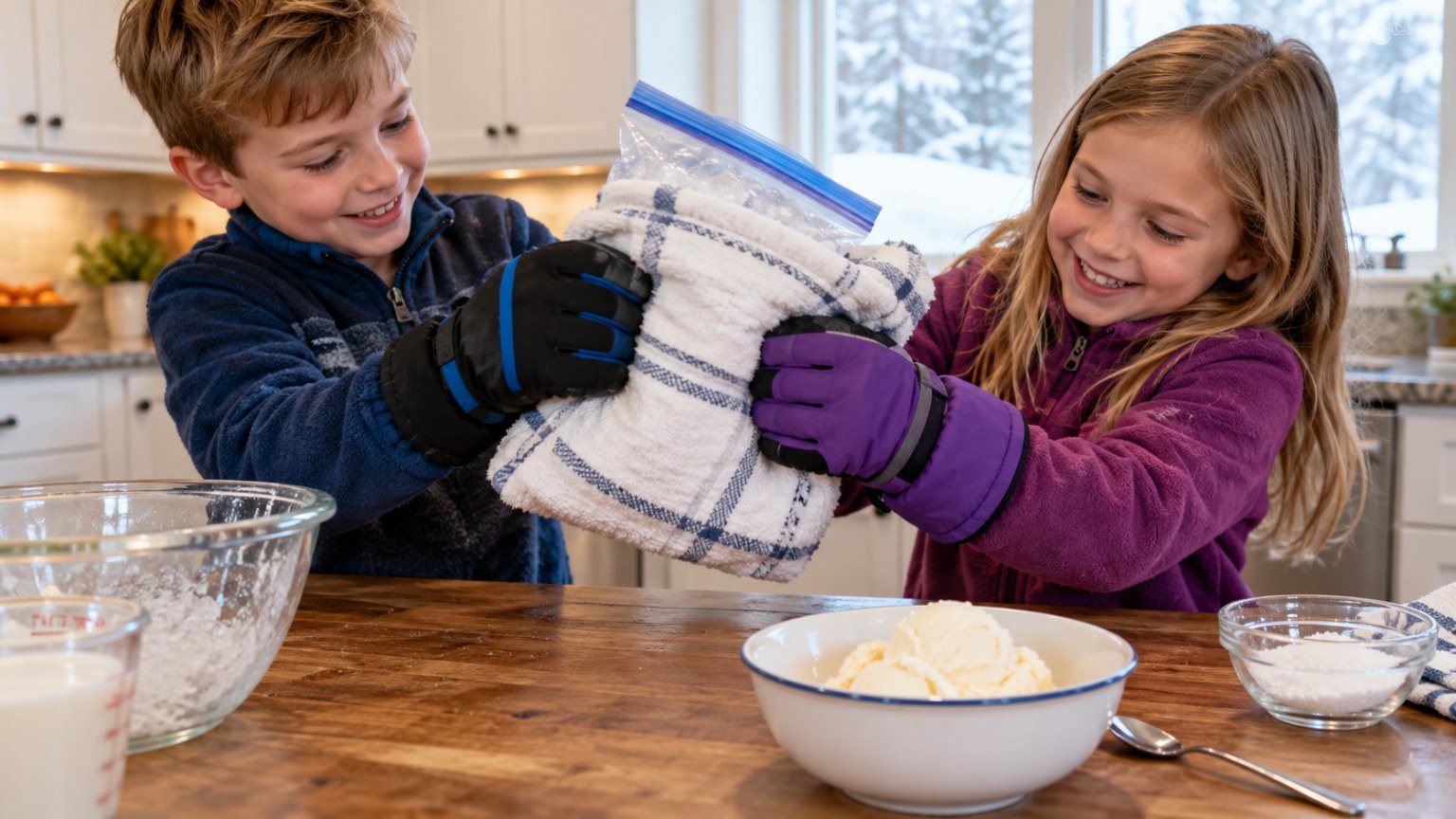
Overview
Shake up ice cream and find out what salt does to ice.
Description
Your child mixes a simple ice cream base, seals it in a small bag inside a big bag of ice and salt, and shakes until it freezes. They measure the temperature of plain ice water and salty ice to discover why the salt makes ice cream possible.
Objective
Your child will follow a recipe, measure and compare temperatures of plain ice and salted ice, and explain why the salt helps freeze the ice cream.
Materials
| Item | Quantity |
|---|---|
| Half-and-half or whole milk (coconut milk for dairy-free) | 1/2 cup per child |
| Sugar | 1 tablespoon per child |
| Vanilla extract | 1/4 teaspoon per child |
| Ice cubes | about 3 cups per child |
| Coarse salt or table salt | 1/3 cup per child |
| Quart-size zip bags and gallon-size zip bags | 1 of each per child |
| Kitchen or outdoor thermometer | 1 |
| Winter gloves or a dish towel | 1 per child |
| Cups of plain ice water for comparison | 1 |
Vocabulary
Preparation
- Check for dairy allergies; use coconut milk or a dairy-free milk if needed (it will be icier).
- Put a cup of ice and water out 10 minutes early so it gets as cold as it can.
- Double-check that the zip bags seal; a leaky bag lets salty water into the ice cream.
Introduction
Ask: "If ice is already frozen, how can it freeze ice cream fast? Let's see whether salt makes ice colder or warmer."
What happens to ice when people sprinkle salt on an icy sidewalk?
Where does the heat from the ice cream go?
Steps
Conclusion
Ask: "Why couldn't plain ice freeze the ice cream as fast?" Plain ice water stays near 32°F, while salty ice gets colder and pulls heat out of the cream faster.
Make your own lesson plan in minutes
Describe a topic and Resource Portal AI writes the objectives, materials and steps for your group.
Try Resource Portal AI