Static Electricity Detector: Build a Foil-Leaf Electroscope and Explain It
Overview
Build a device that detects invisible charge, then explain it in writing.
Description
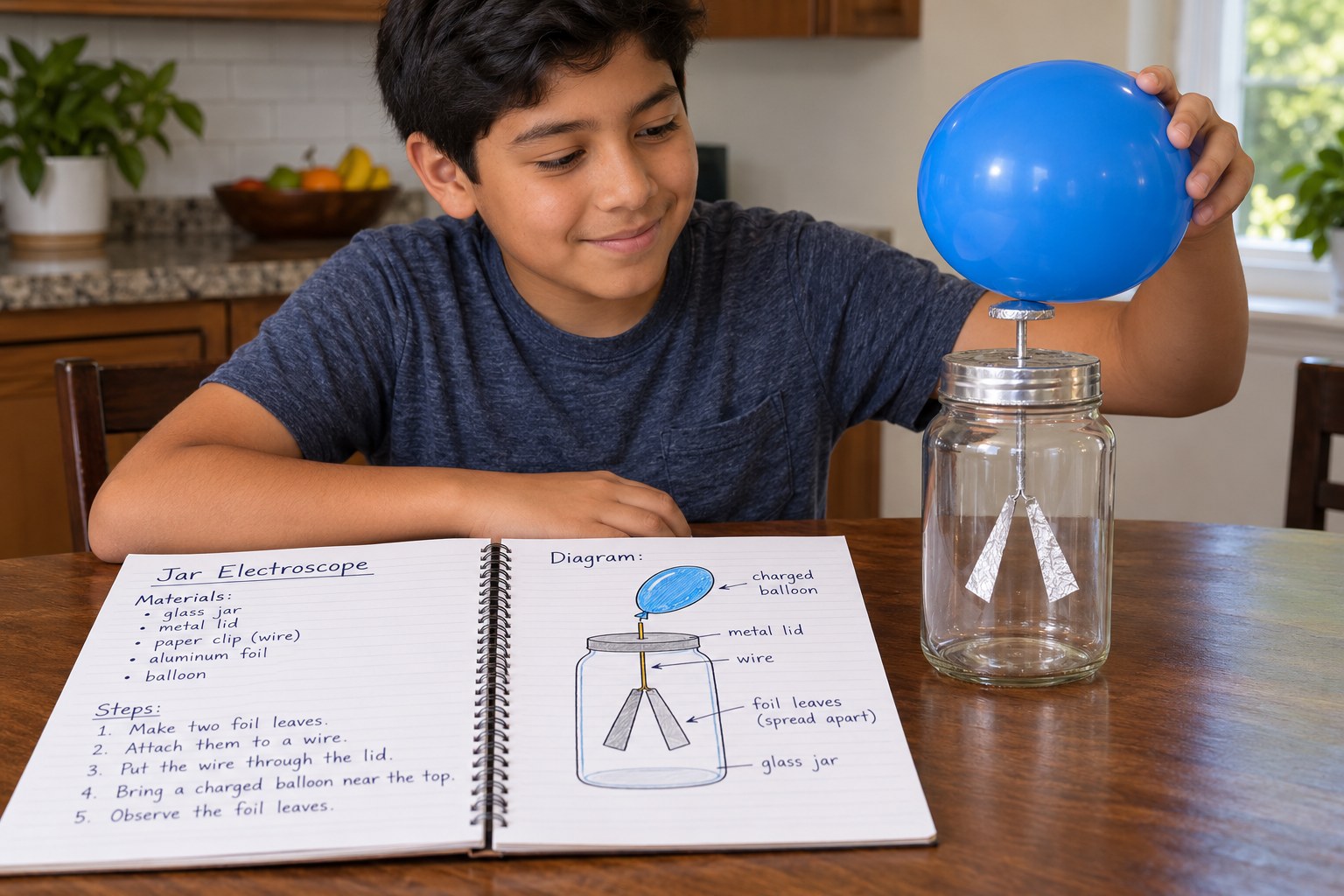
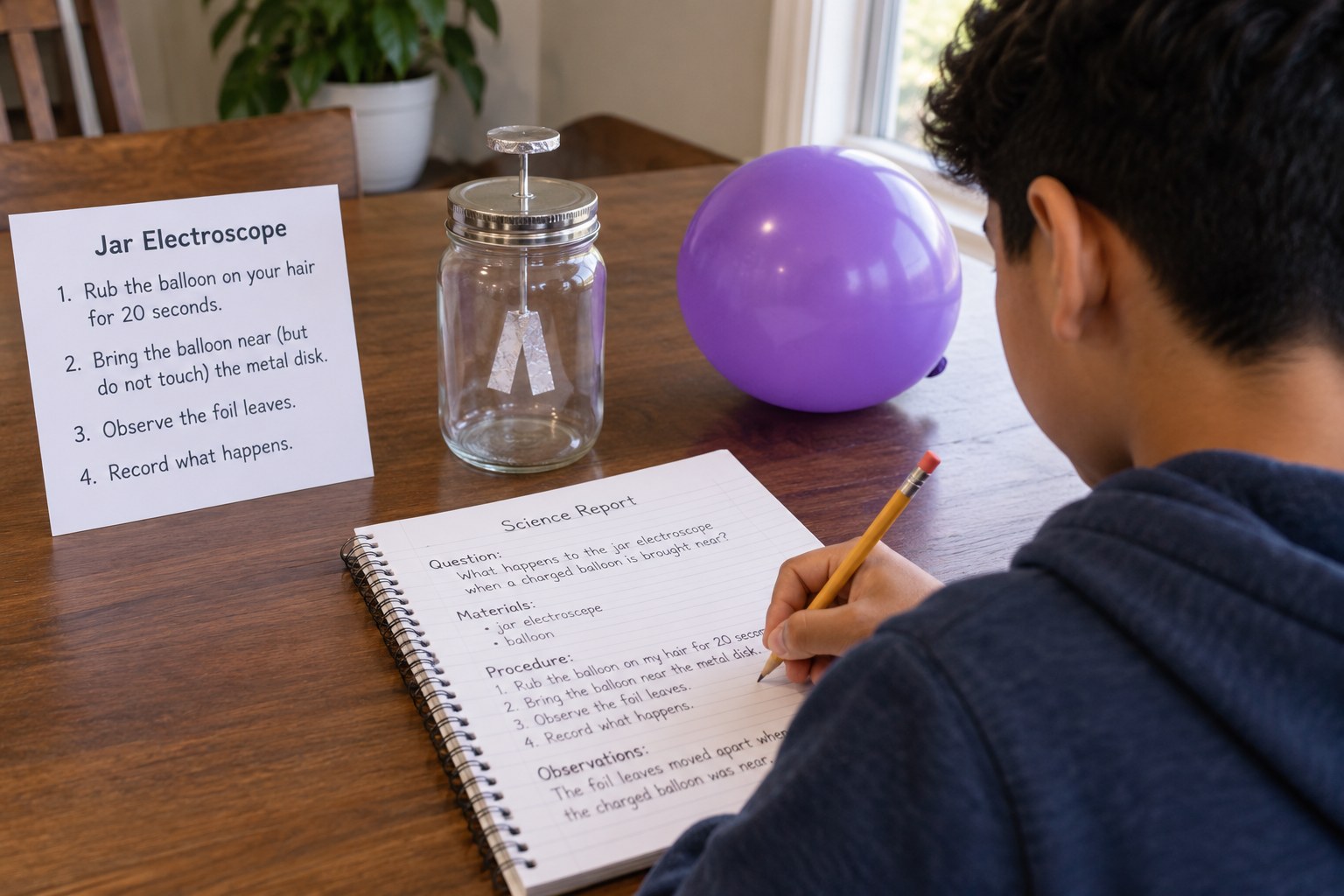
Your teen builds a jar electroscope with two thin foil leaves, uses a charged balloon and comb to make the leaves spread apart without touching them, and then writes a clear, illustrated explanation of why it happens.
Objective
Your teen will build and test an electroscope, then write an organized explanatory paragraph or short report using precise science vocabulary and evidence from their tests.
Standards
Materials
| Item | Quantity |
|---|---|
| Clean, dry glass jar with a lid you can replace with cardboard | 1 |
| Stiff cardboard circle to cover the jar | 1 |
| Large paper clip | 1 |
| Aluminum foil | a small sheet |
| Balloon | 1 |
| Plastic comb | 1 |
| Wool sweater, fleece or your hair for rubbing | 1 |
| Tape, scissors and paper for writing | 1 each |
Vocabulary
Preparation
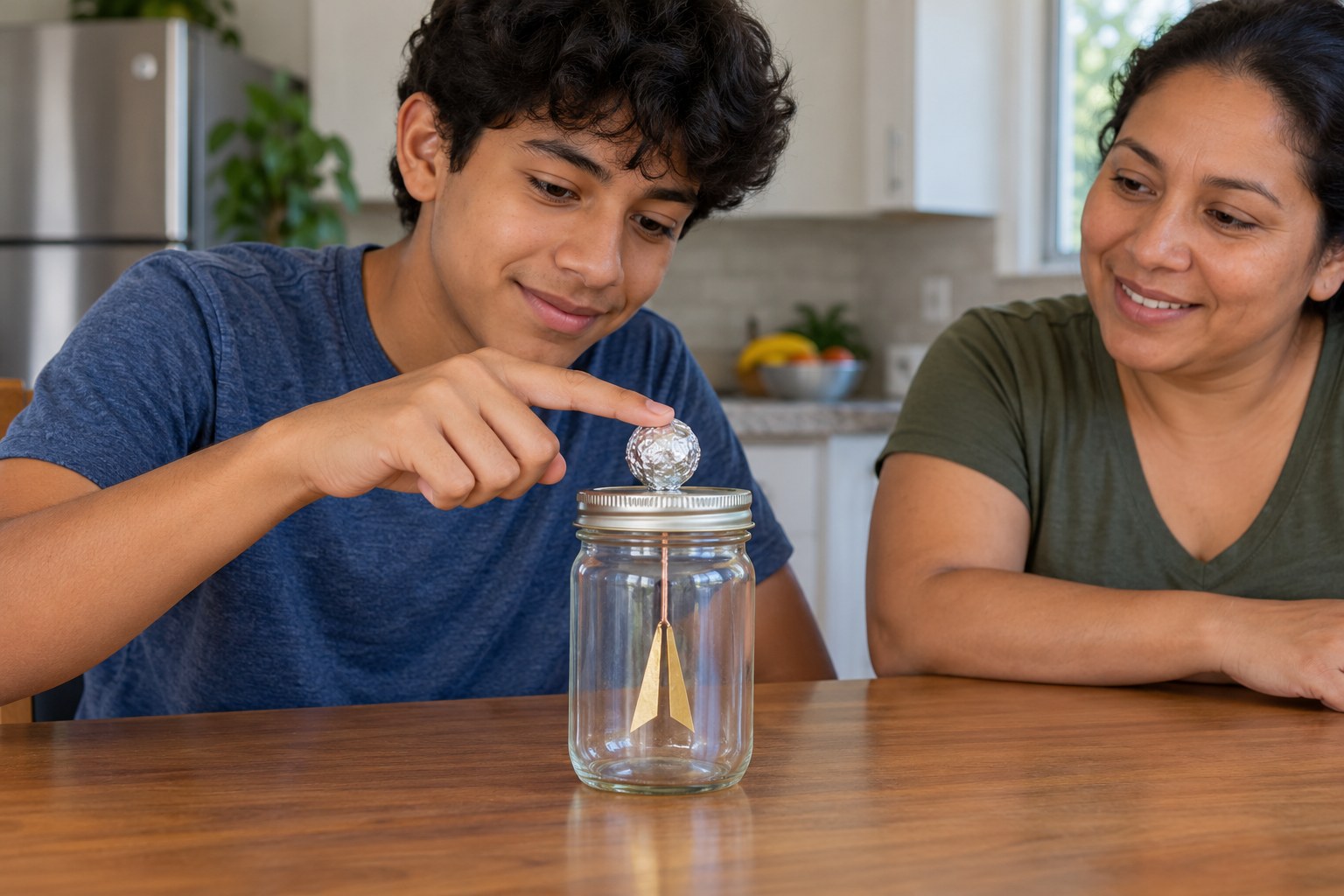
- Unbend the paper clip into a long hook. Poke it through the middle of the cardboard circle so the hook hangs inside the jar and a small loop sticks up on top; crumple a marble-sized ball of foil around the top end.
- Cut two foil strips about 1/2 inch by 2 inches. Hang both on the hook, side by side, so they touch. Static works best on a dry day; a humid day may weaken results.
Introduction
Rub a balloon on your hair and hold it near your teen's arm hair or a stream of water. Ask, 'You can't see the charge, so how could we build something to prove it is there and measure it?'
What do you think moves when you rub a balloon on hair?
Why might two things with the same charge push apart?
Steps


Conclusion
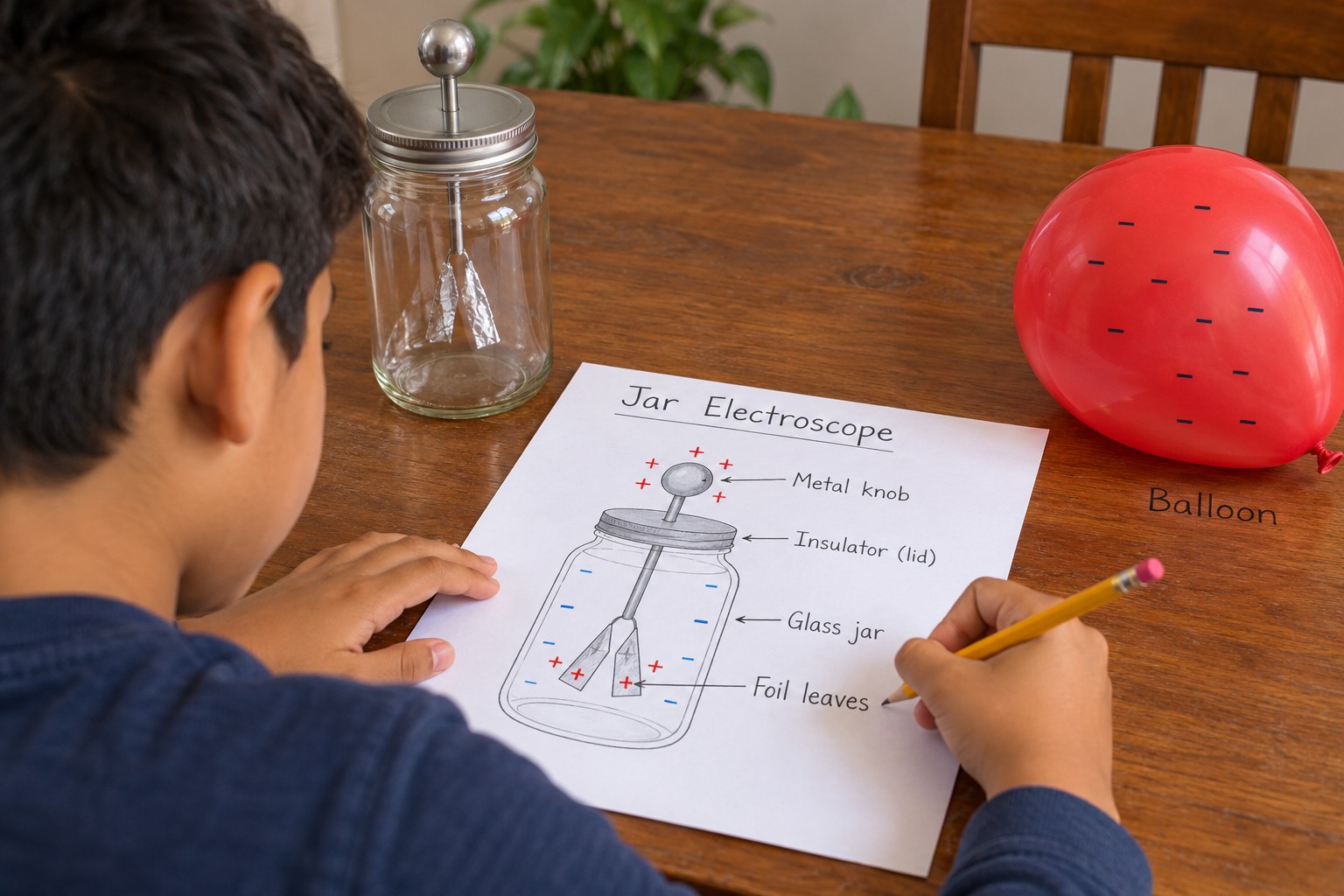
Your teen built a detector for a force they couldn't see and explained it in writing. The leaves spread because they gain the same charge and like charges repel, the same idea behind lightning and the shocks from a doorknob.
Make your own lesson plan in minutes
Describe a topic and Resource Portal AI writes the objectives, materials and steps for your group.
Try Resource Portal AI