How Do Airplanes Fly? Test a Paper Wing and Write an Explainer
Overview
Build a wing that climbs, then explain flight in writing.
Description
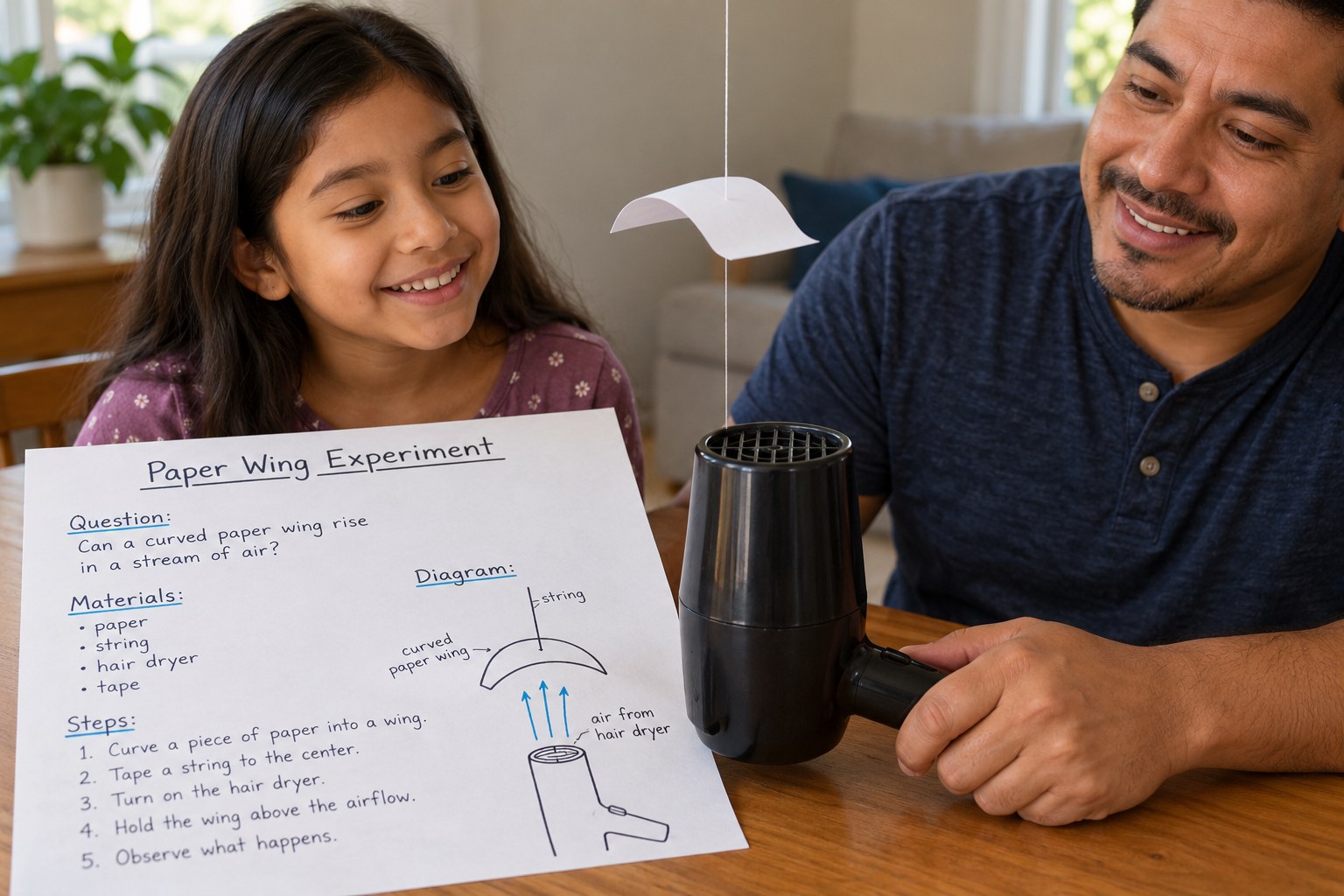
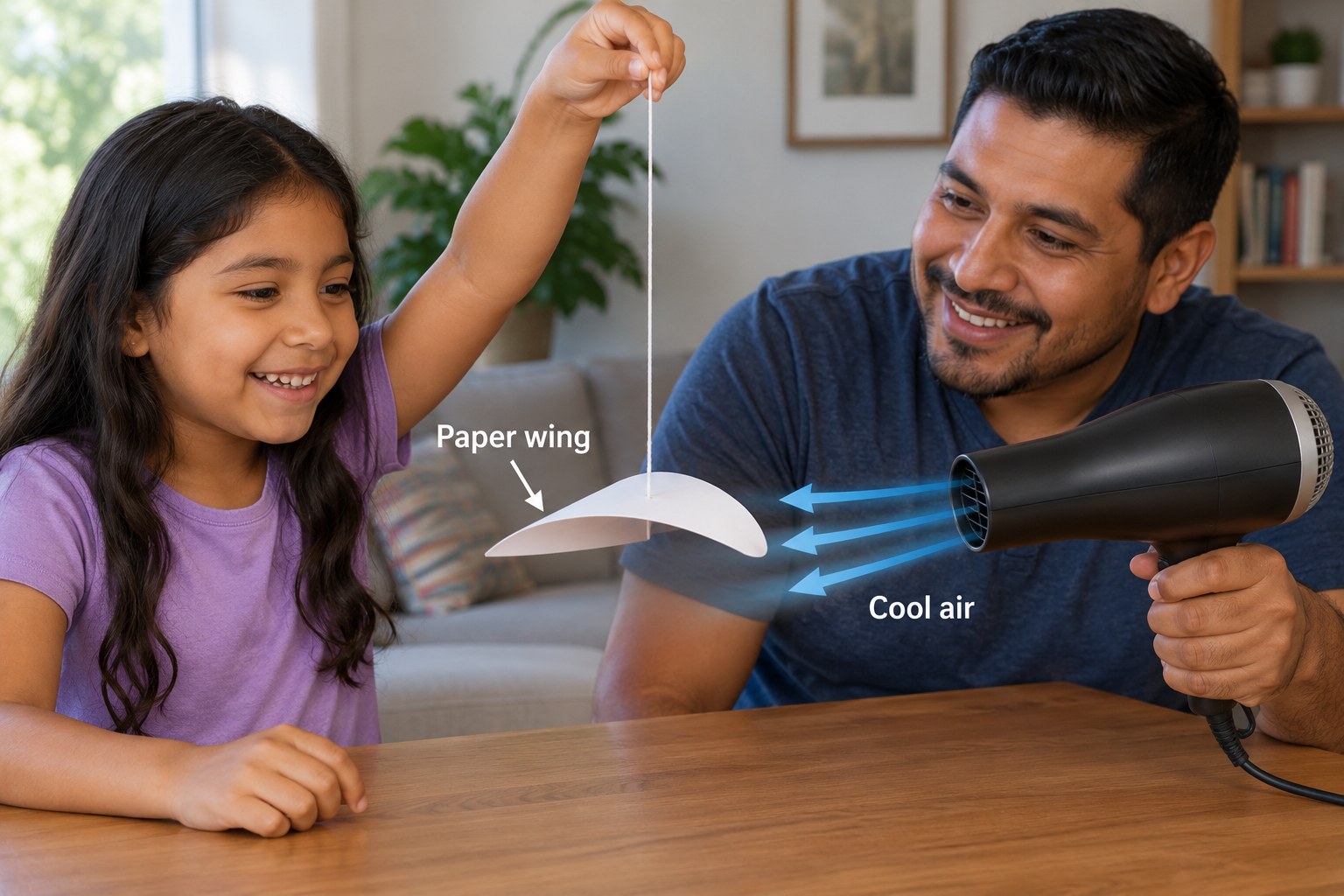
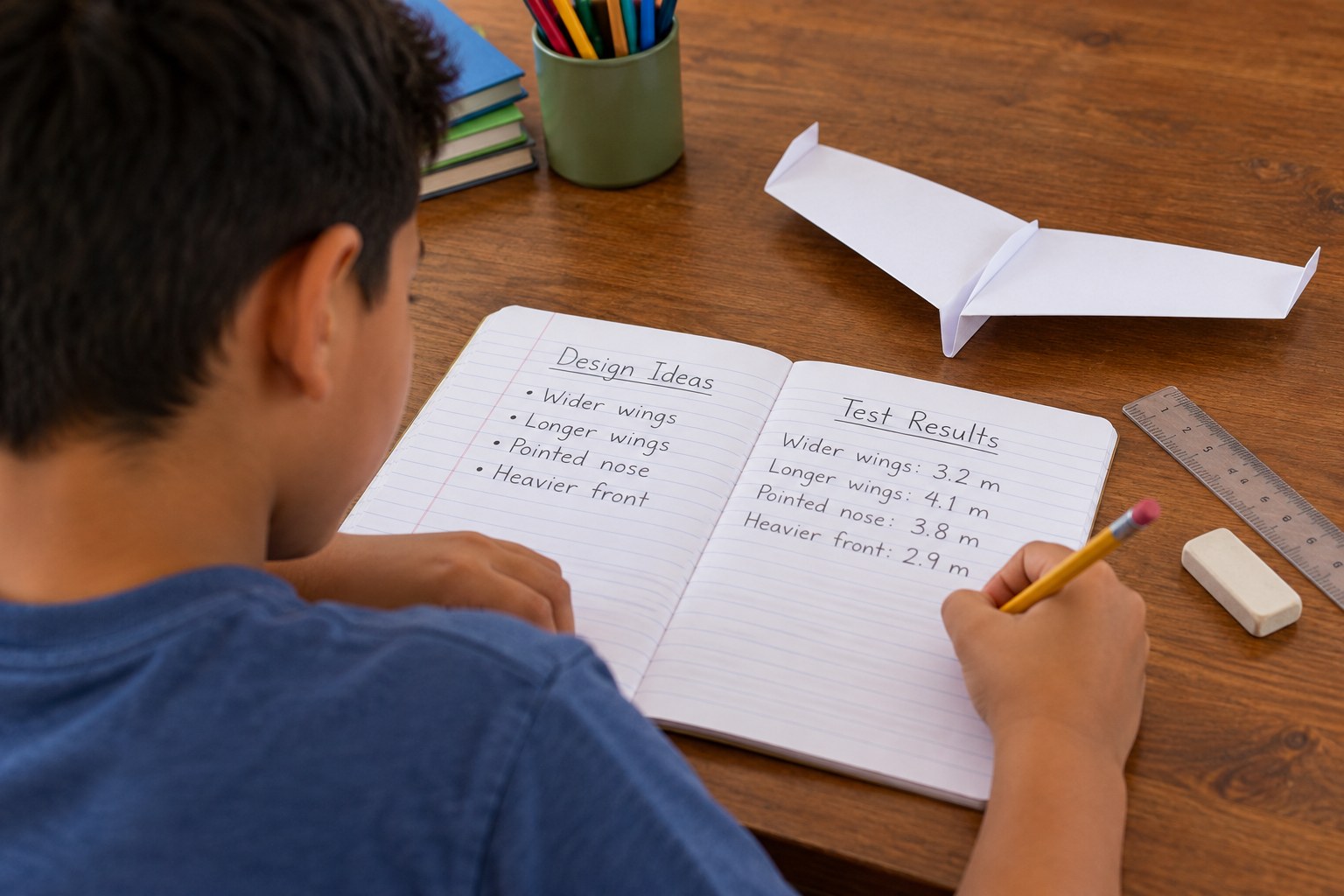
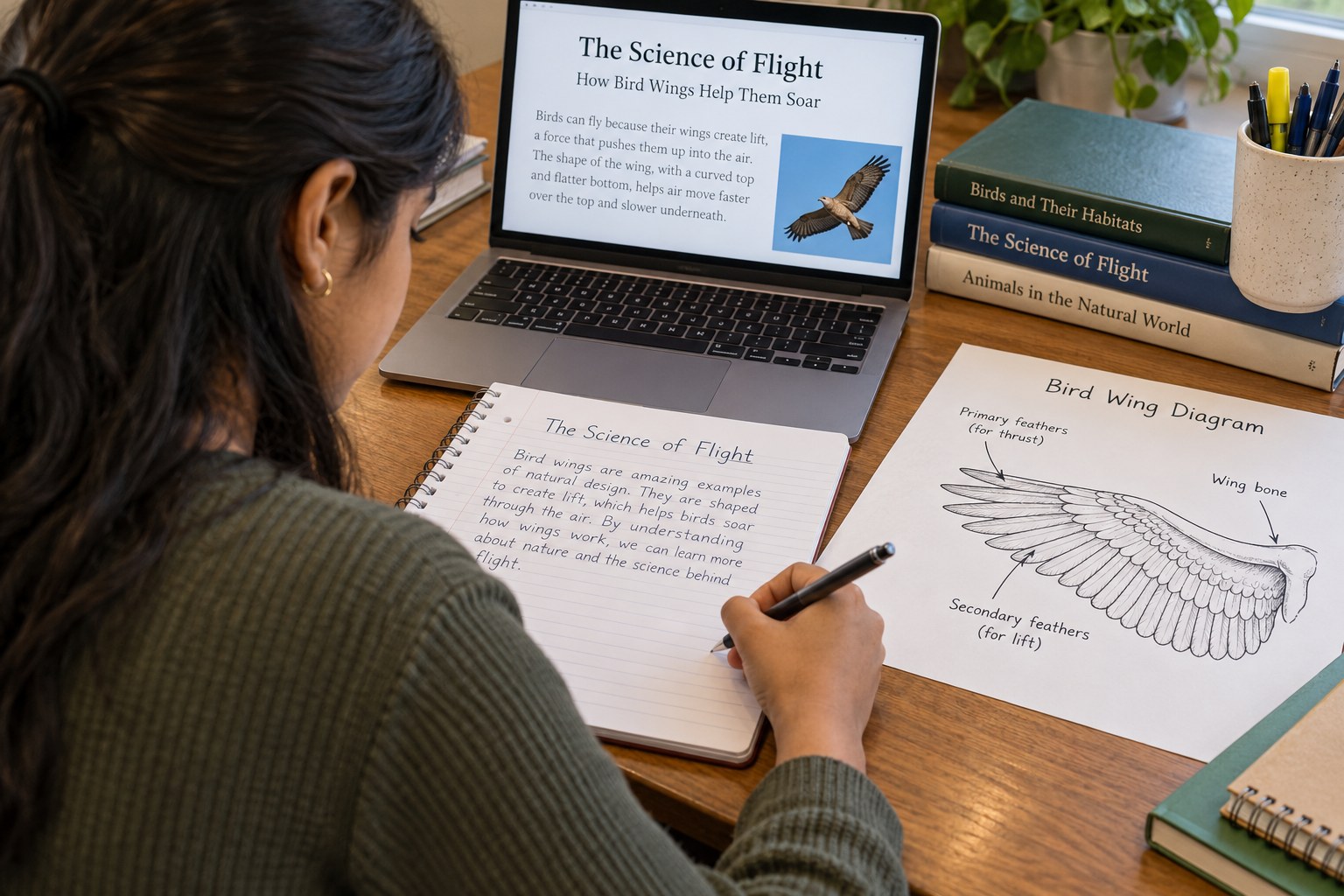
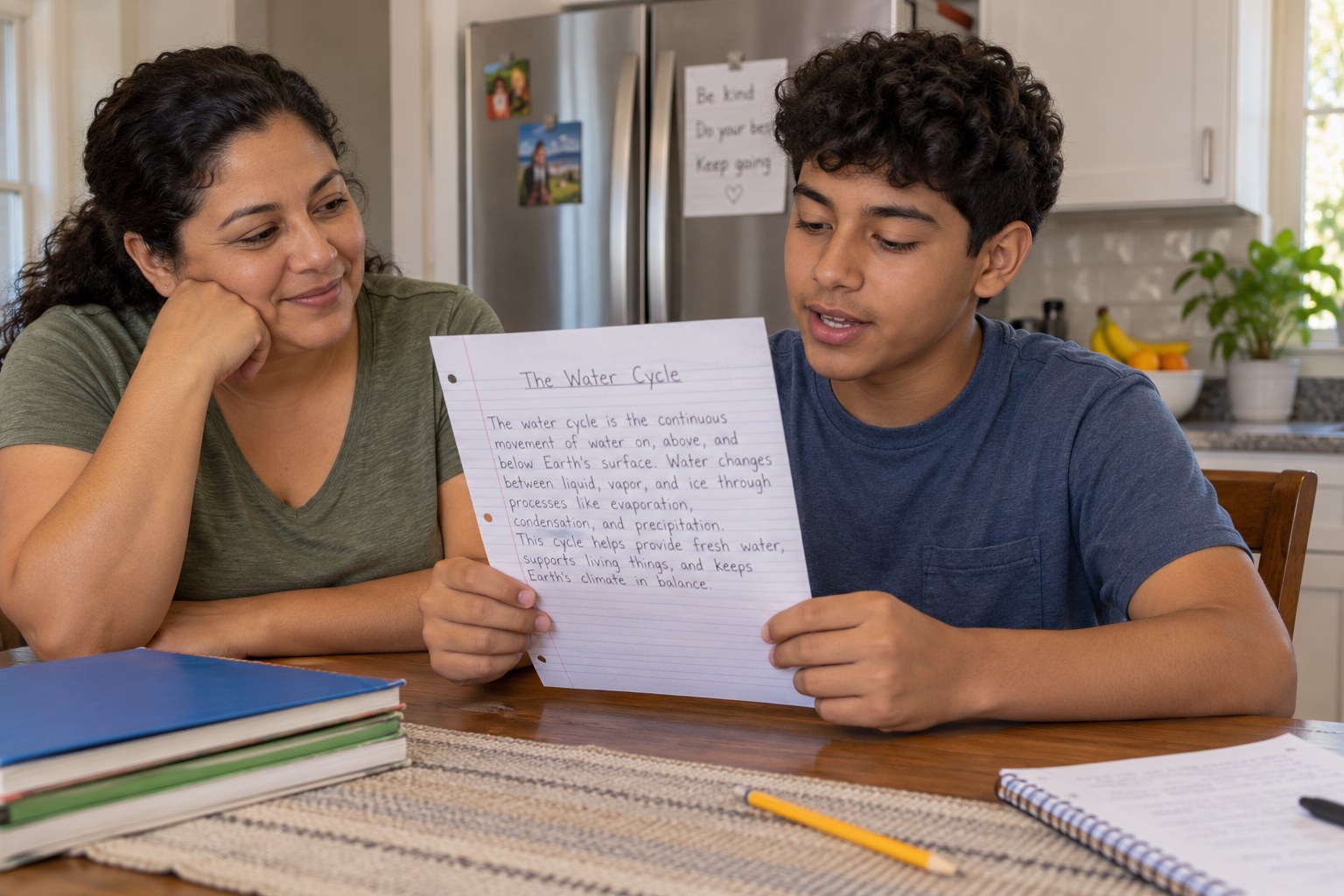
Your teen builds a paper wing that climbs a string when air blows over it, tests how wing angle changes lift, then writes a short explanatory article about how airplane wings really work, including why a popular explanation is a myth.
Objective
Your teen will test a model wing, gather observations about lift and angle of attack, and write an organized explanatory article with headings, accurate facts, a diagram and precise flight vocabulary.
Standards
Materials
| Item | Quantity |
|---|---|
| Sheet of printer paper | 2 |
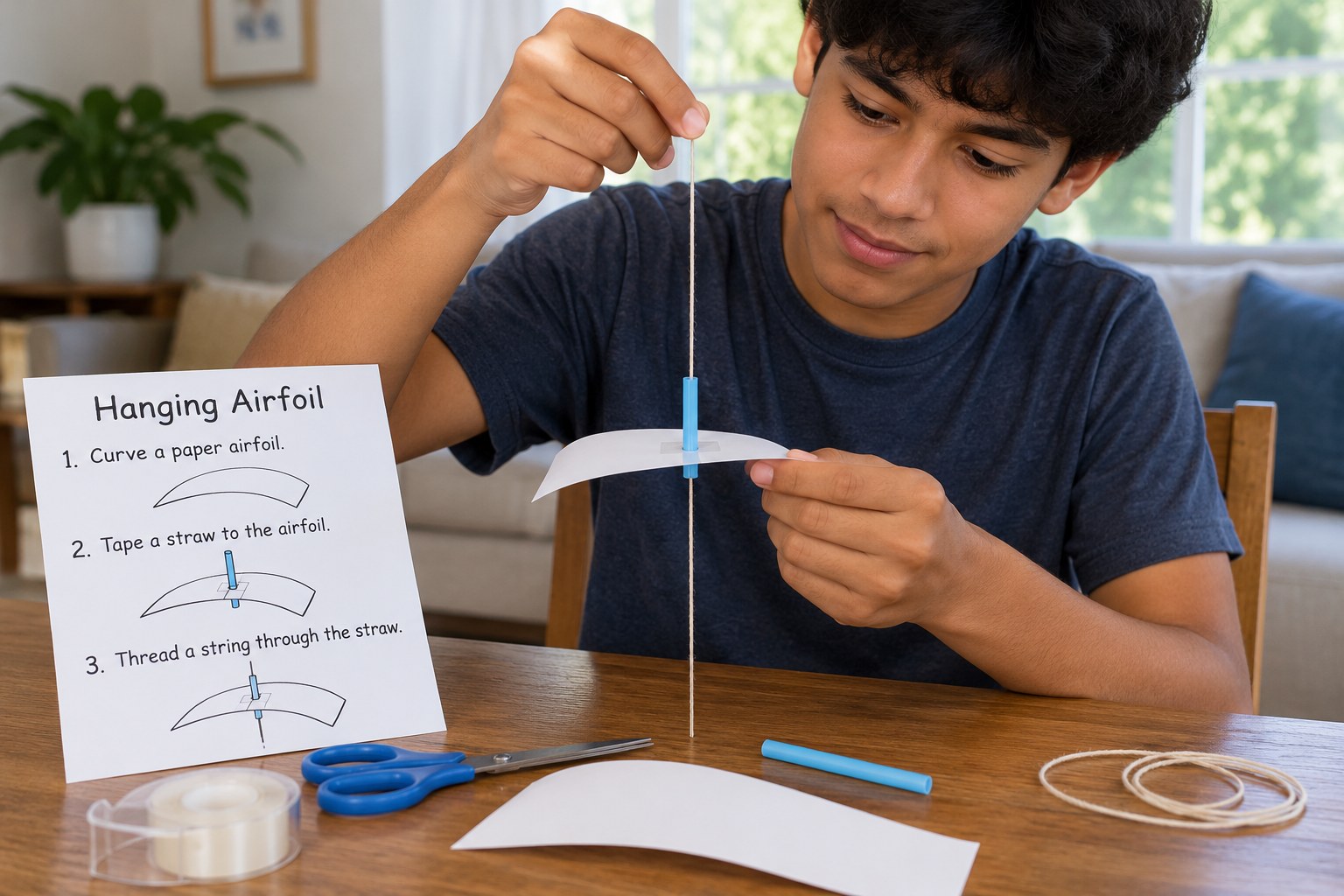
| Drinking straw | 1 |
| String or thread about 3 feet long | 1 |
| Tape and a ruler | 1 each |
| Hair dryer on the cool setting, or a desk fan | 1 |
| Lined paper or a laptop for writing | 1 |
Vocabulary
Preparation
- Read 'About airplanes and lift' yourself so you can help check facts in the writing.
- Clear a space near an outlet for the hair dryer or fan; adult handles the hair dryer and keeps it on cool.
- Tie or tape the string so it hangs straight down from a shelf or doorframe to a heavy book on the floor, or have a helper hold both ends taut.
Introduction
Ask your teen: a large passenger jet can weigh more than 400,000 pounds at takeoff. What holds it up? Many people say air 'has to go faster over the top to meet the air underneath'. Today you'll find out why that explanation is wrong, and what really happens.
Why do airplanes need a runway to take off?
What do you feel when you hold your flat hand out of a car window and tilt it?
Steps
Conclusion
Ask: why does a plane tilt its nose up to take off and land? Watch a short video of a plane's wing flaps extending before landing and add a sentence about flaps to the article.
Make your own lesson plan in minutes
Describe a topic and Resource Portal AI writes the objectives, materials and steps for your group.
Try Resource Portal AI