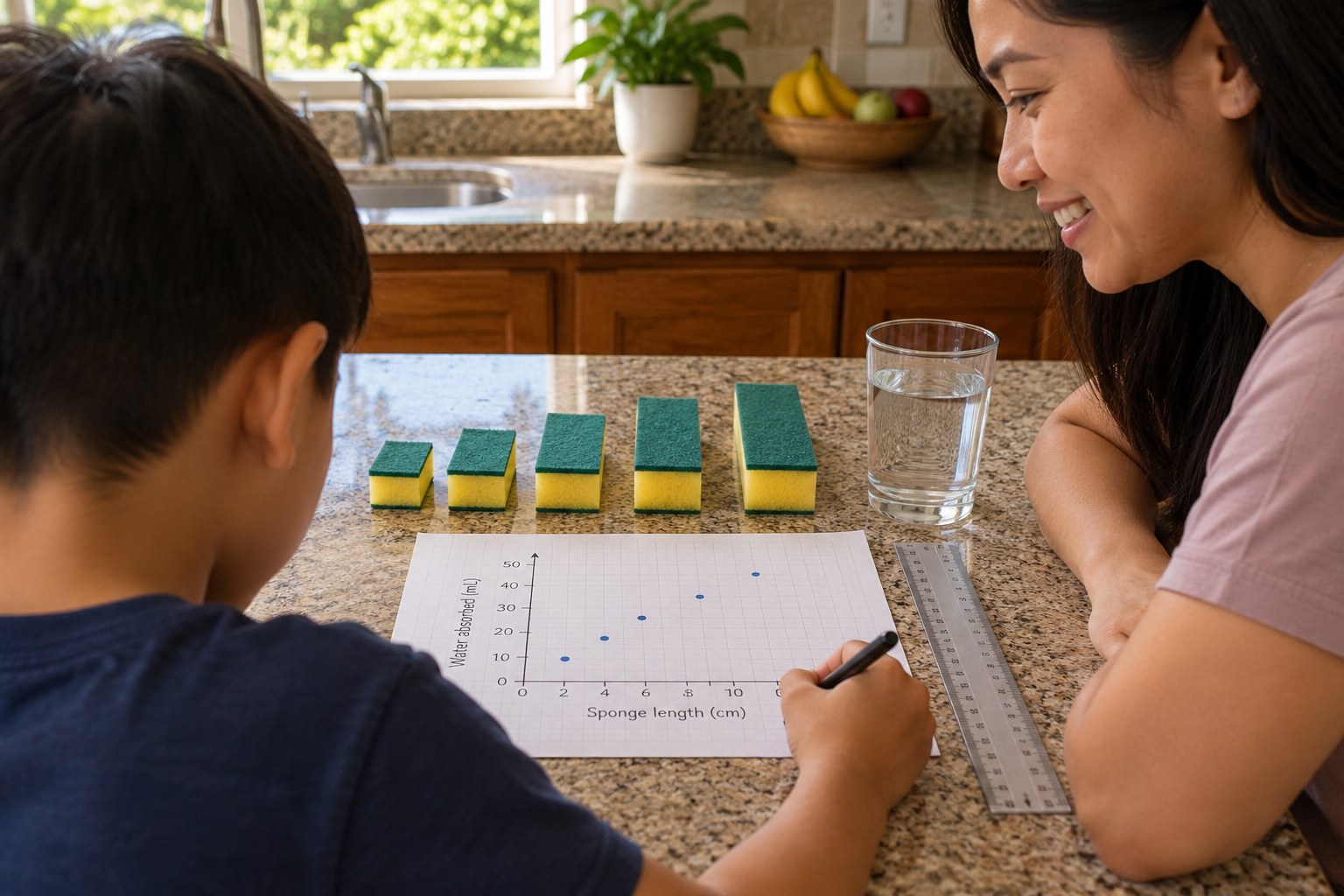
Candy Pumpkin Catapult: Scatter Plot Launch Lab
Overview
Build a catapult and graph pull-back against launch distance.
Description
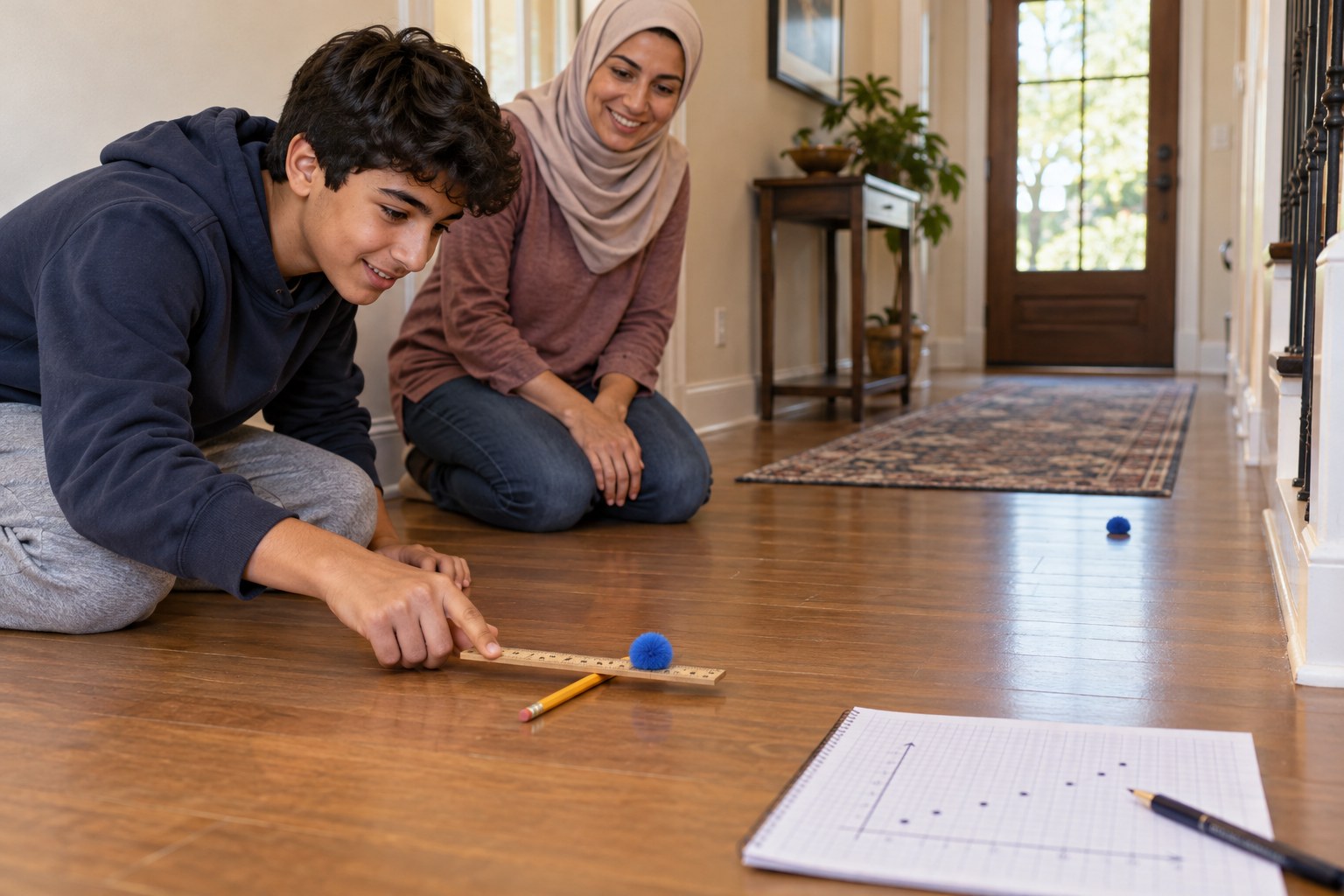
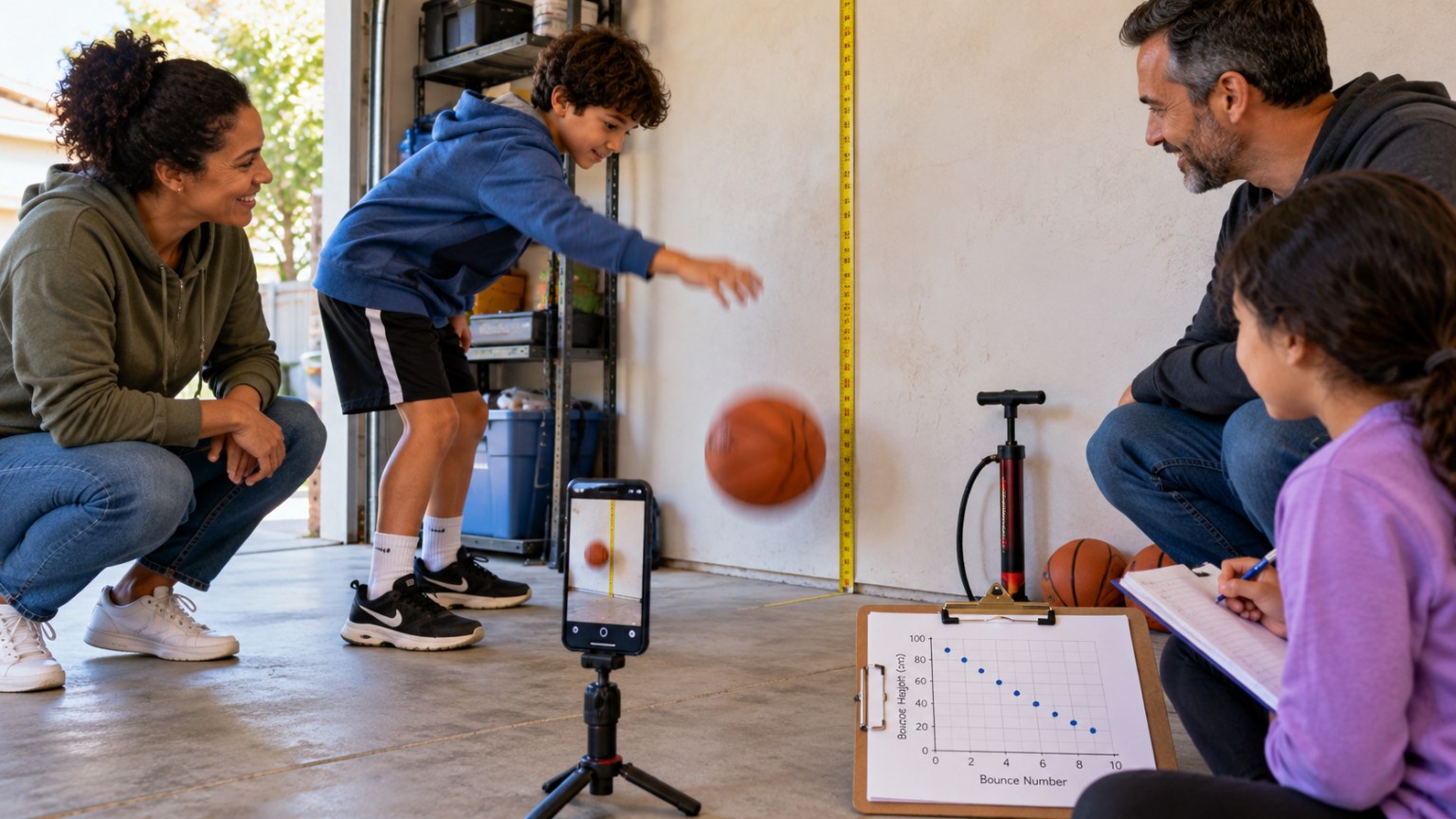
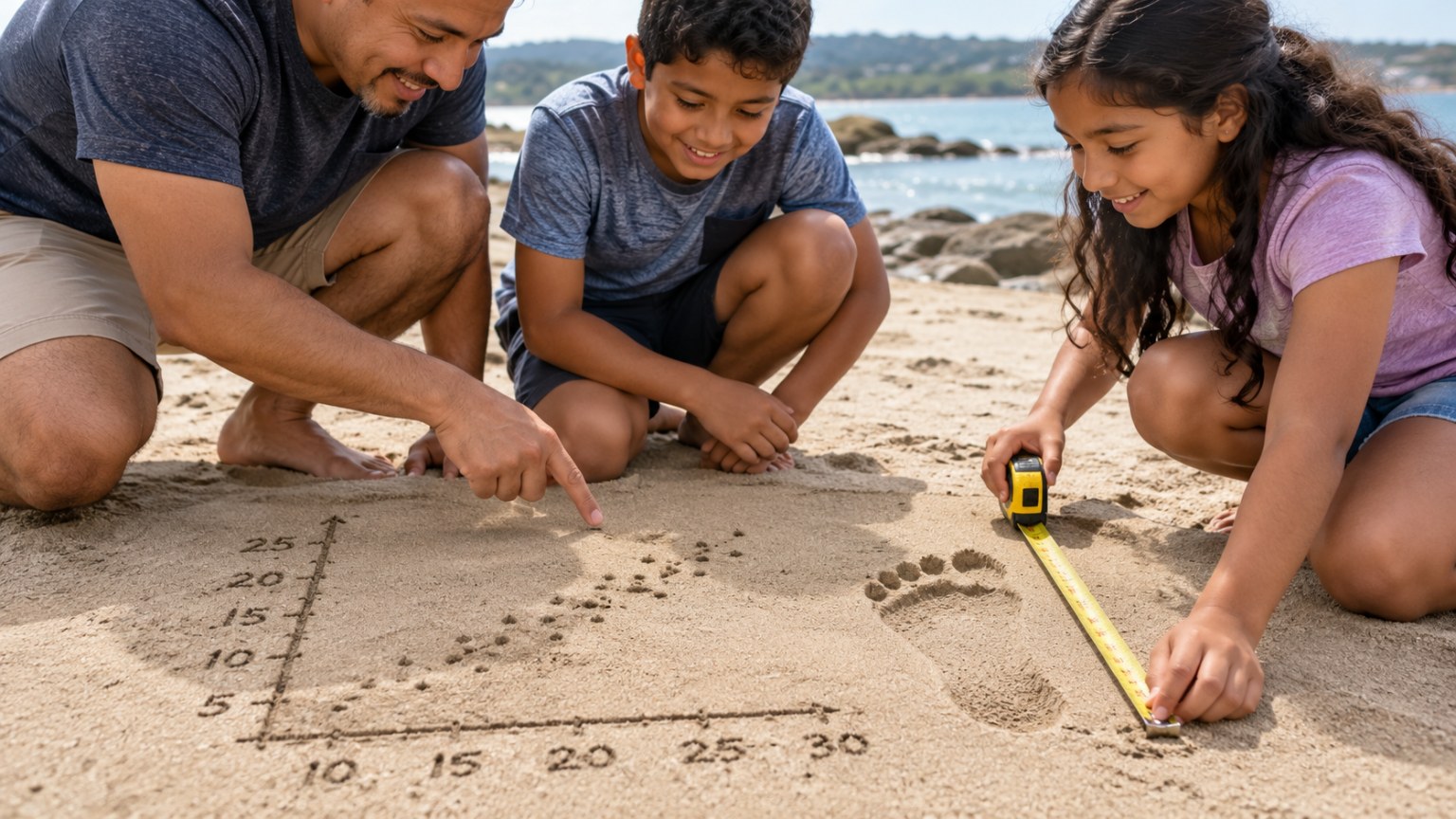
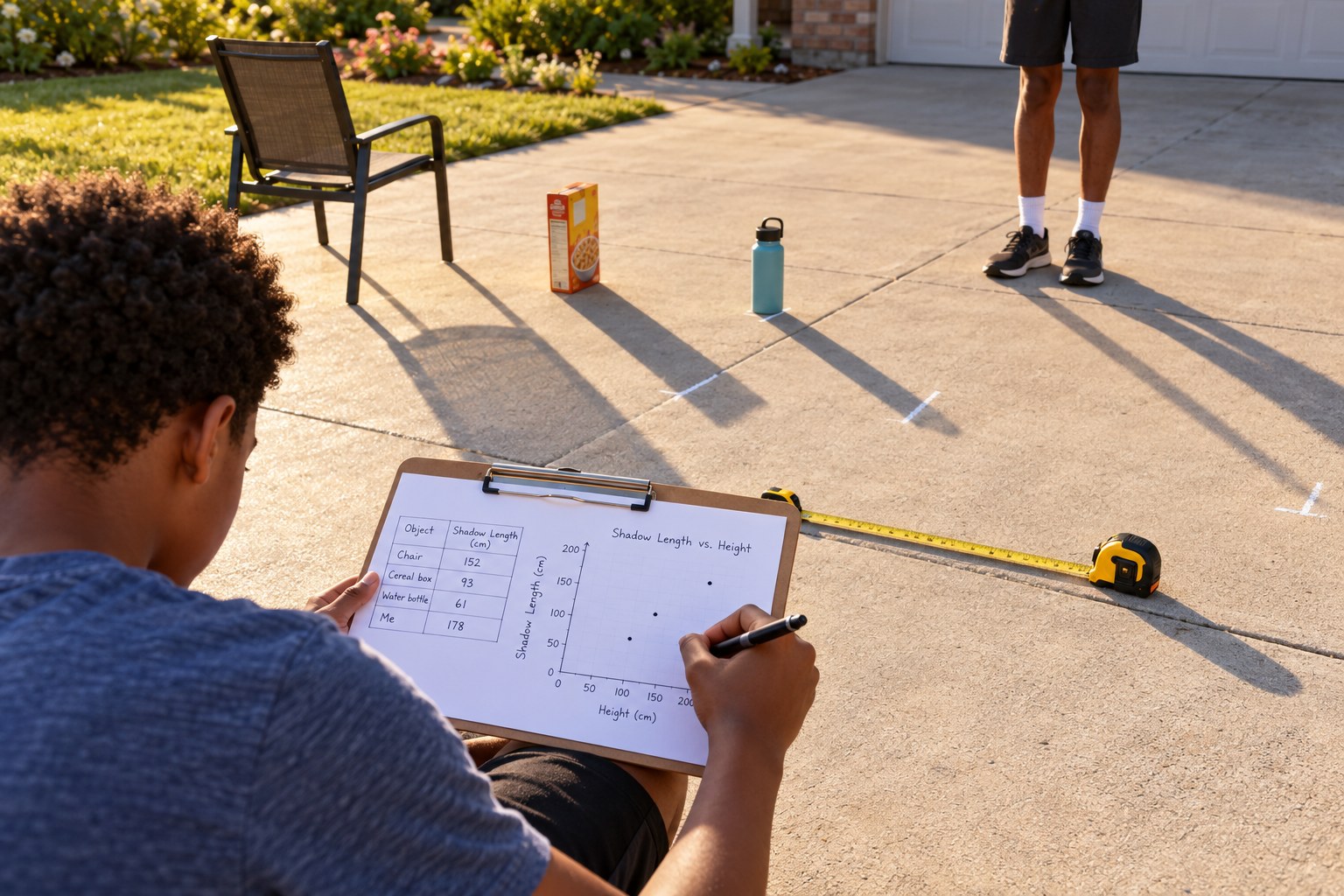
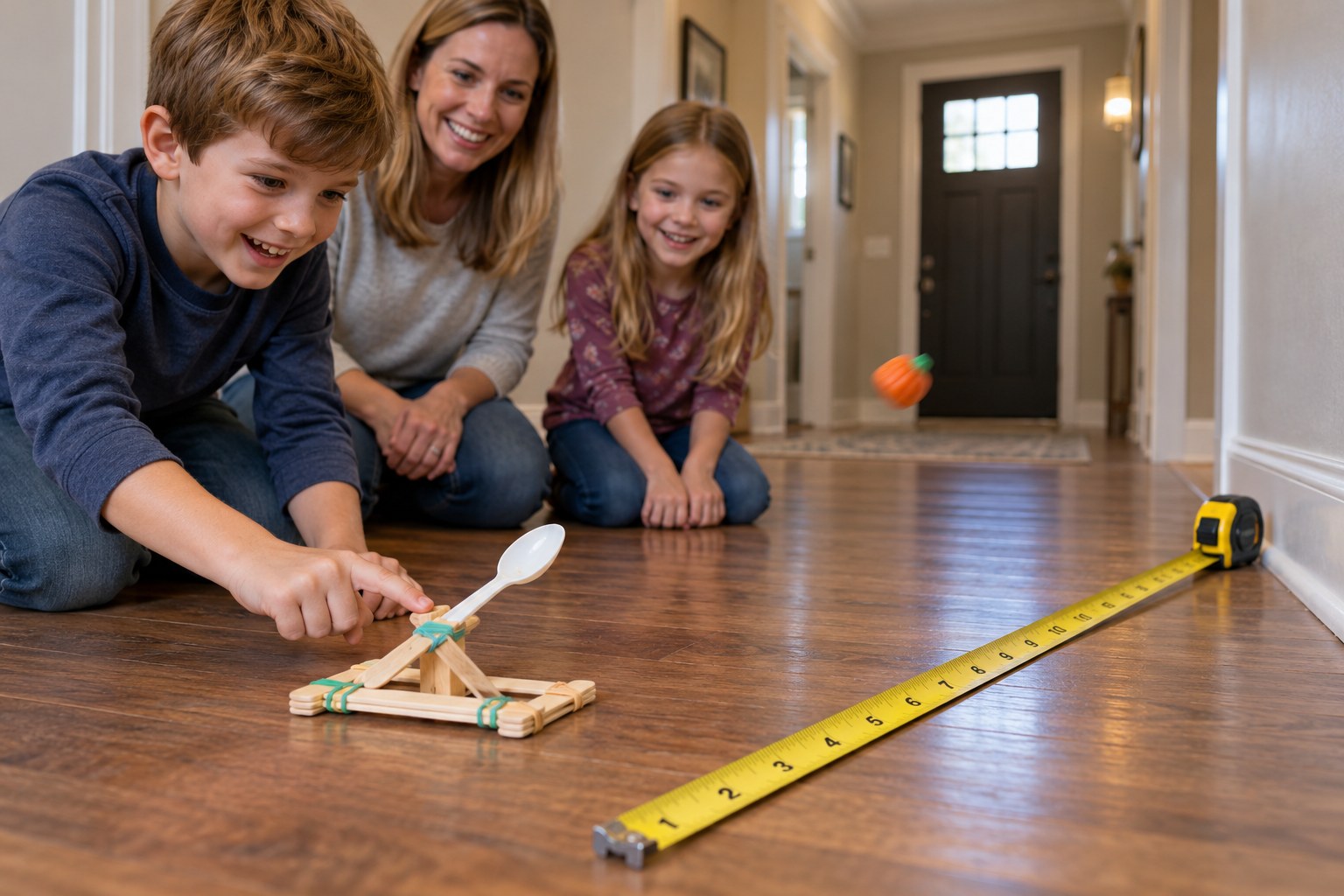
Your teen builds a craft-stick catapult, launches candy pumpkins or pom-poms at different pull-back distances, records the launch distances, and makes a scatter plot with a line of fit to describe the relationship.
Objective
Your teen will build a working lever catapult, run a controlled test, construct a scatter plot of bivariate data, draw an informal line of fit and describe the association.
Standards
Materials
| Item | Quantity |
|---|---|
| Jumbo craft sticks | 9 |
| Rubber bands | 6 |
| Plastic spoon or bottle cap | 1 |
| Hot glue (adult) or strong tape | 1 |
| Candy pumpkins, pom-poms or mini marshmallows (projectiles) | 10 |
| Tape measure or yardstick | 1 |
| Ruler | 1 |
| Graph paper and pencil | 2 sheets |
Vocabulary
Preparation
- Clear a hallway or table at least 10 feet long. Mark a launch line with tape and lay the tape measure along the floor.
- Set a rule: launch only toward the open floor, never at people or pets. Wear glasses if you have them.
Introduction
Launch one pom-pom from a spoon by hand and ask: 'How could we make it go farther every time, and prove it with data instead of luck?'
What makes a catapult store energy?
What should stay the same in every launch so the test is fair?
Steps
Conclusion
Ask: what does the slope of your line mean in real words? Engineers use scatter plots and lines of fit to predict how designs will perform before building the real thing.
Make your own lesson plan in minutes
Describe a topic and Resource Portal AI writes the objectives, materials and steps for your group.
Try Resource Portal AI