Free lesson planBuild a Boat: The Foil Boat Penny Challenge
STEAM1 HourGrades: 6th, 7th, 8th
Overview
Students will create a foil boat to test buoyancy and design skills in a fun and competitive challenge. Teams will collaborate and problem-solve to maximize their boat's capacity.
Description
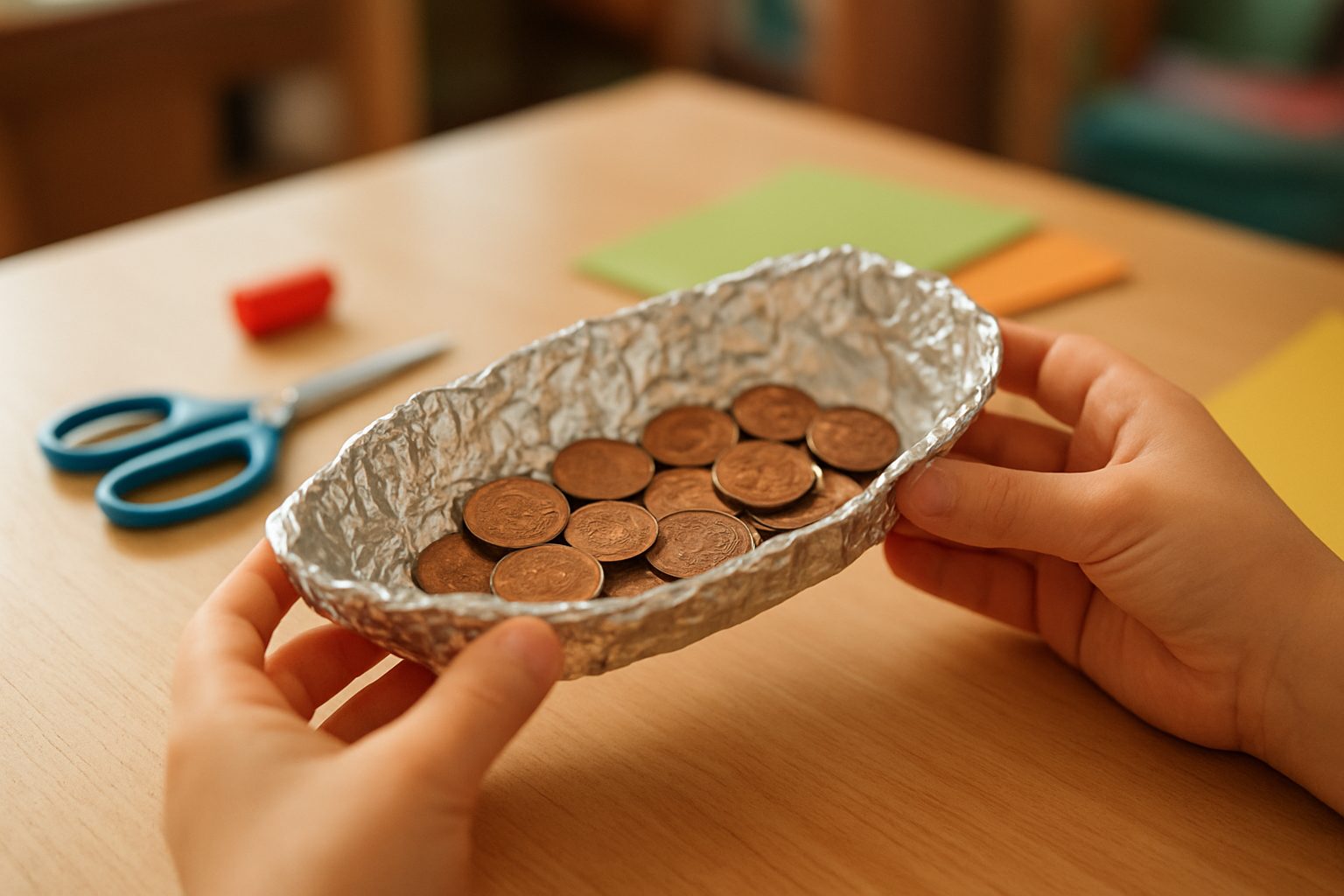
In this engaging challenge, students will design and build a foil boat that can hold as many pennies as possible without sinking. They will work collaboratively to apply principles of buoyancy and design thinking, using critical thinking and problem-solving skills in a fun and competitive environment.
Objective
Students will collaborate in teams to design and construct a foil boat that can hold the maximum number of pennies without sinking, applying critical thinking and engineering principles.
Materials
| Item | Quantity |
|---|
| Aluminum foil | 5 sheets |
| Penny packs (100 pennies each) | 2 packs |
| Measuring cups | 5 pieces |
| Basin or large container for water | 5 pieces |
| Markers for design | 10 pieces |
| Rulers | 5 pieces |
| Tubs of water | 5 pieces |
| Paper for sketches | 5 sheets |
Vocabulary
Buoyancy
The ability of something to float in water.
Design Thinking
A way to solve problems by focusing on what users need.
Prototype
A simple model used to test an idea.
Mass
How much stuff is in an object.
Displacement
The water moved by an object when it is in water.
Preparation
- Gather all materials and ensure enough for 20 students.
- Set up the workstations with enough space for each group to work.
- Fill the basin or large container with water for testing the boats.
Introduction
Show a short video of boats in action and discuss how different designs impact their ability to float and carry weight.
What makes a boat float?
How can we design a boat to hold weight without sinking?
What materials do you think will work best for our boats?
Steps
1Step 1
Introduce the Challenge
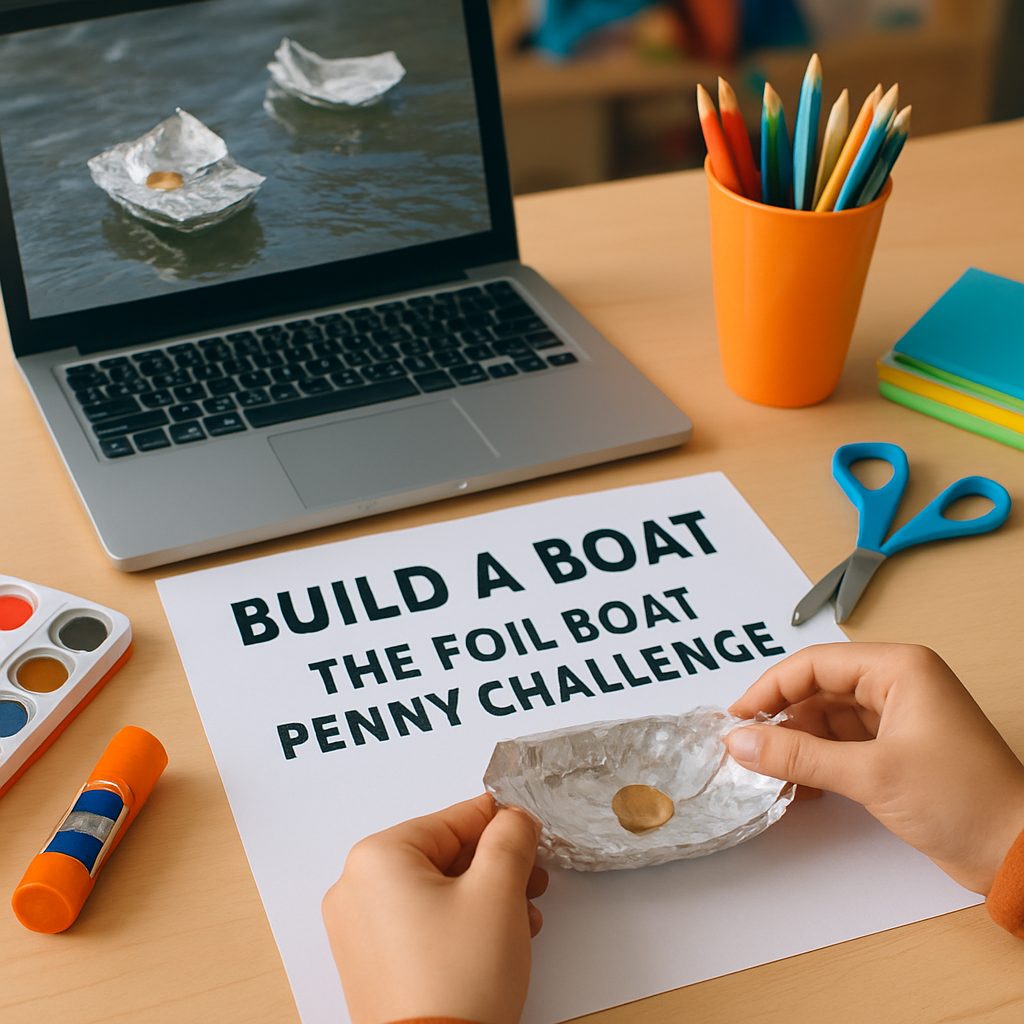
(5 min) Introduce the challenge by showing a short video of boats in action. Discuss how the design of a boat affects its ability to float and carry weight. Ask, "What design features do you think are most important for keeping a boat afloat?" Students will share their thoughts before moving on to the next step.
2Step 2
Distribute Materials
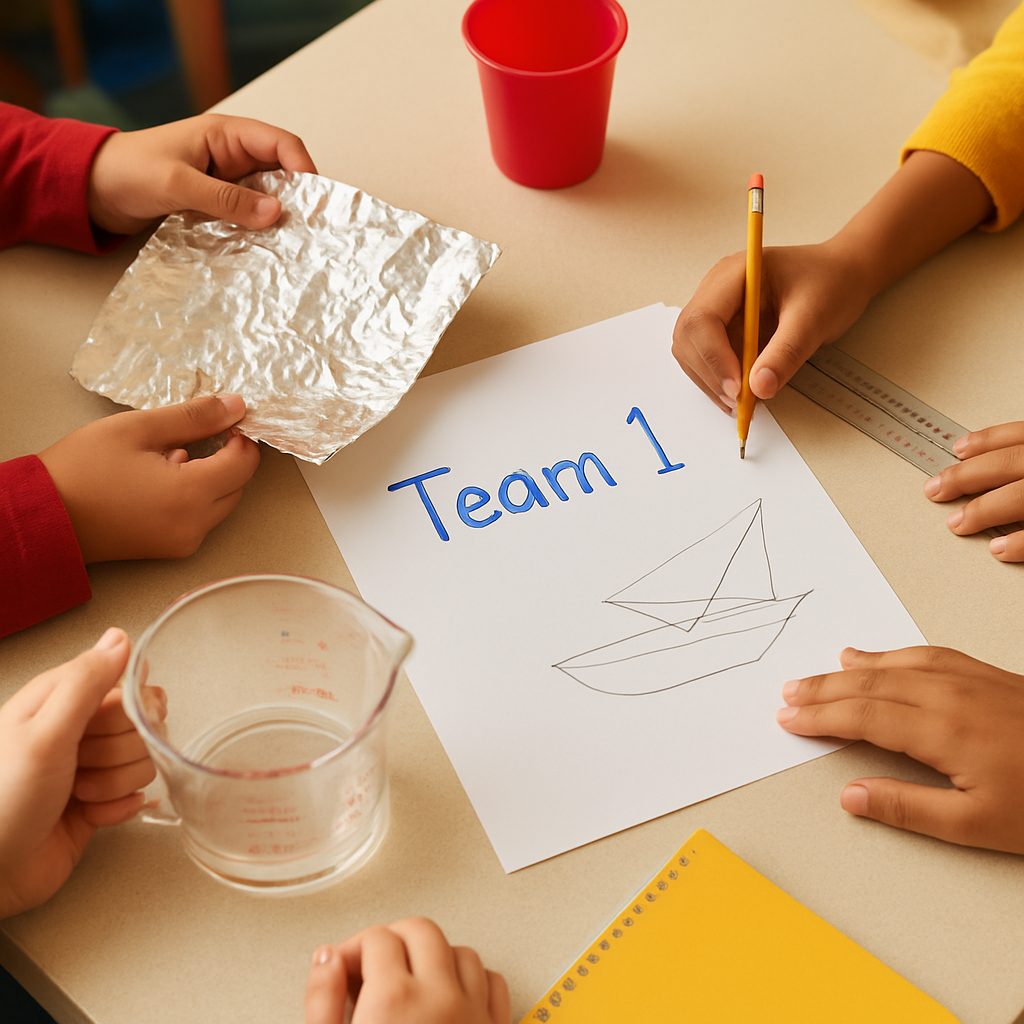
(5 min) Divide students into groups of 4 and distribute materials. Each group receives 1 sheet of aluminum foil, 1 piece of paper for sketches, 1 ruler, and 1 measuring cup. The teacher says, "Use the measuring cup to accurately determine the volume of water your boat can displace!" Students will name their team and prepare to brainstorm their boat design, ensuring they understand how to use their materials effectively. The finished work will include a clear team name written on the sketch paper and a plan for their boat's design.
3Step 3
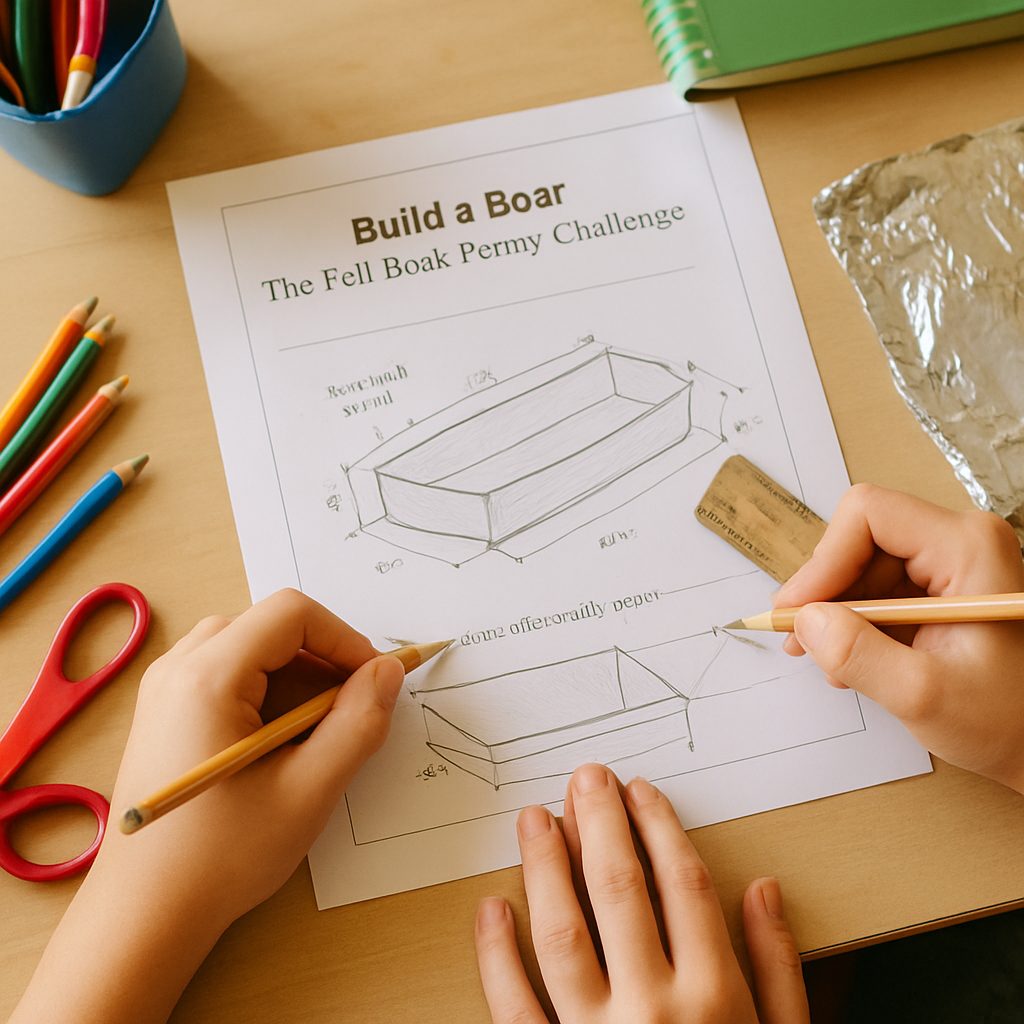
Sketch Boat Designs
(10 min) In their groups, students will sketch their boat designs on the provided paper, discussing shape, size, and structure. The teacher encourages, "Think about how your boat will look and how it will perform in water!" They will use the rulers to measure and mark their design dimensions and ensure they maximize the use of aluminum foil. The finished work will be a detailed sketch that includes measurements and notes on their design choices.
4Step 4
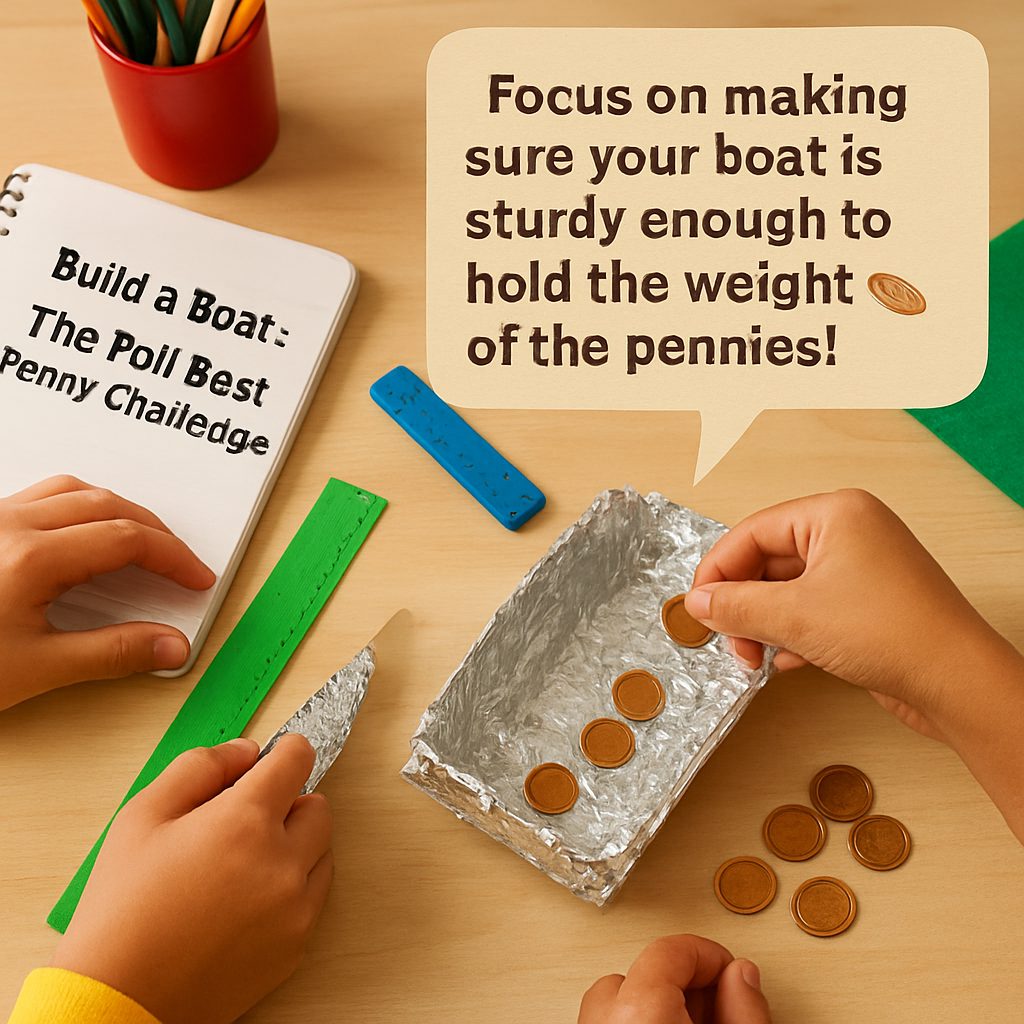
Construct the Boats
(20 min) Teams will construct their boats using the aluminum foil based on their designs. The teacher reminds them, "Focus on making sure your boat is sturdy enough to hold the weight of the pennies!" Each team carefully shapes their foil, measuring dimensions with the rulers, and ensuring the boat can hold as many pennies as possible. The finished work will be a constructed foil boat that reflects their design, ready for testing in the water.
5Step 5
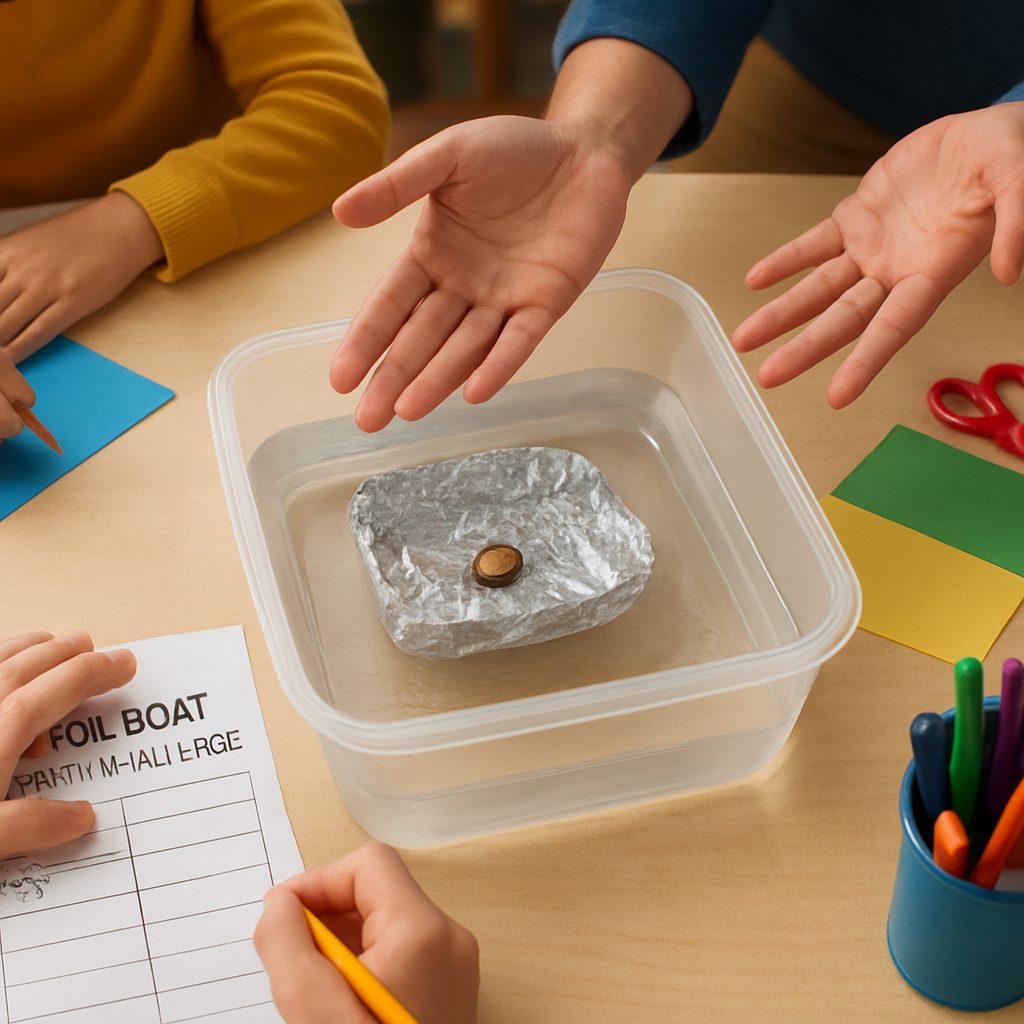
Test the Boats
(15 min) After building, each team will place their boat in a tub of water, testing how many pennies it can hold before sinking. The teacher excitedly asks, "How many pennies do you think your boat can carry?" Students will add one penny at a time, counting how many their boat can hold, and recording their results. The finished work will be a documented count of pennies that each boat successfully holds, ready for presentation.
6Step 6
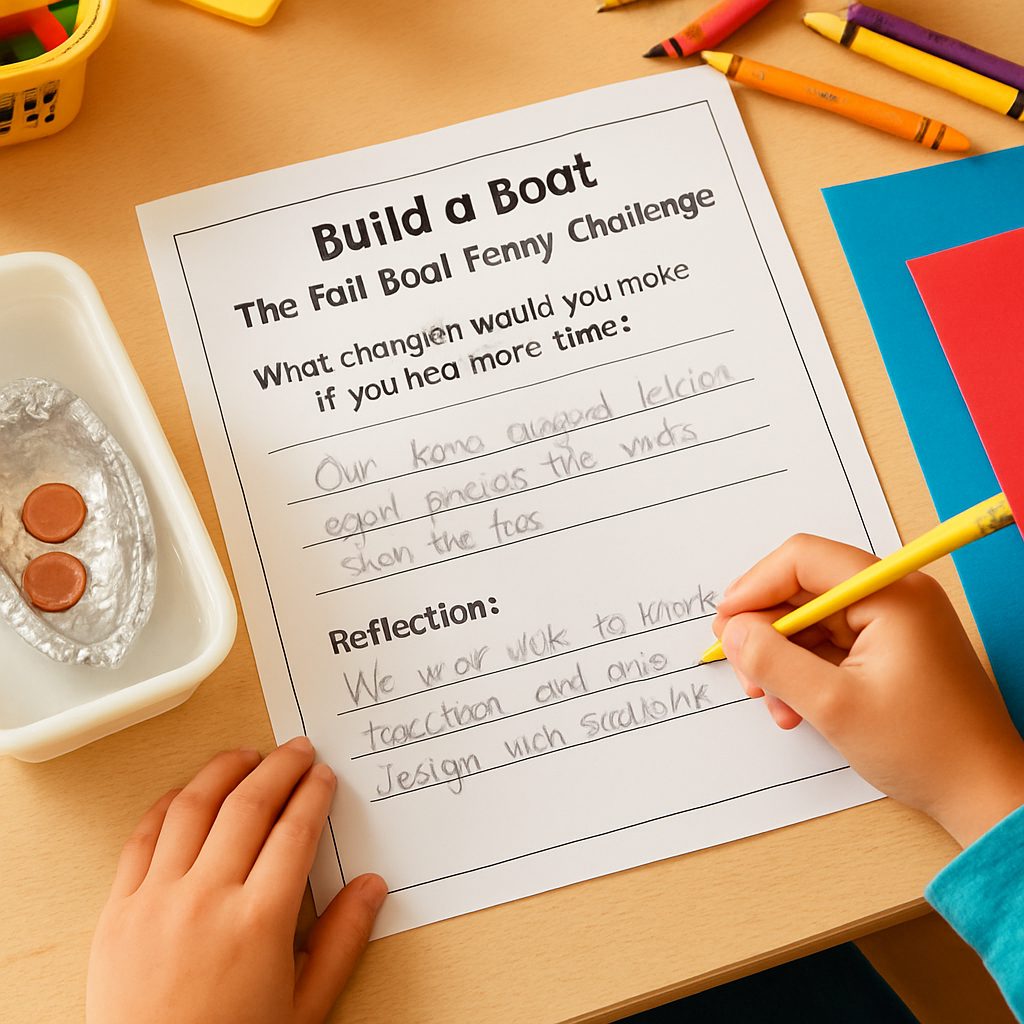
Reflect on Results
(5 min) Finally, teams will reflect on their designs and test results. The teacher prompts, "What changes would you make if you had more time?" Students will discuss what worked well and what could be improved, considering their collaborative efforts and outcomes. The finished work will include reflections written on their sketch paper, summarizing their learning experience.
Conclusion
Teams will present their boats, sharing the number of pennies their boat held and discussing their design strategies and lessons learned about buoyancy and teamwork.
Make your own lesson plan in minutes
Describe a topic and Resource Portal AI writes the objectives, materials and steps for your group.
Try Resource Portal AI