Lesson planCastle Arch Engineering: Keystone Angles and a Glue-Free Sponge Arch
STEAM50 minutesGrades: 7th, 8th
Overview
Calculate wedge angles and build an arch that stands without glue.
Description
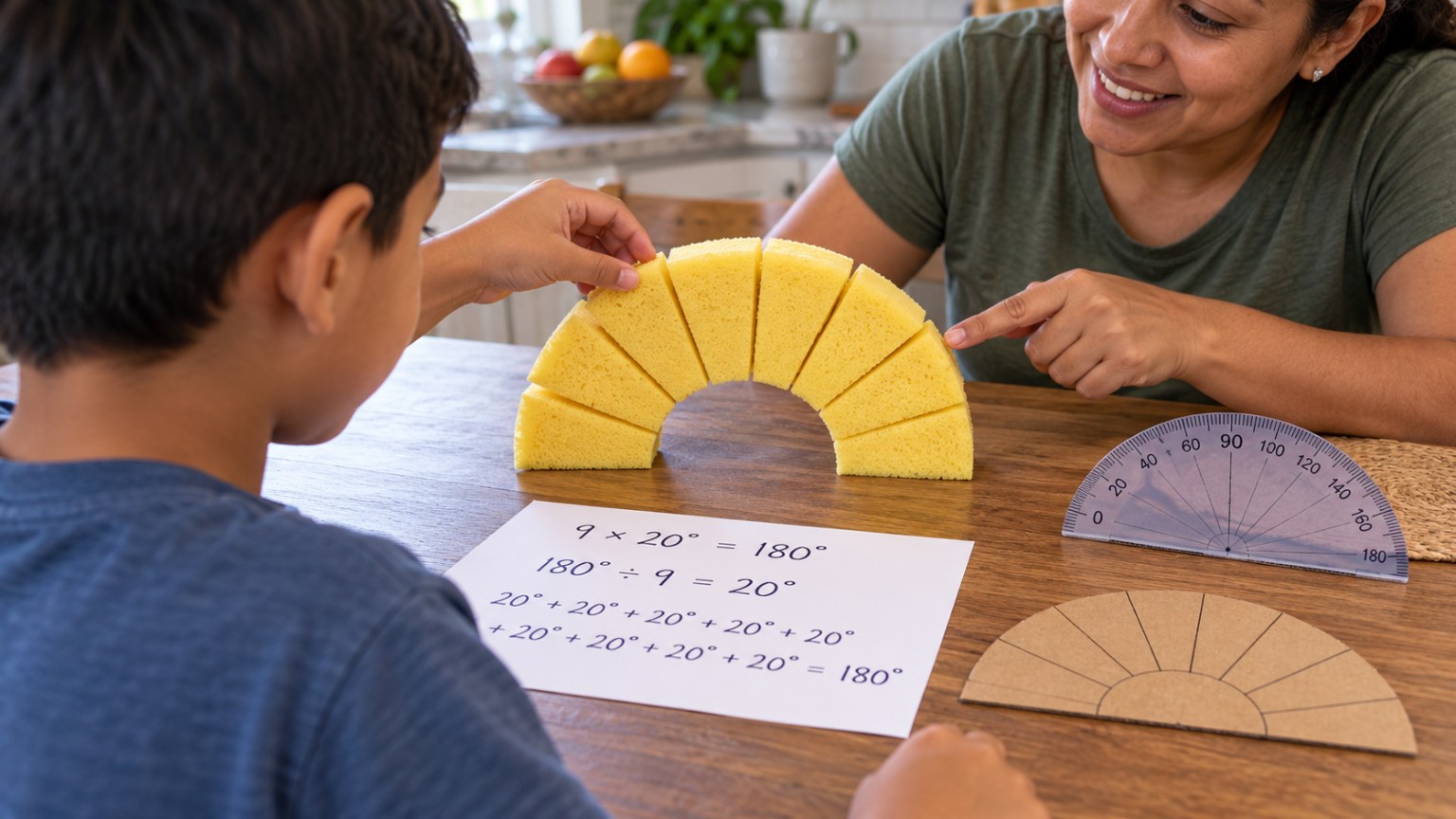
Your teen uses angle equations to design the 9 wedge-shaped stones (voussoirs) of a semicircular castle arch, cuts them from kitchen sponges, builds the arch over a cardboard support, then removes the support to see the arch stand on its own and test how much it can hold.
Objective
Your teen will write and solve equations for unknown angles in an arch (adjacent angles around a point, angles in a triangle and supplementary angles), build a 9-voussoir arch from those angles, and explain how an arch carries weight.
Standards
7.G.5Math · Grade 7 · Geometry Use facts about supplementary, complementary, vertical, and adjacent angles in a multi-step problem to write and solve simple equations for an unknown angle in a figure.
Materials
| Item | Quantity |
|---|
| Cellulose kitchen sponges, thick (dry) | 5 |
| Protractor | 1 |
| Ruler and pencil | 1 each |
| Compass, or a string and pencil for drawing circles | 1 |
| Scissors | 1 pair |
| Cardboard (cereal box or shipping box) for the template and the centering support | 2 pieces about 12 by 8 inches |
| Stack of books to prop the centering | 2-3 |
| Small paperback books or coins for load testing | 5-10 |
| Paper for equations | 1 sheet |
Vocabulary
Voussoir
One of the wedge-shaped stones that make up an arch.
Keystone
The wedge at the very top of an arch that locks the other stones in place.
Centering
A temporary wooden frame that holds arch stones up while the arch is being built.
Adjacent angles
Angles that share a vertex and a side without overlapping.
Supplementary angles
Two angles whose measures add up to 180 degrees.
Preparation
- Clear a table. Make sure the sponges are dry; dry cellulose sponges are stiffer and cut more cleanly.
- Copy the Angle problem set from the section below onto paper.
Introduction
Show your teen a photo of a medieval castle gateway or church doorway with a round arch. Ask: there is no glue between these stones and nothing holding up the middle, so why does it not fall down?
Where does the weight on top of an arch go?
Why might every stone in a round arch be the same wedge shape?
Steps
1Step 1
Solve the angles
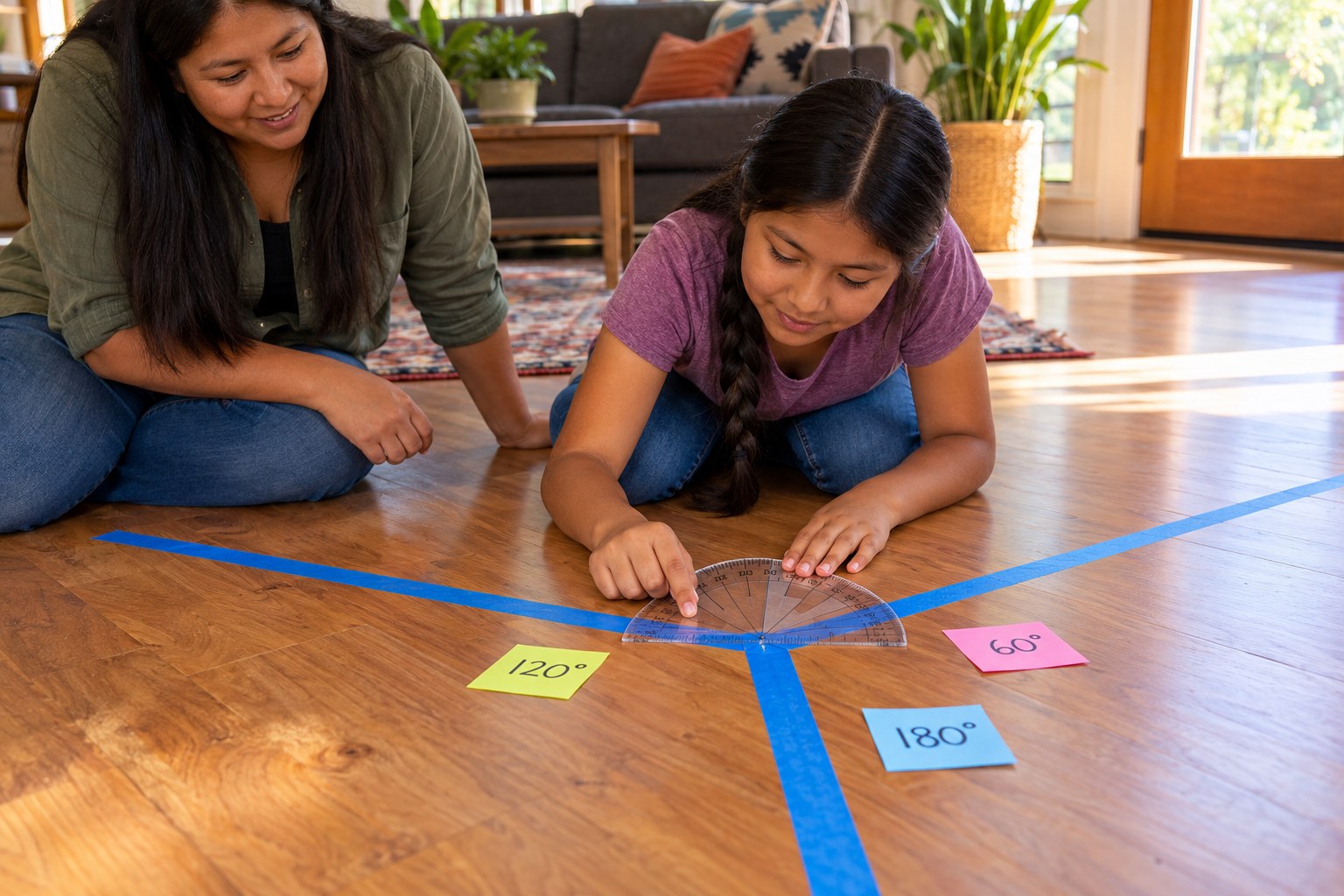
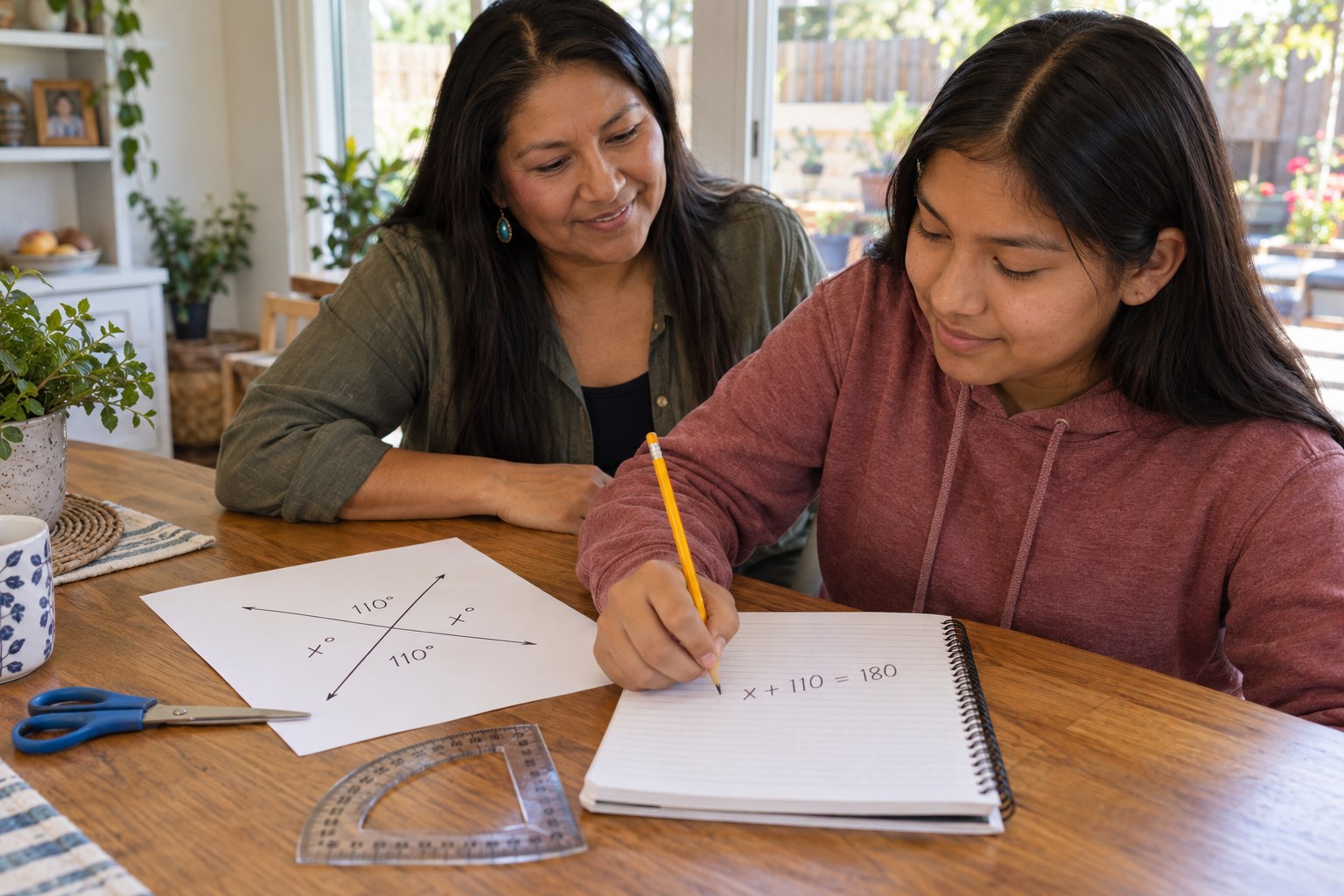
(10 min) Your teen draws a horizontal baseline and a center point, and reasons that 9 equal voussoirs share the 180-degree straight angle as adjacent angles, so 9x = 180 and x = 20 degrees. They then find the corner angles of each wedge: the triangle from the center has base angles b with 2b + 20 = 180, so b = 80 degrees (outer corners), and the inner corners are supplementary, 180 - 80 = 100 degrees.
2Step 2
Draw the template
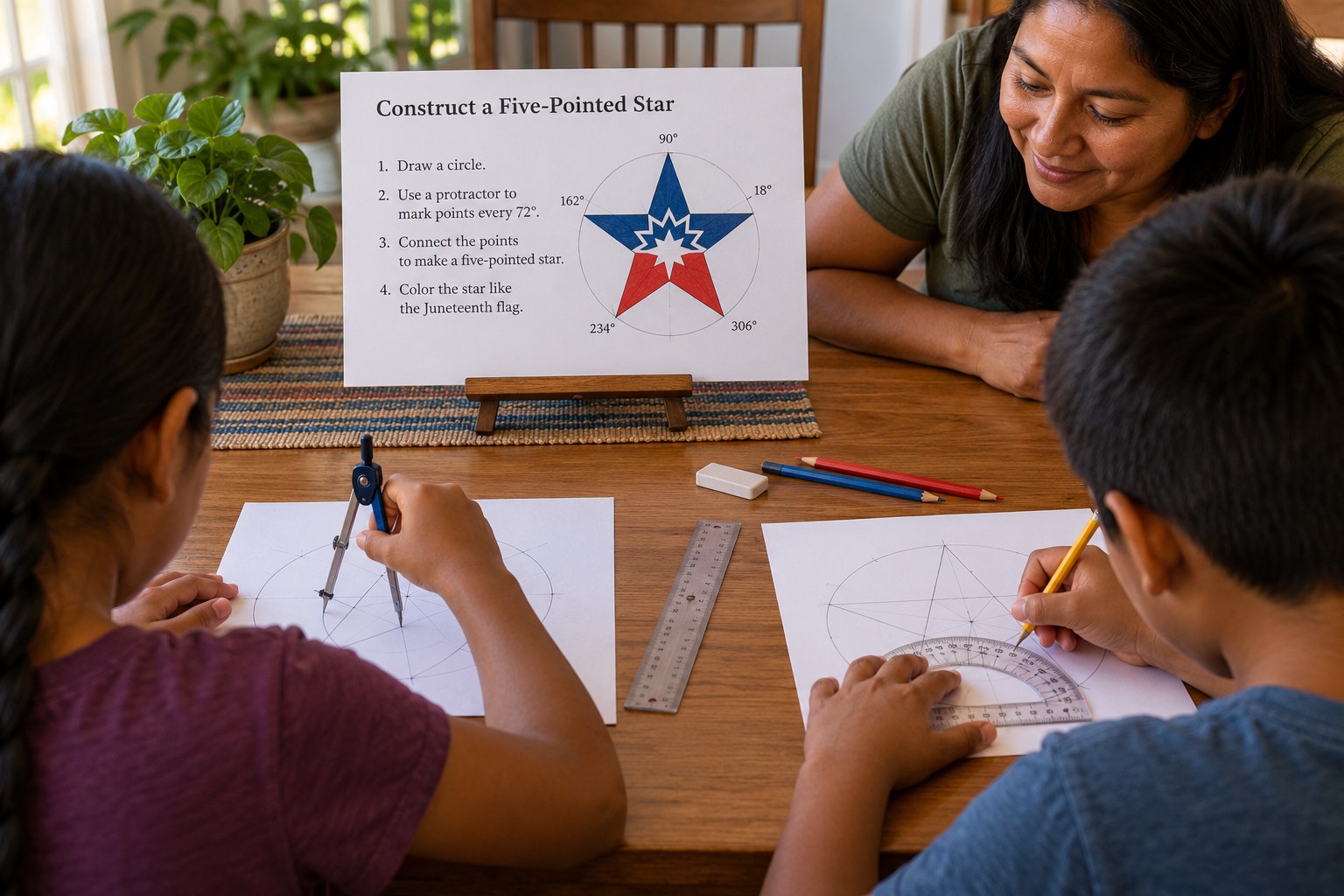
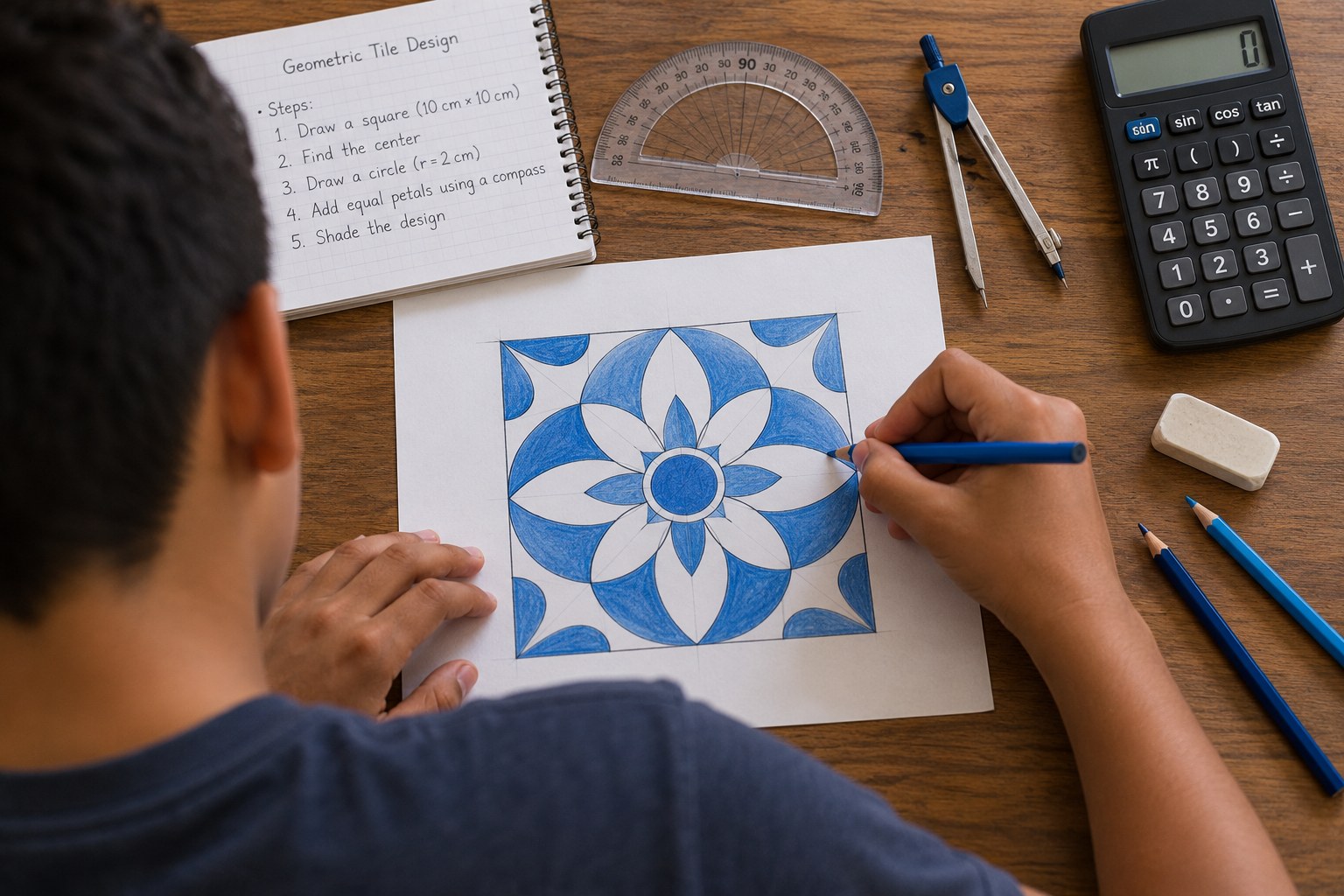
(8 min) On cardboard, your teen draws two semicircles from the same center, radius 3 inches and radius 5 inches, and uses the protractor to draw rays every 20 degrees. They connect the points with straight lines to get 9 identical trapezoid wedges, measure one wedge's corner angles with the protractor and check them against 80 and 100 degrees.
3Step 3
Cut the voussoirs
(10 min) Your teen cuts one wedge out of the template, traces it 9 times onto the broad faces of the sponges and cuts out 9 sponge voussoirs with scissors. They also cut a semicircle of cardboard with a 3-inch radius to use as the centering.
4Step 4
Build over the centering
(10 min) Your teen stands the cardboard centering upright on the table (propped between books), then sets the voussoirs on it from both bottom ends toward the top, placing the keystone last. Slowly slide the centering out; the arch should stand on its own.
5Step 5
Load test and explain
(8 min) Your teen gently stacks coins or small books on the keystone one at a time and records how much it holds before it shifts, and notices that the bottom stones push outward. They write 3 sentences explaining how each wedge pushes on its neighbors so the load travels around the curve to the ground, and why castle walls beside an arch had to be thick to push back.
Conclusion
Ask: what would change with 7 voussoirs instead of 9? (Each angle would be 180/7, about 25.7 degrees.) Look for arches over doorways, bridges and windows this week and count the voussoirs.
Make your own lesson plan in minutes
Describe a topic and Resource Portal AI writes the objectives, materials and steps for your group.
Try Resource Portal AI