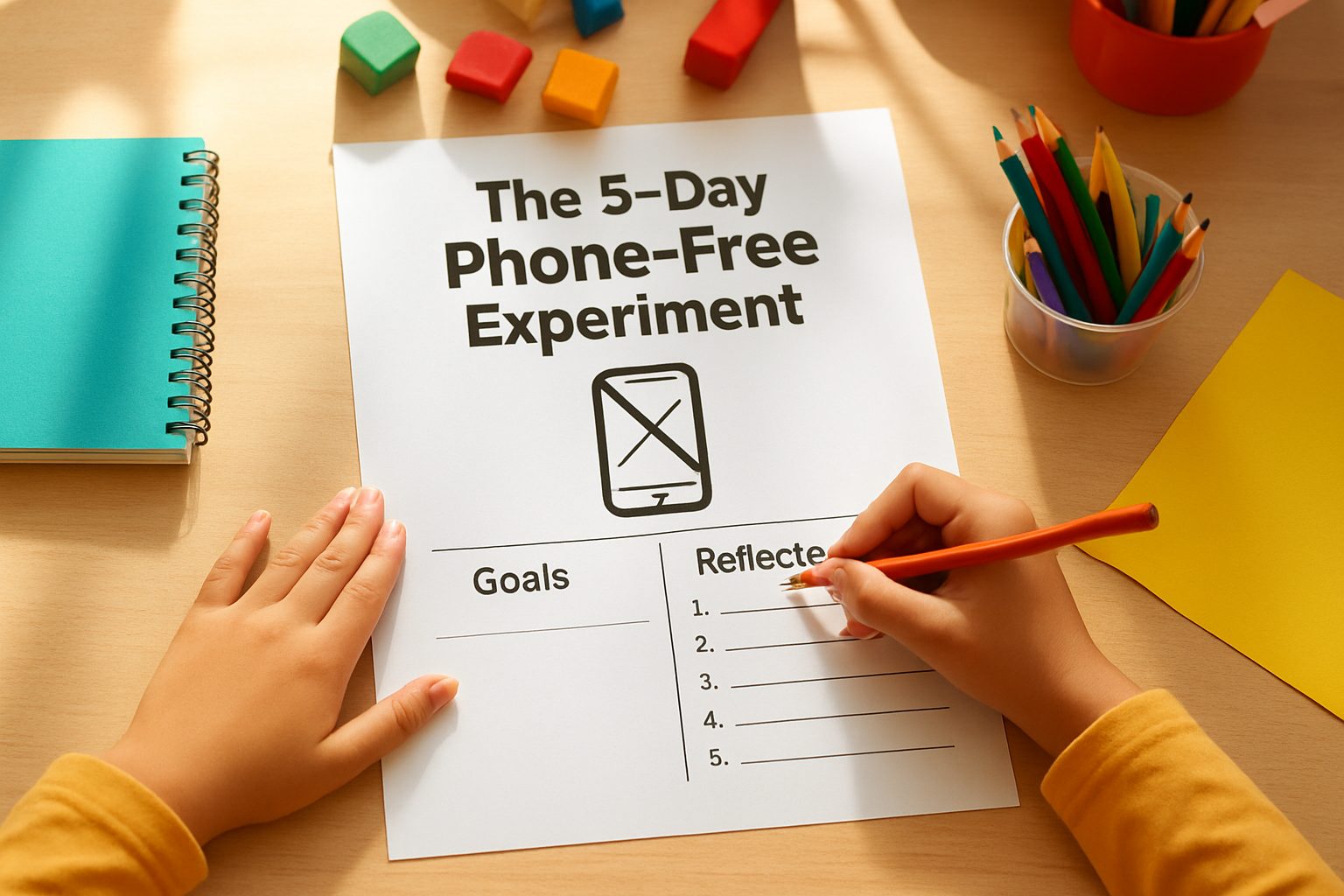
Full lesson previewThe 5-Day Phone-Free Experiment
SEL1 HourGrades: 6th, 7th, 8th
Overview
Engage in a 5-day phone-free challenge to explore the impact of reduced screen time on well-being and social interactions.
Description
This lesson encourages students to reflect on their relationship with technology, specifically their smartphones, through a structured phone-free experiment for five days. Today, students will set up tracking logs, record baseline data, choose their screen-free challenges, and engage in a 15-minute screen-free activity together.
Objective
Students will participate in a 5-day phone-free experiment, reflect on their experiences, and discuss the impact of technology on their lives.
Standards
RI.6.2ELA · Grade 6 · Reading: Informational Text Determine a central idea of a text and how it is conveyed through particular details; provide a summary of the text distinct from personal opinions or judgments.
SL.6.1ELA · Grade 6 · Speaking & Listening Engage effectively in a range of collaborative discussions (one-on-one, in groups, and teacher-led) with diverse partners on grade 6 topics, texts, and issues, building on others' ideas and expressing their own clearly.
W.6.2ELA · Grade 6 · Writing Write informative/explanatory texts to examine a topic and convey ideas, concepts, and information through the selection, organization, and analysis of relevant content
Materials
| Item | Quantity |
|---|
| Journals | 20 pieces |
| Pens/Pencils | 20 pieces |
| Poster board | 5 sheets |
| Markers | 5 pieces |
| Printed tracking logs | 20 pieces |
| Graph paper | 20 sheets |
| Colored pencils | 20 sets (1 set per student) |
Vocabulary
Screen-free challenge
A challenge without using your smartphone or other screens.
Mindfulness
The act of paying attention to the present moment and your feelings.
Tracking
The way we measure or keep track of changes over time.
Graph
A way to show information visually using lines or bars.
Reflection
A written account of personal thoughts and feelings.
Preparation
- Gather materials: journals, pens/pencils, poster boards, markers, printed tracking logs, graph paper, and colored pencils.
- Prepare a brief presentation on the importance of mindfulness and reducing screen time.
- Create a timeline for the 5-day phone-free experiment.
Introduction
Start with a discussion on recent school phone bans and their impact on student life, introducing the concept of a phone-free challenge.
How many hours a day do you think you spend on your phone?
What activities do you enjoy that do not involve technology?
How do you feel when you are away from your phone?
Steps
1Step 1
Hook Discussion
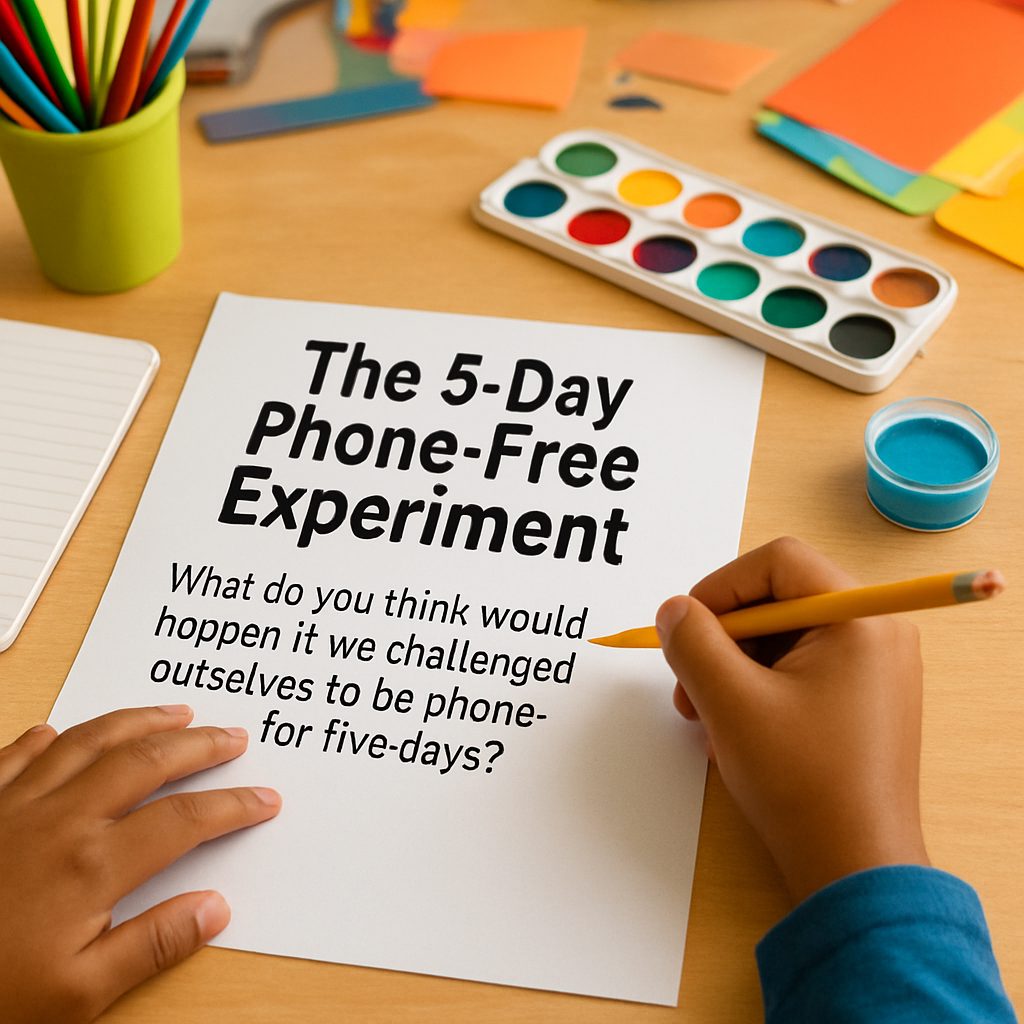
(5 min) Begin with a discussion about recent school phone bans and their implications. Ask students, 'What do you think would happen if we challenged ourselves to be phone-free for five days?' This sets the stage for the experiment and piques their curiosity about the changes they might experience.
2Step 2
Group Organization and Explanation
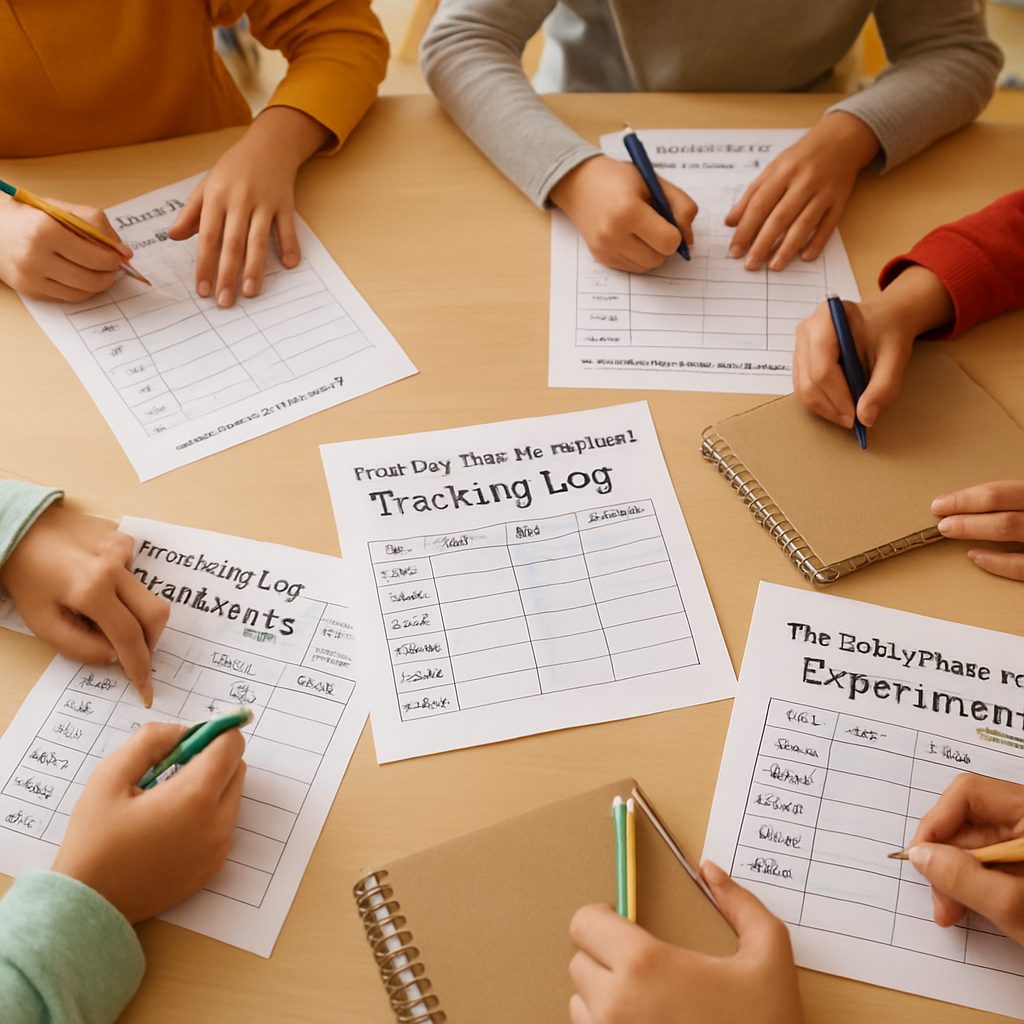
(10 min) Organize students into 5 groups of 4. Each group receives 4 printed tracking logs, a journal, and a pen per student. The teacher explains, 'You will track your focus, mood, and sleep for five days and choose one screen-free challenge each day.' Students begin by discussing their tracking logs, noting down their baseline data before selecting their screen-free challenges. Each group will have 4 tracking logs, 4 journals, and 4 pens/pencils.
3Step 3
Choose Screen-Free Challenges
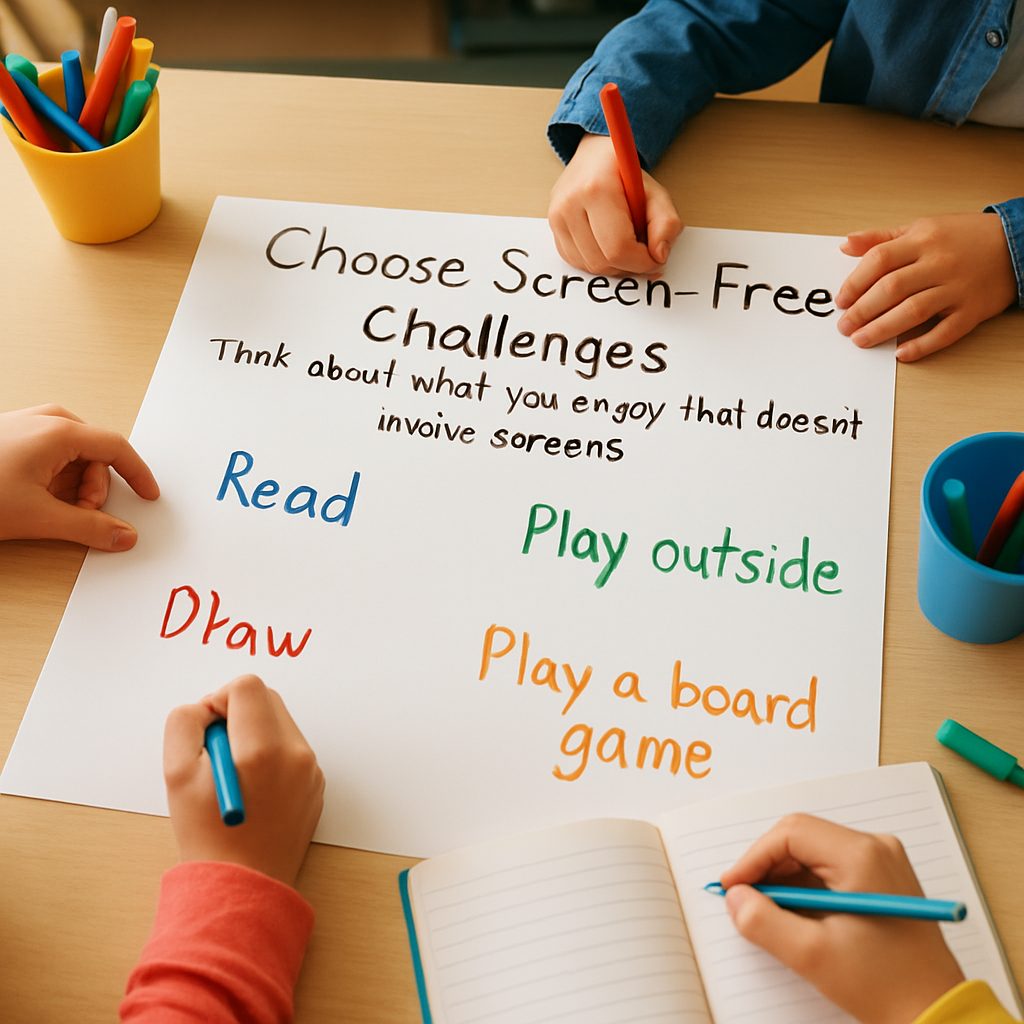
(15 min) Each group discusses and chooses their screen-free challenge for Day 1. The teacher says, 'Think about what you enjoy that doesn’t involve screens.' Students brainstorm ideas on the poster board, writing down their chosen activity in their journals. The finished work includes a visual plan on the poster board and a written description in each student’s journal. Each group will use 1 poster board and 1 set of markers.
4Step 4
Engage in the Challenge
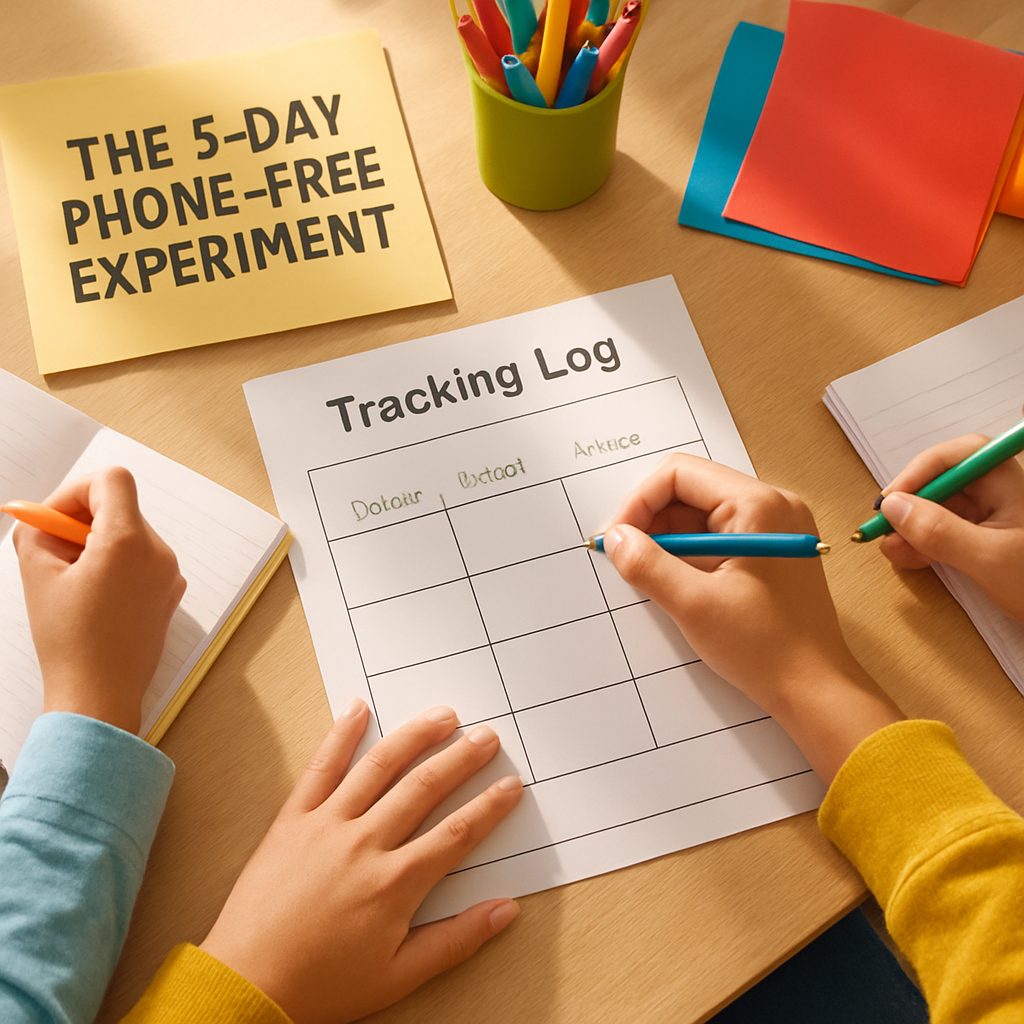
(15 min) Students will participate in their chosen screen-free challenge for 15 minutes in class. The teacher encourages, 'Focus on being fully present during this time.' While engaged, students fill out their tracking logs, noting their focus, mood, and feelings during the challenge. By the end, each student will have a completed entry in their tracking log and share their experience with their group. Each group uses their tracking logs and journals.
5Step 5
Graph Results
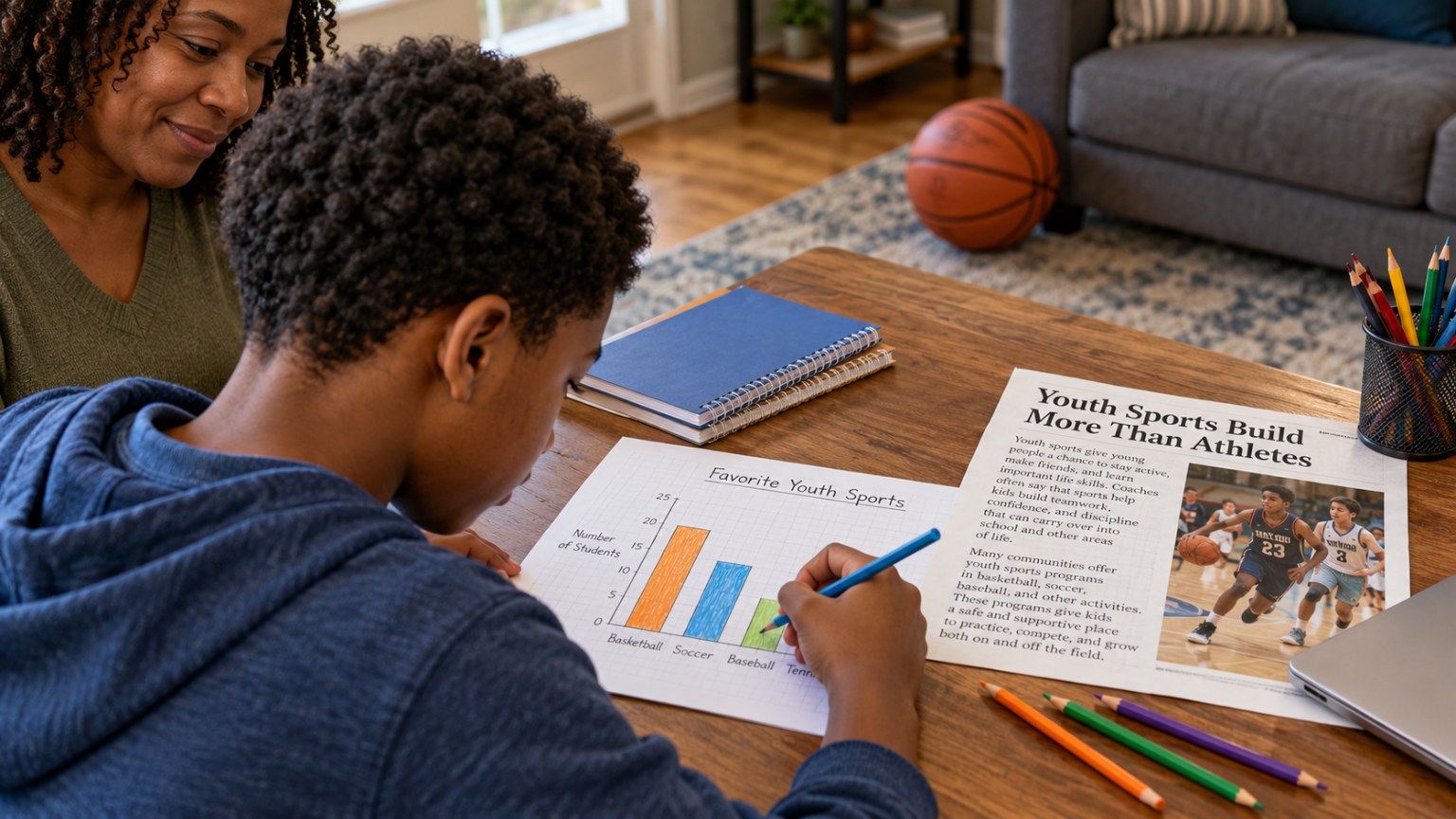
(10 min) At the end of the week, students will graph their results using graph paper to visualize their focus, mood, and sleep data. The teacher prompts, 'Let’s see how our experiences compare!' Each group will create a collective graph, comparing their findings with the class data and discussing any trends they noticed. The final work will be a group graph displayed on a large piece of graph paper. Each group will use 1 sheet of graph paper.

6Step 6
Reflection
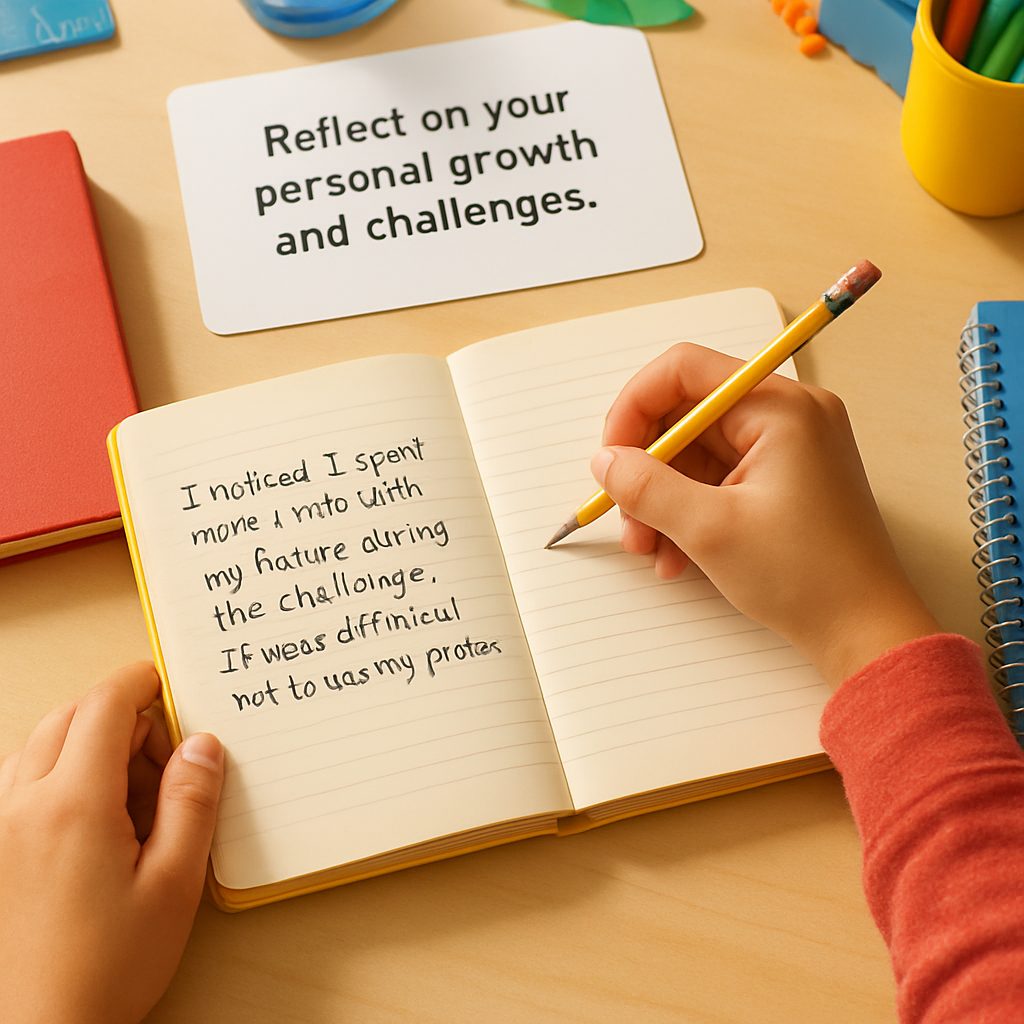
(5 min) Each student writes a short reflection in their journal about what changed during the challenge and what they found difficult. The teacher reminds them, 'Reflect on your personal growth and challenges.' Students will write at least two sentences to express their thoughts, resulting in a personal journal entry that captures their experience. Each student will use their journal for this reflection.
Conclusion
Discuss as a class what they learned during the experiment. How did their social interactions and well-being change over the week?
Make your own lesson plan in minutes
Describe a topic and Resource Portal AI writes the objectives, materials and steps for your group.
Try Resource Portal AI