Free lesson plan

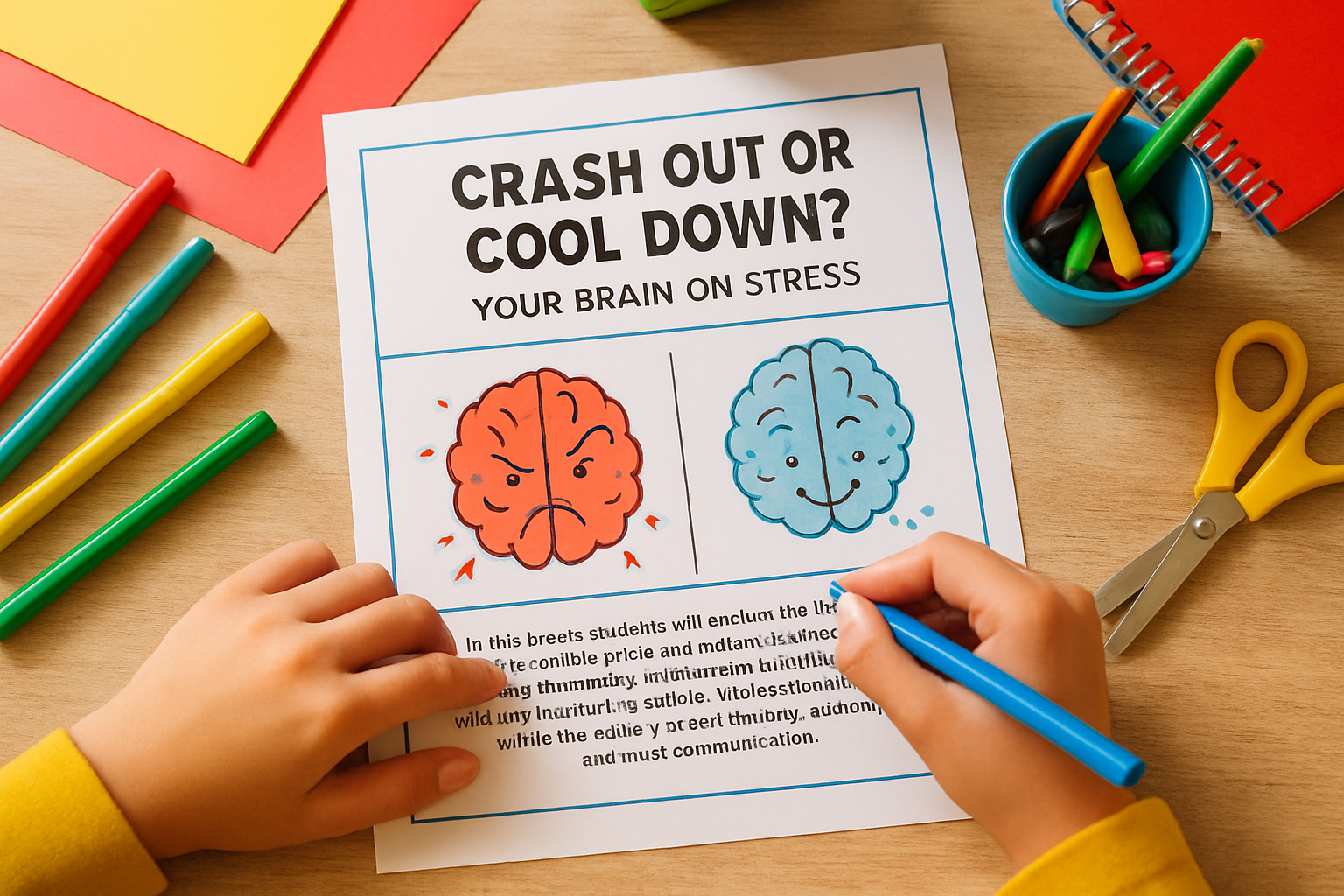
Crash Out or Cool Down? Your Brain on Stress
SEL1 HourGrades: 6th, 7th, 8th
Crash Out or Cool Down? Your Brain on Stress

Overview

Students will learn about stress and its effects on the brain, while developing coping strategies through collaborative activities.

Description

In this lesson, students will explore the impact of stress on the brain and learn strategies to manage it effectively. Through engaging activities like creating stress balls and practicing cool-down techniques, they will build their skills in critical thinking, collaboration, and communication.

Objective

Students will understand the effects of stress on their brains and develop personalized strategies to manage stress effectively.

Standards

RI.6.2ELA · Grade 6 · Reading: Informational Text
Determine a central idea of a text and how it is conveyed through particular details; provide a summary of the text distinct from personal opinions or judgments.
SL.6.1ELA · Grade 6 · Speaking & Listening
Engage effectively in a range of collaborative discussions (one-on-one, in groups, and teacher-led) with diverse partners on grade 6 topics, texts, and issues, building on others' ideas and expressing their own clearly.
W.6.2ELA · Grade 6 · Writing
Write informative/explanatory texts to examine a topic and convey ideas, concepts, and information through the selection, organization, and analysis of relevant content

Materials

ItemQuantity
Stress Ball Kits20 kits
Notebooks20 pieces
Markers20 pieces
Mindfulness Activity Cards1 set
Whiteboard1 piece
Projector1 piece
Resource Handouts on Stress Management20 pieces
Index Cards20 pieces
Brain Diagram Handouts20 pieces
Timer1 piece

Vocabulary

Stress
A state of mental or emotional strain resulting from adverse or demanding circumstances.
Coping Strategies
Techniques that help individuals deal with stress or difficult situations.
Mindfulness
The practice of being present and fully engaged with the current moment.
Brain Chemistry
The study of the chemical processes that occur in the brain.
Resilience
The ability to recover quickly from difficulties; emotional strength.

Preparation

Introduction

Start with a 5-minute discussion about the slang 'Crash out' to engage students' interest.
What does stress mean to you?
Can you think of a time when you felt overwhelmed? How did you cope?

Steps
1Step 1
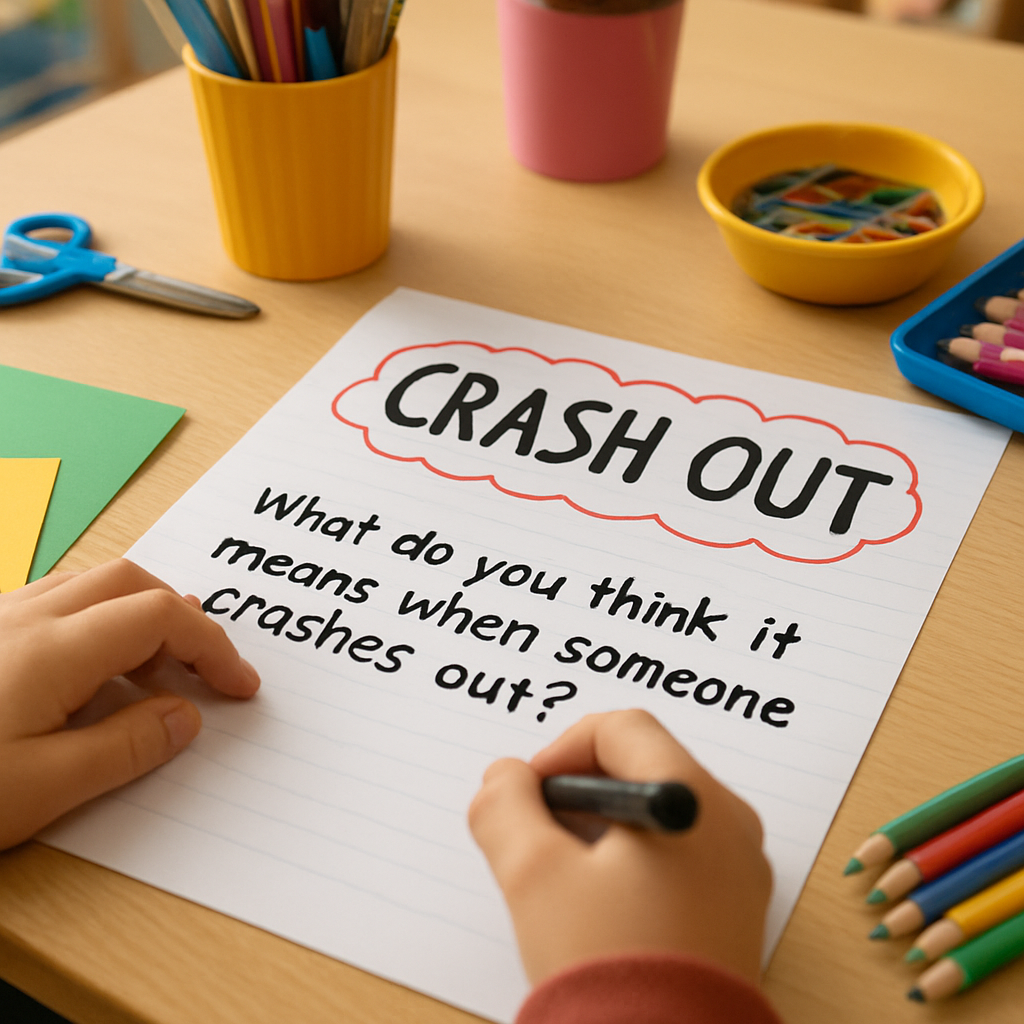
Discuss 'Crash Out'
(5 min) Start with a brief discussion of the slang 'Crash out.' Ask students, 'What do you think it means when someone crashes out?' Encourage them to relate it to their own experiences with stress. This sets the stage for understanding stress in their lives.
Step 1
2Step 2
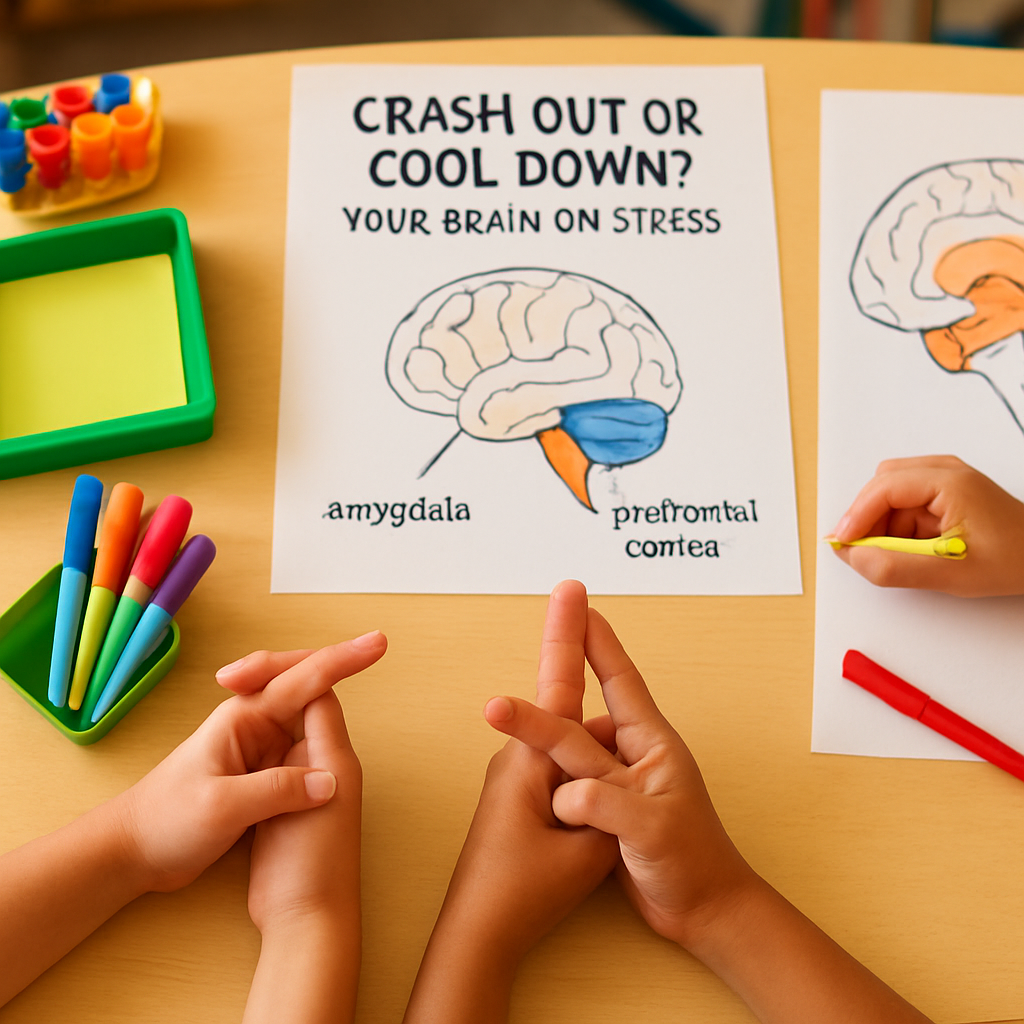
Introduce Brain Model
(10 min) Introduce the brain model by showing students a simple diagram of the amygdala and prefrontal cortex on the whiteboard. Explain, 'The amygdala helps us react to stress, while the prefrontal cortex helps us think clearly.' In groups of four, students will create hand models using their fingers to represent these parts, referencing their brain diagram handouts. Each group will also draw their own diagrams on chart paper to reinforce their understanding.
Step 2
3Step 3
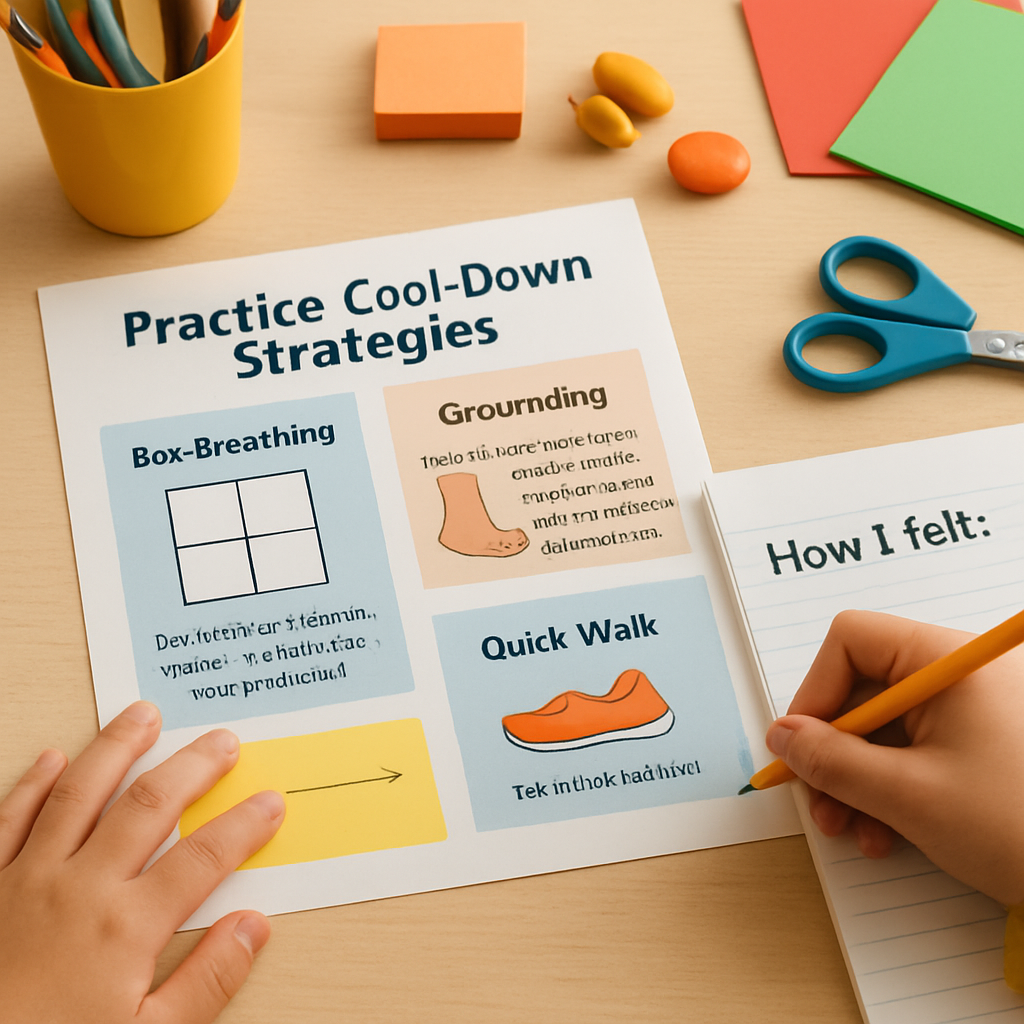
Practice Cool-Down Strategies
(15 min) Practice three cool-down strategies: box breathing, grounding, and a quick walk. For box breathing, guide students through taking deep breaths in a box pattern, saying, 'Breathe in for 4 seconds, hold for 4, breathe out for 4, and hold for 4.' Students will follow along with the group timer, practicing each strategy together. Afterward, students will reflect on how they felt during each activity, promoting relaxation and mindfulness.
Step 3
4Step 4
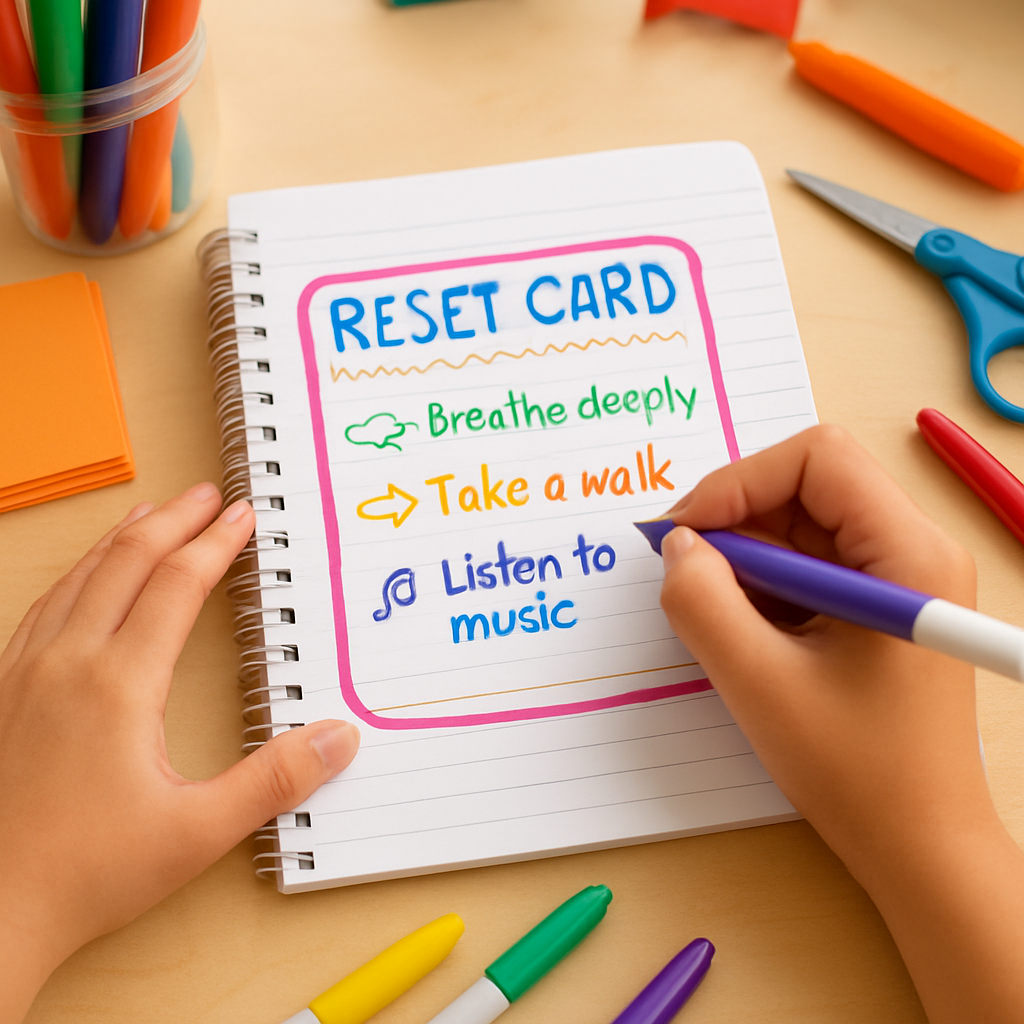
Create Reset Cards
(15 min) After practicing, have students create a 'reset card' in their notebooks using the markers and index cards. They will write down personal strategies for managing stress. Students should think creatively, making the cards colorful and visually appealing, as these will serve as reminders of their coping strategies when facing stress.
Step 4
5Step 5
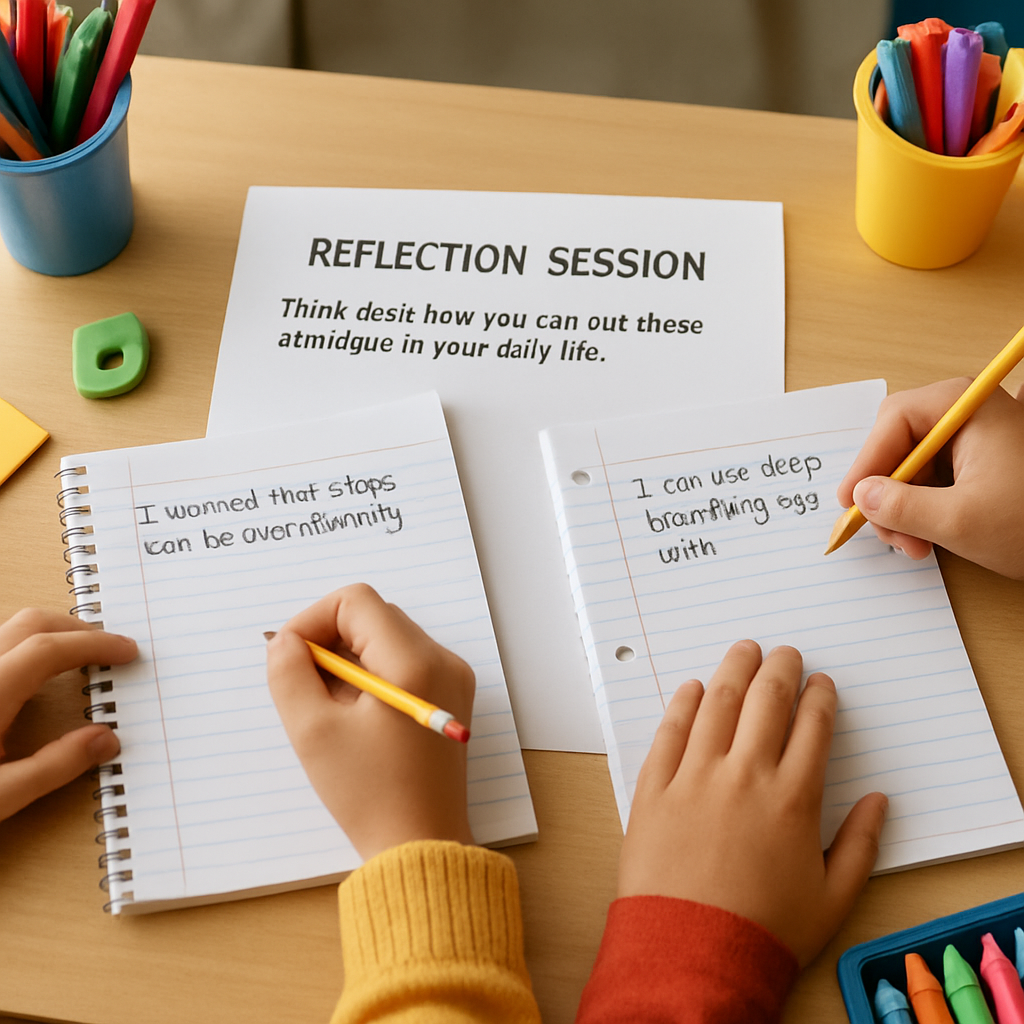
Reflection Session
(15 min) Conclude with a reflection session where each student writes two sentences in their notebooks about what they learned regarding stress and coping strategies. The teacher will say, 'Think about how you can use these strategies in your daily life.' Encourage sharing in small groups afterward, allowing students to express their thoughts and insights from the lesson, creating a supportive environment for discussion.
Step 5

Conclusion

Wrap up the lesson by summarizing that understanding stress is key to managing it. Remind students to practice the cool-down strategies and use their reset cards at home to help with stress management.

Make your own lesson plan in minutes

Describe a topic and Resource Portal AI writes the objectives, materials and steps for your group.

Try Resource Portal AI