Free lesson planWhy Free Kicks Curve: The Magnus Effect
Science1 HourGrades: 6th, 7th, 8th
Overview
Discover the science behind why free kicks curve in soccer! Students will engage in hands-on experiments to understand the Magnus Effect and its real-world applications.
Description
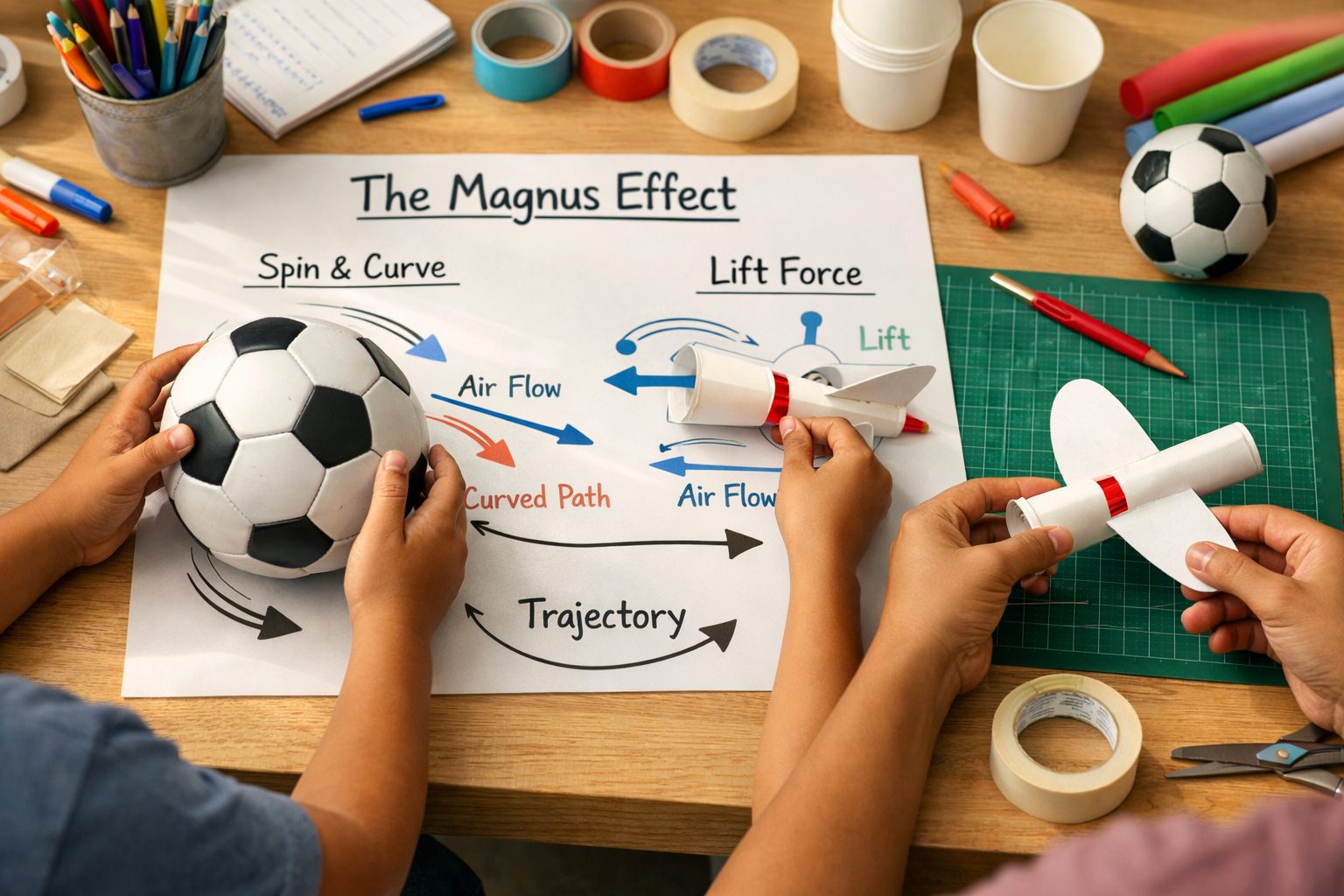
In this lesson, students will explore the Magnus Effect and how it affects the trajectory of objects like soccer balls and paper-cup gliders. Through hands-on activities and group collaboration, they will design experiments to observe the effects of spin on an object's motion.
Objective
Students will understand the Magnus Effect and apply the concept to observe and predict the trajectory of spinning objects like soccer balls and paper-cup gliders.
Materials
| Item | Quantity |
|---|
| Soccer Balls | 4 pieces |
| Measuring Tape | 4 pieces |
| Markers | 1 pack |
| Large Whiteboard or Chart Paper | 1 sheet |
| Protractors | 4 pieces |
| Stopwatch | 4 pieces |
| Paper Cups | 20 pieces |
| Tape | 1 roll |
| Beach Ball | 1 piece |
Vocabulary
Trajectory
The path that a moving object follows through space as a function of time.
Spin
The rotation of an object around its axis.
Magnus Effect
A phenomenon where a spinning object curves away from its intended path due to pressure differences.
Aerodynamics
The study of the behavior of air as it interacts with solid objects, like a ball.
Preparation
- Set up an outdoor or gym space for soccer activities, or a safe indoor area for the paper-cup gliders.
- Gather all materials and ensure there are enough supplies for each group.
- Prepare a whiteboard or chart paper for group discussions and recording findings.
Introduction
Show a short video clip of famous soccer free kicks that curve dramatically, prompting students to discuss the science behind the action. Ask them, "Have you ever wondered why some soccer balls curve while others go straight?"
Steps
1Step 1
Introduce the Magnus Effect
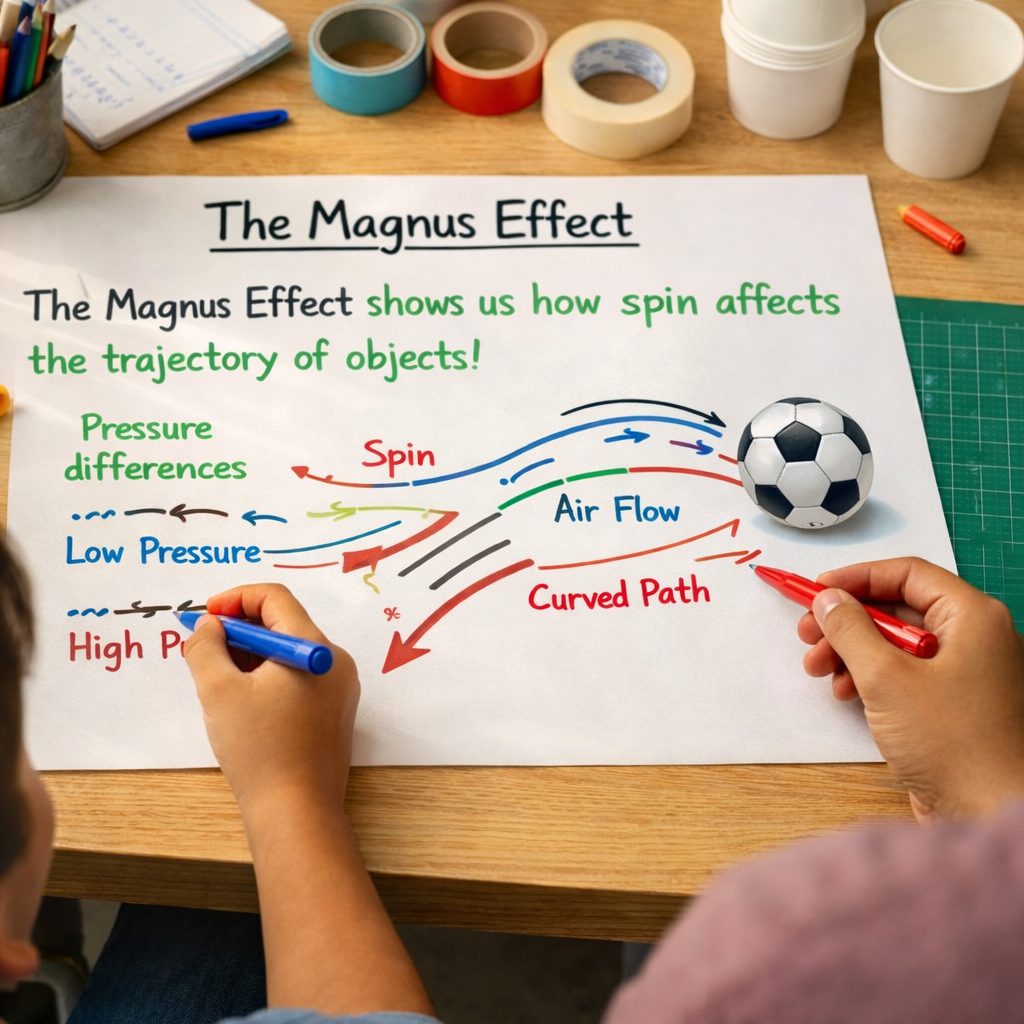
(10 min) Begin by explaining the Magnus Effect using visual diagrams. Say, "The Magnus Effect shows us how spin affects the trajectory of objects!" Students will take notes on the whiteboard or chart paper, using markers to highlight important points. They will learn to illustrate how pressure differences caused by spin can result in a curved trajectory, creating a visual representation of their understanding.
2Step 2
Hook
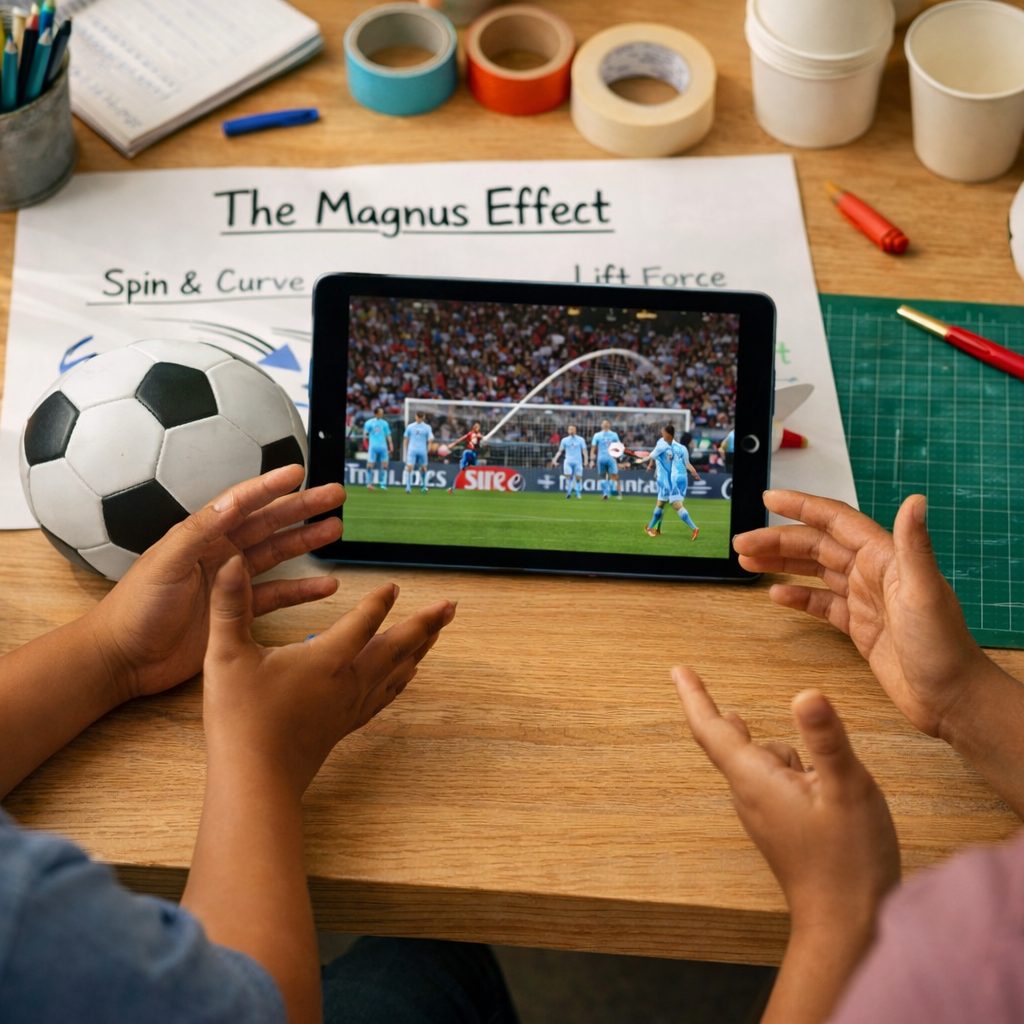
(5 min) Show a short video clip of famous soccer free kicks that curve dramatically. Ask students, "Why do you think some soccer balls curve while others go straight?" This prompts them to think critically about the science behind the Magnus Effect. Students will discuss their thoughts in pairs before sharing with the larger group, encouraging them to connect their ideas to the video they just watched.
3Step 3
Form Groups and Plan Experiments
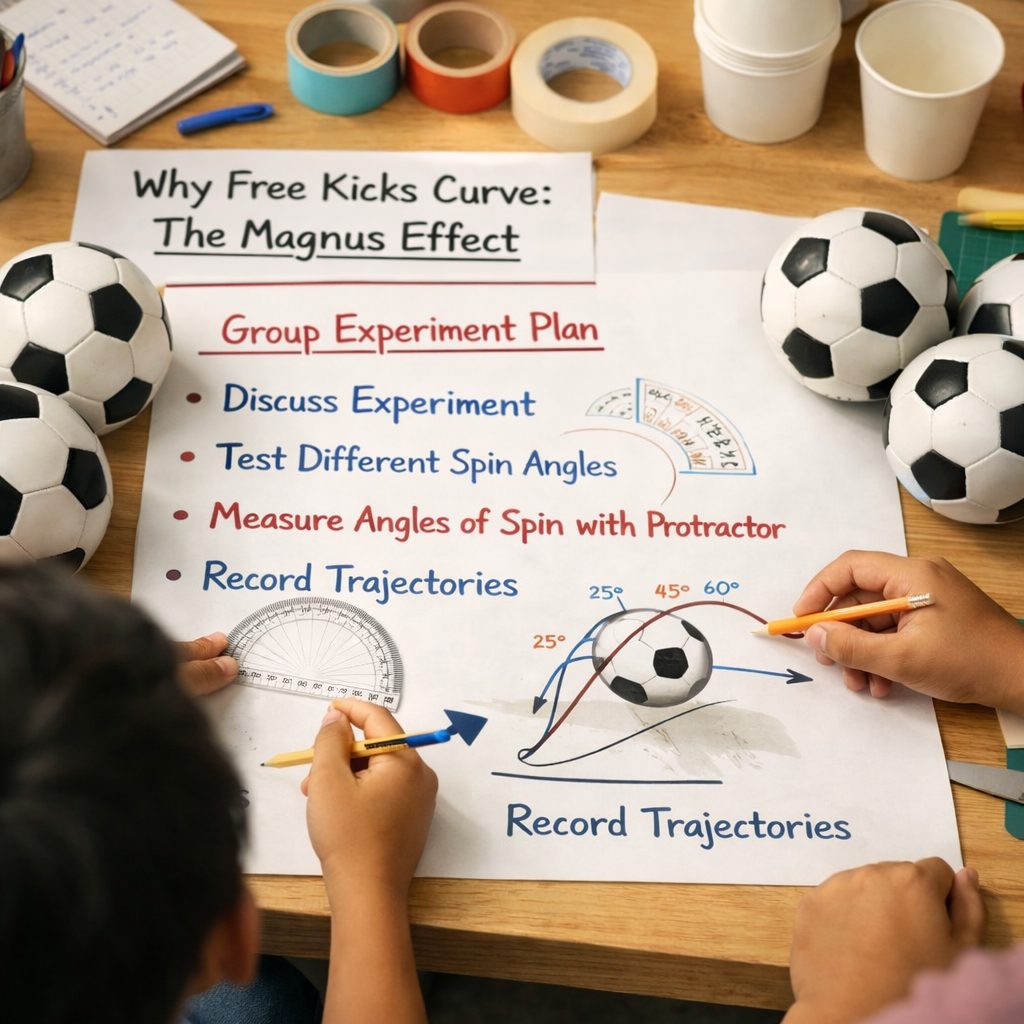
(10 min) Divide students into small groups and provide them with the materials: 4 soccer balls, measuring tapes, and 1 protractor per group. Each group will discuss and design their experiments, determining how they will test the effect of spin on the soccer balls' trajectories. They will use the protractor to measure the angle of spin they will apply, preparing for data collection and recording their plans on chart paper.
4Step 4
Conduct Experiments
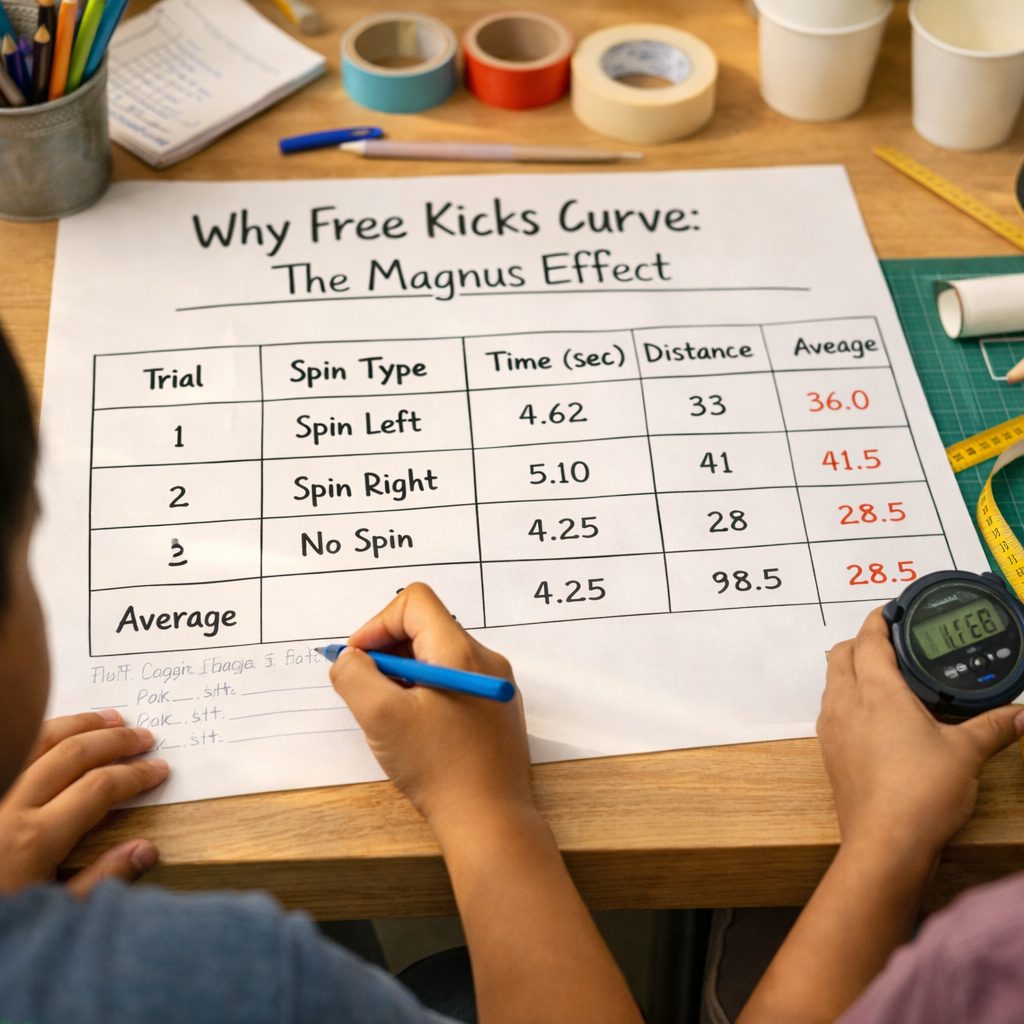
(20 min) Groups will take turns kicking the soccer balls with different spins on an outdoor field or using paper-cup gliders indoors. Each group will have a stopwatch to time how long the ball travels and a measuring tape to determine the distances traveled. They will record their data on chart paper, analyzing their results and preparing to present their findings to the class.
5Step 5
Present Findings
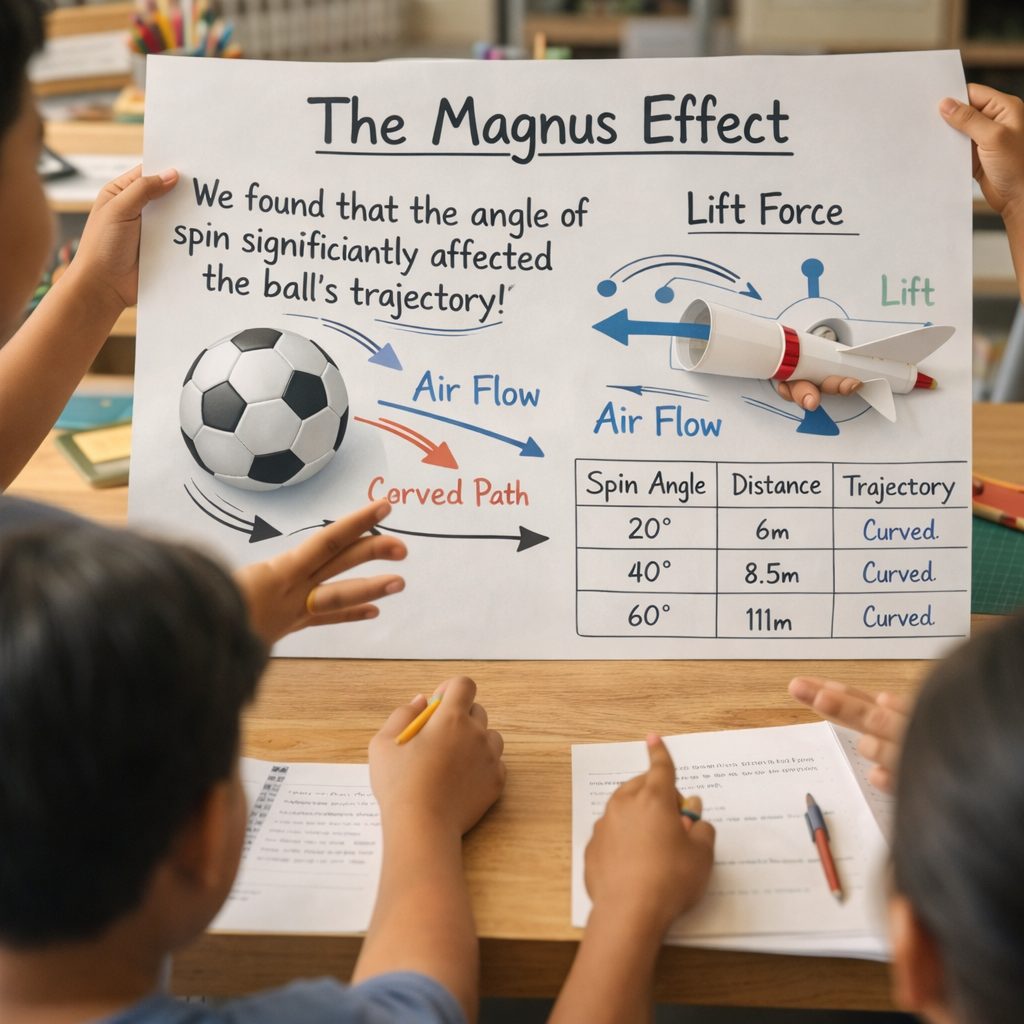
(10 min) Groups will present their findings to the class, using their chart paper to display data and conclusions about the Magnus Effect. As they present, they might say, "We found that the angle of spin significantly affected the ball's trajectory!" Students will explain their methods, share their data, and engage with questions from their peers, showcasing their collaborative effort.
6Step 6
Reflect on Learning
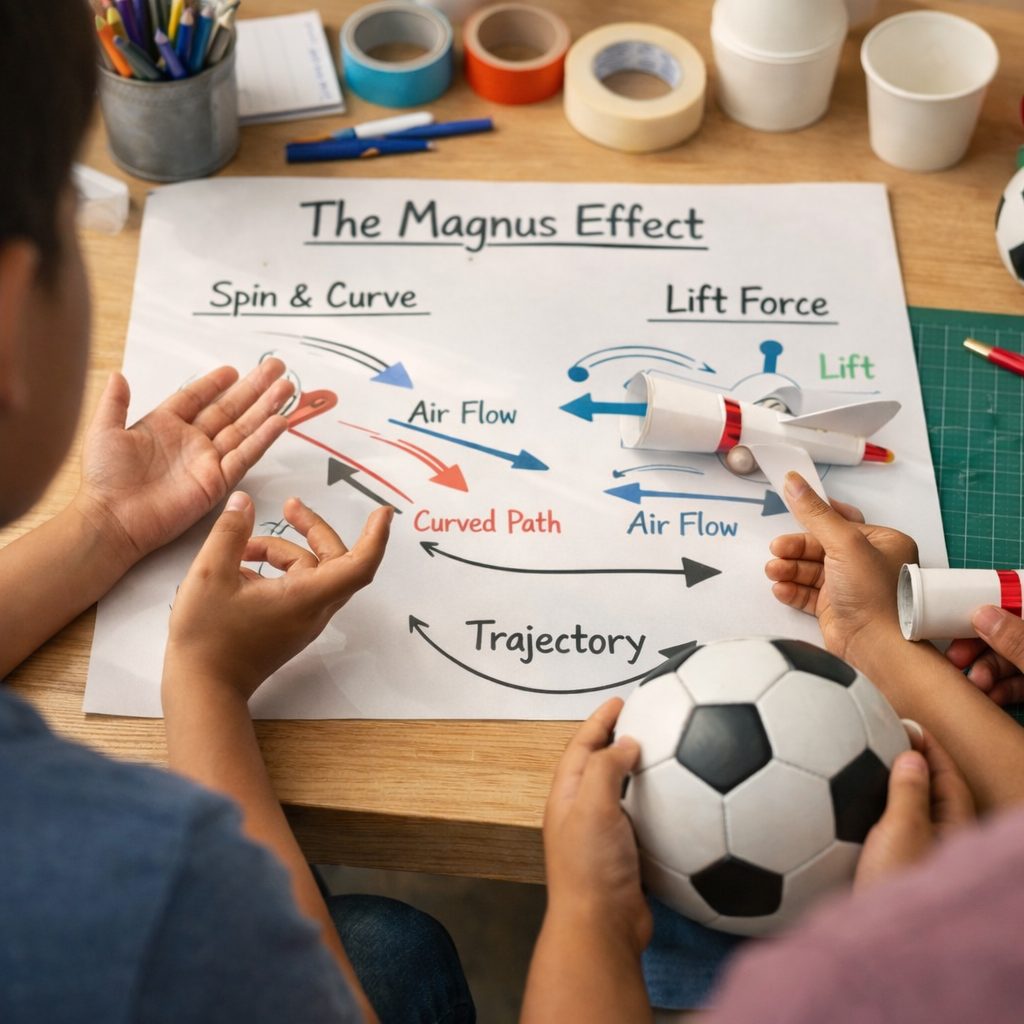
(5 min) Facilitate a class discussion reflecting on the experiments and the concept of the Magnus Effect. Encourage students to share their thoughts and ask questions about how they can apply this knowledge in real-world scenarios. They will also consider how the skills they practiced, like teamwork and problem-solving, can help them in future projects.
Conclusion
Wrap up the lesson by summarizing how the Magnus Effect influences the trajectory of both soccer balls and paper-cup gliders, emphasizing its relevance in sports and science.
Make your own lesson plan in minutes
Describe a topic and Resource Portal AI writes the objectives, materials and steps for your group.
Try Resource Portal AI