Lesson planOcean Acidification: Breath Bubbles, Cabbage Indicator and the Shell Test
Science45 minutesGrades: 6th, 7th, 8th
Overview
See how carbon dioxide makes water more acidic and test shells.
Description
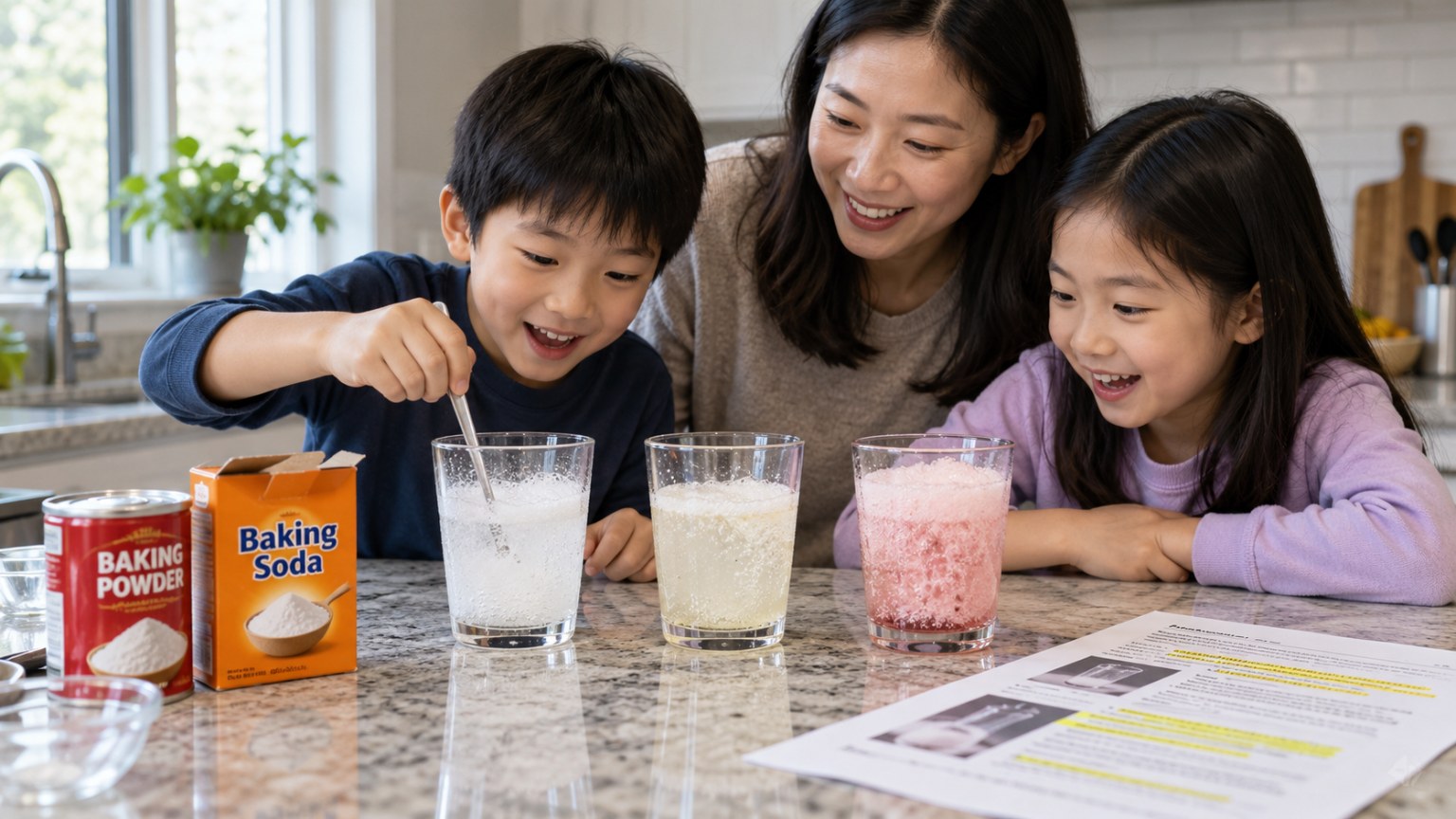
Your teen reads a short original article on how carbon dioxide changes ocean chemistry, blows breath bubbles into red cabbage indicator to watch carbon dioxide make water more acidic, then soaks eggshell pieces in water, club soda and vinegar to see what acid does to the calcium carbonate that shells are made of, and writes an evidence-based explanation.
Objective
Your teen will analyze how carbon dioxide, ocean chemistry and shell-building animals interact in a text, test those ideas with two experiments, and write an explanation developed with relevant facts and observations.
Standards
RI.7.3ELA · Grade 7 · Reading: Informational Text Analyze the interactions between individuals, events, and ideas in a text (e.g., how ideas influence individuals or events, or how individuals influence ideas or events).
Develop the topic with relevant facts, definitions, concrete details, quotations, or other information and examples.
Materials
| Item | Quantity |
|---|
| Red cabbage | about 1/4 head |
| Hot water (adult) and a strainer | 2 cups |
| Baking soda | 1 pinch |
| Clear cups or jars | 5 |
| Drinking straws | 1 per person |
| Eggshells from 2 eggs, rinsed with the inner skin peeled off | 6 similar pieces |
| Tap water, plain club soda (carbonated water) and white vinegar | 1/2 cup each |
| Timer, paper and pencil | 1 each |
| Optional: a seashell, piece of coral rubble or classroom chalk to compare | 1 |
Vocabulary
Carbon dioxide (CO2)
A gas that we breathe out and that is released when fossil fuels are burned.
Acid
A substance that can react with and dissolve minerals like calcium carbonate; lemon juice and vinegar are acids.
pH
A scale from 0 to 14 that shows how acidic or basic a liquid is; lower numbers are more acidic.
Calcium carbonate
The hard mineral that seashells, coral skeletons, eggshells and chalk are made of.
Ocean acidification
The ongoing drop in ocean pH caused by the ocean absorbing carbon dioxide from the air.
Preparation
- Make cabbage indicator: an adult chops the cabbage, covers it with about 2 cups of hot water, lets it steep 10 minutes, then strains out the purple liquid and lets it cool.
- Rinse and peel the eggshells, then break them into 6 pieces of about the same size.
Introduction
Pour some purple cabbage juice into a cup and ask: what if I told you that just by breathing out into this cup, you could change its chemistry, and the same thing is happening to the whole ocean right now?
What gas do you breathe out?
What are seashells and coral skeletons made of, and what do you think acid does to them?
Steps
1Step 1
Read and map the ideas
(10 min) Your teen reads 'The Ocean's Changing Chemistry' and draws a cause-and-effect chain of at least 5 links, starting with burning fossil fuels and ending with shell-building animals. Then they note which links the two experiments will test.
2Step 2
Breath bubble test
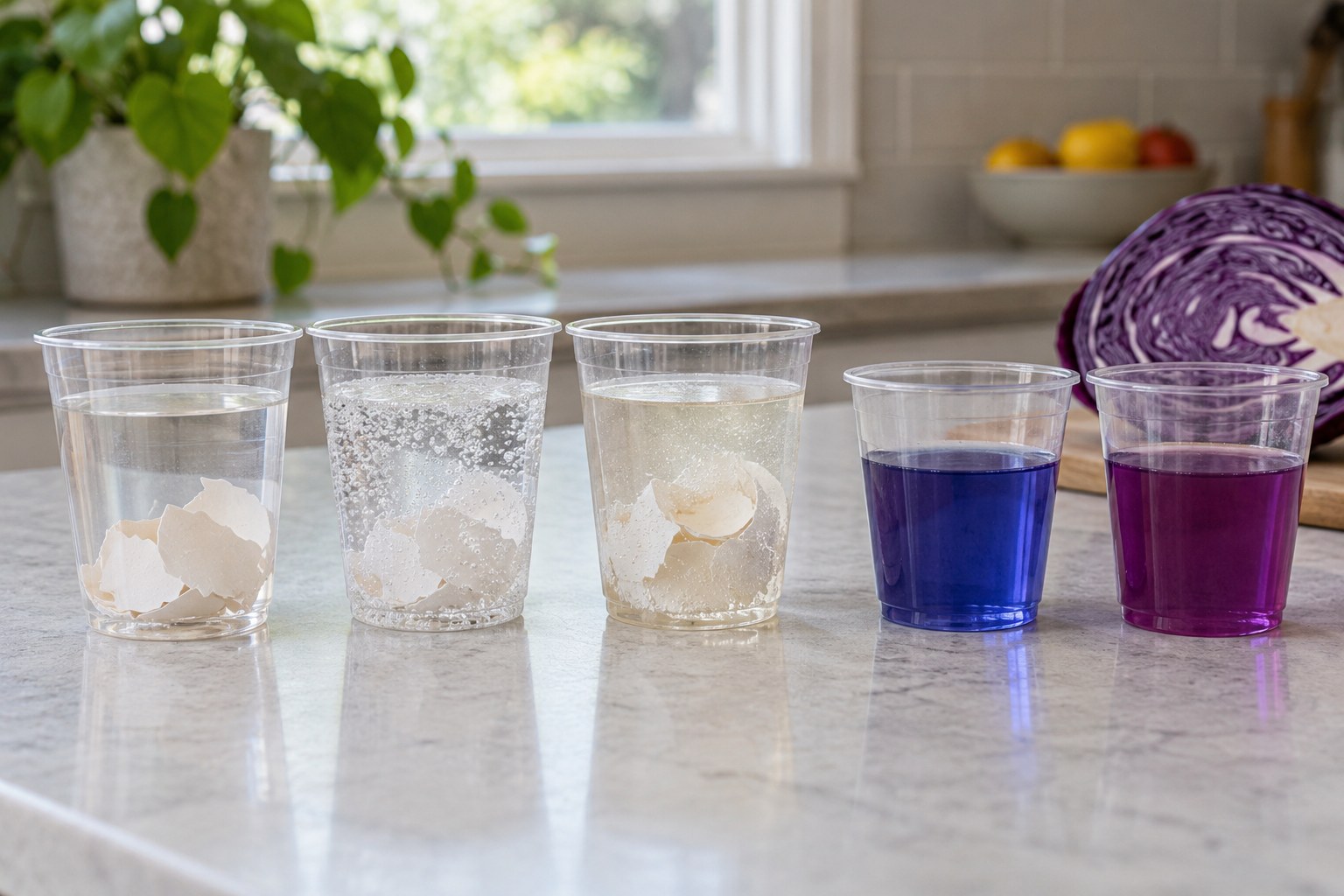
(10 min) Pour cabbage indicator into two cups and add a tiny pinch of baking soda to each so they turn blue-purple, like the slightly basic ocean. Your teen gently blows bubbles through a straw into one cup for 1 to 2 minutes (breathe out only, never sip) and compares the color with the control cup, recording any shift toward purple or pink, which means more acidic.
3Step 3
Set up the shell test
(8 min) Label three cups Water, Club Soda and Vinegar, and fill each with 1/2 cup of its liquid. Drop two eggshell pieces into each cup and record your starting observations: color, hardness when gently pressed, any bubbles.
4Step 4
Observe and record
(9 min) Watch the cups for several minutes and record bubbles every 2 minutes. Then your teen takes one shell piece out of each cup, rinses it and presses it gently to compare hardness; leave the other pieces in for a 24-hour check.
5Step 5
Write the explanation
(8 min) Your teen writes a paragraph explaining how carbon dioxide affects shell-building animals, using at least 3 facts from the article, 2 observations from the experiments and 2 vocabulary words. They also note one way the experiment is different from the real ocean.
Conclusion
Ask: why did vinegar act so much faster than club soda, and which one is closer to what is happening in the ocean? The real ocean is still slightly basic, but even a small change makes it harder for young oysters, corals and tiny sea snails to build shells.
Make your own lesson plan in minutes
Describe a topic and Resource Portal AI writes the objectives, materials and steps for your group.
Try Resource Portal AI