Earth Day Muddy Water Filter Challenge
Overview
Design a filter to clean muddy water and measure the results.
Description
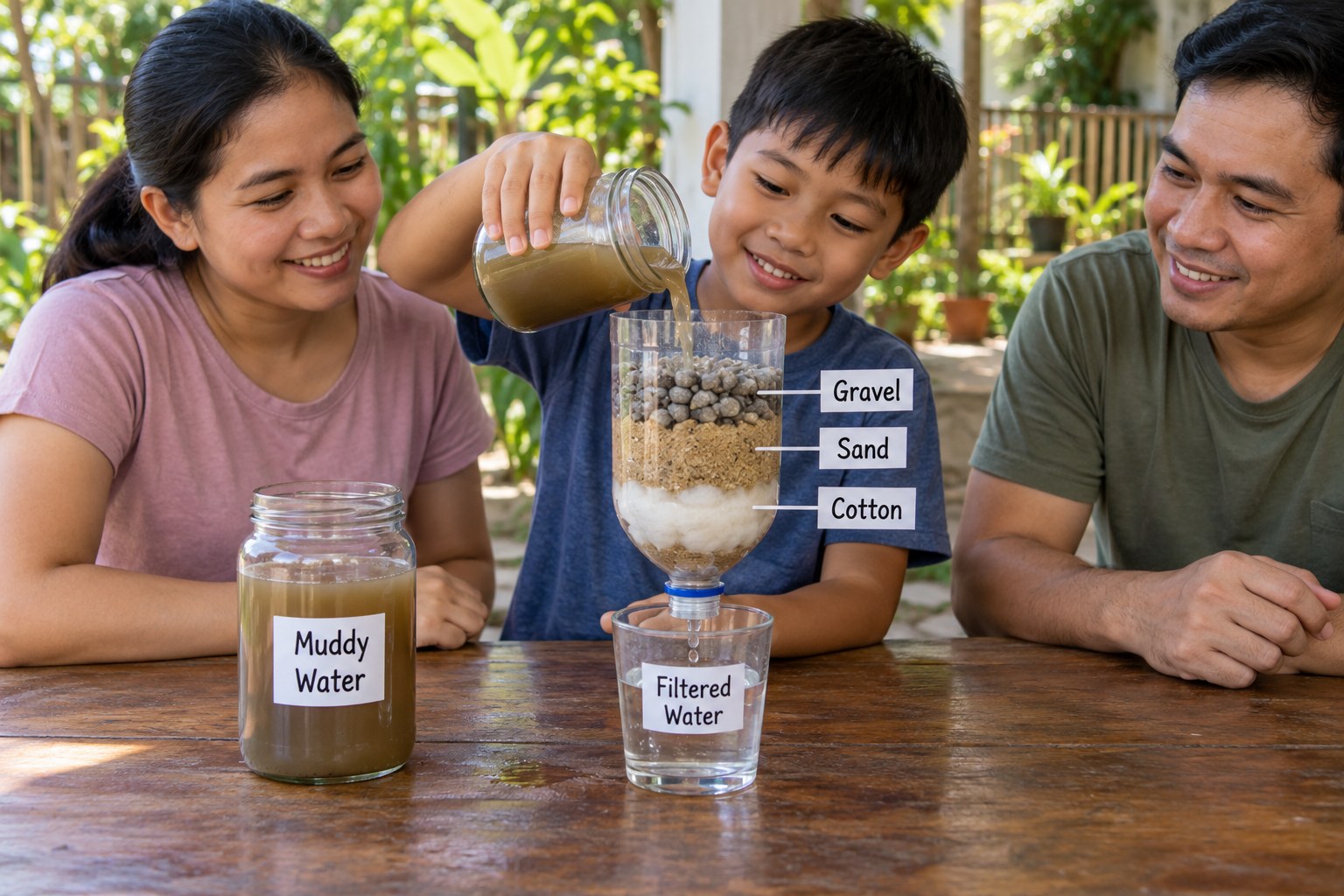
Your child mixes a jar of muddy 'river water,' designs a layered filter from sand, gravel, cotton and coffee filters inside a cut plastic bottle, measures how many milliliters come through, and redesigns it to get the clearest water.
Objective
Your child will design, test and improve a layered water filter, measure liquid volumes in milliliters, and solve problems comparing the water poured in and collected.
Standards
Materials
| Item | Quantity |
|---|---|
| Clear plastic bottle, 1-2 liters, cut in half by an adult | 1 per filter |
| Coffee filters or a paper towel | 2 |
| Cotton balls or a clean cotton cloth | 6-8 balls |
| Clean sand (play sand) | 1 cup |
| Small gravel or aquarium rocks | 1 cup |
| Activated charcoal from a pet store (optional) | 1/4 cup |
| Muddy water: 2 cups water with 3 tablespoons soil and a few crumbled leaves | about 2 cups per test |
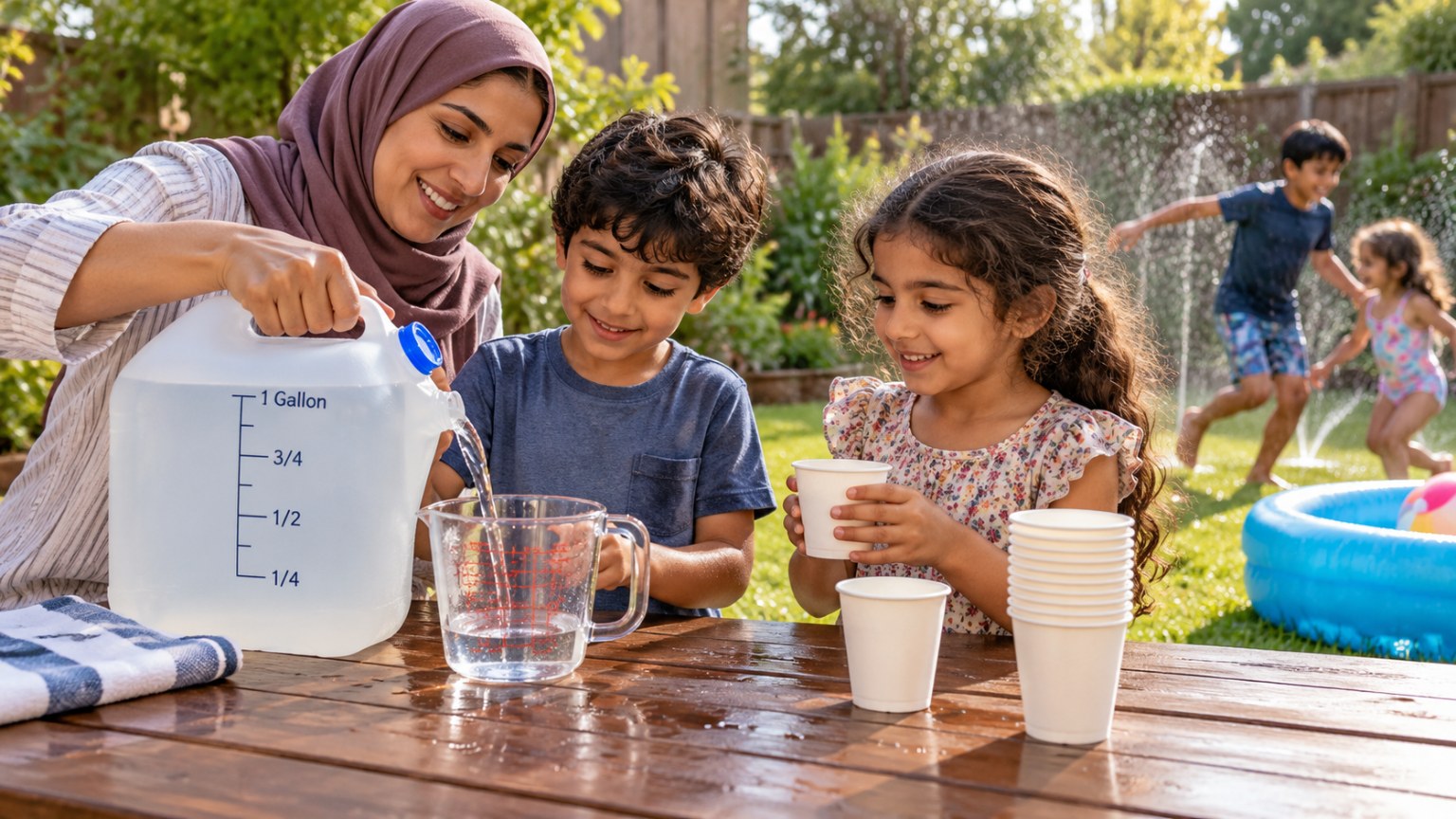
| Measuring cup with milliliter marks | 1 |
| Clear cups and a rubber band | 3 cups, 1 band |
Vocabulary
Preparation
- Cut the bottle about 1/3 of the way down (adult only, with scissors or a craft knife). Flip the top half upside down into the bottom half like a funnel.
- Rinse the sand, gravel and charcoal in a strainer so they do not add extra dirt.
- Important: filtered water is NOT safe to drink. This filter removes some dirt, but not germs or chemicals.
Introduction
Hold up a glass of clear tap water and a jar of muddy water. Ask: how does muddy river water turn into the clean water in our faucet? On Earth Day we celebrate clean water, and today your child becomes a water engineer.
What do you think would catch the big pieces? The tiny pieces?
Why does clean water matter to people, fish and farms?
Steps
Conclusion
Ask: what did each layer do? Explain that water treatment plants use similar steps plus disinfection, and that Earth Day began partly because rivers and coasts were badly polluted, which led to the Clean Water Act in 1972.
Make your own lesson plan in minutes
Describe a topic and Resource Portal AI writes the objectives, materials and steps for your group.
Try Resource Portal AI