Lesson planLunar New Year Reunion Dinner: Write a Narrative Scene
Writing45 minutesGrades: 6th, 7th, 8th
Overview
Write a scene set at a new year reunion dinner.
Description
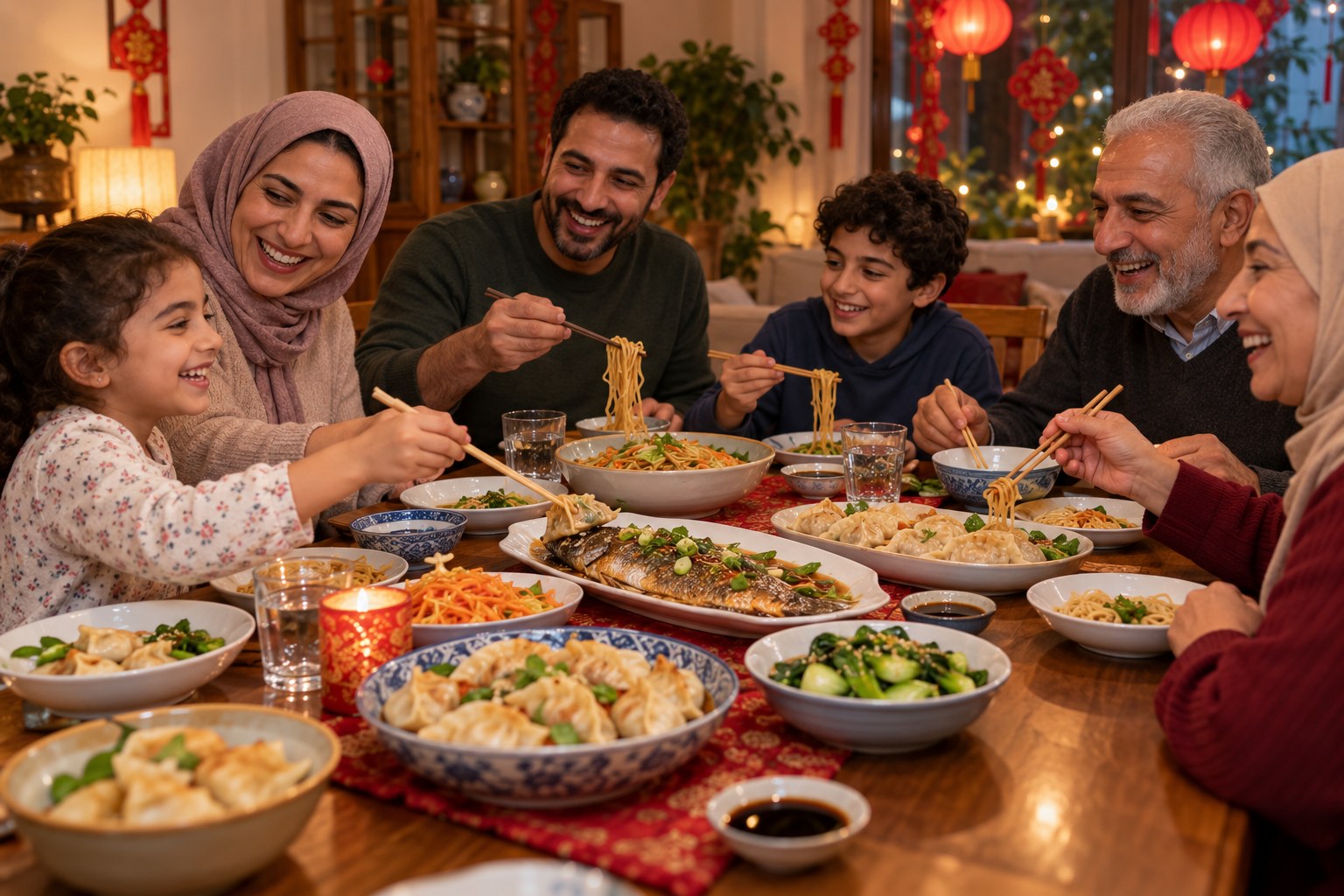
Your teen learns about the Lunar New Year reunion dinner, gathers sensory details from a real or imagined family meal, and writes a one-page narrative scene that uses dialogue, pacing and precise sensory language to show a moment of connection between generations.
Objective
Your teen will plan and draft a narrative scene that uses dialogue, pacing and description to develop characters, and precise words and sensory language to capture the setting of a family celebration.
Standards
Use narrative techniques, such as dialogue, pacing, and description, to develop experiences, events, and/or characters.
Use precise words and phrases, relevant descriptive details, and sensory language to capture the action and convey experiences and events.
Materials
| Item | Quantity |
|---|
| Notebook or paper | 3 sheets |
| Pen or pencil and two highlighters | 1 set |
| Optional: family photos of a holiday meal | a few |
| Timer | 1 |
Vocabulary
Reunion dinner
The big family meal on Lunar New Year's Eve, when relatives gather from near and far.
Sensory detail
Words that show what a character sees, hears, smells, tastes or feels.
Pacing
How fast or slow a story moves; slowing down a moment makes it feel important.
Dialogue
The words characters speak, written in quotation marks.
Preparation
- Read 'About the reunion dinner' and the model paragraph in the additional sections.
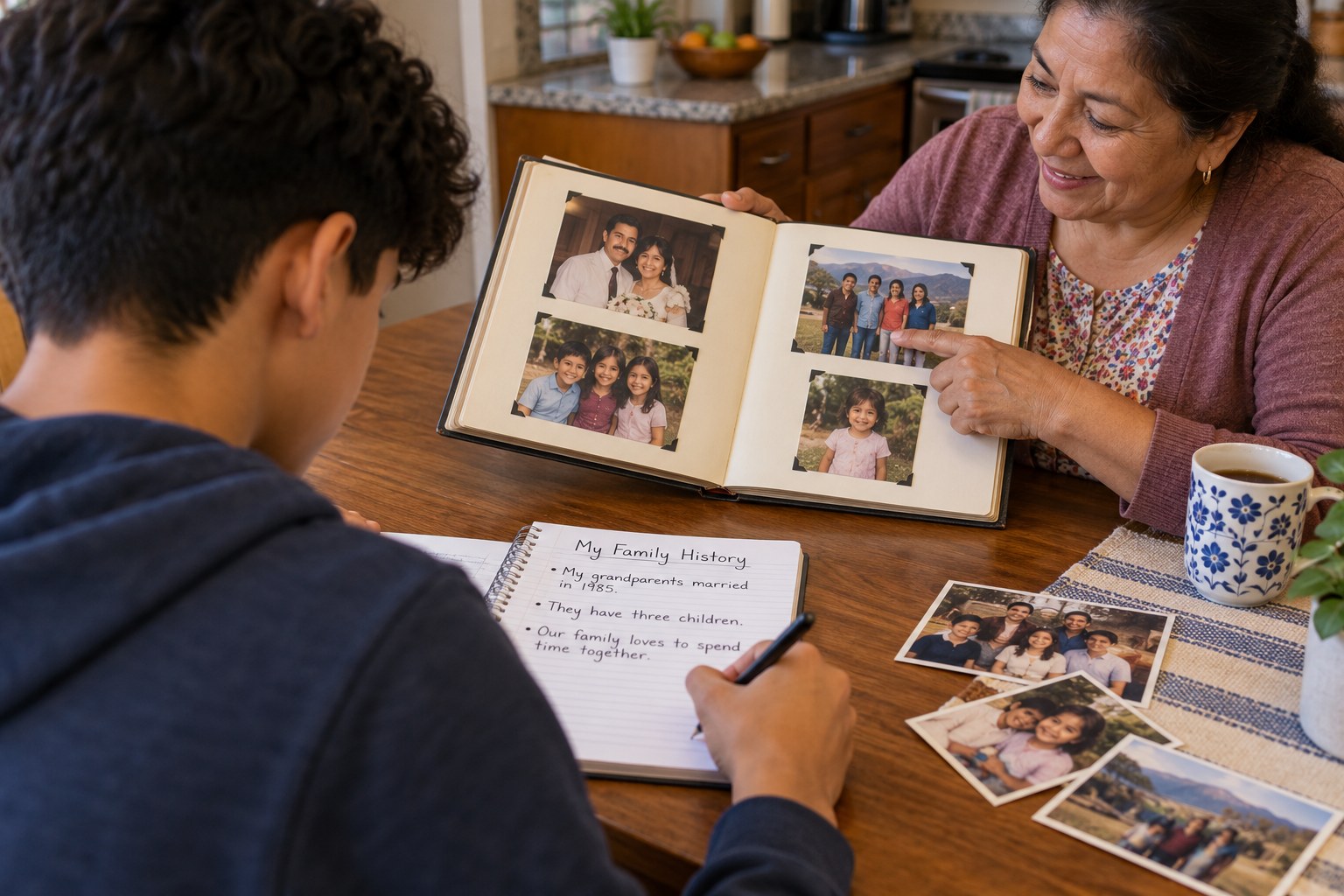
- If your family celebrates Lunar New Year or another holiday meal, pull out a few photos to spark memories.
Introduction
Read the model paragraph aloud. Ask your teen which single detail made them feel like they were at the table. Explain that strong scenes zoom in on one small moment instead of summarizing a whole night.
What sounds, smells and conversations happen at a big family meal?
Why might a writer slow down one moment in a story?
Steps
1Step 1
Learn the tradition
(5 min) Your teen reads 'About the reunion dinner' and notes 3 details that could appear in a scene. If your family has its own new year or holiday meal, they add details from it.
2Step 2
Gather sensory details
(8 min) Your teen makes a five-column list for sight, sound, smell, taste and touch at a reunion dinner, aiming for 3 precise details in each. They replace general words (food, noise) with specific ones (sizzling garlic, a grandmother's laugh, the crack of a red envelope's seal).
3Step 3
Plan the moment
(7 min) Your teen chooses one small moment: a grandparent's story, a mistake folding dumplings, a quiet moment with a cousin, or receiving a red envelope. They sketch a quick plan with a beginning that sets the scene, a middle where something small changes, and an end that shows what the narrator understands.
4Step 4
Draft the scene
(15 min) Your teen writes a one-page scene with at least 4 lines of dialogue that reveal character, and slows the pacing at the most important moment by adding sensory detail and inner thoughts. Set a timer and write without stopping to fix spelling.
5Step 5
Revise with highlighters
(8 min) Your teen highlights dialogue in one color and sensory details in another to check the balance. They revise 3 weak words into precise ones and read the scene aloud to you.
Conclusion
Ask your teen which line they are proudest of and why. If the scene is based on a real family member, they might share it with that person.
Make your own lesson plan in minutes
Describe a topic and Resource Portal AI writes the objectives, materials and steps for your group.
Try Resource Portal AI