Full lesson previewInterview Like a Podcaster: Questions That Get Real Stories
Language Arts40 minutesGrades: 11th
Overview
Prepare and record a ten-minute interview that gets real stories.
Description
Your teen researches a family member's job or hobby, writes eight open-ended questions with planned follow-ups, and records a ten-minute interview on a phone, using a folded towel to cut table noise. They listen back, mark the moments where a follow-up question unlocked a better story, and write two new probing questions they wish they had asked.
Objective
Your teen will propel a conversation by posing questions that probe reasoning and evidence, clarifying and verifying ideas, and inviting different perspectives.
Standards
Propel conversations by posing and responding to questions that probe reasoning and evidence; ensure a hearing for a full range of positions on a topic or issue; clarify, verify, or challenge ideas and conclusions; and promote divergent and creative perspectives.
Materials
| Item | Quantity |
|---|
| Phone with a voice recorder app | 1 |
| Folded towel to set the phone on | 1 |
| Notebook for questions and notes | 1 |
| Pen | 1 |
| Headphones for listening back | 1 pair |
Vocabulary
Open-ended question
A question that cannot be answered with yes or no, such as 'What was that first day like?'
Follow-up question
A question that builds on what the person just said to go deeper.
Probing question
A question that asks for reasons, evidence or an example, such as 'What made you decide that?'
Active listening
Paying full attention, showing interest and responding to what was actually said.
Preparation
- Ask a family member, such as a grandparent, aunt or parent, to be interviewed for ten minutes about their job or a long-time hobby, and get permission to record.
- Choose a quiet room and turn off fans or the TV.
Introduction
Ask your teen: in podcasts you like, what does the host do when a guest says something interesting? Usually the best moments come right after a host asks 'Wait, what happened next?'
What is the difference between a question that gets a one-word answer and one that gets a story?
How can you tell when someone is really listening to you?
Steps
1Step 1
Research the guest
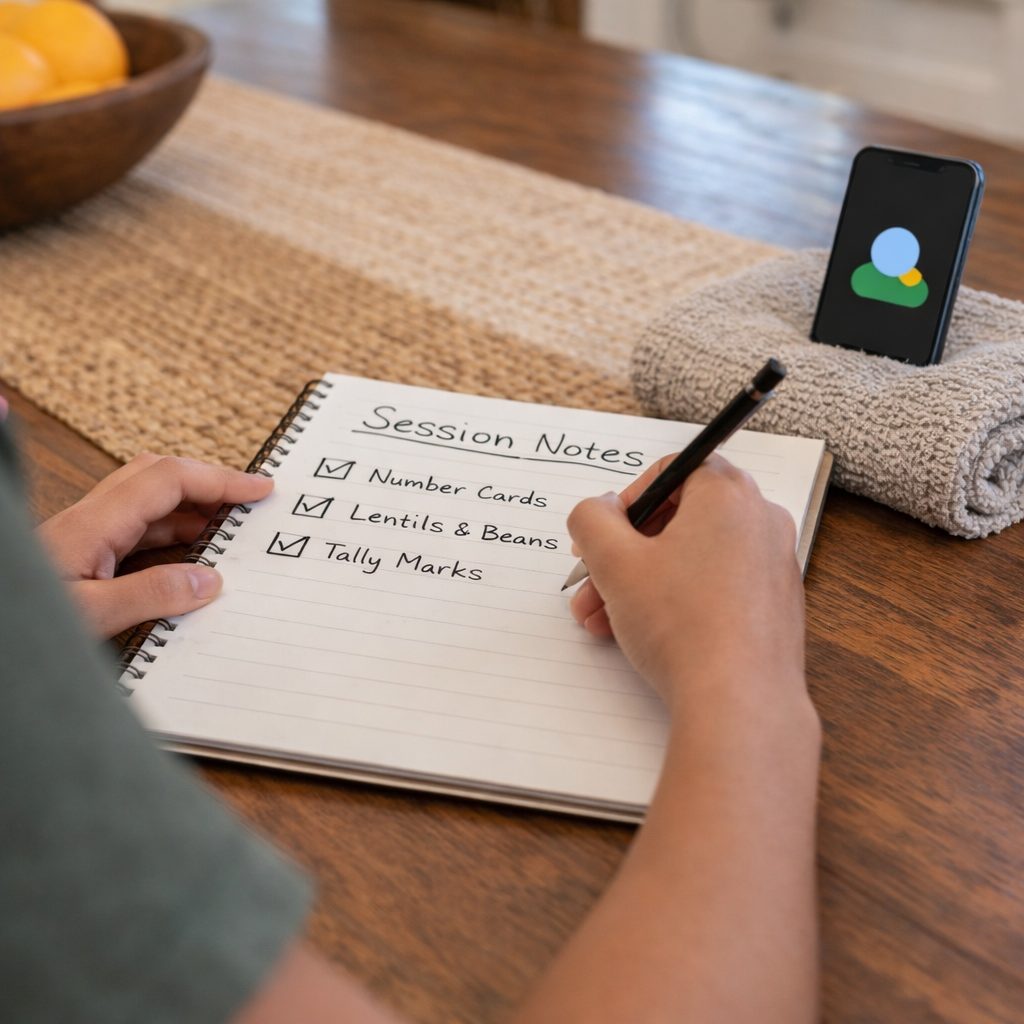
(8 min) Your teen asks one or two quick background questions or looks up the guest's job or hobby, and writes three things they already know and three they are curious about in the notebook. They pick a central question for the interview.
2Step 2
Write questions
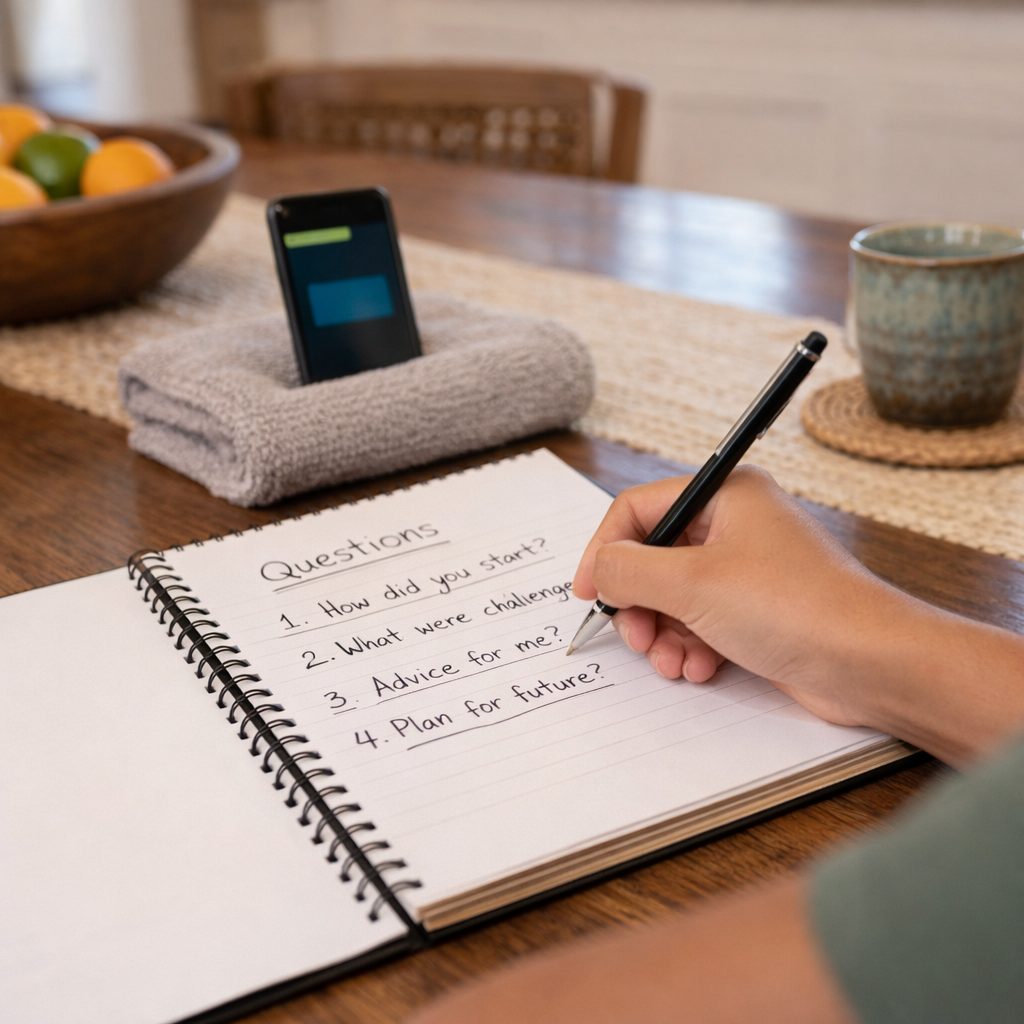
(10 min) Your teen writes eight open-ended questions in the notebook, then adds one planned follow-up under each, including at least two that ask for reasons or evidence, such as 'Why did you choose that over the other option?' and one that invites a different view, such as 'What would someone who disagrees with you say?'
3Step 3
Record the interview
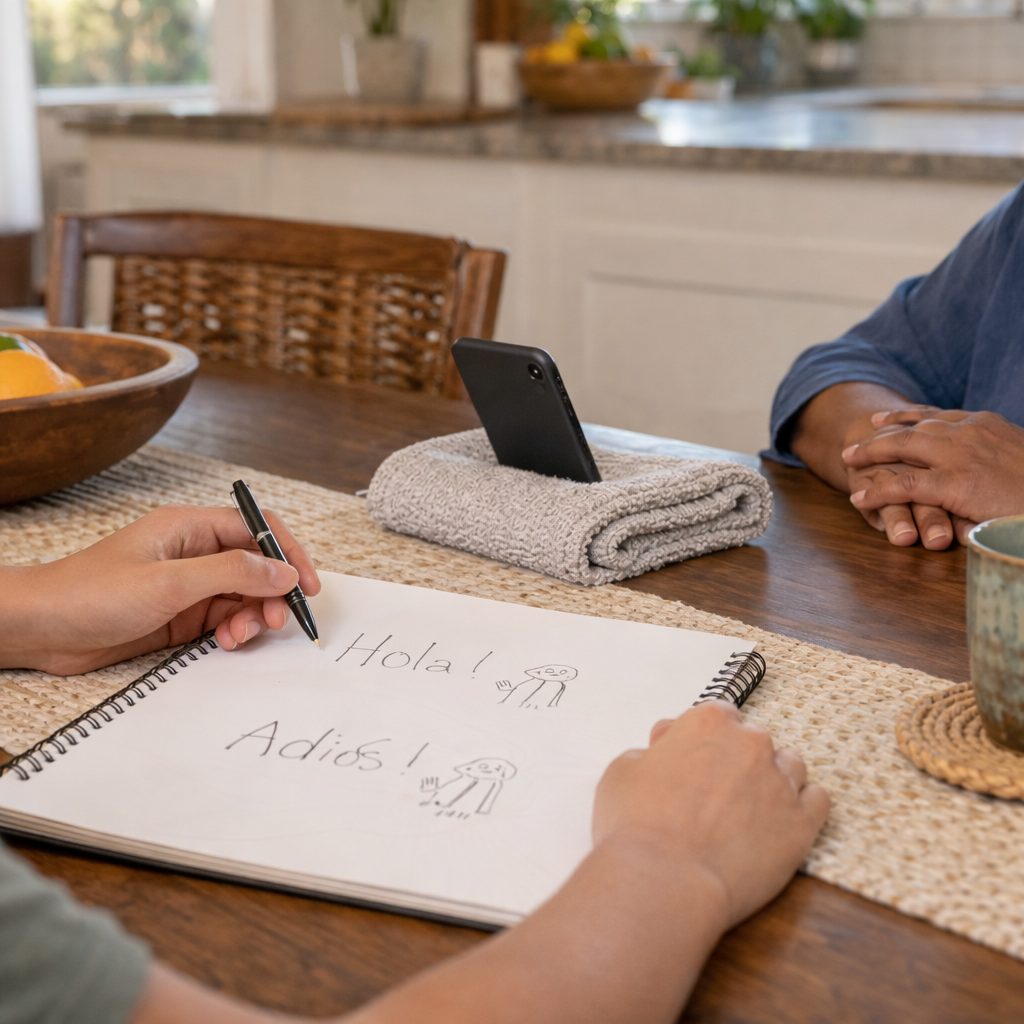
(12 min) Your teen sets the phone on the folded towel between them and the guest, records for about ten minutes, and follows the guest's answers rather than the list when something interesting comes up. They take quick notes of moments they want to return to.
4Step 4
Listen back and reflect
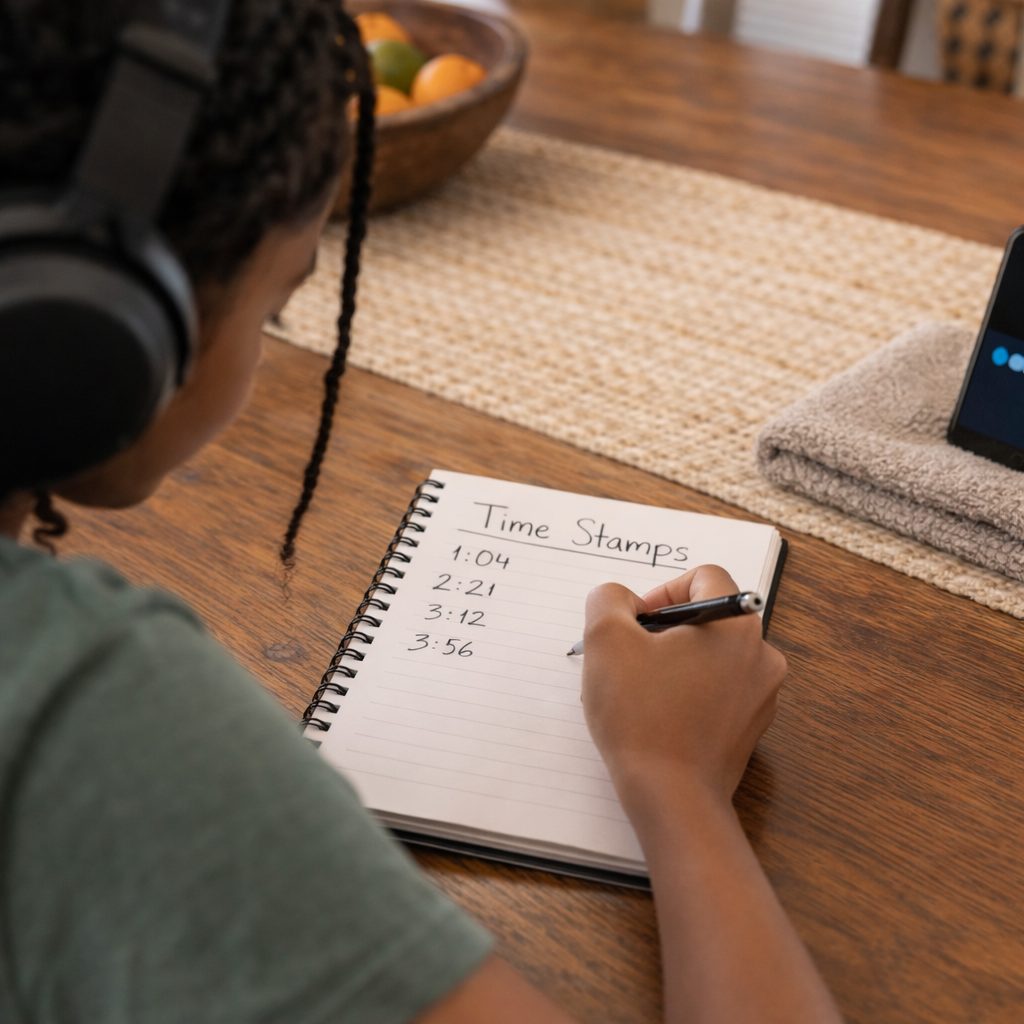
(10 min) Wearing the headphones, your teen listens to the recording and marks in the notebook the time stamps where a follow-up led to a better story and where they missed a chance to probe. They write two new probing questions they wish they had asked.
Conclusion
Ask your teen which follow-up question worked best and why. The best interviewers plan carefully, then listen closely enough to leave the plan when a real story appears.
Make your own lesson plan in minutes
Describe a topic and Resource Portal AI writes the objectives, materials and steps for your group.
Try Resource Portal AI