Why Pipes Burst in Winter: Measure How Much Ice Expands
Overview
Measure ice expansion as a percent and see why pipes burst.
Description
Your teen freezes water in a straight-sided cup overnight, measures how much taller the ice is than the water was, and calculates the percent increase. Then they connect the result to why outdoor pipes and hose bibs can crack on freezing winter nights and how families protect them.
Objective
Your teen will measure the change in height and mass when water freezes, calculate percent increase and percent error, and explain why freezing water can burst pipes.
Standards
Materials
| Item | Quantity |
|---|---|
| Straight-sided clear plastic cups (not glass) | 2 |
| Ruler with millimeter marks | 1 |
| Kitchen scale (grams) | 1 |
| Permanent marker | 1 |
| Small plastic water bottle with cap | 1 |
| Calculator | 1 |
| Paper and pencil | 1 each |
Vocabulary
Preparation
- The night before: fill each plastic cup with exactly 5 cm of water (measure from the inside bottom), mark the water line, weigh each cup and write the masses down, then set the cups level in the freezer.
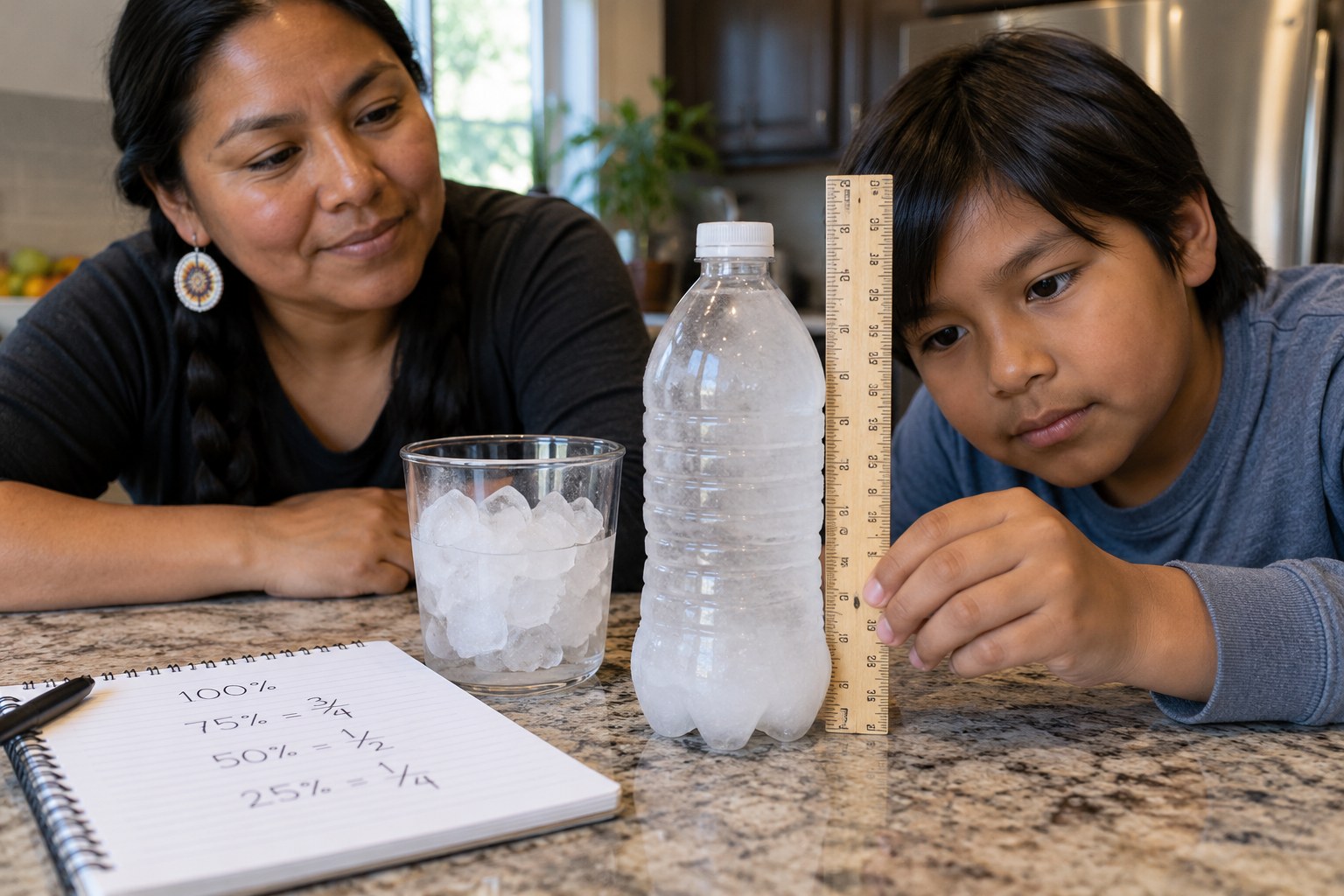
- Also fill the small plastic bottle to the very top with water, screw the cap on and freeze it standing up in a bowl. Never freeze water in glass; it can shatter.
Introduction
Show your teen the frozen plastic bottle. Ask: the bottle was full of water and capped, so where did the bulge come from? What would happen if that bottle were a metal pipe?
Why might a plumber get extra calls after a hard freeze?
Does freezing add more water, or does the same water take up more space?
Steps
Conclusion
Ask: if a pipe holds 2 liters of water, about how much extra space would that water need when it freezes? (About 180 mL.) That pressure is what cracks pipes.
Make your own lesson plan in minutes
Describe a topic and Resource Portal AI writes the objectives, materials and steps for your group.
Try Resource Portal AI