Lesson planSet-Piece Lab: Designing a Free-Kick Routine With Cones
Sports50 minutesGrades: 11th
Overview
Script, rehearse and test two free-kick routines with cones.
Description
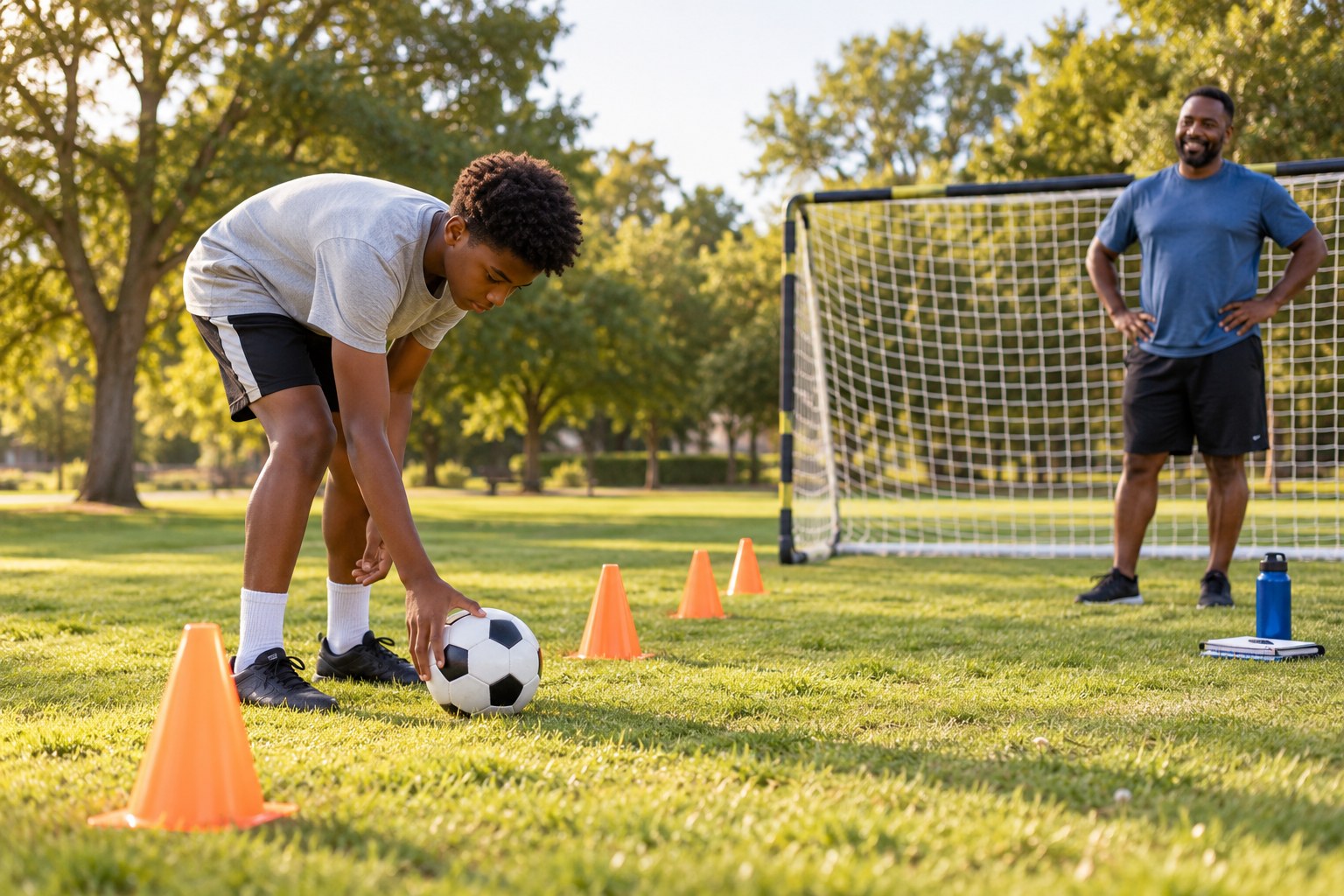
Your teen learns how pro teams script free kicks with decoy runs, screens and timed movement, then designs two routines of their own using 6 cones as a defensive wall and markers. They run each routine 10 times with you or a sibling as the second attacker, tally the results, and decide which one they would trust in a real match.
Objective
Your teen will design two scripted free-kick routines with a decoy movement, run each one ten times, and use their tally to judge which routine is more reliable and why.
Materials
| Item | Quantity |
|---|
| Soccer ball | 1 (2 if you have them) |
| Cones or plastic cups as 'defenders' and markers | 6 |
| Portable goal, or two backpacks as goalposts about 6 steps apart | 1 |
| Notebook | 1 |
| Pencil | 1 |
| Water bottle | 1 per player |
Vocabulary
Set piece
A planned play that starts from a dead-ball restart, such as a free kick, corner or throw-in.
Decoy run
A run meant to pull a defender or the keeper's attention away from where the ball is really going.
Screen
An attacker standing in or near the wall to block the keeper's view of the kick.
Trigger
The agreed signal, like a raised arm or the first step of the run-up, that starts every player's movement at the same time.
Preparation
- Find a flat spot in a backyard or park with room for a 20-step run-up and shot.
- Set the goal or two backpacks about 6 steps apart and fill the water bottles.
Introduction
Watch one well-known free-kick goal on video, then watch it again only following the players who never touch the ball. Ask: what were they doing, and would the goal have happened without them?
Why might a team practice the same free kick hundreds of times?
What makes a decoy believable to a defender?
Steps
1Step 1
Study how routines are scripted
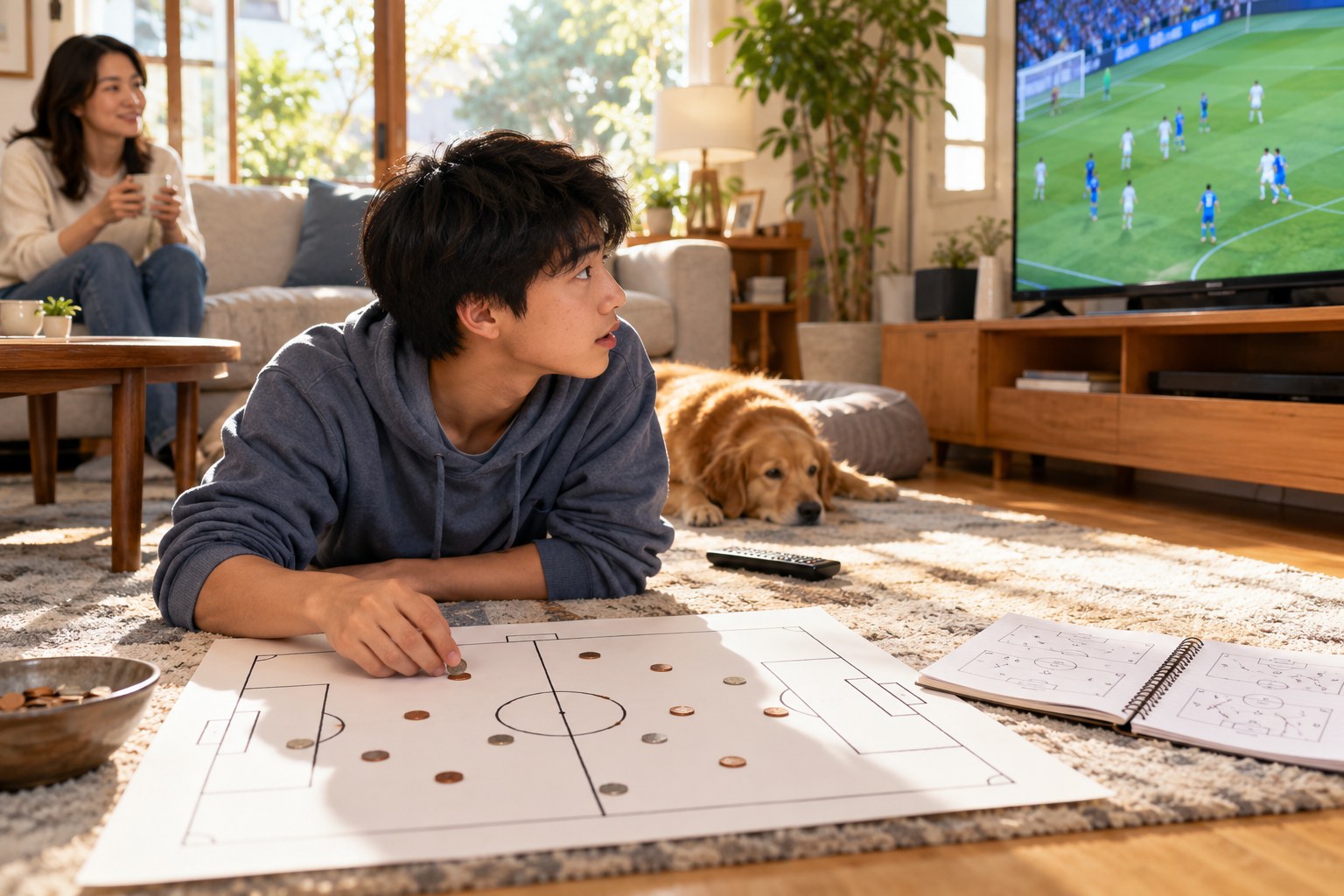
(8 min) Your teen watches two or three pro free kicks on a phone and, in the notebook, sketches each one with arrows: who runs, who screens, who strikes. They label the trigger in each clip and write one sentence on why the decoy worked.
2Step 2
Build the wall and draw two plays
(8 min) Your teen places 4 of the 6 cones in a line about 9 steps from the ball as the wall and uses the other 2 cones to mark where the decoy and the striker start. In the notebook they draw Routine A (a direct shot over or around the wall) and Routine B (a short pass to a teammate after a decoy run), each with a clear trigger.
3Step 3
Walk it through
(6 min) Your teen explains Routine A and Routine B to you, then you both walk through each one at half speed with the soccer ball so the timing of the trigger, decoy run and kick is clear. Adjust any run that crosses into the other player's path.
4Step 4
Run ten of each
(20 min) Your teen runs Routine A ten times and Routine B ten times, keeping the kicks controlled and taking water breaks from the water bottle. After each try, the pencil goes in the notebook with a tally: goal, on target but saved or blocked, or off target, plus a quick note if the decoy fooled anyone.
5Step 5
Pick the routine you would trust
(8 min) Your teen totals each routine's tally in the notebook, works out the success rate out of 10, and writes a short coach's note: which routine they would call in a close match, what one tweak would improve the weaker routine, and how many tries they would want before trusting it. They read the note to you and you ask one 'what if the wall jumps?' question to test it.
Conclusion
Ask your teen: 'Did the routine that looked coolest on paper actually work best?' Pro teams keep the plays that survive repetition, not the prettiest ones.
Make your own lesson plan in minutes
Describe a topic and Resource Portal AI writes the objectives, materials and steps for your group.
Try Resource Portal AI