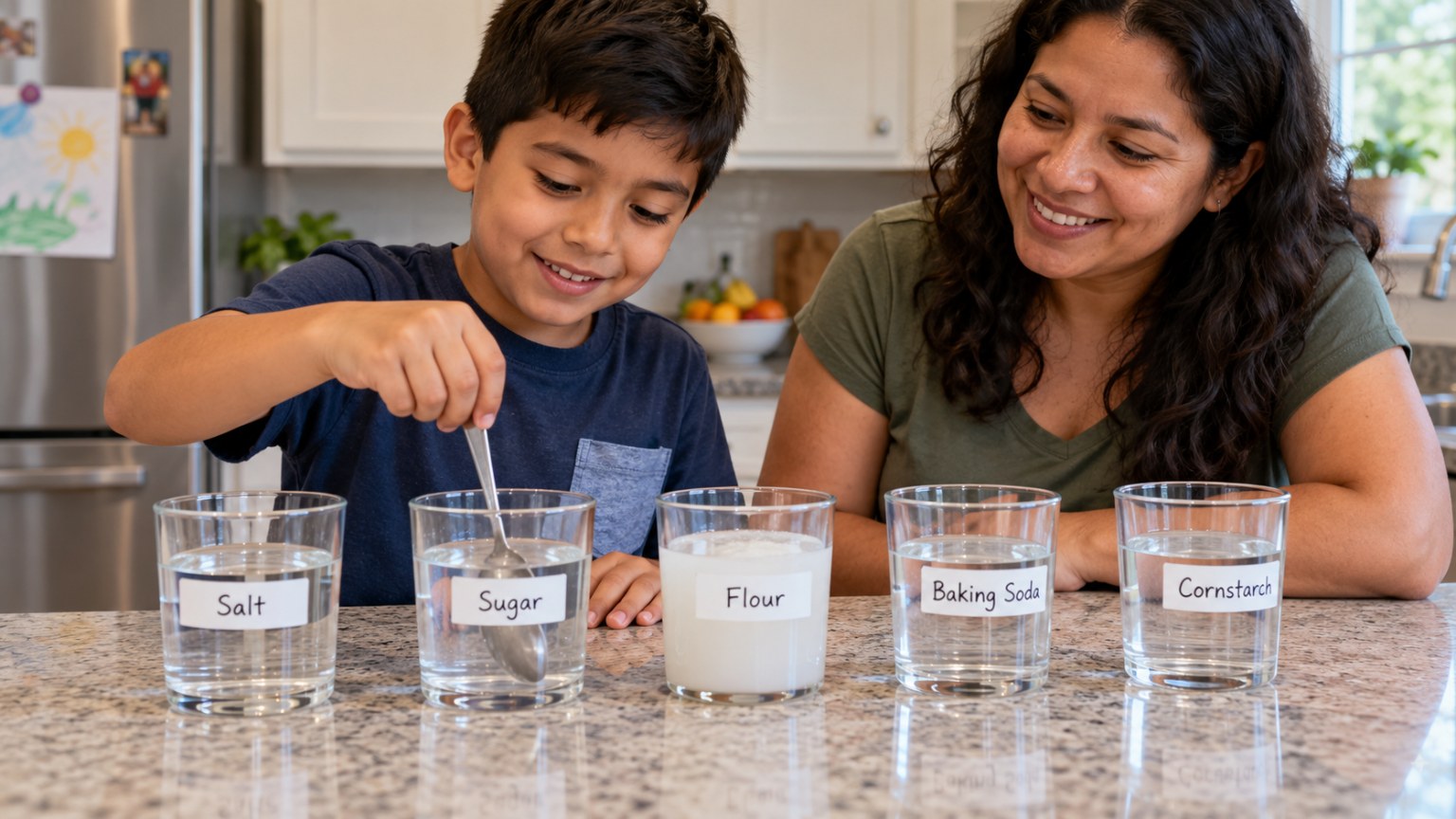
Why Is the Ocean Salty? Make Sea Water and Find the Hidden Salt
Overview
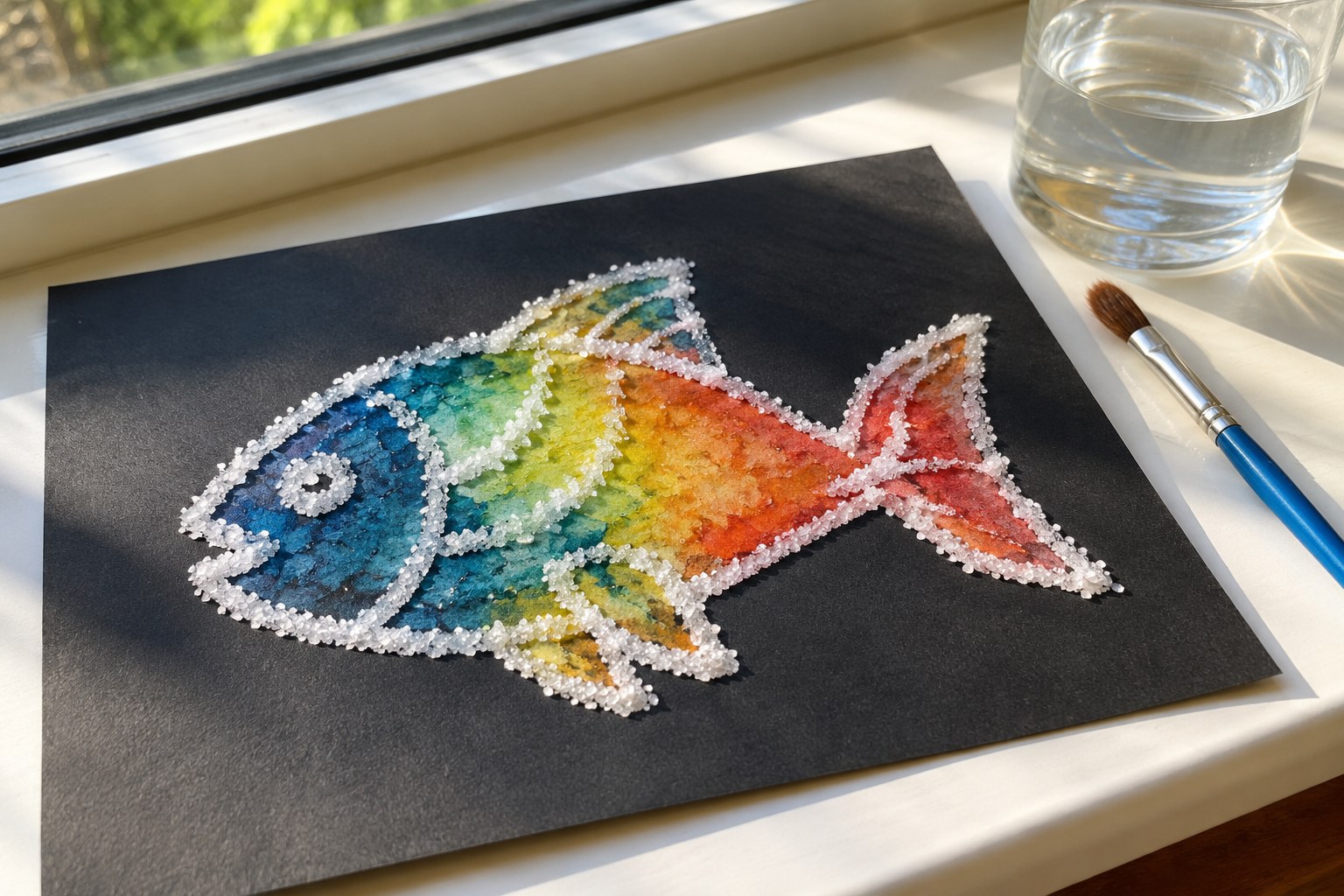
Paint with sea water and find the salt left behind.
Description
Your child mixes real-ocean-strength salt water and extra-salty water, paints both onto dark paper, and watches the water disappear into the air while sparkly salt crystals stay behind, then draws and tells what they found.
Objective
Your child will make salt water, observe that the salt seems to disappear when stirred, and tell from their own observations that the salt stays behind when the water evaporates.
Standards
Materials
| Item | Quantity |
|---|---|
| Warm tap water | 2 cups |
| Table salt | about 2 tablespoons |
| Clear cups or jars | 2 |
| Measuring spoons and a spoon for stirring | 1 set |
| Black or dark blue construction paper | 2 sheets per child |
| Paintbrushes or cotton swabs | 1-2 per child |
| Shallow dish or jar lid | 1 |
| Crayons and paper for the observation drawing | 1 set |
Vocabulary
Preparation
- Label two cups 'Ocean' and 'Extra Salty' with a marker or tape.
- Pick a warm, sunny windowsill or outdoor spot where the paintings can dry undisturbed.
Introduction
Ask your child to lick a clean finger, touch it to a pinch of salt and taste it. Then ask: if you swallowed a mouthful of ocean water at the beach, what would it taste like? Why is the ocean salty but the water in a river is not?
Where do you think the salt in the ocean comes from?
If you stir salt into water and it disappears, is it really gone?
Steps
Conclusion
Ask your child to answer the big question in their own words: where did the water go, and why did the salt stay? Explain that the sun warms the ocean every day, water evaporates into the air, and the salt stays behind in the sea.
Make your own lesson plan in minutes
Describe a topic and Resource Portal AI writes the objectives, materials and steps for your group.
Try Resource Portal AI