Lesson planHuman Body Heart Pump Math: Pulse, Unit Rates and Liters per Day
STEAM45 minutesGrades: 6th, 7th
Overview
Calculate how much blood your heart pumps in a day.
Description
Your teen measures their resting and active pulse, converts counts to beats per minute, then uses the heart's approximate stroke volume to calculate how much blood the heart pumps per minute, hour and day, and tries to move water by hand at heart speed to feel how hard the heart works.
Objective
Your teen will use unit rates to convert pulse counts to beats per minute and to calculate cardiac output in liters per minute, hour and day.
Standards
6.RP.2Math · Grade 6 · Ratios & Proportional Relationships Understand the concept of a unit rate a/b associated with a ratio a:b with b ≠ 0, and use rate language in the context of a ratio relationship.
6.RP.3bMath · Grade 6 · Ratios & Proportional Relationships Solve unit rate problems including those involving unit pricing and constant speed.
Materials
| Item | Quantity |
|---|
| Stopwatch or phone timer | 1 |
| Measuring cup with milliliter markings | 1 |
| Two large bowls, one filled with water | 2 |
| Empty 1-liter or 2-liter bottles | 2-5 |
| Calculator (optional) and pencil | 1 each |
| Heart pump worksheet from this lesson | 1 per teen |
Vocabulary
Pulse
The beat you feel in an artery each time the heart pushes out blood.
Unit rate
A rate compared to 1 unit, like beats per 1 minute.
Stroke volume
The amount of blood the heart pushes out with one beat.
Cardiac output
The amount of blood the heart pumps per minute (stroke volume times heart rate).
Artery
A blood vessel that carries blood away from the heart.
Preparation
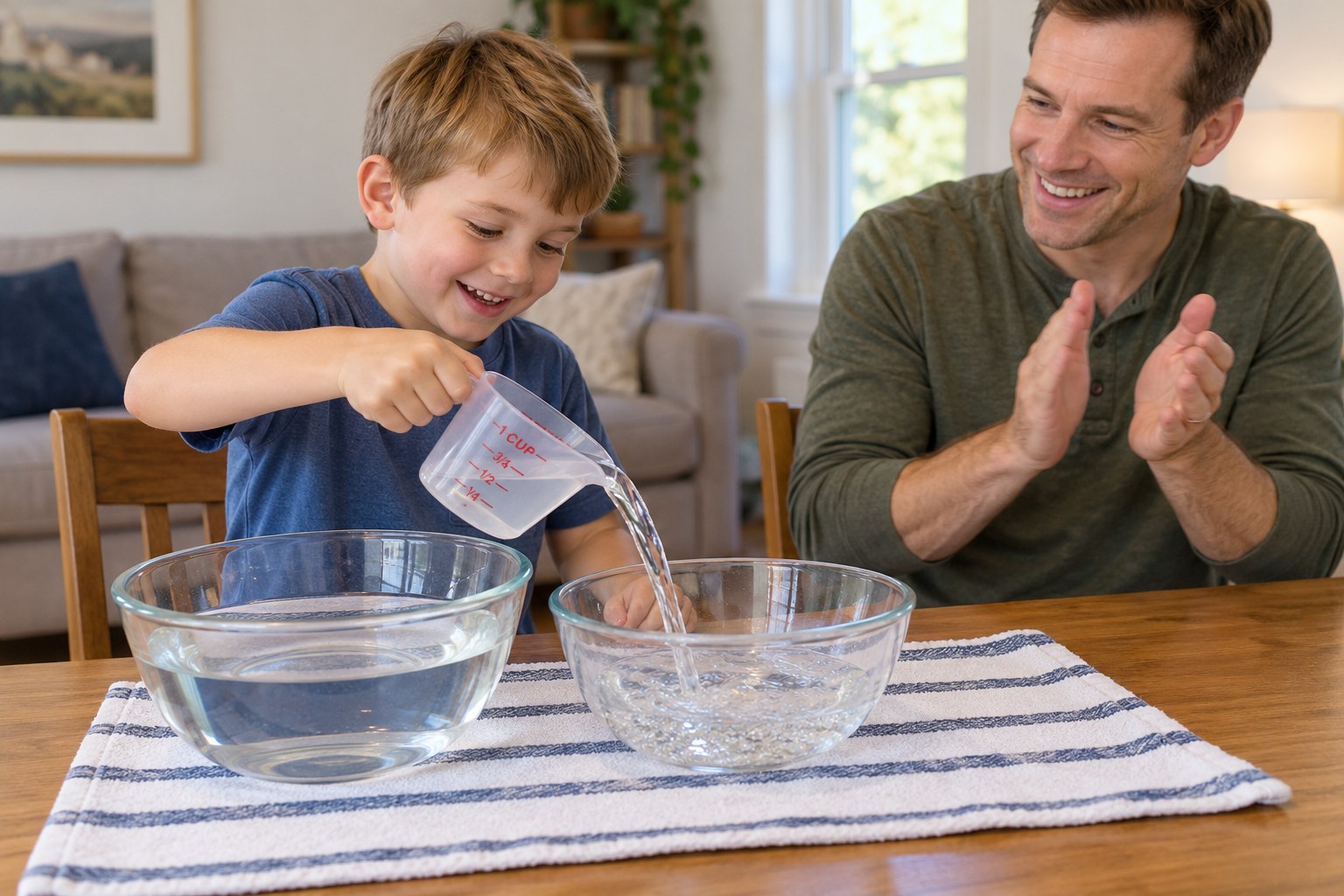
- Fill one bowl with water and set the empty bowl next to it on a towel.
- Copy the worksheet from the additional sections.
Introduction
Hold up a 1-liter bottle. Say: "At rest, your heart moves about this much blood every 12 seconds or so. By the end of today you'll know how many bathtubs that adds up to in a day."
About how many times do you think your heart beats in one minute?
Why would your heart need to pump faster when you exercise?
Steps
1Step 1
Measure resting pulse
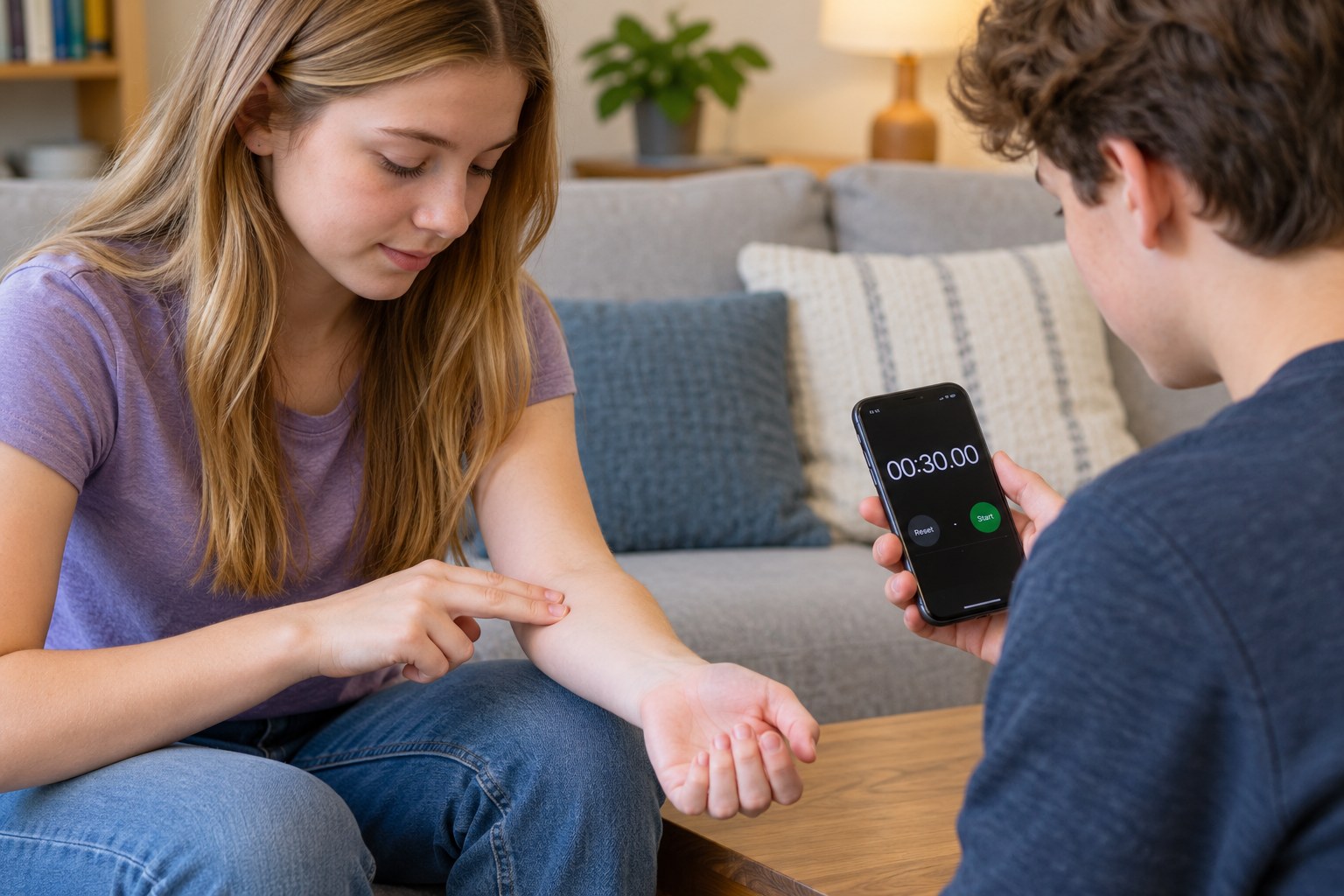
(7 min) Your teen sits quietly for 2 minutes, then finds the pulse on the thumb side of the wrist with two fingers (not the thumb) and counts beats for 15 seconds while a partner times. They repeat for 30 seconds and write both counts, then use rate reasoning to convert each to beats per minute and compare.
2Step 2
Measure active pulse
(6 min) Your teen does 1 minute of jumping jacks or stair steps at a comfortable effort, then immediately counts for 15 seconds and converts to beats per minute. Record how many more beats per minute than resting.

3Step 3
Calculate cardiac output
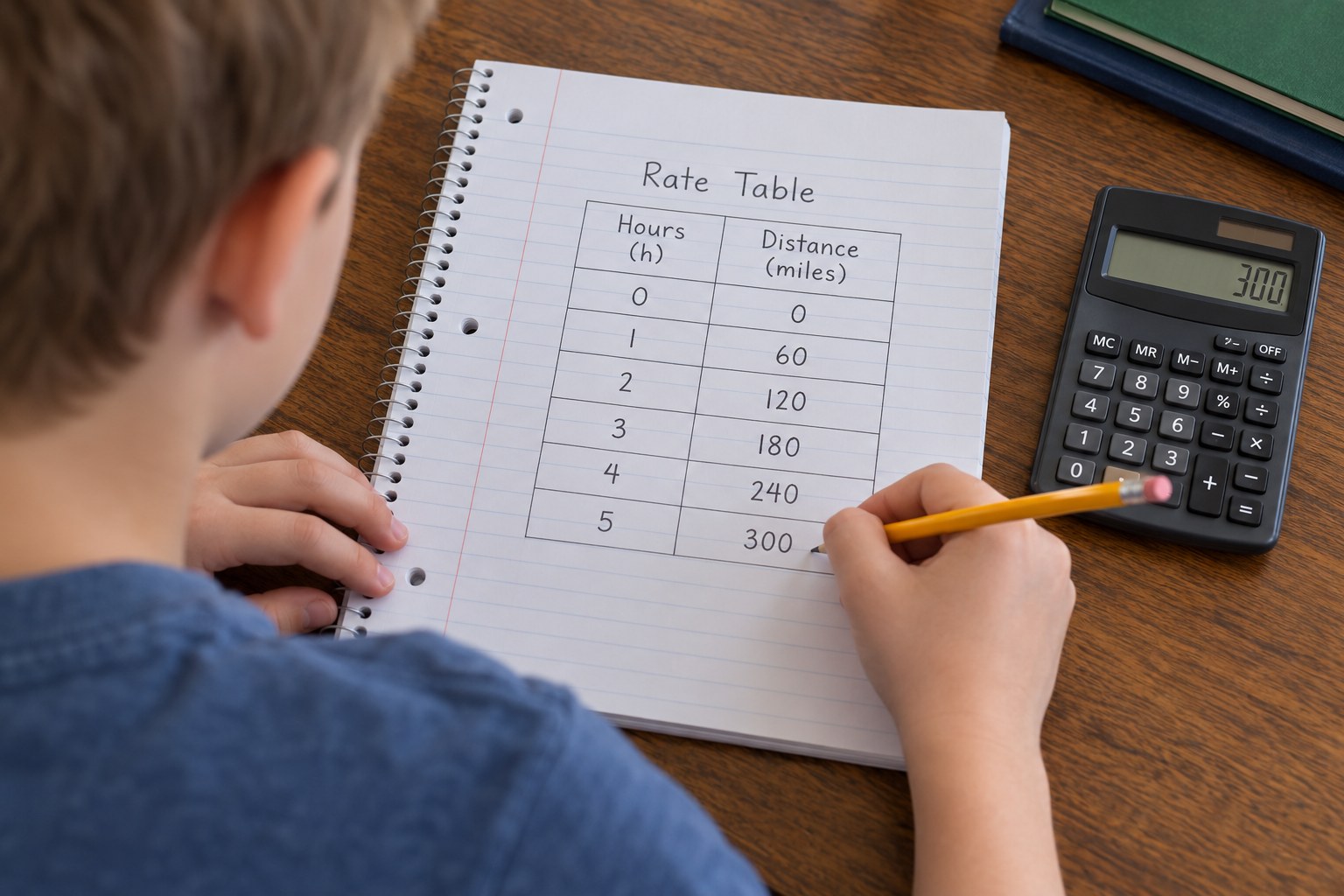
(12 min) Using about 70 mL per beat (a typical resting adult stroke volume), your teen calculates milliliters per minute at their resting rate, converts to liters per minute, and then finds liters per hour and per day. They fill in the worksheet's rate table and check the answer key.
4Step 4
Feel the work
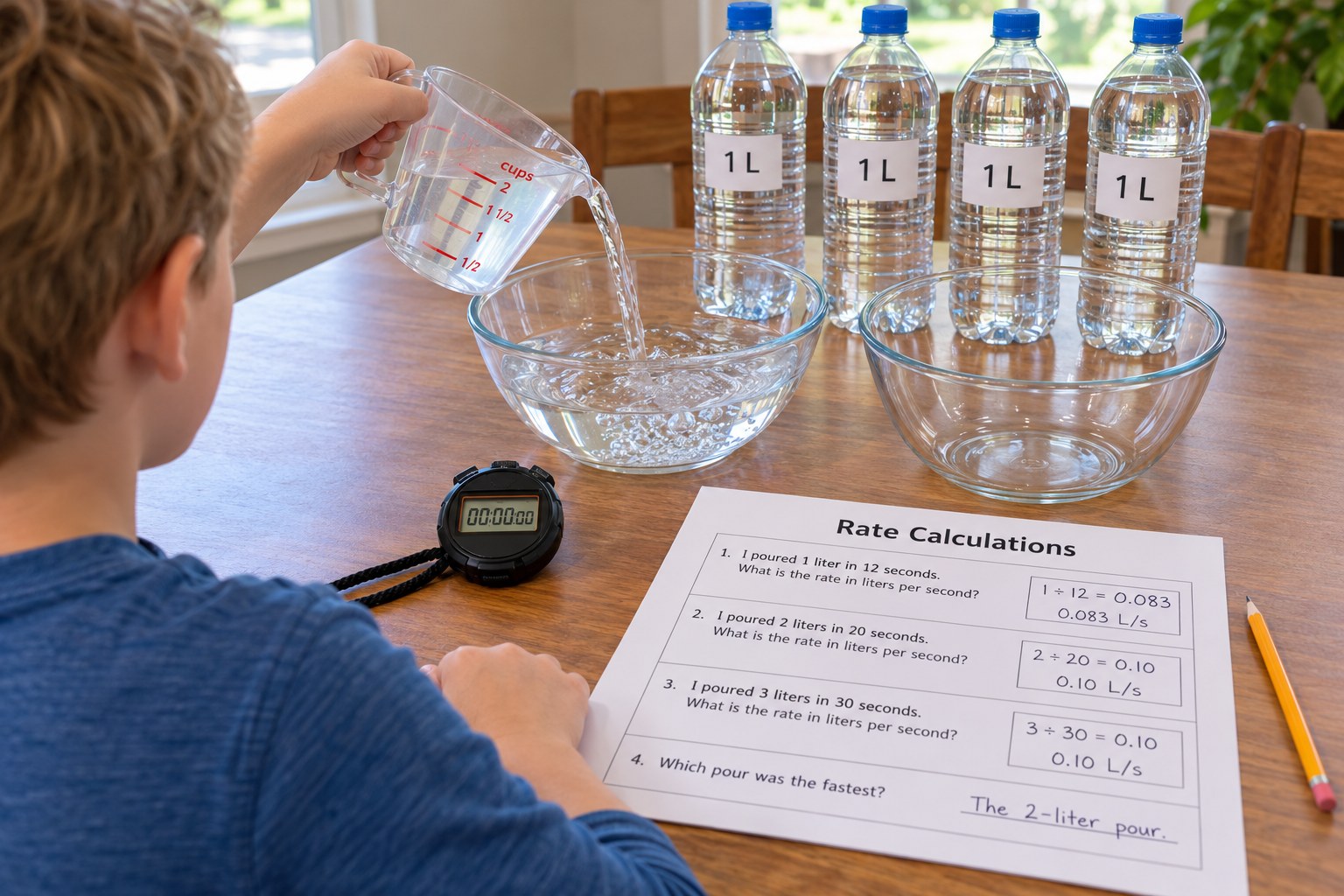
(10 min) Your teen tries to scoop 70 mL of water with the measuring cup from one bowl to the other at their resting heart rate for 30 seconds while a partner claps the beat. Count scoops, measure how much water moved, and compare that with what a heart moves in 30 seconds without ever resting.
5Step 5
Bottle model and reflect
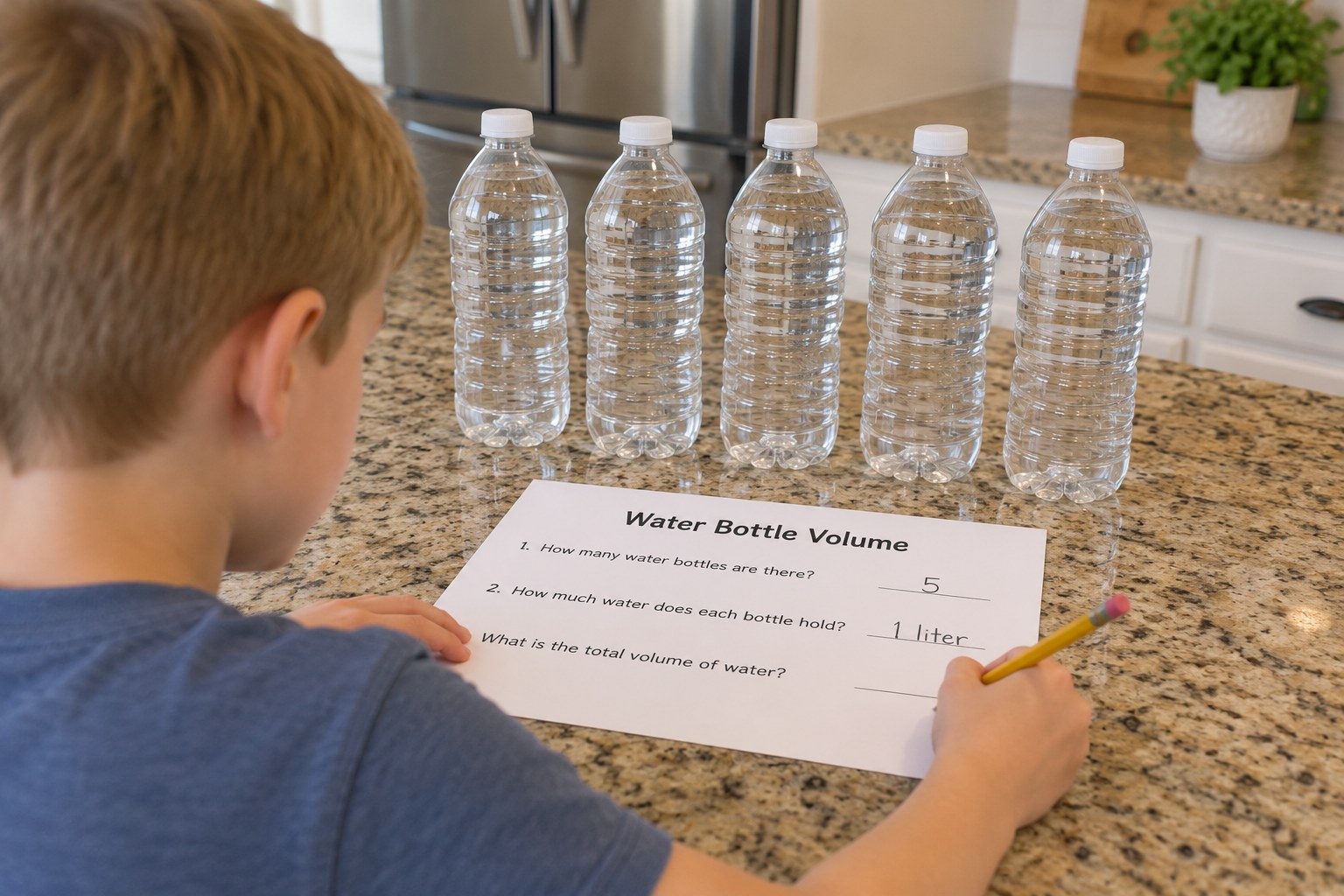
(8 min) Fill five 1-liter bottles (or two 2-liter bottles plus one 1-liter) to show the roughly 5 liters of blood in an adult body. Your teen calculates how long it takes the heart to pump all of it once at rest, and writes two sentences about what surprised them.
Conclusion
Ask: how many liters does your heart pump in a day at rest? How does the rate change when you exercise? Estimate how many liters your heart pumped during this lesson.
Make your own lesson plan in minutes
Describe a topic and Resource Portal AI writes the objectives, materials and steps for your group.
Try Resource Portal AI