Spinning Earth: Why We Have Day and Night
Overview
Spin a model Earth to find out where day and night come from.
Description
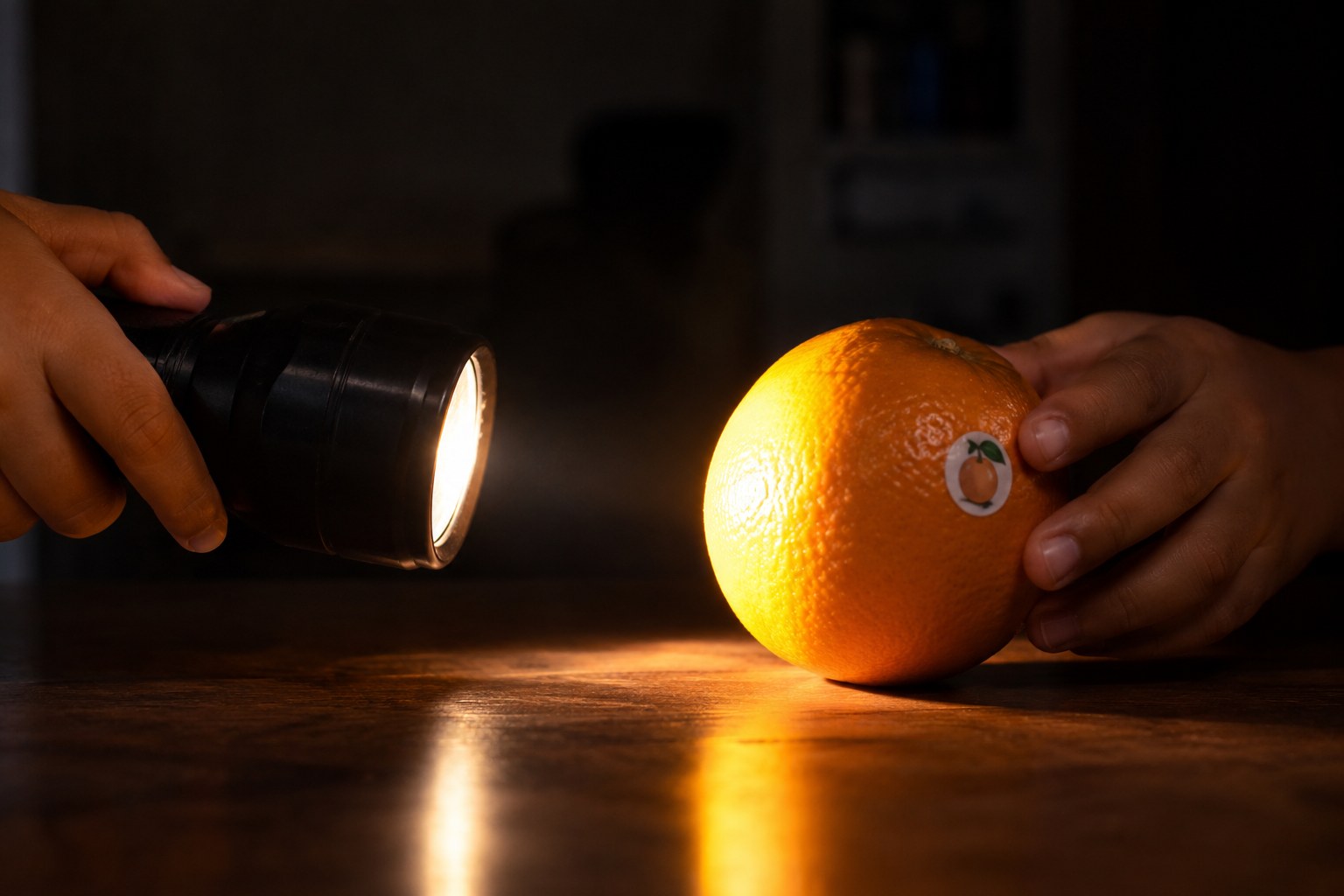
Your child uses a flashlight 'Sun' and a ball 'Earth' with a sticker for your home to discover that Earth spins, then becomes the spinning Earth themselves to see why the Sun seems to rise, cross the sky and set.
Objective
Your child will model Earth spinning in front of a light and explain that it is day on the side facing the Sun and night on the side facing away.
Materials
| Item | Quantity |
|---|---|
| Flashlight or a lamp with the shade removed | 1 |
| Ball or orange to be the Earth | 1 |
| Small sticker or a dot of tape to mark your home | 1 |
| Pencil or chopstick to push through the orange (adult does it), or just hold the ball | 1 |
| Paper and crayons | 1 sheet per child |
Vocabulary
Preparation
- Pick a room you can make fairly dark. Put the sticker on the ball to show where you live.
- If using an orange, an adult pushes the pencil through from top to bottom so it can spin like a top.
Introduction
Ask: does the Sun move across the sky, or are we the ones moving? Let's do an experiment to find out.
Where is the Sun in the morning? Where is it in the evening?
Is it nighttime everywhere on Earth at the same time?
Steps
Conclusion
Ask: when it is night here, what is happening on the other side of Earth? (It is daytime there.) Tomorrow morning, look out the window and say 'our side of Earth is turning toward the Sun.'
Make your own lesson plan in minutes
Describe a topic and Resource Portal AI writes the objectives, materials and steps for your group.
Try Resource Portal AI